
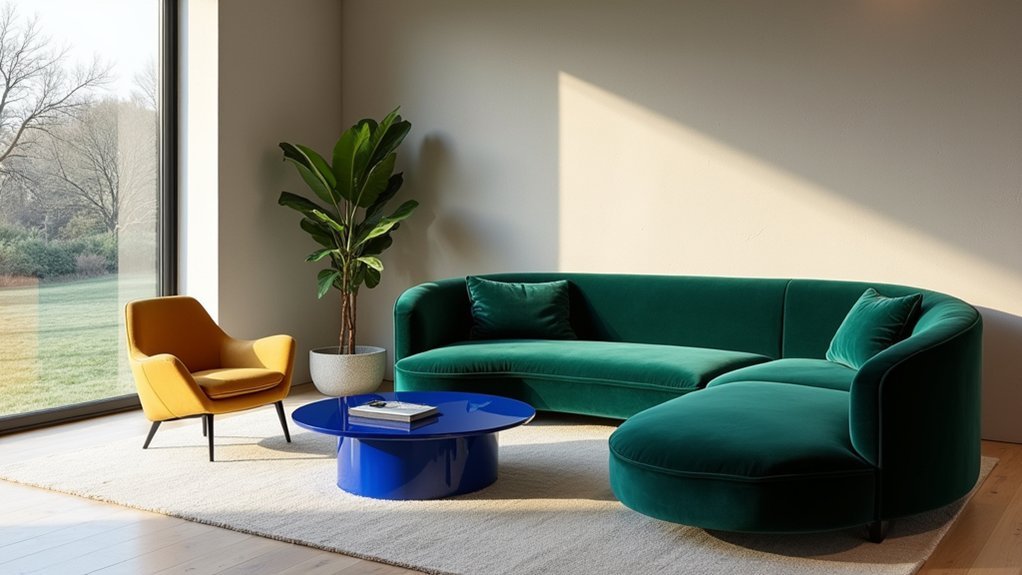
You’ll make bold furniture feel intentional by choosing one standout piece—like a velvet sofa or sculptural table—as your focal point, then keeping nearby pieces streamlined and neutral. Measure first: keep 30–36 inches for walkways and 14–18 inches between seating and tables, and tape layouts on the floor. Use the 60–30–10 rule, echo the statement color in small accents, and add layered lighting and texture for depth. Next, you’ll see quick fixes for common mistakes.
Key Takeaways
- Pick one bold statement piece to anchor the room, and keep nearby furniture streamlined so it stays the focal point.
- Repeat the statement piece’s color or finish in small accents to create cohesion without overpowering the space.
- Plan scale and spacing with measurements, keeping 30–36 inches for walkways and 14–18 inches between seating and tables.
- Use the 60–30–10 color rule, pairing quiet neutrals with one bold accent color and durable, wear-friendly finishes.
- Prevent a dated look by mixing eras thoughtfully and updating easy swaps like hardware, lighting, art, and accessories.
Choose One Bold Furniture Focal Piece
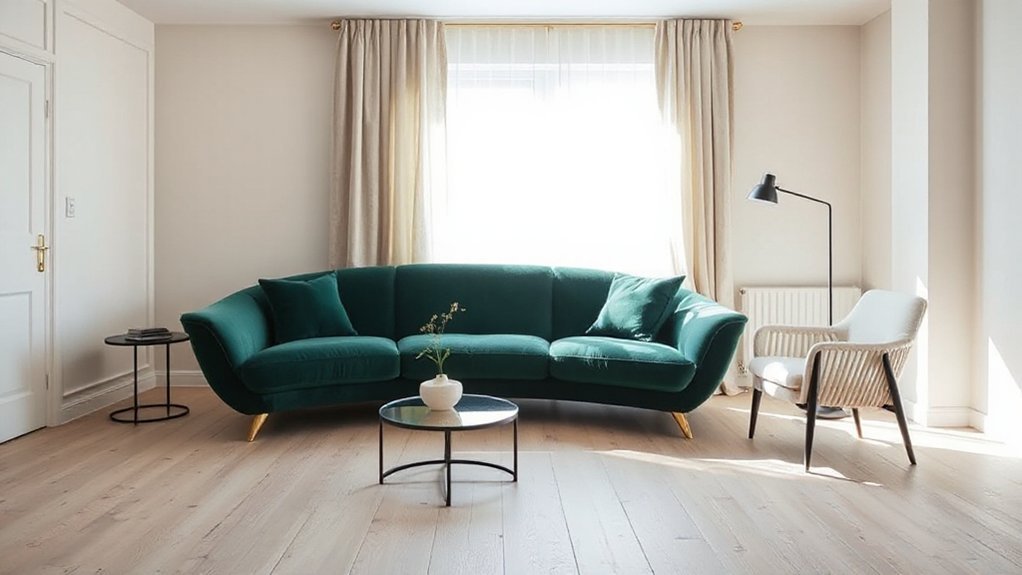
If you want bold furniture to look intentional instead of chaotic, start by choosing one focal piece that anchors the entire room. Pick a sofa in saturated velvet, a sculptural marble table, or a lacquered credenza, then let everything else support it. Repeat its color or finish in two small touches—pillows, a vase, or hardware—so the choice reads deliberate. Build a clean backdrop with an Accent wall in a muted tone or tone-on-tone texture that frames the piece without competing. Keep adjacent furniture streamlined and neutral, and use statement art to echo the focal piece’s mood: graphic lines for modern shapes, warm abstracts for curved silhouettes. You’ll create a curated, current look with confident restraint.
Get Scale Right for Bold Furniture
You can’t make a bold piece look intentional if the scale’s off, so measure your room-to-piece proportions before you buy. Check width, depth, and height against wall runs, circulation paths, and sightlines to keep the statement crisp, not cramped. Then balance visual weight—pair a chunky sofa with lighter-leg tables or airy lighting so the room feels curated and current.
Measure Room-to-Piece Proportions
Before a bold sofa, sculptural chair, or oversized coffee table steals the spotlight, lock in the scale: measure your room’s length and width, then map the piece’s footprint and surrounding clearances so it reads intentional—not crammed or lost. Use painter’s tape to outline dimensions on the floor, including doors’ swing arcs and cabinet drawers. Keep main walkways at least 30–36 inches, and allow 14–18 inches between seating and a coffee table for easy reach. For space utilization, check sightlines: your statement piece shouldn’t block windows, vents, or traffic to key zones. Refine furniture placement by anchoring big items to a focal wall, then confirm the remaining negative space supports daily movement and cleaning access.
Balance Visual Weight Carefully
Although a bold piece grabs attention fast, the room still needs balanced visual weight so it feels curated—not top-heavy or chaotic. Anchor large silhouettes with quieter companions: pair a statement sofa with streamlined side tables, or offset a sculptural chair with a low, wide console. Keep clear sightlines so the hero piece reads intentional, not cramped.
Use furniture placement to distribute mass across the room—don’t stack all the “heaviness” on one wall. Float the piece if you can, then counter it with lighting, art, or a textured rug on the opposite side. Nail color coordination: echo one hue from the bold item in smaller accents, and let neutrals hold the background. Balance finishes, too—gloss needs matte nearby.
Place Bold Furniture to Improve Room Flow
One bold furniture move can instantly fix a room’s flow: anchor circulation first, then let the statement piece lead. Start by mapping your primary walkway from entry to seating; you’re aiming for clear, intuitive paths. Use furniture placement to create “lanes” around the hero item, not through it, so people move naturally without clipping corners. Keep at least 30–36 inches for main routes, and float oversized pieces when walls would choke passage. Then tighten the composition with Decorative accents that reinforce direction—like a runner, a floor lamp, or a sculptural side table.
- Align the statement piece with the room’s focal line
- Angle chairs to open, not block, entry paths
- Float the sofa to define zones and shortcuts
- Use rugs and lighting to guide movement
Pick Bold Furniture Colors Using the 60–30–10 Rule
How do you go bold with color without letting a statement piece hijack the whole room? Use the 60–30–10 rule to control impact: 60% is your dominant field color, 30% is a supporting mid-tone, and 10% is your punchy accent—often your bold furniture pick. Choose that 10% using color psychology: emerald signals calm luxury, cobalt reads energetic, and terracotta feels grounded and current. Then scale saturation to the furniture’s size; a sofa wants a slightly muted jewel tone, while a chair can handle high-chroma lacquer. Protect your investment by matching hue to furniture durability: darker, textured fabrics hide wear; performance velvet resists crushing; pigmented leather ages evenly. Test swatches in day and night light.
Balance Bold Furniture With Quiet Basics
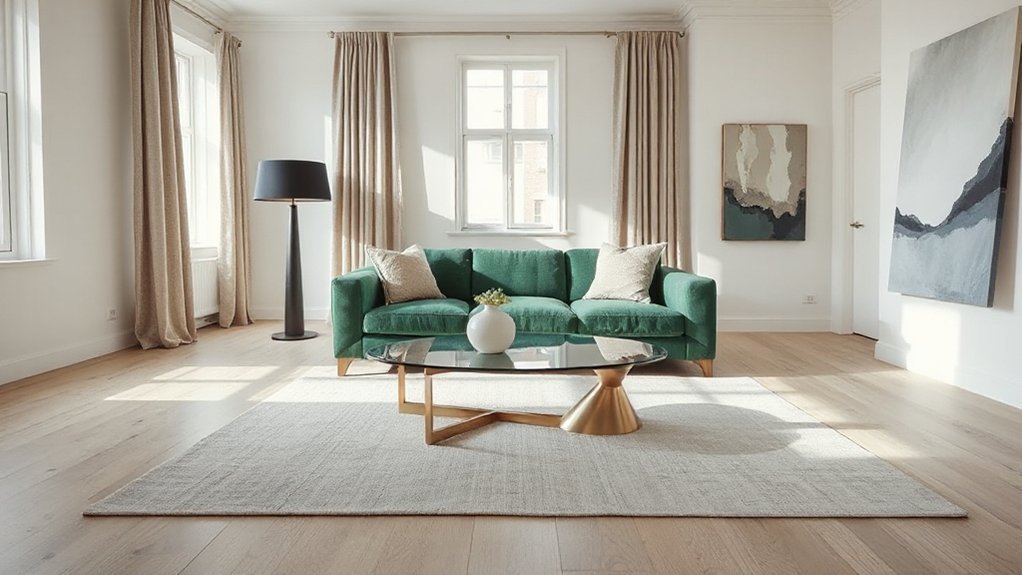
Once you’ve chosen a statement piece, you’ve got to anchor it with a neutral foundation—think warm whites, greiges, light oak, or matte black—so the bold furniture reads intentional, not chaotic. Keep the backdrop quiet with streamlined rugs, low-contrast walls, and clean-lined upholstery that lets color and silhouette lead. Then repeat simple supporting elements (one metal finish, one wood tone, a recurring shape) to create cohesion that feels current and curated.
Anchor With Neutral Foundations
Even if you’re investing in a showstopping sofa or a sculptural dining table, a neutral foundation keeps the statement intentional instead of chaotic. Start by choosing Neutral palettes that pull back visual noise—think warm whites, greige, taupe, or soft charcoal—so your bold piece reads as curated, not competing.
Use quiet basics to control contrast and scale without dulling the impact:
- Paint walls in matte, low-sheen neutrals to soften glare and highlight form
- Choose large rugs in solid or micro-textured weaves to ground the silhouette
- Keep window treatments simple in linen or cotton, close to wall color
- Add understated accessories in tonal ceramics, brushed metal, or clear glass
You’ll get a gallery-like backdrop that’s current, calming, and confidently designed.
Repeat Simple Supporting Elements
When you echo a few quiet details around a bold piece, you create rhythm that makes the statement feel designed, not random. Pull one or two colors from the standout item and repeat them in low-key places: piping on pillows, a vase, a narrow frame, or a solid rug border. Keep fabric patterns restrained—think subtle stripes, micro-checks, or tone-on-tone textures—so the hero piece stays dominant.
Use furniture placement to reinforce the story. Align side tables or chairs on a shared axis, repeat one material (oak, matte black metal), and match leg profiles to reduce visual noise. Limit accessories to consistent shapes, and repeat lighting finishes for cohesion. You’ll get a curated, current look without diluting the impact.
Style Bold Furniture With Lighting and Texture
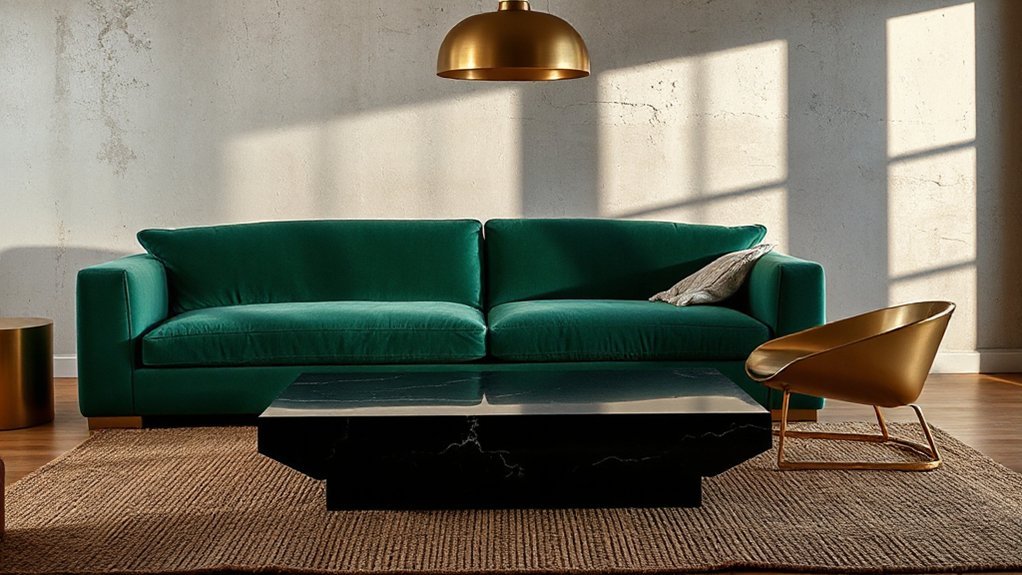
Because bold furniture already commands attention, you’ll get the most polished result by pairing it with lighting and texture that control contrast, depth, and mood. Start by setting Lighting ambiance with layered sources, so your statement piece reads intentional from day to night. Then build texture layering that balances its visual weight—mixing tactile, matte, and reflective finishes to create dimension without competing.
- Use a warm-dim floor lamp to soften saturated upholstery and highlight curves.
- Add a directional picture light or adjustable spotlight to sculpt silhouettes and shadows.
- Ground the piece with a low-pile rug, then add bouclé, linen, or velvet accents nearby.
- Introduce controlled shine—brushed brass, smoked glass, or lacquer—to echo hardware and add depth.
Avoid Bold Furniture Mistakes (and Quick Fixes)
Although bold furniture can instantly elevate a room, a few predictable missteps can make it feel chaotic, cramped, or unintentionally “showroom.” You’ll avoid that by checking scale (is it swallowing the layout?), color balance (did you accidentally create a competing focal point?), and styling restraint (are accessories piling on noise instead of polish).
First, don’t buy for Vague trends—choose a silhouette you’d still love in five years, then update with swappable textiles. If a piece reads too large, float it off the wall, remove one side chair, or switch to a slimmer-leg base to restore airiness. If colors fight, repeat one hue twice (art, pillow, rug) and quiet the rest with warm neutrals. If it feels dated, replace shiny hardware, add matte black accents, and edit patterns. Avoid outdated styles by mixing eras intentionally.
Frequently Asked Questions
How Do I Choose Durable Upholstery for Bold Furniture in High-Traffic Homes?
Choose upholstery rated 50,000+ double rubs, with tight weaves and stain-resistant finishes. Favor fabric options like solution-dyed acrylic or performance velvet. Demand removable covers. Follow cleaning tips: blot fast, mild soap, vacuum weekly.
What’s the Best Way to Mix Bold Furniture With Antique or Vintage Pieces?
Mix bold furniture with vintage pieces by “breaking rules” methodically: use color coordination to echo one hue, then build balance and contrast through scale, texture, and finish. You’ll anchor antiques, letting bold forms read intentional.
How Can I Make Bold Furniture Work in an Open-Concept Layout?
You’ll make bold furniture work in an open-concept layout by zoning with rugs, lighting, and sightlines. Use color coordination across vignettes, and prioritize space balancing by offsetting statement pieces with airy, low-profile staples.
Should I Prioritize Comfort or Style When Choosing a Statement Piece?
Prioritize comfort first; style follows. Like a throne that pinches, your statement piece can’t rule. Balance Comfort vs. Style and Functionality vs. Aesthetics: choose ergonomic support, durable fabrics, sculptural lines, and current colorways.
How Do I Protect Bold Furniture From Pets, Kids, and Everyday Spills?
You’ll protect bold furniture by choosing pet proof fabrics and applying stain resistant finishes. Use washable slipcovers, keep throws handy, trim claws, set no-jump rules, and blot spills fast with enzyme cleaner. Rotate cushions often.
Conclusion
Let your bold furniture act like a flag in the room—one clear focal piece that signals intent. Keep scale honest, so it commands without crowding, and place it where traffic flows like a river around a stone. Use the 60–30–10 rule to paint contrast with control. Quiet basics become the frame; lighting and texture add the spotlight and grit. Skip common missteps—too many statements—and edit fast.