
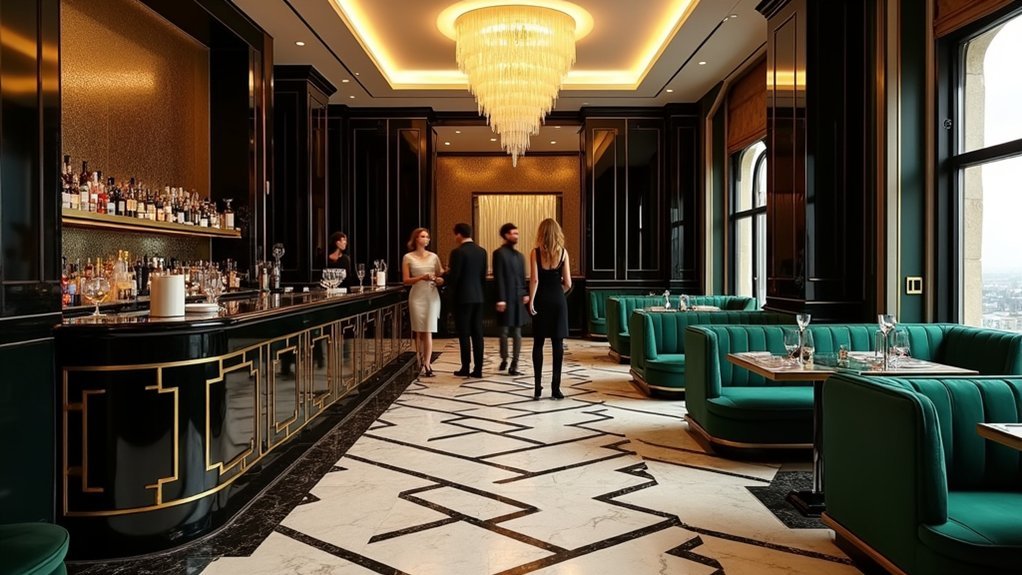
Yes—you’re seeing Art Deco make a real comeback in 2026, led by bold geometry, stepped forms, sunbursts, and crisp symmetry across interiors, fashion, and branding. You’ll spot high-contrast palettes (onyx and ivory) with jewel-tone accents, plus warmer metals like brass and gunmetal replacing chrome. Brands and retailers are pairing these cues with modern proportions and more sustainable materials, which helps the look stick beyond a micro-trend. Keep going to see what signals matter most.
Key Takeaways
- Yes—2026 shows an Art Deco revival via chevrons, sunbursts, stepped forms, and high-contrast black-ivory palettes across interiors, fashion, and branding.
- Drivers include renewed appetite for Jazz Age glamour, optimistic “city confidence,” and social media favoring crisp geometry and metallic accents.
- The 2026 update is “polished restraint”: warm brass or gunmetal, champagne tones, and jewel accents like emerald or oxblood in controlled doses.
- Authentic Deco signals include lacquer, inlay, fluted glass, chrome/brass, and strict symmetry; Deco-inspired uses similar motifs with modern proportions.
- A true comeback is indicated by multi-season demand, consistent material orders, museum and heritage support, and rising resale value for quality Deco pieces.
Is Art Deco Making a Comeback in 2026?
Three signals say Art Deco is making a real comeback in 2026: brands are doubling down on geometric motifs and high-contrast palettes, interior and furniture lines are returning to luxe metals and lacquered finishes, and fashion/jewelry is leaning into crisp symmetry with bold, architectural silhouettes. You’ll notice Deco isn’t showing up as costume nostalgia; it’s landing as a Vintage revival with tighter lines, cleaner production, and more scalable materials. Retail assortments feature stepped forms, sunbursts, and fan patterns, but you’ll also see updated proportions that fit smaller spaces and modern wardrobes. This Contemporary reinterpretation favors brushed brass over shine, jewel tones over pastels, and graphic black-and-ivory pairings that photograph well for ecommerce. If you track launches, the volume and consistency across categories confirm it’s a comeback.
What’s Driving Art Deco’s Return Right Now?
You’re seeing Art Deco surge because you’re craving glamour again—polished metals, rich color, and that Roaring ’20s confidence that reads “luxury” in 2026. You can also trace the spike to social media’s aesthetic cycles, where high-contrast interiors and sharp silhouettes perform well and get replicated fast. And when you prioritize craftsmanship, Art Deco’s bold geometry, inlaid details, and architectural symmetry give you statement pieces that feel intentional, not disposable.
Nostalgia For Glamour
As luxury swings back toward statement-making after years of muted minimalism, Art Deco’s return rides a very specific craving: polished glamour that feels earned, not loud. You’re seeing buyers trade “quiet” for pieces with craft you can read at a glance—sunburst marquetry, stepped silhouettes, fluted metals, and lacquer that catches evening light.
You’re also chasing Vintage glamour and nostalgic elegance because they signal confidence and permanence in an uncertain market. Deco delivers that through honest materials—brass, onyx, walnut, velvet—and disciplined geometry that still feels modern. Designers lean into jewel tones, high-contrast trims, and symmetrical layouts because they photograph like heirlooms and wear well over time. If you want indulgence without chaos, Deco lets you go bold with rules, not noise.
Social Media Aesthetic Cycles
Why does Art Deco feel suddenly unavoidable on your feed? Algorithms reward high-contrast, high-gloss visuals, and Deco’s luxe palettes and streamlined silhouettes pop in a 0.7-second scroll. You’re also seeing creators batch “era edits” that cycle every 6–12 weeks: Jazz Age mood boards, hotel-lobby lighting, champagne typography, and cinematic cityscapes. That cadence turns a Vintage revival into a repeatable content format brands can brief, shoot, and A/B test fast.
You don’t just like the look; you share the signal. Deco carries Cultural symbolism—optimism after uncertainty, metropolitan confidence, old-money polish without overt tradition. When influencers tag locations, cocktails, or wardrobe staples, platforms cluster the posts, pushing the aesthetic from niche to mainstream overnight.
Craftsmanship And Bold Geometry
Even if minimalism still dominates plenty of interiors, Art Deco is surging again because it looks *made*, not mass-produced—think fluted marble, inlaid woods, lacquered finishes, and brass hardware that catches light like jewelry. You’re seeing buyers pay premiums for tactility and precision, so brands are doubling down on luxury craftsmanship: bookmatched stone, hand-burnished metals, and custom veneers that signal permanence in a disposable market.
Bold geometry also reads instantly on camera and in person. When you layer stepped silhouettes, sunburst motifs, and high-contrast inlays, you get geometric patterns that feel structured yet playful. You can modernize the look with slimmer profiles, warmer metals, and saturated colors, keeping the drama while staying current.
What Counts as Art Deco vs Deco-Inspired?
If you’re shopping the 2026 Art Deco wave, you need to separate true Art Deco—original 1920s–30s pieces or faithful reproductions with geometric symmetry, luxe materials, and period-accurate craftsmanship—from anything that’s simply labeled “Deco.” You can spot Deco-inspired design when it borrows the look—sunbursts, stepped forms, bold contrast, brass accents—while using today’s silhouettes, finishes, and mass-market construction. Getting this distinction right helps you price, source, and style with confidence instead of chasing a trend tag.
Defining True Art Deco
Before you call anything “Art Deco,” it helps to separate the real 1920s–30s movement from today’s Deco-inspired lookalikes. True Art Deco is period-rooted: it came out of interwar optimism, machine-age pride, and luxury modernity. You’ll see bold geometry, stepped silhouettes, sunbursts, chevrons, and streamlined symmetry—executed with rigorous proportion, not random pattern mixing. Materials matter: lacquer, chrome, polished stone, exotic veneers, and inlaid marquetry signaled status and new technology at once. The best pieces balance glamour with function, turning furniture, lighting, and architecture into Artistic expression. You can also read Cultural symbolism in motifs that referenced speed, skyscrapers, aviation, and global craft traditions filtered through modern industry. Provenance and craftsmanship seal it.
Recognizing Deco-Inspired Elements
Although the market keeps slapping the “Art Deco” label on anything geometric and glossy, you’ll get a cleaner read on 2026’s comeback by spotting what’s truly Deco-inspired versus authentically Deco. Start with structure: true Deco leans on stepped silhouettes, ziggurats, sunbursts, chevrons, and strong vertical emphasis; it feels engineered, not merely decorative.
When you’re shopping, treat “Deco-inspired” as a remix: you’ll see art deco motifs printed on wallpaper, rugs, and packaging, but the proportions stay contemporary—softer corners, lighter profiles, mixed eras. Look for deco inspired patterns paired with modern neutrals, matte finishes, or minimalist hardware; that’s a tell. Authentic cues include lacquer, inlay, fluted glass, brass, and symmetrical layouts that read luxe, not cute.
How Can You Tell a Real Revival From a Fad?
When a style resurfaces across runways, real estate listings, and product launches at the same time, you can’t assume it’s a true Art Deco revival—fads can mimic the same visual cues. You can separate signal from noise by tracking what endures past the hype cycle and where buyers put real money.
- Watch the timeline: if demand holds for 3+ seasons, it’s not just a microtrend.
- Check supply chains: consistent material orders and artisan waitlists suggest staying power.
- Follow institutions: museum programming, heritage tours, and design schools point to Cultural revival, not gimmicks.
- Measure resale: if listings highlight craftsmanship and Vintage charm, and prices hold, the market’s voting “revival.”
Which Art Deco Shapes and Motifs Are Trending?
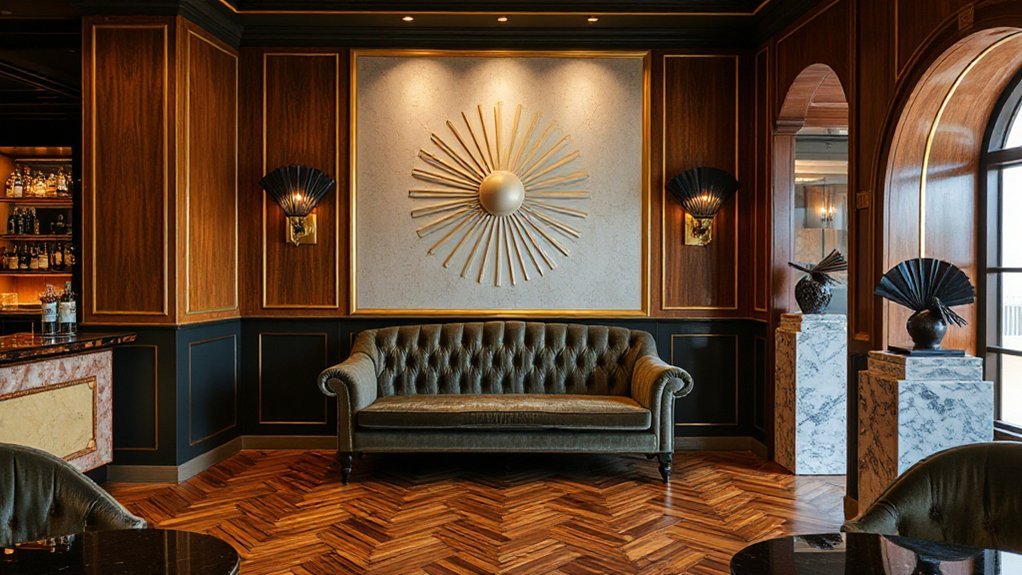
As 2026 buyers chase Deco glamour without the costume feel, you’ll see designers leaning hard on geometry that reads crisp, architectural, and scalable across interiors, fashion, and branding. Strong chevrons, stepped ziggurats, and sunburst rays are back because they translate cleanly into tiles, pleats, embossing, and UI patterns. You’ll also notice streamlined arches and fan shapes replacing fussy flourishes, giving a Vintage revival vibe with less nostalgia baggage.
Motifs skew symbolic and engineered: stylized speed lines, winged emblems, and bevel-cut facets that mimic machine-age precision. In product packaging and signage, stacked type blocks, corner insets, and repeating border frames deliver instant Deco recognition. The winning play is Modern reinterpretation—use fewer elements, scale them bigger, and let negative space do the work.
Which Art Deco Colors Are Back for 2026?
If you want Art Deco color in 2026 without tipping into theme-party territory, you’ll see palettes shifting toward “polished restraint”: high-contrast neutrals (onyx black, warm ivory, champagne) anchored by metallics (brushed brass, pale gold, gunmetal) and punched up with saturated jewel tones like emerald, sapphire, and oxblood. The Vintage revival feels cleaner and more editorial, guided by Cultural influence from global hotel bars, fashion runways, and reissued 1930s prints. You’ll get the Deco mood by balancing depth with light and keeping finishes consistent. Try these on-trend moves:
- Pair onyx + ivory, then add one jewel accent.
- Swap bright chrome for brushed brass or gunmetal.
- Use oxblood or sapphire in small, high-impact zones.
- Echo champagne tones across lighting, trim, and hardware.
Which Art Deco Materials Work Sustainably Now?
Although Art Deco once leaned on exotic hardwoods, virgin marble, and high-shine chrome, you can get the same luxe geometry in 2026 by choosing lower-impact, spec-friendly materials that still read “tailored.” Start with FSC-certified oak or fast-growing bamboo in tight-grain stains, then add inlays using recycled aluminum or brass for that crisp linework. Swap quarried stone for terrazzo or engineered slabs made with recycled materials, so you keep the veining and contrast without the footprint. For metal shine, specify PVD-coated stainless or powder-coated steel in champagne, ink, or gunmetal tones—durable, repairable, and less fussy than plating. Finish with low-VOC lacquers and eco friendly finishes that hit the gloss level Deco demands, but pass today’s indoor-air expectations.
Where Is Art Deco Showing Up Most in 2026?

Because designers want rooms that photograph cleanly and feel “finished,” Art Deco shows up most in 2026 where high-impact geometry can anchor a space fast: boutique hospitality lobbies and bars, upscale multifamily amenity floors, and kitchen-and-bath refreshes that trade farmhouse softness for crisp symmetry. You’ll also spot it wherever brands need instant recognition and premium cues without a full remodel. Watch these hotspots:
- Hotel check-in zones using fluted counters and stepped signage for quick wow.
- Cocktail bars pairing brass rails with jewel-tone upholstery for shareable backdrops.
- New-build condo lounges where mirror, marble-look porcelain, and linear lighting sell “luxury.”
- Retail capsules syncing Art deco fashion drops with Deco inspired artwork to boost dwell time and conversions.
How Do Art Deco Interiors Look Different in 2026?
While classic Art Deco leaned heavily on high-gloss glamour and strict symmetry, 2026 interiors remix the look into something cleaner, lighter, and more livable: think Deco geometry simplified into bold outlines, warmer metals in softer sheens, and luxe surfaces that read premium on camera without feeling like a period set. You’ll see satin brass, brushed chrome, and smoked glass paired with calm, matte walls so highlights pop. Instead of full-room theming, you layer focal moves: a scalloped mirror, a fluted credenza, or Vintage furniture reupholstered in performance velvet. Geometric patterns shift from busy repeats to oversized arches, sunbursts, and inlaid lines that guide sightlines. Lighting goes sculptural but efficient, with ribbed shades and dimmable LEDs. You keep it Deco—just edited.
What Architecture Trends Signal Deco’s Return?
As developers and homeowners chase “statement minimalism” in 2026, you’ll spot Art Deco’s return in architecture that pairs clean massing with bold, graphic moves: stepped setbacks on new mid-rises, rounded corner volumes, and strong vertical fins that read like modernized pilasters. You’ll also notice a shift in specs and approvals: cities reward contextual density, and clients pay for tactile identity over blank glass. Watch for:
- Fluted metal or precast surrounds that frame entries like marquees, without excess ornament.
- Two-tone stone, terrazzo, or brick banding that boosts legibility at street speed.
- Art restoration of lobby mosaics and facades to lift asset value and heritage credits.
- Cultural symbolism in sunbursts, chevrons, and zigzags translated into screens and railings.
How Is Art Deco Influencing Fashion and Jewelry?
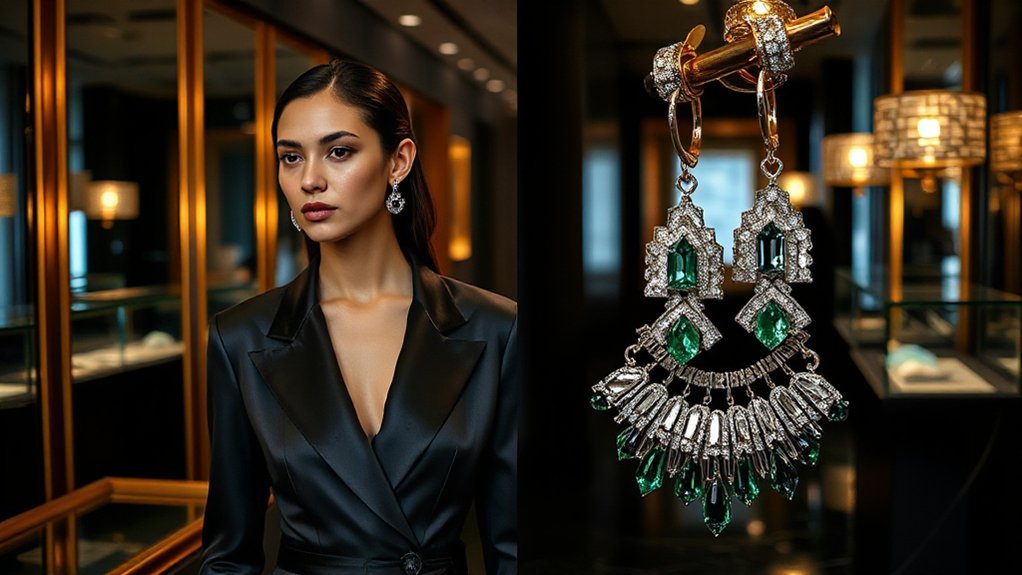
Two runways and a jewelry case tell the same 2026 story: Art Deco’s back, and it’s selling a sharper kind of glamour. You’ll spot it in column dresses, tuxedo tailoring, and bias-cut satin that moves like liquid chrome. Designers lean on graphic contrast—black, ivory, jewel tones—then lock it in with hard-edged shoulders, geometric cutouts, and symmetrical beading.
In jewelry, you’re buying architecture for your body: step-set baguettes, fan motifs, onyx and emerald pairings, and platinum-toned settings that read clean on camera. A vintage revival is driving resale and reissues, but you’re also getting modern comfort—lighter chains, modular drops, and stackable signets. Luxury branding pushes Deco cues through limited runs and provenance-forward storytelling, not costume excess.
How Is Art Deco Shaping Branding and Packaging?
Where do you see Art Deco first in 2026 branding—before you even touch the product? You spot it in the shelf-blocking geometry, metallic foils, and high-contrast typography that reads “premium” at a glance. Brands are using Deco to signal heritage and modernity at once, pairing Artistic innovation with Cultural preservation in a single visual system. You’ll notice tighter grids, stepped motifs, and symmetrical layouts that photograph cleanly for ecommerce and unboxing.
- Bold wordmarks with condensed caps and sharp terminals
- Foil stamping and lacquered blacks for light-catching depth
- Chevron, sunburst, and fan patterns as repeatable brand assets
- Structured cartons and labels that feel architectural, not flimsy
How Do You Use Art Deco Without Going Kitsch?
How do you tap Art Deco’s glamour in 2026 without sliding into costume? You start by editing: choose one hero gesture, not a full-theme room. Anchor your color palette in modern neutrals—ink, sand, stone—then add a single high-gloss accent like brass, lacquer black, or emerald. Keep materials authentic and tactile so it reads premium, not party prop: veined marble, ribbed glass, mohair, or brushed metal.
Next, scale matters. Go for oversized geometry in one place—an arch mirror, stepped headboard, or fluted pendant—while the rest stays quiet. Use decorative motifs sparingly: a fan pattern on cushions, a chevron inlay on a side table, not everywhere. Finish with clean negative space and warm lighting.
Frequently Asked Questions
How Do I Authenticate Original Art Deco Pieces Before Buying?
You authenticate original Art Deco pieces by checking maker’s marks, materials, and period construction, then requesting provenance. Use Art authentication experts for documentation and a vintage appraisal for market comps, restorations, and red-flag repairs.
What Are the Best Art Deco Travel Destinations for 2026?
Chase Deco like a neon compass: Miami, Paris, Mumbai, and Napier top 2026. You’ll book luxury accommodations in restored icons, hunt vintage fashion markets, and time visits with design weeks and coastal soirées for maximum buzz.
How Does Art Deco Affect Home Resale Value in 2026 Markets?
You’ll often boost value when you apply Art deco influence thoughtfully; in 2026’s resale market, buyers pay premiums for restored originals, quality fixtures, and cohesive styling, but you’ll lose leverage if updates feel kitschy or impractical.
Which Art Deco Designs Are in the Public Domain for Commercial Use?
You can commercially use Art Deco designs published before 1929 in the U.S., like 1920s posters, patterns, and motifs; verify rights per country. For Art deco fashion, Art deco jewelry, recreate vintage, not logos.
What Insurance Coverage Do Collectors Need for Art Deco Antiques?
If your Art deco fashion brooch vanishes at a fair, you’ll need scheduled collectibles insurance: agreed value, worldwide transit, theft, accidental damage, and restoration. Add Art deco architecture display coverage, plus appraisal updates and climate-related damage protection.
Conclusion
You’re seeing Art Deco everywhere in 2026, and it’s not a coincidence: the same clean geometry shaping new façades is also showing up on runways, in jewelry cases, and across premium packaging. When arches, sunbursts, stepped forms, and high-contrast metallics align across architecture, fashion, and branding at once, you’re watching a real revival, not a fling. Use it with restraint—one bold motif, rich materials, sharp lines—so it reads modern, not kitsch.