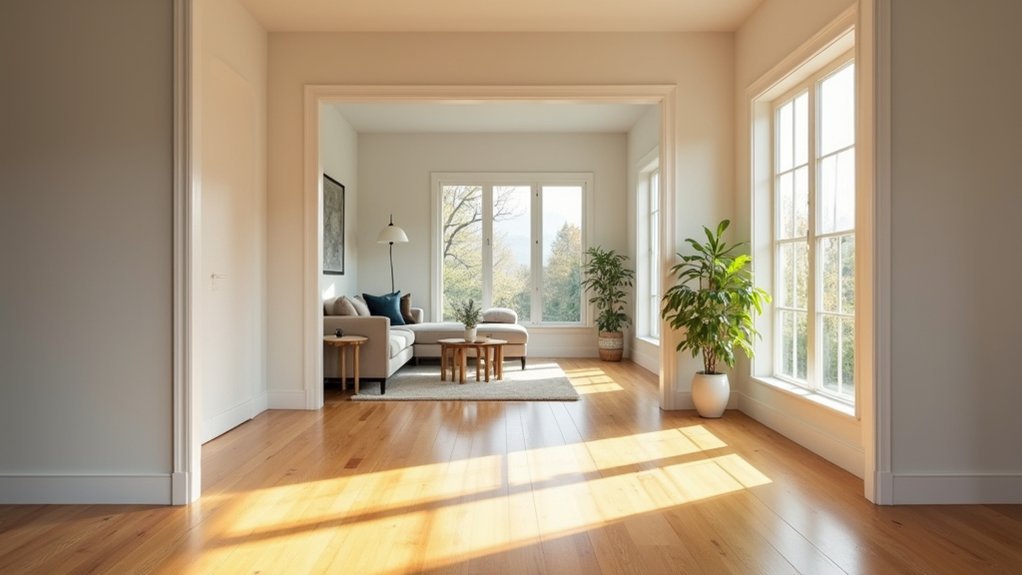
You instantly trust a home when the flooring looks intentional, honest, and professionally installed. You notice straight plank runs, tight seams or grout lines, flush connections, and an even matte sheen that signals real craftsmanship, not a quick cover-up. Calm, cohesive color and controlled variation reduce visual noise and make the space feel clean and cared for. When you spot gaps, stains, chips, or squeaks, you assume bigger maintenance issues. Next, you’ll see which materials and finishes earn trust fastest.
Key Takeaways
- Clean, bright, well-maintained floors signal good upkeep and instantly raise confidence in the home’s overall condition.
- Straight runs, tight seams or grout, and flush transitions suggest professional installation and careful planning.
- Matte or honed finishes with consistent sheen look intentional, hiding quick cover-ups and implying durable, properly finished surfaces.
- Natural, believable grain and controlled variation feel authentic, signaling quality materials rather than cheap, repetitive printed patterns.
- Calm, timeless choices like wider planks and neutral undertones reduce visual noise, suggesting long-term care over fleeting trends.
What Makes Flooring Feel Trustworthy?
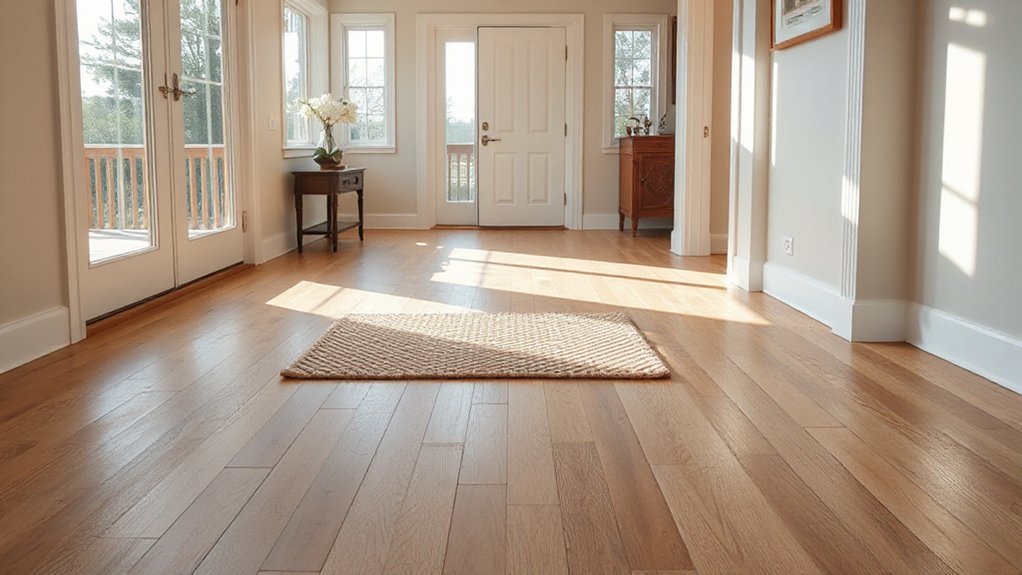
Even if you can’t name it, you trust certain floors because they signal quality and honesty at a glance. You read flooring as evidence: the surface looks intentional, the joints align cleanly, and the finish reflects light evenly instead of hiding flaws. When flooring textures feel consistent underfoot—no hollow spots, no sharp changeover—you sense competent installation and stable subfloors.
You also trust what lasts. Material durability shows up in tight grain, dense wear layers, and finishes that resist scuffs without looking plasticky. Natural variation appears controlled, not chaotic; patterns repeat less, edges stay crisp, and thresholds look engineered, not improvised. The floor supports the room’s proportions and palette, so nothing feels “covered up.” That coherence tells you the home was cared for, not staged.
The 5 Floor Cues People Notice First
Trust forms fast because your eye scans the floor for a handful of telltale signals before you register the paint color or furniture. First, you clock proportion: wide planks or large-format tile read confident, while fussy small units can feel dated. Second, you notice flooring textures—matte, wire-brushed, or honed surfaces signal intention and restraint. Third, you read alignment: straight runs, consistent reveals, and tight grout lines suggest care. Fourth, you spot progressions: slim, flush thresholds and clean stair nosings look professionally planned, not patched. Fifth, you sense material honesty: real wood grain variation, natural stone movement, or high-quality LVP embossing that matches the print earns immediate credibility. Together, these cues telegraph thoughtful installation techniques without you thinking about them.
What Makes a Floor Look Clean Right Away?
Because your brain reads “clean” as uniform and intentional, a floor looks spotless fastest when it keeps visual noise low: consistent sheen (usually matte or satin), a tight color range that doesn’t spotlight every speck, and grout or seams that blend instead of contrast. You’ll read large-format planks or tiles as cleaner because fewer joints mean fewer dark lines to track. Choose a mid-tone with subtle patterning; it masks dust without looking busy. Prioritize stain resistance so spills don’t telegraph yesterday’s life, and pick textures that add slip resistance without trapping grime. Keep progressions crisp: aligned thresholds, straight baseboard lines, and tight cuts at vents. When your floor reflects light evenly and edges look precise, the whole room feels freshly cared for.
Why Worn Floors Suggest Bigger Hidden Problems
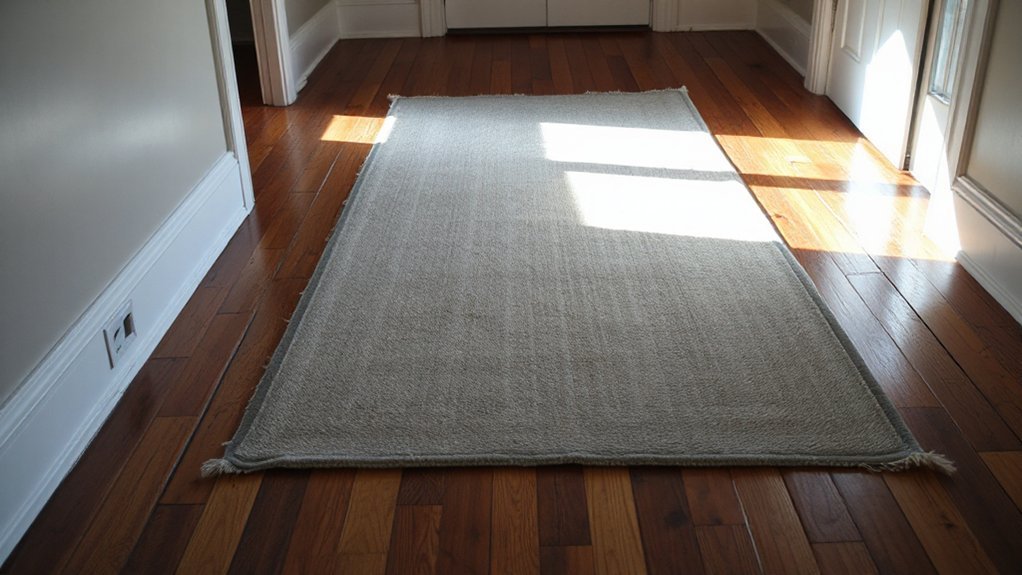
When a floor looks worn—scuffed finish, dulled traffic lanes, chipped edges, or gapped seams—you don’t just see age; you start scanning for what else the home owner deferred. Worn flooring reads like a maintenance ledger: if the surface didn’t get refinished, were gutters cleaned, HVAC serviced, and leaks addressed? A persistent floor stain can hint at pet urine, past plumbing failures, or moisture wicking up from a subfloor—issues you can’t solve with a rug. Listen for a floor squeak, too; it often signals loose fasteners, subfloor delamination, or uneven joists, and it can mean movement elsewhere in the structure. In design terms, distress without intention feels like neglect, so you mentally budget repairs before you even tour the closets.
How Floor Color Changes First Impressions
When you step into a home, the floor color sets the tone before you notice a single fixture. Choose light floors and you signal cleanliness and openness, because they bounce light and make dust and clutter feel less dominant. Go dark and you convey luxury and intention, with rich contrast that reads upscale and anchors the room’s finishes.
Light Floors Signal Cleanliness
Even before you notice the furniture, light-toned flooring quietly tells your brain the home is clean, cared for, and easy to maintain. That’s color psychology at work: pale oak, ash, maple, or limestone reads as airy and hygienic, so you assume routines are consistent and surfaces get attention. You also see dust, crumbs, and scuffs sooner, which signals transparency rather than concealment—and that builds trust.
You’ll read light floors as “fresh” when the finish is matte or satin, not glossy, and when grain and knots stay visible as natural textures. Pair them with crisp baseboards and warm-white walls, and the whole room looks brighter, larger, and more orderly. Add soft, even lighting to keep the tone true.
Dark Floors Convey Luxury
Although they show dust faster than pale planks, dark floors—espresso walnut, ebonized oak, deep-stained herringbone—telegraph luxury the moment you step in. You read them as deliberate, not default: a choice that frames the room like a tailored suit. Dark tones deepen contrast, making white trim crisper, brass warmer, and art more gallery-like. Underfoot, you expect luxury textures—silky wool rugs, leather seating, velvet drapery—because the floor already signals depth and richness. You’ll trust the craftsmanship when you see tight grain, consistent stain saturation, and clean bevels at each board edge. Pair them with sophisticated finishes—matte sealants, low-sheen oils, or wire-brushed character—and the space feels composed, quiet, and expensive without shouting.
Does Floor Shine Signal Care or a Quick Cover-Up?
Because a glossy floor catches light like a mirror, you instinctively read it as proof someone’s been meticulous—but that shine can also come from a fast topcoat meant to distract. You judge floor shine by how it behaves under real use, not just staging lights. A cared-for finish looks even, not plasticky, and it won’t pool at edges or exaggerate every swirl mark. If you suspect a quick cover up, look for shortcuts that reveal themselves at eye level and under side lighting.
- Check reflections: crisp, consistent highlights suggest proper leveling and curing.
- Scan for texture: grit, orange peel, or tackiness signals rushed application.
- Smell the room: strong solvent odor often means freshly masked wear.
Which Flooring Transitions Instantly Look Sloppy?
When you cross from one room to the next, a sloppy shift announces itself faster than the flooring ever could. You notice height mismatches that catch your toe, reducers that look like afterthoughts, and metal strips that glare under light. The worst offenders are gaps at doorways, wavy cuts around jambs, and seams that don’t align with the sightline of the hall. If the flooring material changes, the joint should feel intentional, not patched—flush where possible, capped only when needed, and color-matched without looking “close enough.” You can also spot rushed flooring installation when planks stop short of the trim, caulk blobs hide sins, or the threshold squeaks. Clean edges and consistent reveals earn instant trust.
Which Floor Patterns and Trends Date a Home Fast?
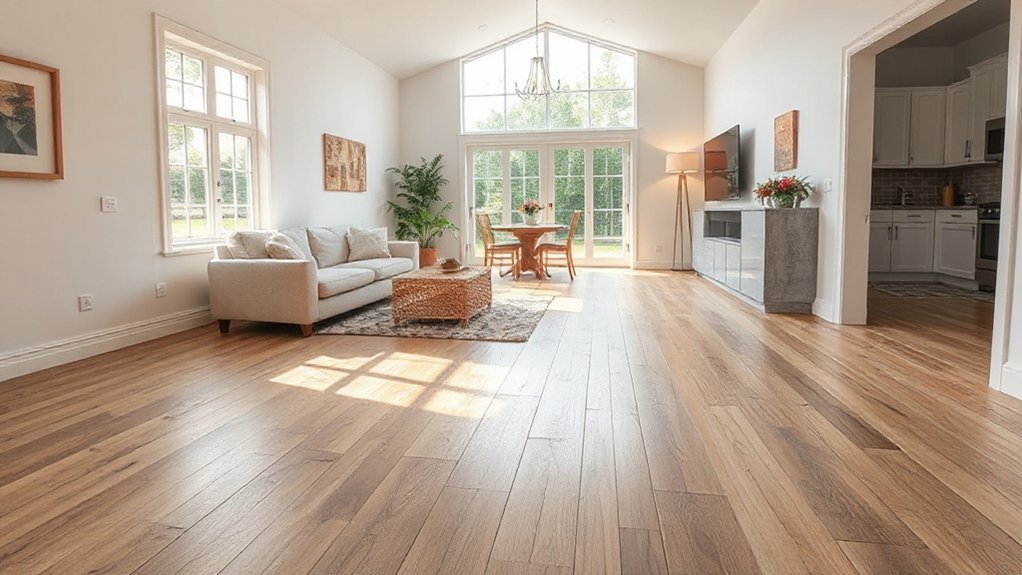
You can spot a fast-dating floor the moment the pattern starts performing louder than the room. Overly trendy tile motifs—busy encaustic prints, high-contrast geometrics, TikTok-famous repeats—lock your home to a specific year and make everything else feel temporary. Outdated wood-plank looks do the same when the color skews gray-wash, the grain is overly printed, or the planks run too narrow and uniform, signaling “builder-grade trend” instead of timeless material.
Overly Trendy Tile Motifs
Even if the materials are high-end, overly trendy tile motifs can timestamp a home faster than almost any other finish. When you walk in and see trendy tile with bold patterns dominating the sightlines, you read it as a specific era, not a timeless baseline. You’ll feel the room fighting your furniture, your art, and even your lighting plan.
- Maximalist encaustic-look carpets: oversized medallions or patchwork fields pull focus from everything else.
- Hyper-graphic geometrics: high-contrast chevrons, cubes, and zigzags create visual noise at scale.
- Novelty mosaics: slogans, icons, or micro-pattern repeats look clever once, then quickly feel dated.
If you want longevity, keep floors quieter and put personality on paint, textiles, and removable décor instead.
Outdated Wood Plank Looks
Trendy tile isn’t the only thing that can lock a house into a specific year—outdated wood plank looks do it just as fast. You’ll spot it in high-gloss, orange-toned “golden oak,” gray-washed boards that read like 2010s flip culture, and ultra-narrow strips that feel busy. Heavy hand-scraping, deep bevels, and repetitive printed grain scream laminate-era shortcuts, even when the product isn’t cheap.
To keep trust high, you should choose calmer visuals: wider planks with subtle variation, matte finishes, and neutral undertones that don’t fight your walls. If you love Vintage patterns, use them intentionally in inlays or borders, not wall-to-wall. Prioritize Eco friendly materials—FSC oak, reclaimed wood, or low-VOC engineered boards—to signal quality and care.
What Your Floors Suggest About Pets and Kids
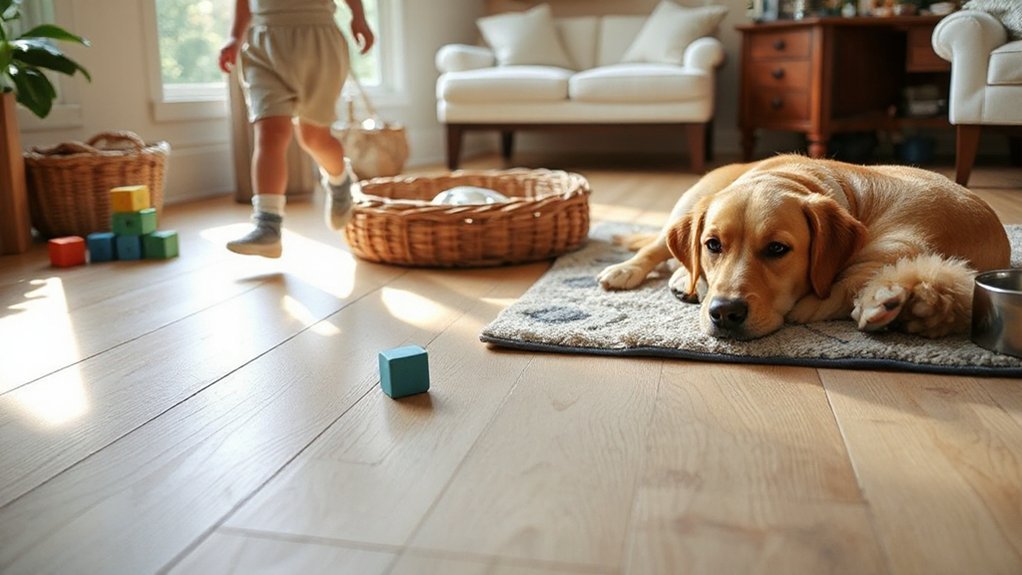
Although a floor can’t confirm who lives in a home, it signals whether the space welcomes pets and kids—or merely tolerates them. You telegraph confidence when you choose finishes that look intentional under stress: scuffs, spills, zoomies, and toy traffic. Surfaces that mask wear without looking busy read as considered, not compromised, and they quietly imply you’ve planned for real life.
- Matte, textured finishes suggest grip and reduced slip risk—an instant cue for kid safe flooring.
- Tight seams and nonporous top layers imply easy wipe-downs, fewer odors, and smarter pet friendly materials.
- Warm, resilient underfoot performance signals comfort for crawling knees, dropped cups, and long play sessions.
If your floor holds up without constant babysitting, buyers assume the rest of the home will, too.
Hardwood Floors: The Trust Signals Buyers Expect
When you walk into a home with real hardwood, you read it as a classic quality cue—solid materials, proper installation, and a finish that’s meant to age well. You notice tight seams, consistent stain tone, and clean progressions at thresholds, and it quietly signals the place has been maintained with standards. You also trust the resale story because hardwood stays in style, photographs well, and buyers keep paying for it year after year.
Classic Quality Cue
Even if you can’t name the species, hardwood floors broadcast “well-built” the moment you step inside. You read the tight grain, crisp seams, and solid underfoot feel as proof the home’s been cared for. Matte finishes telegraph restraint, while a warm stain delivers Vintage charm without looking fussy. When boards run straight and smooth sit flush, you assume the same precision exists behind the walls.
- Consistent plank widths signal intentional sourcing, not leftover bundles.
- Clean thresholds and vents show trades were coordinated, not rushed.
- Low-VOC finishes and reclaimed stock offer Eco friendly options that still look premium.
You’ll also trust quiet floors: minimal squeaks, no hollow bounce, and no obvious patchwork. That calm read makes everything else feel credible, instantly.
Timeless Resale Confidence
Because buyers have seen enough “updated” homes that age poorly, hardwood reads as a safe, bankable choice the instant they walk in. You signal permanence: real planks, tight seams, and a consistent sheen that photographs cleanly and feels substantial underfoot. When you choose a classic width and a balanced stain, you avoid trend fatigue and widen your buyer pool.
You also communicate smart stewardship. Refinishable surfaces imply you’ve maintained the home, not masked problems. Pair hardwood with luxury finishes—matte hardware, tailored trim, quiet-close doors—and the whole interior lands as intentionally upgraded. Specify eco friendly materials like FSC-certified oak or reclaimed boards, and you add credibility without shouting. Even skeptics relax, because they can project their style onto a proven, resale-ready foundation.
Laminate Floors: When They Still Feel High-End
Although laminate still carries an outdated “budget” label in some circles, the right installation and finish can read surprisingly high-end at first glance. You earn instant trust when the planks run long, seams stay tight, and the bevel looks crisp—not cartoonish. Choose a matte, low-sheen surface that mimics oiled hardwood, and you’ll avoid the telltale plastic glare.
- Thickness and core: Pick 10–12mm boards with a dense core; they feel solid underfoot and resist hollow tapping.
- Edge, grain, and color: Go for micro-bevels, registered embossing, and calm, mid-tone stains that don’t scream “printed.”
- Smart underlayment: Pair Eco friendly options with Acoustic benefits, so rooms sound quieter and more intentional.
Tile Floors: Why They Read Clean and Permanent
Laminate can imitate luxury, but tile signals the real thing the moment you step in. You read it as clean because grout lines define order, and the hard surface doesn’t hide wear. Even before you touch anything, tile implies easy upkeep, moisture resistance, and a deliberate investment in the structure, not just the styling.
You also trust tile because it feels permanent. Porcelain and stone hold their color, stay flat, and telegraph durability underfoot. Choose larger formats to reduce grout and sharpen sightlines; pick matte or satin for a refined, slip-smart finish. Today’s eco friendly materials, including recycled-content porcelain, add credibility without shouting. And textured finishes deliver grip and depth while still looking tailored. When you see well-set tile, you assume the whole home was built with intent.
Carpet: When It Feels Cozy vs. Questionable
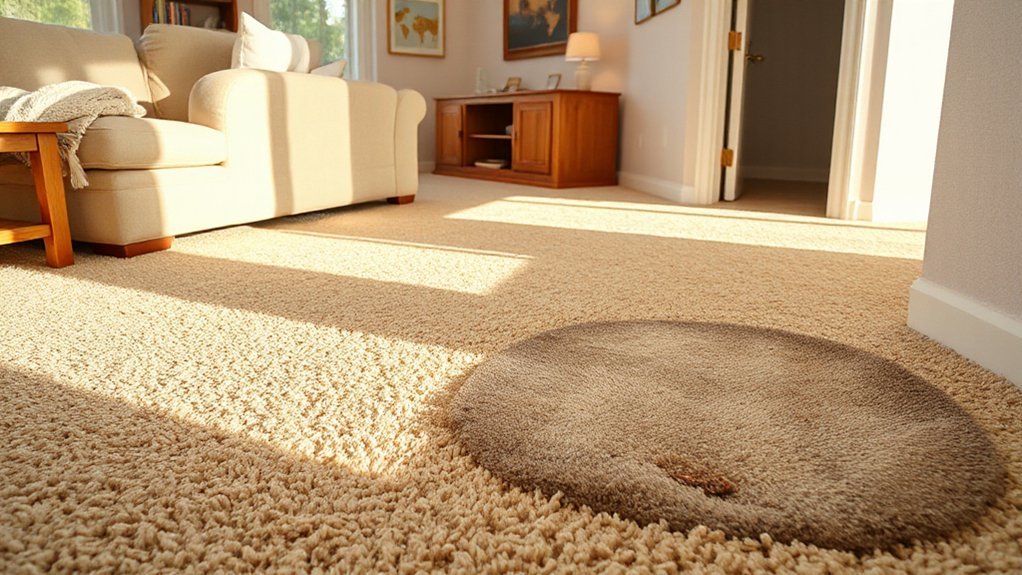
When carpet looks intentional, you trust the room faster—your eye reads warmth, sound control, and a choice made for comfort, not just cost. You relax when the pile feels even underfoot, the color sits quietly in the palette, and edges tuck cleanly to baseboards without ripples or gaps. Carpet earns confidence when it supports the design, not when it tries to hide wear. You sense doubt fast when stains ghost through, fibers shed, or seams telegraph.
- Cozy textures: dense cut pile or low-loop wool, matte and consistent.
- Crisp installation: tight stretches, aligned patterns, clean progressions at doors.
- Red flags: sour odor, sticky backing, matted paths—signals of questionable materials and neglect.
Flooring Upgrades That Build Trust the Fastest
If you want instant buyer-level confidence, start with the upgrades that signal clean installation, durable materials, and deliberate design choices. Replace worn carpet with wide-plank engineered hardwood or premium LVP in a matte finish; both read current, photograph well, and telegraph flooring durability. Specify tight seams, consistent stagger, and baseboards re-cut to sit flush—sloppy transitions kill trust fast. In kitchens and entries, upgrade to large-format porcelain with minimal grout lines; it looks hygienic and resists staining. Add proper underlayment for quiet footsteps and a solid feel underfoot. Choose low-VOC adhesives and FSC-certified wood or recycled-content tile to underline material sustainability. Finish with crisp metal or wood thresholds that align cleanly across rooms. Buyers notice immediately.
Frequently Asked Questions
How Does Flooring Affect Appraisal Value Compared to Cosmetic Upgrades?
Flooring often boosts appraisal value more than cosmetic upgrades because appraisers credit durable, consistent materials and condition. You’ll see luxury upgrades like hardwood outperform paint, while curb appeal helps, yet interior flooring influences comps and buyer perception.
What Flooring Choices Reduce Allergens for Sensitive Buyers?
Choose hard, non-porous floors—tile, sealed hardwood, LVP, or polished concrete—you’ll trap less dust, dander, and mold. But here’s the clincher: prioritize allergy friendly surfaces and hypoallergenic flooring, skip wall-to-wall carpet entirely.
How Long Do Common Flooring Types Typically Last Before Replacement?
You can expect carpet 5–15 years, laminate 10–25, vinyl 10–20, engineered wood 20–40, solid hardwood 50+ (refinishable), and tile/stone 50+. Floor durability depends on wear layers, moisture, and material longevity.
Which Floors Are Best for Radiant Heating Systems?
You’ll get the best radiant-heat performance from tile, stone, or engineered wood, since they conduct and stay stable. Luxury vinyl works if it’s rated. Bamboo flooring can work, but choose engineered planks.
What Flooring Materials Offer the Best Soundproofing Between Rooms?
You’ll get the best between-room soundproofing with carpet over thick pad, cork, or rubber flooring; pair them with underlayment Soundproofing options and added Acoustic insulation. You’ll cut impact noise and dampen airborne chatter.
Conclusion
You trust a home faster when the floor signals care, permanence, and cleanliness. I once watched a buyer step onto matte oak LVP, pause, and say, “This place feels maintained,” before seeing the kitchen. That’s the flooring doing quiet persuasion. In one NAR survey, 54% of buyers will pay more for hardwood floors—because they read as durable, cleanable, and intentional. Choose consistent tones, seamless connections, and low-gloss finishes, and you’ll earn instant credibility.