
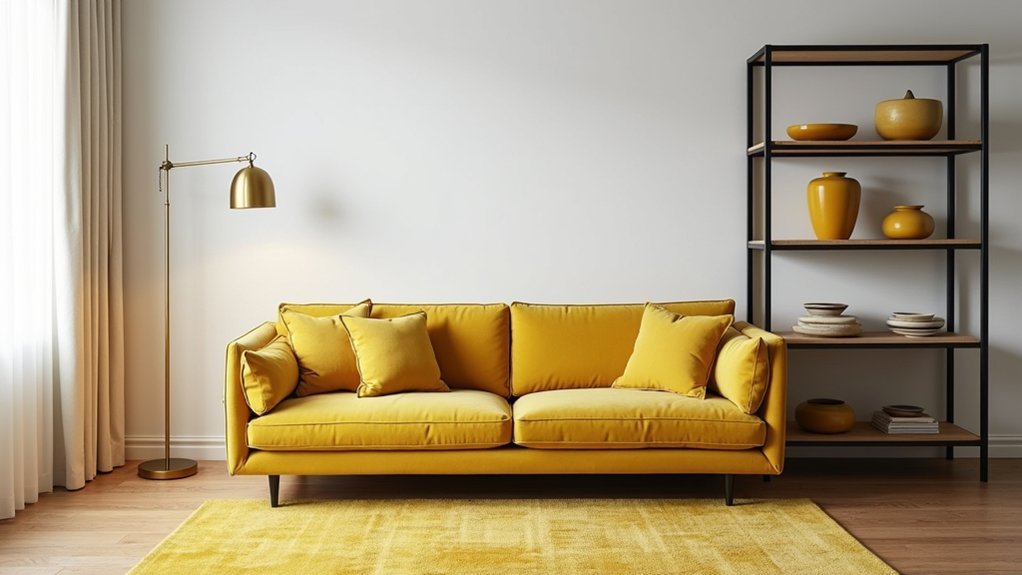
You’ll get yellow right by testing undertones in your room’s light (morning, evening, LED, incandescent) with large swatches on multiple walls so it doesn’t skew orange or sickly. Keep it controlled: paint a bookcase back, niche, or door interior, or add citron pillows, a rug, or curtains on a neutral base of white, gray, or beige. Sharpen it with black accents, warm it with wood or brass, and layer dimmable lighting—next up, smarter pairings and common mistakes to avoid.
Key Takeaways
- Test several yellow paint samples on multiple walls, checking undertones across daylight and evening lighting before committing.
- Use yellow strategically as an accent on niches, bookcase backs, doors, or small zones to avoid overwhelming the room.
- Introduce yellow through textiles and decor—pillows, rugs, curtains, throws, lampshades, and art—for low-commitment, flexible updates.
- Balance yellow with neutrals like white, gray, or beige, and add contrast using navy, charcoal, or black details.
- Choose matte or eggshell finishes, layer warm lighting with dimmers, and add natural textures like linen, jute, and oak for depth.
Yellow Interior Design: Pick Undertones and Light
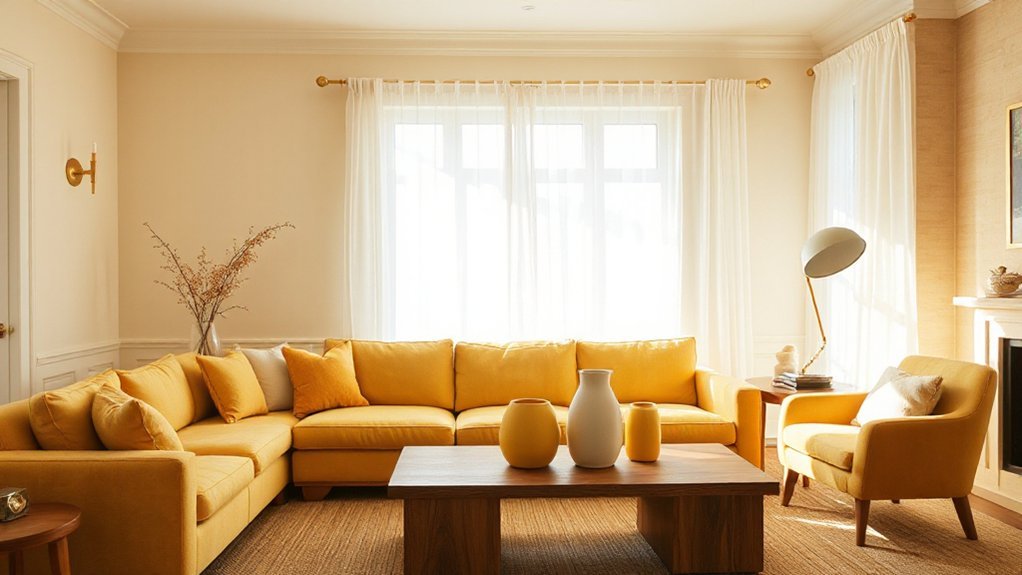
Before you commit to yellow, lock in its undertone and check how your room’s light will shift it throughout the day. North-facing rooms cool colors, so a golden or honey yellow won’t read sickly. South-facing light warms everything, so a lemon or buttery yellow can stay crisp instead of turning orange. Under LEDs, watch for green casts; under incandescent, expect extra warmth.
Use large paint swatches, view them morning-to-night, and compare against your fixed finishes—floors, stone, and upholstery. Color psychology matters: cleaner yellows feel energizing, while ochre and mustard feel grounded and heritage-forward. Match the undertone to adjacent neutrals for interior harmony—warm yellows with creamy whites and taupes, cool yellows with soft grays and blue-leaning whites.
Use Yellow Paint in Small, Controlled Areas
If you’re nervous about committing to yellow, use it like an accent paint and keep the application tight. Choose a single surface: the back of a bookcase, a recessed niche, the inside of a front door, or a narrow band on a built-in. This gives you the lift of yellow without turning the whole room into a statement.
Let Color psychology guide your placement: put yellow where you want energy and focus, like an entry, breakfast nook, or home office wall behind open shelving. Nail the paint application with clean edges, painter’s tape, and a matte or eggshell finish for modern softness. Test swatches at different times of day, then commit only after you’ve seen the undertone settle.
Add Yellow With Pillows, Rugs, and Curtains
When you want to try yellow without touching a paint can, bring it in through textiles—pillows, rugs, and curtains give you instant impact with zero commitment. Start with two to three pillows in varied textures, then repeat the shade in a small rug or a curtain band so the color feels intentional, not random. Choose warm marigold for cozy rooms, or lemon for a crisp, modern look.
Use Bold color combinations to keep yellow sophisticated: pair it with charcoal, navy, forest green, or dusty pink, and ground the mix with natural wood or black metal. Follow Seasonal decorating tips by shifting fabric weights—linen curtains and cotton pillows for spring, velvet pillows and a wool rug for fall—while keeping your yellow hue consistent year-round.
Try Low-Commitment Yellow Accents and Decor
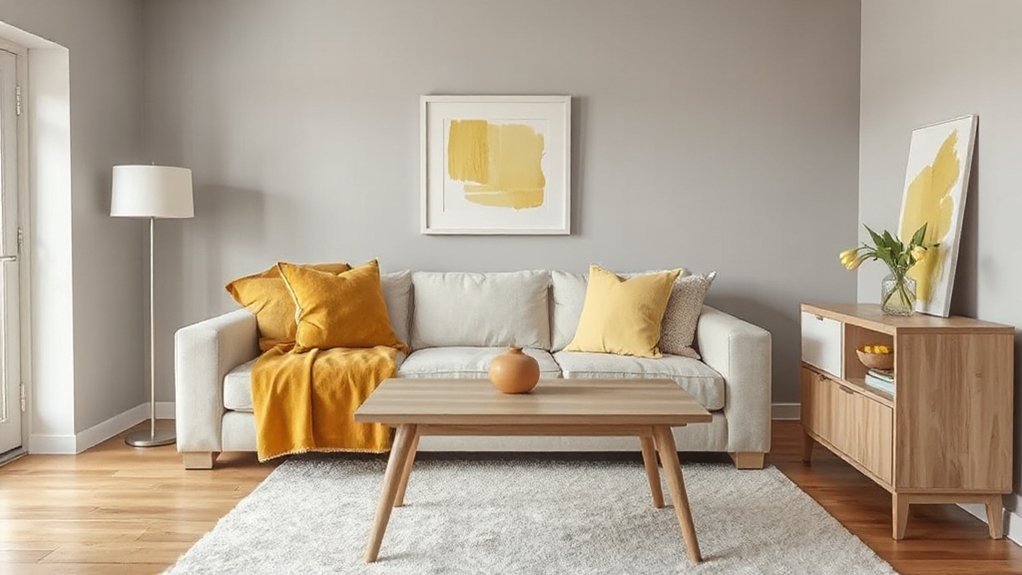
Keep it flexible by swapping in yellow textiles like throws, kitchen towels, or a duvet cover to refresh the room fast. Then layer in removable yellow accessories—vases, lamp shades, peel-and-stick decals, or artwork—so you can edit the look as trends shift. You’ll get that sunny hit of color without repainting or committing to big-ticket pieces.
Swap In Yellow Textiles
Because textiles instantly change a room’s mood without a major makeover, swapping in yellow fabrics is one of the easiest, lowest-commitment ways to test the color. Start with cushion covers, a throw, or new drapery panels so you can scale the dose up or down fast.
Choose the right Textile texture for the vibe: linen and cotton keep yellow airy, velvet makes it luxe, and bouclé reads modern. Balance saturation by pairing butter, marigold, or ochre with your existing neutrals and woods. Use Fabric patterns strategically—thin stripes and small checks feel tailored, while oversized florals or geometric prints deliver a bold, trend-forward hit. Anchor busy prints with one solid yellow piece, or do the reverse for a calmer look. Keep placement consistent across the room for cohesion.
Add Removable Yellow Accessories
If you want to try yellow without repainting or reupholstering, swap in removable accessories that you can move, store, or replace in minutes. Start with a glazed ceramic vase, a sculptural lamp, or a set of picture frames in warm ochre; they read intentional, not loud. Add one high-impact piece per zone, then repeat the tone once to create cohesion. For Seasonal color schemes, rotate citrus yellows in spring and buttery marigolds in fall, pairing them with your existing neutrals. Use small, portable items—candles, trays, throw pillows, or art prints—so edits stay easy. Consider Cultural symbolism, too: yellow can signal joy, prosperity, or caution, so choose shades that fit your home’s mood. Keep finishes matte for modern rooms, glossy for glam.
Calm Yellow Down With Neutrals (White, Gray, Beige)
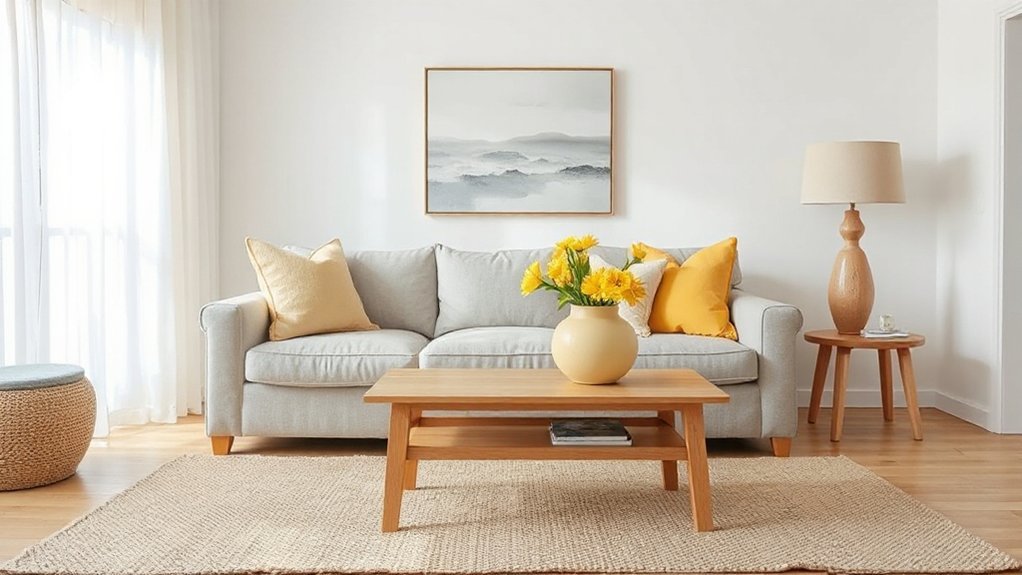
When yellow starts to feel loud, you can steady it with crisp white to keep the look clean and current. Layer in soft gray to mute the brightness and give the space a more tailored, modern edge. Add beige for warmth, and you’ll get yellow that reads inviting instead of overpowering.
Balance Yellow With White
How do you keep yellow from overpowering a room? You balance it with crisp white. Treat white walls, trim, and ceilings as your reset button; they give yellow a clean backdrop and sharpen its cheer without turning loud. Limit yellow to one to three focal elements—an accent chair, art, or a backsplash—then repeat it in small doses for control. For modern complementary color schemes, pair buttery yellow with bright white and a tiny hit of navy or black in hardware for contrast. Use lighting enhancements to keep the tone true: warm LEDs (2700–3000K) make yellow feel sunny, while daylight bulbs can push it acidic. Choose matte whites for softness, or high-gloss for a tailored, contemporary finish.
Soften Yellow With Gray Beige
Because yellow carries so much visual energy, you can calm it instantly by layering in gray-beige (greige) and other neutrals like soft white, warm gray, and sandy beige. Use greige on walls or large upholstery, then add yellow through pillows, art, or a single accent chair. This approach respects Yellow psychology: you still get optimism and warmth, but you avoid overstimulation. Keep your Color contrast controlled by choosing muted, slightly dusty yellows (ochre, butter, straw) instead of neon tones. Anchor the scheme with black or charcoal in small doses—hardware, frames, or a lamp base—to sharpen edges without turning the room stark. Finish with natural textures like linen, oak, and woven rugs to keep the palette modern and livable every day.
Pair Yellow With Blue, Green, and Other Accents
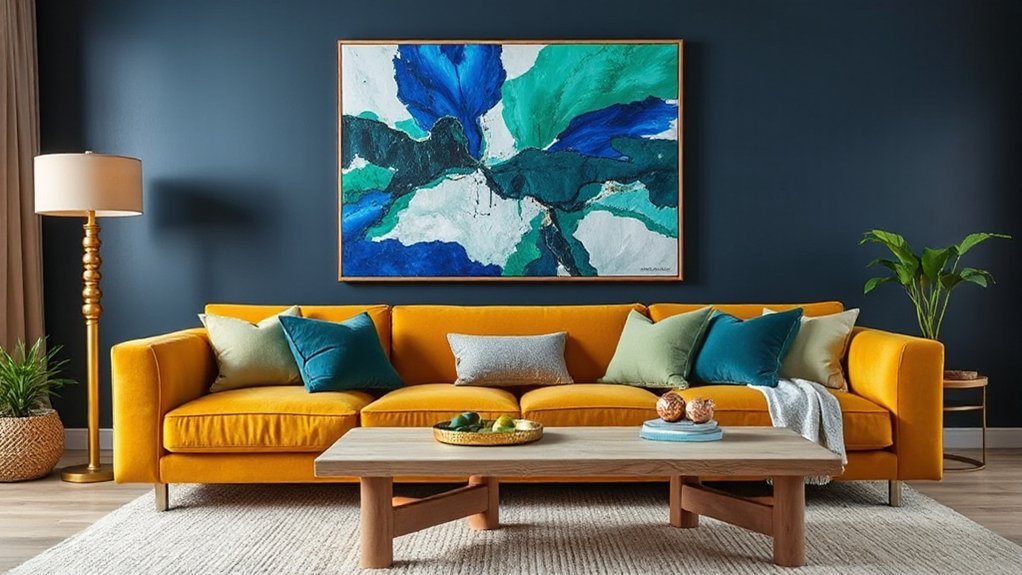
Although yellow can steal the spotlight, it looks most intentional when you anchor it with cooler accents like blue and green. Try navy or denim to steady a sunny sofa, then layer sage, olive, or eucalyptus in pillows, art, or ceramics to keep the palette fresh and modern. Lean on complementary color schemes by pairing yellow with crisp cobalt in small doses—think a throw, lampshade, or framed print—so the contrast feels designed, not loud. Pattern mixing helps, too: combine a yellow stripe with a blue geometric and a green botanical, and repeat one color in each pattern to unify the look. Finish with matte black or white details for clean definition, and keep saturation levels consistent throughout the room.
Warm It Up With Brass, Gold, and Wood Tones
When you want yellow to feel richer and more elevated, pair it with warm metals and natural woods. You’ll instantly shift yellow from playful to polished, especially in living rooms, kitchens, and entryways. Brass finishes add depth and a soft glow, while Gold accents sharpen the look with a boutique-hotel edge. Bring in oak, walnut, or rattan to ground the color and keep it organic.
- Choose one dominant yellow element (sofa, rug, or wall) and repeat it in two smaller doses.
- Swap in brass cabinet pulls, a picture light, or a slim floor lamp for quick warmth.
- Layer wood tones: light oak for airy spaces, walnut for moodier rooms.
- Finish with textured neutrals—linen, boucle, or jute—to balance the shine.
Yellow Interior Design Mistakes (and Quick Fixes)
Yellow can look effortlessly chic—or completely off—depending on how you handle tone, placement, and contrast. First mistake: picking a neon or buttery shade without testing it in your room. Fix it by sampling swatches on multiple walls and checking them morning to night. Second mistake: using yellow everywhere, which flattens the space. Instead, anchor it with neutrals and add one high-impact moment—an accent chair, art, or a rug. Third mistake: ignoring Complementary color schemes. Pair yellow with inky navy, charcoal, or deep violet for instant sophistication. Fourth mistake: forgetting Lighting enhancements. Swap to warmer bulbs, add dimmers, and layer task and ambient lights so yellow reads rich, not sickly. Keep finishes matte for a modern look.
Frequently Asked Questions
Is Yellow a Good Choice for Resale Value or Future Buyers?
Yes, if you use it strategically, you’ll appeal to future buyers. Keep Yellow accent walls muted and limited, and choose removable Yellow furniture accents. You’ll add warmth and trend-forward character without scaring conservative shoppers.
Which Yellow Paint Finishes Work Best for High-Traffic Rooms?
Choose satin or eggshell yellow for high-traffic rooms; they resist scuffs and clean easily. Use semi-gloss on trim. Match wall textures with durable primers, and tie in accent accessories so you won’t highlight wear.
How Do I Match Yellow With Existing Flooring and Countertops?
Match yellow by sampling swatches against your flooring and countertops in natural light, then choose a undertone that echoes their warmth or coolness. Use color coordination with Accent accessories, balancing yellow with neutrals and textures.
What’s the Best Way to Add Yellow in a Rental Without Painting?
Skip painting—you’ll still get impact with removable yellow layers. If you worry it’ll look loud, keep it to Accent pillows and Decorative accessories, then repeat the tone in a throw, art, or vase.
How Do I Keep Yellow From Looking Dated or Overly Trendy?
Keep yellow from looking dated by choosing muted, complex tones and limiting it to repeatable accents. Balance with Modern pairings like black, warm woods, and crisp white, and add Vintage accents sparingly. Stick to classics.
Conclusion
You’ve learned yellow isn’t a wild flame—it’s a lantern you carry through your rooms. Choose the right undertone and light, then place it with intention: a tested paint patch, a pillow, a rug, a curtain, or a small decor hit. Let neutrals steady the glow, and let blue or green sharpen it. Warm it with brass and wood. If it feels loud, scale back and rebalance—your home stays modern.