
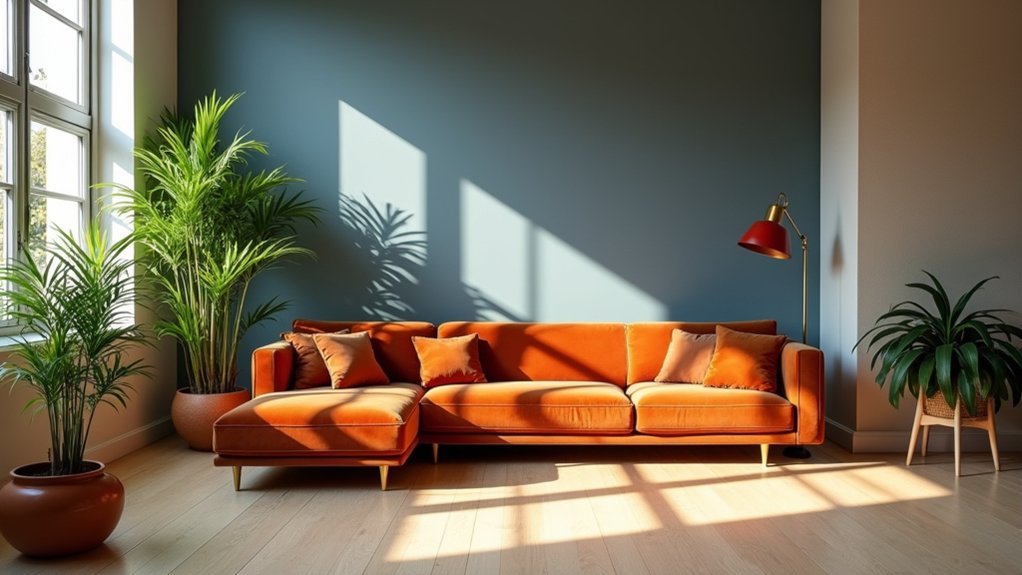
Your “neutral” floor won’t stay neutral because light and nearby colours constantly shift how you see it. In UK north-facing rooms, cooler daylight can flatten oak and pull vinyl or carpet towards grey-blue, while south-facing sun boosts warmth and makes beige look richer. Your LEDs matter too: 2700K lamps add yellow-red and can brown “grey” LVT, while 4000K can bleach beige and highlight grain. Next, you’ll see how to test undertones properly.
Key Takeaways
- Neutral floors shift with light; north-facing daylight cools oak, while south light boosts warmth and richness.
- Bulb colour temperature changes undertones; warm LEDs make greys browner, cool LEDs bleach beiges and highlight grain.
- “Neutral” materials hide biases; oak often runs yellow, ash can skew green, and greige LVT may carry lilac or taupe.
- Wall paint and rugs create contrast effects; cool walls push floors pinker, warm textiles amplify yellow notes.
- Sample size and context matter; offcuts mislead, and testing large samples across day and night reveals true tone.
What Neutral Flooring Looks Like in Your Light
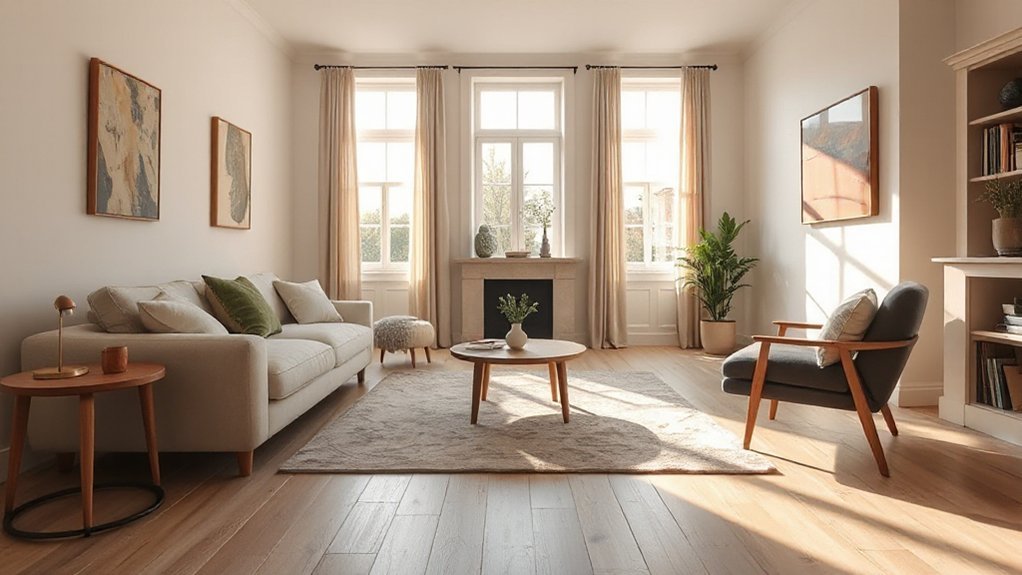
Even if you’ve chosen a “neutral” floor—pale oak, mid-grey laminate, or beige carpet—its colour won’t read as neutral in every room because your light changes it. In UK homes, north-facing rooms get cooler daylight, so oak can look flatter and slightly greyed; south-facing rooms boost warmth and make beige read richer.
You’ll see bigger shifts under common UK bulbs. Warm-white LEDs (around 2700K) increase color saturation in timber and can make grey vinyl look browner, while cool-white (4000K) can bleach beige carpet and emphasise grain. Check it morning, midday, and evening, and switch on your main fittings too. Also notice texture contrast: matt boards scatter light and mute colour; glossy finishes reflect highlights and deepen apparent tone.
How to Spot Undertones in “Neutral” Floors
Because most “neutrals” still lean warm or cool, you’ll spot undertones faster if you compare the floor against a true baseline rather than judging it in isolation. Place a sheet of plain white paper and a mid-grey sample (N5–N6) on the floor; if the boards read pink, peach, or honey beside grey, you’re seeing a warm bias, while blue, green, or violet hints signal cool.
Check a freshly cut edge or an offcut: finishes can mute or shift Colour perception. Then separate hue from texture by viewing a single plank and a larger laid area; repetition amplifies undertones.
Finally, account for Material influence: oak often carries yellow-tan notes, ash can skew greenish, and many “greige” LVT prints hide lilac or taupe casts.
Why Lighting Makes Neutral Floors Go Warm or Cool
Why can the same “neutral” floor look softly honeyed in one room and slightly steely in another? You’re seeing lighting physics. Colour temperature shifts how your eye reads undertones: warm lamps (around 2700–3000K) add yellow-red energy, so beige oak or stone looks creamier; cooler LEDs (4000K+) emphasise grey-blue notes, making the same surface feel cleaner or colder. Daylight matters too. In the UK, north-facing light is typically cooler and more diffuse, which can pull neutrals towards grey, while low-angle afternoon sun warms them. Lumen level also changes perception: brighter light reduces shadow contrast, flattening texture and pushing neutrals cooler. This Mood influence affects whether the room feels snug or crisp throughout the day.
How Neutral Floors Interact With Paint and Rugs
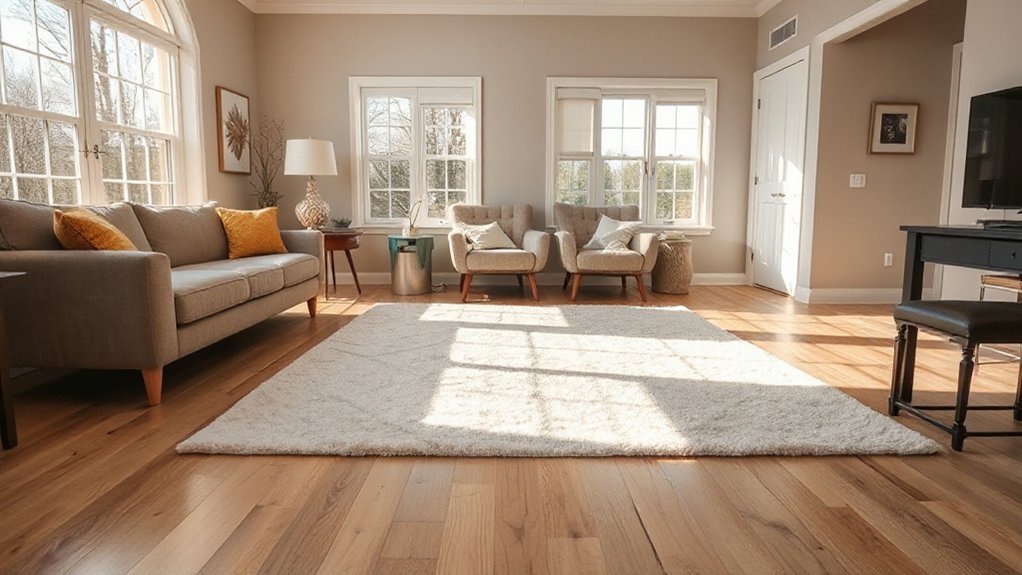
Once you’ve clocked how daylight and bulbs push a “neutral” floor warmer or cooler, the next variable is what sits against it. Paint changes your perception through simultaneous contrast: a cool grey wall makes beige LVT read pinker; a creamy off-white can pull grey oak towards taupe. In UK north-facing rooms, low colour temperature effects are amplified, so test large swatches at skirting level, not just on a card.
Rugs then act like a filter. A warm jute rug boosts yellow notes in pale timber; a charcoal wool flatweave can make the same floor look cleaner but harsher. Prioritise Texture contrast and Material pairing: matte limewash beside satin boards, or loop pile on smooth porcelain, to control glare and undertone drift.
How to Choose Neutral Flooring That Stays Balanced
Although most “neutral” floors sit in the beige–grey crossover, you’ll keep them balanced in UK homes by choosing products with a stable undertone (not just a mid-tone colour) and verifying it under the light you actually live with. In north-facing rooms, grey can read blue; in warm LED light, beige can skew pink. Use real samples, not screen images, and view them morning and evening.
- Check undertone: compare beside pure white card and a true grey tile.
- Control Color contrast: match floor value to your walls’ LRV range.
- Plan Texture variation: add grain, knots, or matte finish to stop flatness.
- Test with furnishings: place your rug and a wood sample to confirm harmony.
Frequently Asked Questions
Will Neutral Floors Affect My Home’s Resale Value?
Yes, neutral floors can boost your home’s resale value if you nail Color coordination and highlight Design versatility. UK buyers often prefer timeless finishes, but you must avoid mismatched undertones and cheap-looking materials that deter offers.
Are Neutral Floors Easier to Clean Than Darker Floors?
Yes, but ironically they don’t stay “clean” longer—you just notice less. Neutral floors balance dirt visibility and stain concealment; UK tests show mid-tones hide dust, while dark floors highlight lint, footprints, scratches.
Which Neutral Flooring Options Are Best for Pets and Scratches?
You’ll get the best pet-ready neutral floors with LVT, porcelain tile, or laminate rated AC4/AC5. Choose Pet friendly materials and Scratch resistant finishes; they resist claws, clean fast, and suit UK busy households.
How Much Does Neutral Flooring Installation Typically Cost?
You’ll typically pay £25–£60/m² installed in the UK; like Goldilocks, costs vary by prep, underlay, and labour. Prioritise flooring durability, then colour coordination. Get three quotes; expect £800–£2,500 per room.
Can I Refinish or Recolor Neutral Wood Floors Later?
Yes, you can refinish or recolour neutral wood floors later, enabling Color transformation, but you’ll need sanding, staining, and resealing. For Finish preservation, use compatible lacquer/oil systems; UK professionals assess wear, species, existing coatings.
Conclusion
You can’t assume a “neutral” floor will stay neutral; it behaves like a chameleon under your home’s light. North-facing rooms often pull boards cooler, while warm LEDs can tip them honey-gold. You’ll spot it by checking undertones at different times of day and against your paint, skirting, and rugs. Test real samples on site, not just online swatches. When you measure light and materials together, your scheme stays balanced.