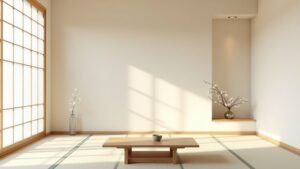
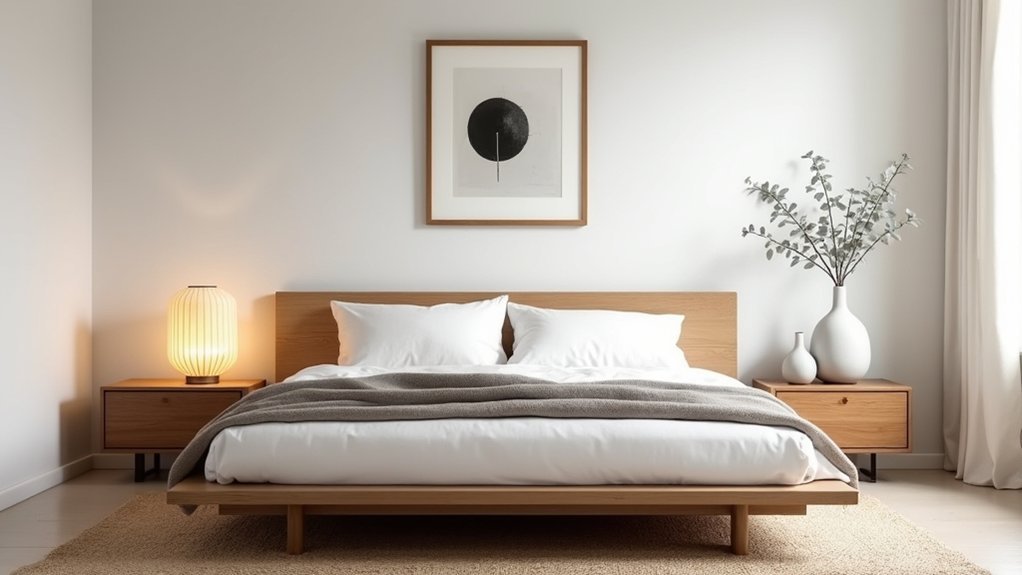
Apply Japandi style in your bedroom by keeping it calm, minimal, and warm. Paint walls warm white, oatmeal, or pale stone, then add muted sage or dusty blue accents with low contrast. Choose light oak, ash, or birch furniture with clean lines, matte finishes, and hidden storage, and centre the bed with about 60cm each side. Layer 2700K dimmable lighting and natural textiles like linen and wool, and keep décor to 2–3 pieces. Keep going for more practical room-by-room pointers.
Key Takeaways
- Choose a muted neutral palette—warm whites, oatmeal, pale stone—with low contrast and small charcoal accents for calm.
- Prioritise natural materials like light oak, linen, wool, and paper, using matte or oiled finishes instead of gloss.
- Keep furniture minimal and low-profile: a simple bed, one bedside table, and streamlined storage with flat fronts and minimal hardware.
- Plan layout for negative space—centre the bed, keep 60cm bedside clearance, and maintain open sightlines from the doorway.
- Add warmth with layered textures, dimmable 2700K lighting, and just 2–3 intentional accents like one print, throw, or sculptural plant.
What Makes a Bedroom Japandi?
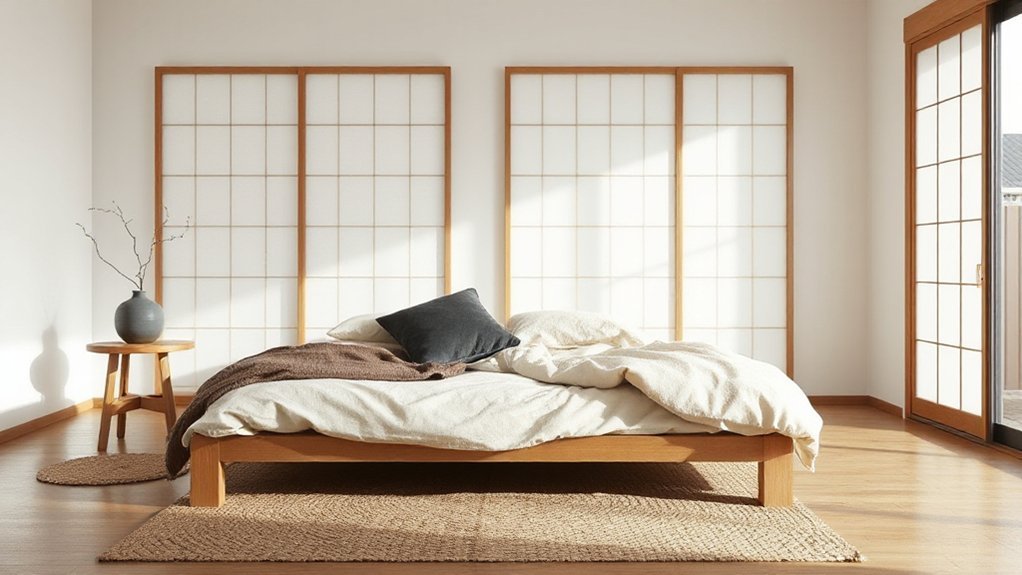
Although it blends Japanese calm with Scandinavian practicality, a Japandi bedroom comes down to disciplined simplicity: clean-lined furniture, a muted neutral palette, and natural materials such as light wood, linen, wool, and paper. You’ll spot it in the way the room feels restrained yet inviting, with every piece earning its place. The cultural influences matter: Japanese wabi-sabi values honest wear and quiet craftsmanship, while Nordic design prioritises functional comfort for long winters. Its historical origins sit in modernist cross-pollination—mid-century Scandinavian designers admired Japanese joinery and proportion, and Japanese interiors absorbed pared-back Western forms. In a UK home, you create Japandi by choosing fewer, better items and keeping visual noise to a minimum.
Japandi Bedroom Rules: Minimal, Warm, Natural
If you want a Japandi bedroom that feels calm rather than cold, follow three non-negotiables: keep it minimal, make it warm, and stick to natural materials. Start by clearing visual noise: limit furniture to what you use daily, hide chargers, and choose one statement piece over multiples. Let Scandinavian design elements do the heavy lifting with clean lines, smart storage, and practical proportions suited to UK bedrooms. Add warmth through texture, not clutter: layer linen, wool, and a soft rug, and use timber bedside tables or a rattan chair. Keep finishes matte and tactile, avoiding high-gloss plastics. For character, hang one piece of Japanese inspired art and leave breathing space around it. Maintain clear floors and uncluttered surfaces daily.
Choose a Calm Japandi Bedroom Color Palette
Because colour sets the mood before you’ve even made the bed, keep your Japandi palette quiet, light, and grounded. Start with warm whites, oatmeal, and pale stone; they reflect grey UK daylight without feeling clinical. Use Color psychology: soft neutrals lower visual noise, while muted sage or dusty blue supports rest. Keep contrast low—think charcoal only in small hits, not on every wall.
Choose one main wall colour and repeat it in two strengths to control zoning, especially in box rooms and loft bedrooms. For a calm look, avoid bright primaries and high-chroma pastels. Your paint finish matters: use matt or flat on walls to hide glare; pick eggshell on woodwork for wipeable practicality. Sample swatches morning and evening before committing.
Pick Japandi Bedroom Woods and Materials
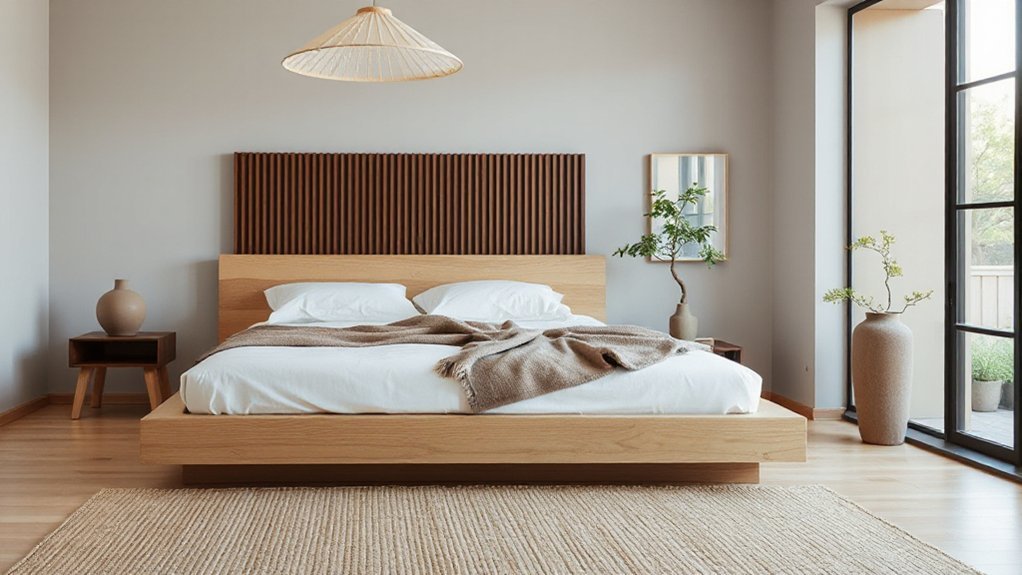
Once you’ve set a calm palette, let the woods and materials do the heavy lifting for warmth and texture. Start with pale oak, ash, or birch for Scandinavian warmth, then add darker walnut accents sparingly to ground the scheme without visual clutter. Keep finishes matte or oiled; high gloss fights Japanese minimalism and shows fingerprints in British light. Prioritise natural fibres: linen bedding, wool throws, and cotton rugs for breathable comfort in UK seasons. Introduce tactility with rattan, paper, or bamboo details, but limit them to a few elements so the room stays restful. Choose stoneware or unglazed ceramics for lamps and trays, and avoid overly shiny metals. Aim for honest, durable materials that patinate beautifully.
Choose Japandi Bedroom Furniture With Clean Lines
To make Japandi feel effortless in a UK bedroom, choose furniture with low profiles, straight edges, and plenty of breathing room around each piece. Prioritise pieces that look calm, feel solid, and age well in our damp-prone climate.
- Bed frame: Go for a simple platform or low divan with hidden storage, finished in oak, ash, or walnut tones from Eco friendly materials.
- Bedside tables: Pick slim, handleless drawers or open cubes; keep legs tapered and hardware minimal.
- Wardrobe/chest: Choose flat-front doors, soft-close hinges, and matte finishes; add Vintage accents with a single reclaimed pull or a mid-century stool.
You’ll get a clean silhouette, quieter visual weight, and a bedroom that still feels warm.
Plan a Japandi Bedroom Layout With Space
Although your bedroom might be on the compact side, you can still nail Japandi by planning the layout around clear walking routes and generous negative space. Start by centring the bed on the strongest wall, then keep at least 60cm clearance on each side so you’re not squeezing past furniture.
Limit pieces to essentials: a slim bedside table, a low chest, and one chair at most. Push bulky storage to the perimeter and use the area under the window for a bench only if it doesn’t block radiators, common in UK homes. Create calm through colour contrast: pair pale walls with one darker timber element, not lots of accents. Choose lighting fixtures that stay visually light—wall sconces or pendants free up surfaces and widen sightlines.
Pick Japandi Bedroom Bedding in Natural Fibers
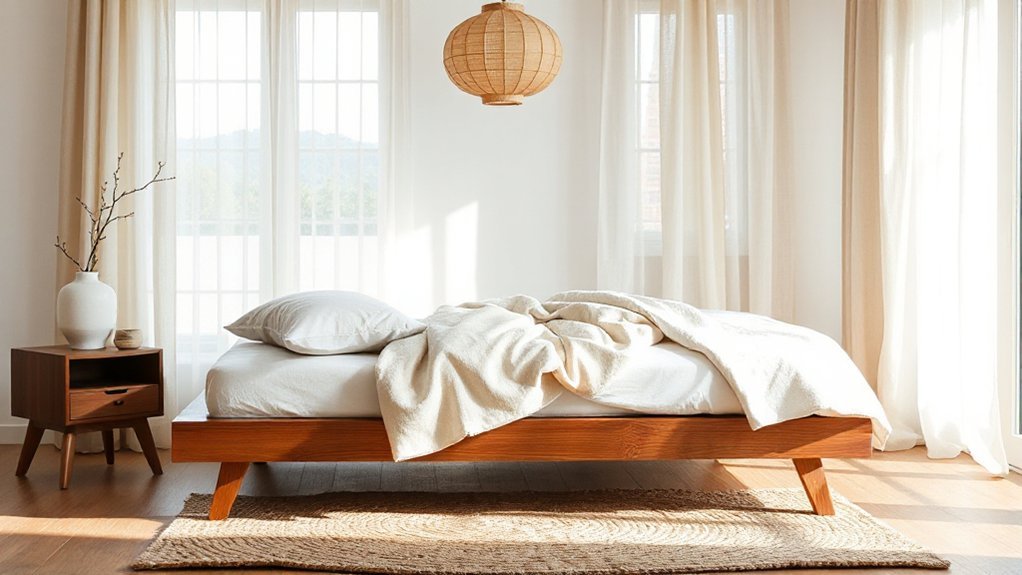
Clear floor space sets the calm, but your bed finishes the job, so choose Japandi bedding that feels natural and looks restrained. Prioritise Natural fibers because they breathe, drape well, and age gracefully in UK homes where heating swings and damp mornings happen. Keep Bedding materials simple, matte, and low-sheen; avoid microfibre and anything overly glossy.
Choose a tight palette—warm white, oat, stone, or charcoal—and commit to it across sheet, duvet cover, and pillowcases so the bed reads as one quiet block. Check labels and weave: percale stays crisp; washed linen looks relaxed; cotton sateen can work if it’s subtle.
- Buy fewer, better sets you’ll rotate year-round.
- Pick OEKO-TEX or GOTS certification for safer finishes.
- Size correctly (UK duvet and pillow standards) to prevent bunching.
Add Texture Layers So It Won’t Feel Flat
Once you’ve nailed the bedding palette, add a few tactile layers so the room still feels warm and lived-in rather than stark. Start with Layered textiles: a washed-linen throw at the foot of the bed, then a wool or cashmere blanket you can pull up on colder UK nights. Swap in one or two cushions in boucle, nubby cotton, or a simple sashiko-style stitch to keep it restrained.
Build Tactile surfaces beyond the bed. Lay a flatweave rug over bare boards, or choose a thick wool runner if you’ve got carpet. Add a rattan laundry basket, a matt-ceramic tray on the bedside, and a pale oak stool to break up smooth planes. Keep textures natural, colours quiet, and finishes matte.
Use Soft Japandi Bedroom Lighting (3 Layers)
If you want your Japandi bedroom to feel calm rather than clinical, you’ll need lighting that’s soft, warm, and layered. Aim for 2700K bulbs and dimmers, so your room shifts from bright function to an ambient glow at night. Keep fittings simple—paper, linen, or opal glass diffuses light without glare and suits UK homes with lower winter daylight.
- Ambient: Use a ceiling pendant or flush fitting to set the baseline, then dim it down for evening.
- Task: Add bedside reading lights or wall sconces with focused beams, positioned to avoid shadows.
- Accent: Introduce a low lamp or concealed LED strip to highlight a surface and create layered illumination.
Choose Fewer Japandi Bedroom Decor Pieces
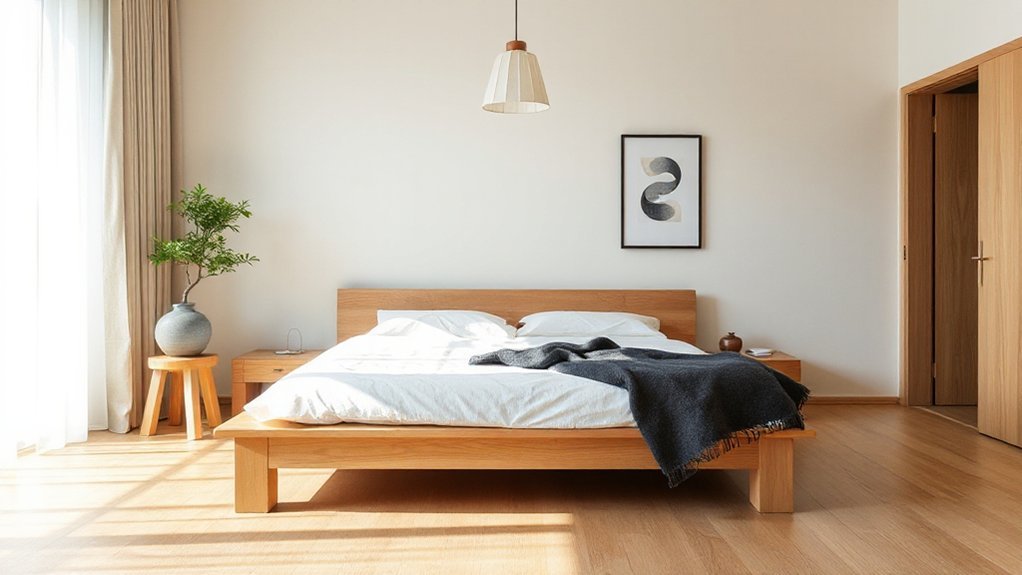
Keep your Japandi bedroom calm by choosing fewer, better pieces and sticking to essential furnishings you’ll use every day. Limit decorative accents to a handful of considered items—one ceramic vase, one framed print, one textured throw—so the room doesn’t feel busy. Leave clear negative space around your bed and storage, because in UK-sized bedrooms, breathing room is what makes the scheme look intentional.
Prioritize Essential Furnishings
Although Japandi design celebrates warmth and comfort, it works best in the bedroom when you pare things back to the essentials. Start by choosing Essential furniture that supports sleep and calm: a low-profile bed, a solid bedside surface, and one closed storage piece. This edit improves Room organization, reduces visual noise, and makes cleaning quicker in typical UK-sized rooms.
- Sleep anchor: Invest in a sturdy bed frame and supportive mattress; everything else follows its scale and materials.
- Daily function: Add one bedside table per person, sized for a lamp, book, and water—no more.
- Storage discipline: Use a wardrobe or chest with doors to hide clutter, then keep floor space clear for airflow and ease of movement.
Limit Decorative Accents
Once you’ve stripped the room back to the key furniture, rein in the decor so the space still feels calm rather than styled. Treat Decorative accents as a finishing layer, not the main event. Choose two or three Artful accessories with purpose: a single ceramic vase on the chest of drawers, one framed print above the headboard, and a linen throw folded at the foot of the bed. Keep materials honest—oak, paper, stone, wool—and repeat tones already in your bedding or rug. Avoid clusters of trinkets, busy gallery walls, and multiple patterned cushions. If you buy something, remove something else to keep the edit tight. Stick to warm, low lighting and one plant, max, for a composed, UK-friendly look.
Embrace Negative Space
When you leave deliberate gaps around furniture and decor, the bedroom instantly reads calmer and more considered—the hallmark of Japandi. Treat Negative space as a design tool, not an absence. Keep sightlines open from the doorway, and let each piece earn its place. Aim for Minimal clutter by editing hard, then styling lightly: one statement lamp, one piece of art, one textured throw.
- Keep a clear border of 30–45cm around the bed and wardrobe so movement feels effortless.
- Use fewer surfaces: a single bedside table beats two mismatched units in tight UK rooms.
- Store ruthlessly: baskets in the wardrobe, not on the floor, so the calm stays visible.
You’ll notice better sleep and easier cleaning, too, especially on busy weekdays.
Add Subtle Greenery for a Japandi Bedroom
Why add greenery to a Japandi bedroom at all? Because it softens clean lines, lifts air quality, and reinforces the nature-led calm at the heart of the look. Choose Indoor plants with sculptural forms and muted tones, so they read as Botanical accents rather than busy décor.
Stick to one or two varieties: a snake plant for upright structure, a ZZ plant for low-maintenance gloss, or a small olive tree if you’ve got strong light. Place a single pot on a low bedside stool, or group two small plants on a floating shelf, leaving breathing room around them. Use simple ceramic planters in off-white, charcoal, or warm stone. In UK homes, favour shade-tolerant options for north-facing rooms and rotate weekly for even growth.
Japandi Bedroom Mistakes to Avoid (and Fixes)
If you cram your bedroom with ornaments, you’ll lose the calm, balanced feel that defines Japandi. Keep surfaces clear and curate a few purposeful pieces, then build warmth with tactile linens, wool throws, and natural wood tones suited to UK light. Fix these two slips and your space will look considered, not sparse or cluttered.
Overcrowding With Decor
Although Japandi celebrates warmth and comfort, overcrowding your bedroom with décor quickly turns that calm, pared-back look into visual noise. If you’re battling decor clutter, you’re likely overdecorating: too many ornaments, layered wall art, and “just-in-case” bits on every surface. Edit ruthlessly and let each piece earn its place, especially in compact UK bedrooms where floor space is precious. Use this quick reset:
- Clear surfaces: keep your bedside table to a lamp, a book, and one small tray.
- Choose one focal point: a single print or plant, not a gallery wall plus accessories.
- Create limits: cap décor to one shelf and one windowsill, then stop.
You’ll regain breathing room and the Japandi balance will read intentional.
Ignoring Warm Textures
When you lean too hard on pale wood, white walls, and minimalist lines, a Japandi bedroom can slip into feeling flat and chilly rather than calm. You fix it by layering warm, natural textures that keep the look restrained but liveable.
Start with bedding: add a linen duvet, a wool throw, and a brushed-cotton sheet set in oat, stone, or soft clay. Bring in Textural contrast with a jute or sisal rug underfoot and a bouclé or woven bench at the bed end. Choose timber with visible grain, and balance it with matte ceramics and paper or linen lampshades for softer light. Finish with Seasonal accents: swap cushion covers, add a heavier throw in winter, and keep a lightweight cotton blanket for summer.
Frequently Asked Questions
What’s the Difference Between Japandi, Scandinavian, and Japanese Bedroom Styles?
You’ll see Japandi blend Scandinavian comfort with Japanese minimalism, shaped by cultural influences and design evolution. Scandinavian bedrooms use pale woods and hygge textiles; Japanese favour low beds, tatami cues, and calm symmetry. In the UK, mix thoughtfully.
How Can I Make a Japandi Bedroom in a Small Rental Without Painting Walls?
You’ll craft a Japandi rental by building a calm “portable shrine”: use light linen curtains, tatami-style rug, and low oak pieces; optimise furniture placement, add warm lamps, and sparing decorative accents; keep clutter tucked away.
What Window Treatments Best Suit a Japandi Bedroom While Maintaining Privacy?
Choose layered window coverings: install sheer natural fabric curtains with a simple roller blind behind. You’ll soften light, keep privacy, and suit Japandi calm. Pick linen or cotton in oat tones; fit tension rods.
How Do I Incorporate Technology (Tv, Speakers, Chargers) Without Disrupting Japandi Style?
Like hiding wires beneath calm waters, you’ll use concealed storage and seamless tech integration: wall-mount the TV, route cables in trunking, choose fabric speakers, and add bedside Qi chargers inside drawers, UK sockets hidden.
What’s a Realistic Budget Range for Creating a Japandi Bedroom From Scratch?
You’ll realistically spend £800–£3,500 to create it from scratch in the UK. Prioritise sustainable materials for bed, flooring, and paint, then add vintage accessories. Shop IKEA, Habitat, Gumtree, and Etsy.
Conclusion
Bring Japandi into your bedroom and you’ll feel that quiet, Kyoto-meets-Copenhagen calm. Stick to warm minimalism: soft neutrals, pale oak or ash, and furniture with clean, low lines. Layer lighting like a well-planned London flat—ceiling, bedside, and a gentle accent glow. Edit your décor ruthlessly, then add one or two plants for life without fuss. Avoid clutter, harsh whites, and mismatched woods, and you’ll sleep better.