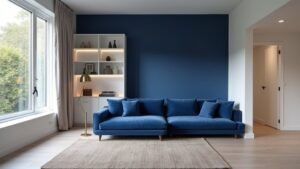
Aesthetic minimalism is when you strip your home or wardrobe back to essential forms, honest materials and a disciplined palette, so proportion, light and negative space do the work. You don’t aim for emptiness; you curate fewer, better pieces with clean lines, consistent finishes and one restrained accent colour. You control visual noise by aligning layouts, widening margins and keeping details crisp. Keep going and you’ll see how to apply it room by room and outfit by outfit.
Key Takeaways
- Aesthetic minimalism reduces design to essential forms, materials, and colors, using proportion, light, and negative space for emphasis.
- It differs from decluttering by curating fewer, better pieces to control atmosphere, silhouette, and visual calm.
- Use a tight palette: one primary neutral, one secondary neutral, and one restrained accent repeated deliberately for cohesion.
- Reduce visual noise by removing nonfunctional items, aligning edges, widening margins, and keeping layouts and finishes consistent.
- Add depth through honest materials and subtle texture contrast (matte wool, linen, leather, ceramics) while keeping accessories minimal.
Aesthetic Minimalism: What It Means (and Isn’t)
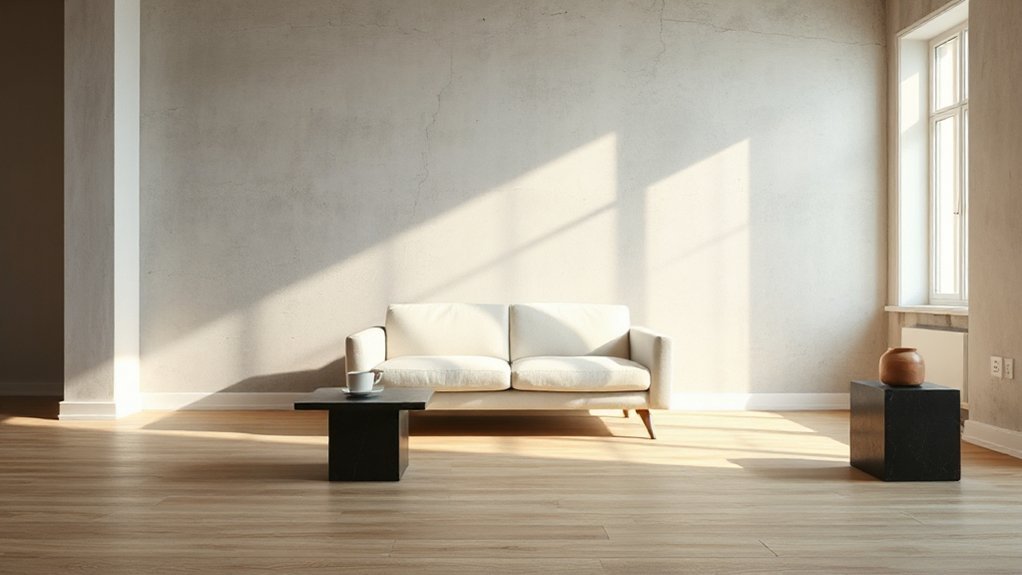
Although “minimalism” gets thrown around as a catch-all for anything plain, aesthetic minimalism has a clearer intent: you deliberately strip a design back to its essential forms, materials, and colours so proportion, light, and negative space can do the heavy lifting. You aren’t chasing emptiness or austerity; you’re curating restraint with purpose. Every line earns its place, every junction reads cleanly, and surfaces feel intentional rather than under-finished.
You also don’t confuse it with “all white”. Color theory still governs contrast, hierarchy, and mood, whether you use monochrome, muted hues, or a single accent. Cultural influences matter too: Scandinavian warmth, Japanese wabi-sabi, and Modernist rigour each shape what “essential” means in practice.
A Quick-Start Checklist for a Minimalist Aesthetic
Start by defining your core palette, so every finish and material choice reads as intentional. Then edit and curate essentials—keep only what earns its place through function, proportion, and quality. Finally, maintain clean visual lines by controlling clutter, aligning edges, and using considered negative space throughout.
Define Your Core Palette
To create a minimalist aesthetic that feels cohesive rather than sparse, define a core palette before you buy, style, or edit anything. Choose one neutral base, one secondary neutral, and one restrained accent; keep finishes consistent so Colour harmony stays effortless across rooms. Test swatches in north and south light, then repeat them deliberately to guide the eye. Use the accent sparingly to create Visual focal points without cluttering the composition.
- You’ll feel calm when every surface speaks the same quiet language.
- You’ll sense confidence as tones align from wall to textile to timber.
- You’ll enjoy relief when choices narrow and decisions speed up.
- You’ll notice elegance when an accent lands with purpose, not noise.
Edit And Curate Essentials
Once your core palette’s set, you can edit with intent rather than emotion, keeping only what earns its place in the scheme. Start by pulling everything into one zone, then sort into: keep, tailor, donate, recycle. Keep only pieces that match your palette, fit properly, and solve a real daily need. Check materials: prioritise wool, cotton, linen, leather, and solid hardware over novelty trims. Limit patterns; if you keep one, ensure it repeats your palette. Choose one standout accessory that nods to luxury branding—quiet logos, sharp finishing, impeccable stitching. Audit duplicates: keep the best version, release the rest. If you enjoy maximalist influences, channel them through a single sculptural item or rich texture, not quantity. Finish by photographing your capsule to spot gaps and excess.
Maintain Clean Visual Lines
With your capsule edited down to pieces that earn their place, the next step is controlling the silhouette so the outfit reads calm, sharp, and intentional. Prioritise uninterrupted lines: clean shoulders, a defined waist, and hems that skim rather than cling. Keep Colour harmony tight—stay within one tonal family, then let Texture contrast do the heavy lifting through matte wool, crisp cotton, or brushed knit. Reduce visual noise by limiting hardware and avoiding fussy layers that break the vertical.
- Choose one strong shape per look, so you feel composed, not crowded.
- Align hemlines and proportions to create quiet confidence.
- Streamline accessories; you’ll look polished, never distracted.
- Press, lint-roll, and polish shoes—small finishes deliver big calm.
Minimalism vs. Decluttering: The Key Difference
Although they’re often lumped together, minimalism and decluttering serve different design goals. Decluttering clears excess so a room functions better; it’s a practical edit. You apply decluttering techniques to remove duplicates, tired décor, and awkward storage, then organise what remains. Minimalism goes further: you curate fewer objects to shape atmosphere, proportion, and negative space, not just tidiness. When you follow a minimalist philosophy, you choose pieces for silhouette, material honesty, and visual calm, and you accept that “enough” can look deliberately sparse. Decluttering can still leave a busy scheme if every surface stays populated. Minimalism, by contrast, controls what’s seen and what’s absent, so light, lines, and focal points read cleanly and intentionally throughout.
The 5 Aesthetic Minimalism Rules to Follow
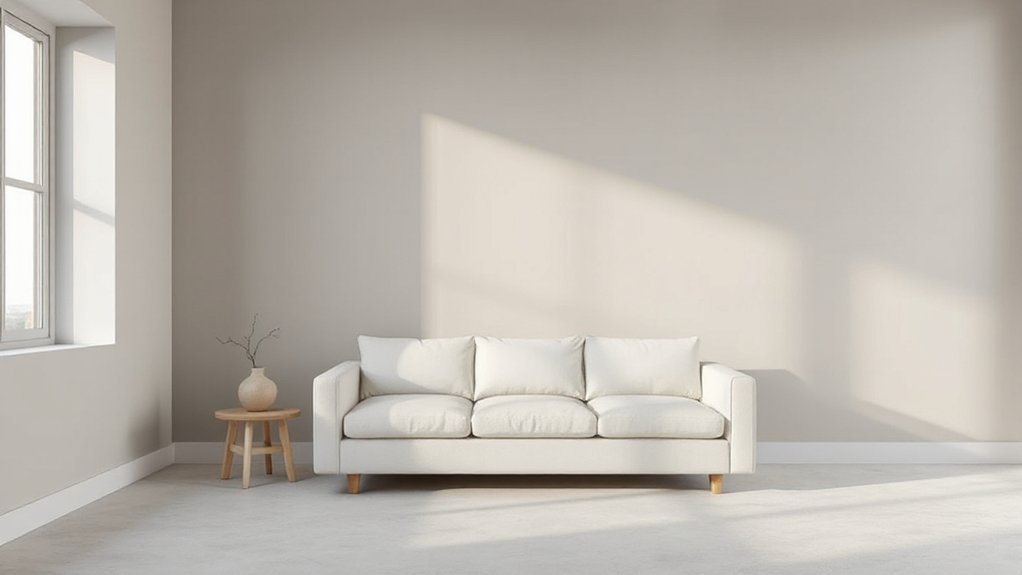
To follow aesthetic minimalism properly, you curate with intention—keep only what earns its place through function, proportion, and finish. You’ll prioritise negative space to control visual weight and let key pieces read clearly. Start with these two rules, and you’ll set a disciplined framework for every room.
Curate With Intention
Why do some minimalist spaces feel effortlessly calm while others read as bare? You make the difference through Intentional curation: you choose fewer pieces, then demand more from each one. Start with function, then insist on beauty, material integrity, and a clear story. With mindful selection, you edit like a designer—measuring scale, checking sightlines, and balancing texture so the room feels composed, not stripped.
- You keep the chair that welcomes you home, not the one that merely fills a corner.
- You display ceramics that hold warmth in the hand and memory in the glaze.
- You choose lighting that softens evenings and flatters every surface.
- You retain art that steadies your gaze and quiets your mind.
Prioritize Negative Space
How often do you treat empty space as an afterthought, rather than the main event? In aesthetic minimalism, negative space isn’t leftover; it’s structure. It frames what matters, sharpens hierarchy, and makes every object feel deliberate.
Start by pulling pieces away from edges and from each other. Leave margins generous, clear sightlines, and uninterrupted surfaces. Let one focal element command the room, then resist the urge to “balance” it with clutter. In layouts, widen gutters, reduce type sizes slightly, and keep alignment ruthless. You’ll create visual breathing that calms the eye and improves legibility.
Use light and shadow to activate emptiness: a blank wall becomes a backdrop, not a void. If a space feels finished too quickly, you’ve probably done it right.
How to Find Visual Noise in Any Room
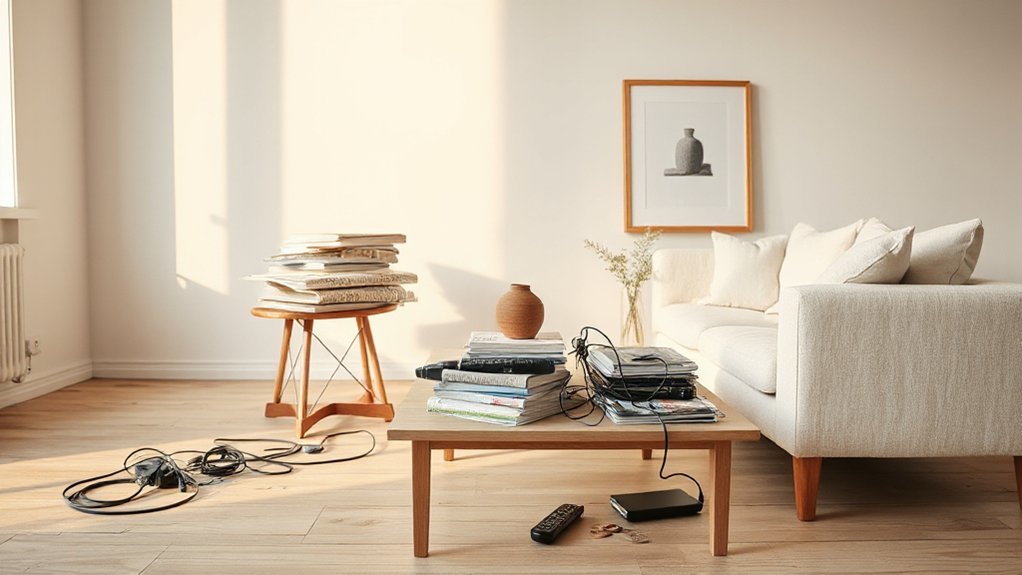
Although you might not notice it at first, visual noise shows up wherever too many elements compete for attention and flatten a room’s sense of calm. You’ll spot it by scanning the space as if you’re a visitor: squint, then note what shouts. Assess colour contrast between surfaces, textiles, and artwork; harsh jumps create agitation. Review furniture placement: if routes feel tight or pieces point in different directions, the room reads as anxious rather than intentional. Treat every object as a signal—if it doesn’t support function or mood, it’s static.
- A crowded sideboard that makes you feel boxed in
- Cables and chargers that trigger low-grade stress
- Busy shelving that steals your eye from the view
- Mismatched frames that leave the wall feeling restless
Pick a Minimalist Color Palette That Works
Start by locking in your base neutrals—think soft whites, warm greys, or muted taupes—as the consistent backdrop that keeps the scheme calm. Then you’ll introduce one accent hue, used sparingly across key pieces, to give the room definition without clutter. Finally, you must balance warm and cool notes so the palette feels intentional, not flat or clinical.
Define Your Base Neutrals
Before you buy a single piece, define your base neutrals to anchor every outfit and stop your wardrobe drifting into “almost matching” chaos. Choose two to three neutrals that flatter your skin tone and suit your life: think ink navy, charcoal, stone, cream, or true black. Use colour psychology to assess their emotional impact: black feels decisive, cream reads calm, charcoal signals competence. Keep undertones consistent—cool with cool, warm with warm—so layers look intentional, not accidental. Test in daylight, then photograph combinations; your camera exposes clashes your mirror forgives. When your neutrals align, everything feels quieter, sharper, and more premium.
- You’ll dress faster and feel in control.
- You’ll stop second-guessing every purchase.
- You’ll look polished without trying.
- You’ll enjoy a calmer, cleaner silhouette.
Add One Accent Hue
Why let a full rainbow into your wardrobe when one accent hue can do the heavy lifting? Choose a single Accent hue that complements your base neutrals and repeat it with intent. Think of it as your signature mark: a knit, a trainer, a crossbody strap, or a lipstick that appears often enough to feel cohesive. Keep saturation consistent, so the palette reads deliberate rather than scattered. Use colour contrast to create focus: place the Accent hue near your face, at the waist, or on footwear to anchor an outfit. Limit prints to those that echo your chosen hue, and avoid mixing multiple brights at once. When you shop, filter by that hue first, then assess fit and fabric quality.
Balance Warm And Cool
One Accent hue gives your wardrobe a clear signature; now make sure the neutrals around it don’t fight each other. Balance warm and cool by choosing a dominant temperature, then supporting it with one opposing neutral. If your base is warm (ecru, camel, chocolate), add a cool anchor like charcoal. If your base is cool (stone, navy, black), soften it with warm ivory or tan. This controlled tension creates Color harmony without looking styled-to-death. Use Texture contrast to stop the palette feeling flat: matte wool against sleek leather, brushed cotton beside crisp poplin. Keep metals consistent: either brushed silver or muted gold. You’ll feel:
- calmer in mirrors
- sharper in photos
- lighter when packing
- more assured in meetings
Warm Minimalism: Textures and Materials to Use
Layer grounding elements: jute or sisal underfoot, linen drapery that filters light, and hand-thrown ceramics with irregular rims. Introduce quiet sheen with aged brass, patinated bronze, or anodised aluminium, but keep it limited to a few touchpoints. Opt for low-sheen paints, clay plasters, and woven baskets to add depth without visual clutter. Keep detailing crisp, but let surfaces do the work.
Minimalist Furniture: Scale, Shape, and Function
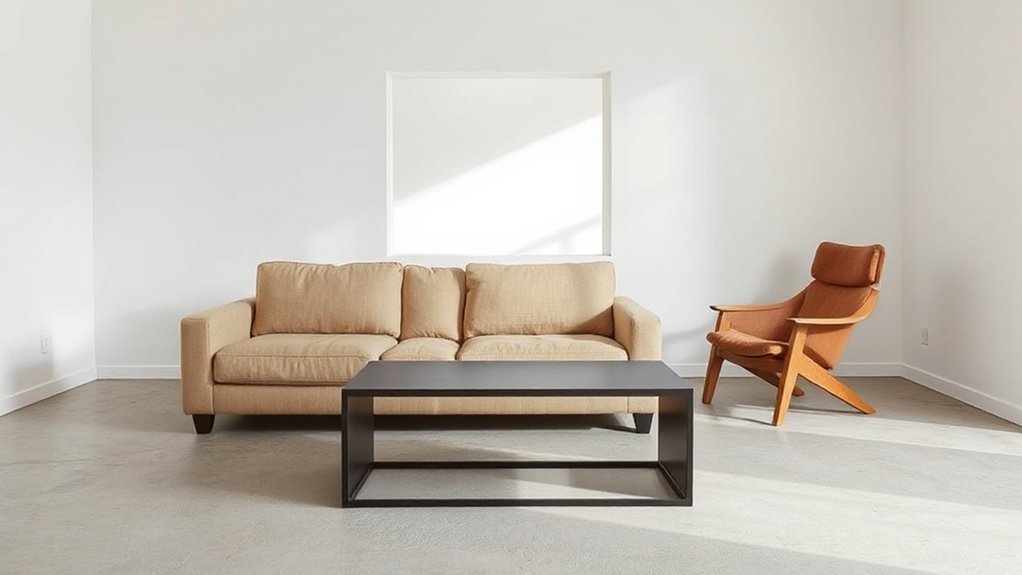
Although minimalism prizes restraint, furniture still needs to earn its footprint through precise scale, clean geometry, and clear function. Start by scaling furniture to your room’s proportions: low, long seating calms a tight lounge; a slender dining table keeps circulation crisp. Choose shapes with intention—rectilinear pieces read disciplined, while a single soft curve can relieve visual tension without clutter. Demand function you’ll actually use: hidden storage, durable upholstery, and honest joinery. When shaping decor through furniture, edit for purpose, not trend, and let craft lead the eye.
- You’ll feel relief when walkways stay clear.
- You’ll sense confidence in balanced proportions.
- You’ll enjoy calm in uninterrupted lines.
- You’ll trust pieces that work every day.
Style With Negative Space (Without Feeling Empty)
Once your furniture sits at the right scale and does its job cleanly, the room’s next design move is the space around it. Treat negative space as an active element: it sets hierarchy, sharpens sightlines, and makes proportions read as intentional, not sparse. Keep clear routes through the room so circulation feels effortless and calm.
Control “emptiness” by anchoring the plan. Align key pieces with architectural lines, centre them where needed, and keep consistent margins to walls and between items. Use one strong focal point per zone and let everything else step back. Manage contrast: a textured rug, matte paint, or timber grain gives depth without clutter. Edit accessories to fewer, larger items so they earn their keep. Aim for visual breathing, not vacancy.
A Minimalist Aesthetic Room: Simple Styling Examples
How do you make minimalism feel lived-in rather than clinical? You curate warmth through proportion, texture, and one deliberate focal point. Start with a calm base: off-white walls, matte timber, and a single low-slung sofa. Then add contrast with tactile layers—linen, wool, and a nubby rug—so the room reads quiet, not sterile. Keep surfaces edited, but not empty: one ceramic bowl, one stack of books, one lamp with a soft shade. Let Artistic expression lead: hang a large-scale print or a small, framed sketch with breathing room. Honour Cultural influences subtly through handmade pieces, not clutter.
- A cup of tea on a clear side table
- Morning light pooling on bare floorboards
- A well-worn throw that invites you in
- One vase holding a single seasonal stem
Minimalist Capsule Wardrobe: 12-Piece Starter
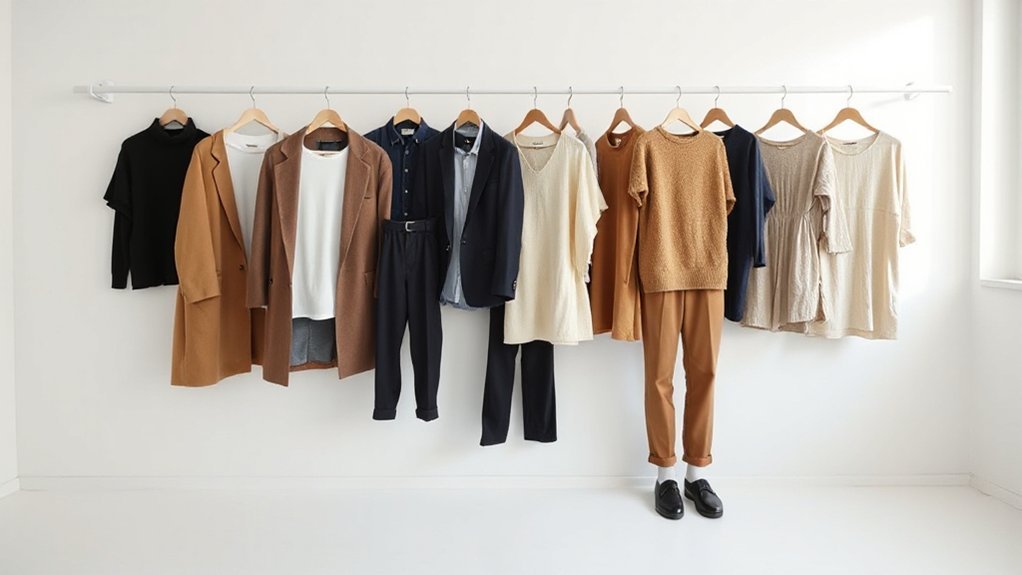
Twelve pieces can carry your week when you treat your wardrobe like a well-edited space: a calm base, clean lines, and intentional contrast. Start with: two tees (white, black), one fine-knit jumper, one crisp shirt, one blazer, one trench, dark straight-leg jeans, tailored trousers, a midi skirt, a day dress, white trainers, and black loafers.
Keep the palette tight and deliberate; use Color psychology to control mood—navy reads competent, cream feels soft, charcoal stays architectural. Prioritise fit and fabric: matte cotton, wool, and structured denim photograph cleanly and wear better. Build variation through accessory layering, not extra garments: a slim belt, small hoop earrings, and a scarf shift proportion and polish without visual noise. Rotate, launder, repeat.
Personalize Minimalism With 3 “signature” Items
- A sculptural coat that makes you feel instantly composed
- A heritage watch that grounds you in confidence
- A leather tote that carries your day with quiet strength
- A sharp loafer that clicks like a signature
Frequently Asked Questions
How Do I Maintain a Minimalist Aesthetic With Kids or Roommates?
You maintain it by zoning shared areas, setting Roommate boundaries, and using closed storage. Limit Kids’ toys to curated sets, rotate weekly, label bins, and enforce reset routines. Choose durable, neutral textiles and consistent containers.
What Are Budget-Friendly Ways to Achieve a Minimalist Look?
Like a calm tide, you’ll achieve a minimalist look cheaply by limiting your colour palette, buying second-hand, and prioritising smart furniture selection. You’ll declutter ruthlessly, use matching storage, swap busy textiles for plain, and keep surfaces clear.
How Can I Make Minimalism Work in a Small Rental Without Renovations?
You can make it work by limiting your Color palette to two neutrals, hiding clutter in lidded boxes, and prioritising furniture selection: slimline pieces, wall-mounted shelves, and multifunctional storage. Use removable hooks, rugs, and curtains.
Which Cleaning Routines Best Support a Minimalist Home Long-Term?
You’ll keep it minimalist by coincidentally pairing daily resets with weekly deep cleans: declutter surfaces nightly, do a 10-minute Clutter reduction sweep, launder Fridays, and review Storage solutions monthly so every item earns its place.
How Do I Handle Gifts and Sentimental Items Without Breaking Minimalism?
Handle gifts by setting firm boundaries: accept only useful pieces, photograph the rest, and release sentimental clutter. Use gift organization with one labelled box and a display quota, then rotate items seasonally.
Conclusion
You’ve now seen that aesthetic minimalism isn’t about deprivation; it’s about intention. Use the checklist, follow the five rules, and spot visual noise before it crowds your space. Let negative space do the heavy lifting, then anchor the room with a few well-chosen textures and a restrained palette. Build a capsule wardrobe that works hard, and finish with three signature pieces that feel like you. Why keep anything that doesn’t earn its place?