
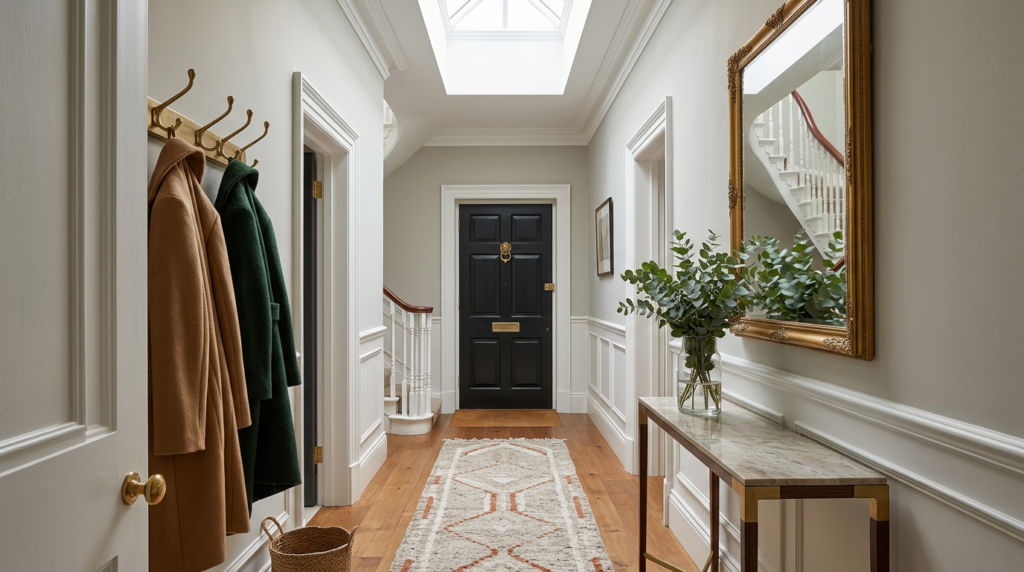
If your hallway or entryway feels tight or dim, you can change the mood fast with the right paint colour. You’ll want to start with the light you actually have, then choose shades that bounce it around or warm it up. Soft whites and pale greiges can open the space, while deeper tones work best as controlled accents. The trick is knowing which undertones and finishes won’t fight your trim or scuff easily…
Choose Hallway and Entryway Colours by Light
Because light changes everything about how paint reads, start by judging your hallway or entryway by its natural and artificial light before you choose a colour. Note which direction your windows face, how long sun hits the space, and where shadows fall at morning and evening.
Then switch on every bulb you’ll actually use, since warm LEDs can yellow a crisp paint and cool bulbs can make it look flat or icy.
Paint large swatches on two walls and live with them for a few days. Check them beside flooring, trim, and any mirror frames, because reflective surfaces amplify undertones.
If the space shifts dramatically between day and night, pick a colour that stays steady in both, not one that only works at noon.
Best Light Colours for Small Hallways
If your hallway feels tight or dim, choose light colours that reflect what little light you have and keep the space looking open. Crisp soft whites brighten without looking stark, while pale greige adds depth and still reads airy.
Light cool greys can stretch a narrow run, especially with white trim and ceilings. For a gentle hint of colour, try misty blue or muted sage; they calm the space and pair well with wood floors and black hardware.
Keep the finish in eggshell or satin so it bounces light and wipes clean. To avoid visual clutter, match your door colour to the walls, and use one consistent shade down the length of the hall.
Add a large mirror and simple art too.
Warm Paint Colours for Dark Entryways
Light shades can open up a small hallway, but a dark entryway often looks better when you lean into warmth to create a welcoming first impression. Choose paint that glows under low light: soft terracotta, muted cinnamon, toasted apricot, or clay pink. These hues bounce warm light around and keep shadows from feeling harsh.
If you want depth, try a russet or auburn on the walls, then use a lighter warm shade on trim and the ceiling to lift the space.
For a moodier look, go with deep ochre or burnt amber; they read rich without turning flat. Add warm-metal hooks, a honey-toned runner, and layered lighting so the colour stays inviting at night.
Neutral Hallway Colours (Undertones That Work)
When you want a hallway to feel calm but not cold, neutral paint comes down to undertones. Start by checking your fixed elements: floors, trim, stone, and metal finishes.
If you’ve got warm woods or brass, choose greiges and beiges with a soft yellow or peach base to keep everything cohesive. With cooler tile, chrome, or blue-grey flooring, pick a taupe or light grey with a violet or blue undertone so the space feels crisp, not muddy.
In in-between homes, reach for balanced neutrals—oatmeal, mushroom, or putty—that sit between warm and cool. Test swatches vertically and look morning and night; hallway lighting shifts fast.
Choose a Hallway Paint Finish That Hides Scuffs
Because hallways take the most bumps, fingerprints, and shoe scuffs, your paint finish matters as much as the colour. Skip flat/matte on high-traffic walls; it marks easily and needs more touch-ups.
Choose eggshell or satin for most hallways: they’re washable, resist scuffs, and still look soft under lighting.
Use semi-gloss on trim, baseboards, and doors, where hands and bags hit constantly, and where you’ll wipe often.
If your walls are uneven, avoid high sheen since it highlights dents; pick a durable matte or “washable matte” designed for scrubbability.
Pair the finish with a quality, stain-resistant paint and let it cure fully before cleaning. You’ll keep the entry looking fresh longer.
Calm Bold Hallway Colours (Feature Wall Ideas)
Even if you love bold colour, you can keep a hallway feeling calm by concentrating it on one feature wall. Pick the wall you naturally face when you enter, then let the surrounding walls stay light and quiet.
Deep teal, inky navy, forest green, or warm terracotta can add drama without narrowing the space. Keep the finish matte or soft eggshell to reduce glare and maintain a relaxed look. Add simple trim in crisp white to frame the colour and make it feel intentional.
You can also create a feature wall with paint effects: a wide vertical stripe, a colour-blocked lower half, or a painted arch behind a console. Limit patterns, repeat the hue once in art or a runner, and you’ll get bold, calm impact.
Match Hallway Colours With Nearby Rooms
If your hallway sits between several rooms, treat it like the bridge that ties them together rather than a standalone colour moment. Pull one shared undertone from adjacent spaces—warm beige, cool grey, olive, or inky blue—and use it as your base. You don’t need perfect matches; aim for harmony that feels intentional when doors are open.
If your living room is earthy, echo it with a lighter clay or muted terracotta in the hall. If bedrooms lean calm, borrow their soft green or dusty lavender, then step it up with crisper trim.
For open-plan sightlines, repeat one paint finish or trim colour across thresholds to keep transitions clean. Use rugs and art to nod to neighbouring accent colours without repainting.
Conclusion
You can make your hallway or entryway feel brighter and more welcoming when you choose colour based on the light you’ve got. Pick soft whites, pale greiges, or muted taupes to open up small spaces, and lean into terracotta, toasted apricot, or cinnamon to warm up darker entries. Add a calm bold feature wall in navy, deep teal, or forest green, then finish with scuff-hiding paint, mirrors, and layered lighting that ties nearby rooms together.