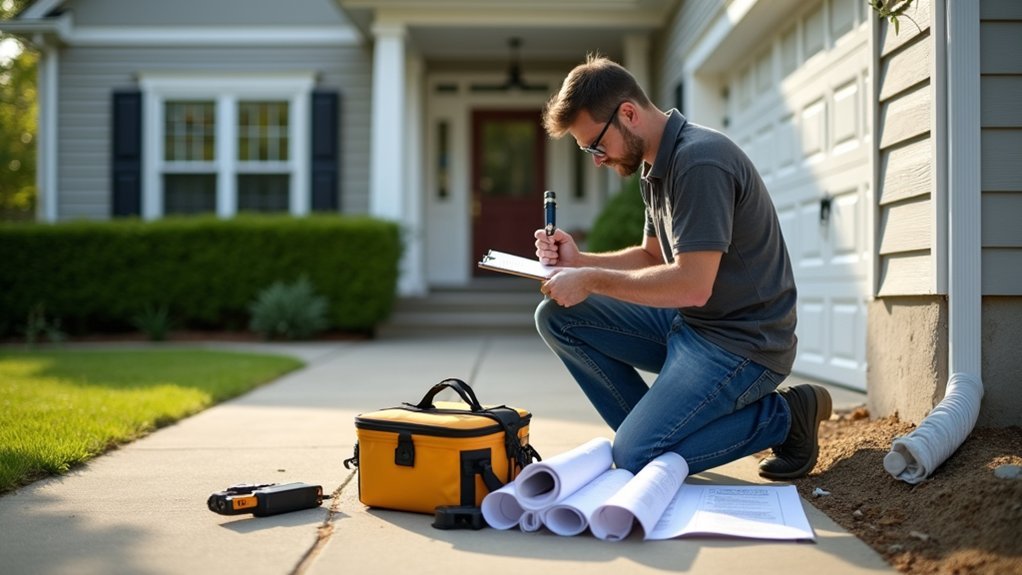
Morning light hits your fence line while wet grass hides old stakes and half-buried markers. You can’t expect an accurate survey if the surveyor can’t reach corners, open gates, or verify utilities without delays. Clear brush, move stored items, and stage key documents so questions get answered fast. Secure pets, disarm alarms, and fix obvious hazards that block access. Next, you’ll need to know exactly what gets checked—and what you might miss.
Key Takeaways
- Confirm boundaries by locating pins/monuments, and gather deeds, plats, easements, and any prior survey reports for quick verification.
- Ensure full access by unlocking gates, clearing driveways and paths, disarming alarms, and securing pets before the surveyor arrives.
- Clear boundary obstructions by trimming vegetation and moving planters, furniture, firewood, and debris away from corners and fence lines.
- Test utilities and safety systems, then complete quick repairs like fixing leaks, patching cracks, securing loose trim, and improving ventilation.
- Schedule adequate time and ensure site safety, providing keys or escorts and honestly disclosing defects to prevent delays and re-inspections.
Know What Your Property Surveyor Will Check
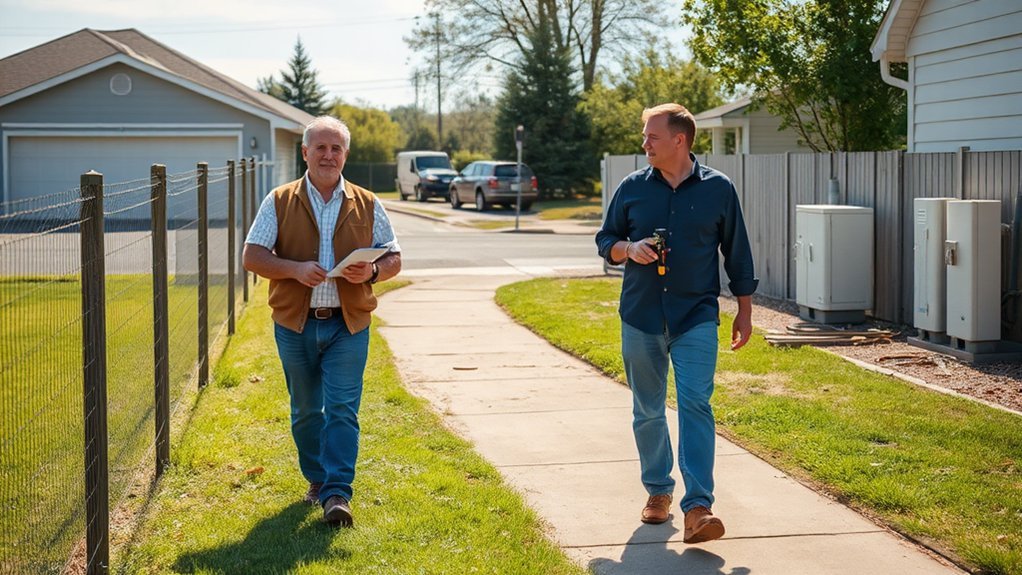
Before the surveyor sets foot on your property, you should know exactly what they’ll be looking for so you can avoid delays and preventable red flags. They’ll verify Property boundaries by locating monuments, pins, and recorded markers, then comparing your deed, plats, and easements to what’s on the ground.
You should expect them to note encroachments like fences, sheds, driveways, or landscaping that cross lines or sit within utility corridors. They’ll also document improvements and setbacks to confirm compliance with local zoning.
If the survey supports construction or financing, they may flag Structural integrity concerns they can observe, such as obvious foundation movement, retaining-wall failure, or unsafe grading that affects measurements.
You’ll help by gathering prior surveys, permits, and title documents upfront.
Clear Access Points for the Property Survey
Before your surveyor arrives, you’ll need to secure clear, legal access to every area they must measure. Unfasten all gates and relevant doors, and clear driveways and walkways so equipment and sightlines aren’t blocked.
Remove clutter, brush, and stored items near boundary lines and corners so markers and monuments are visible and reachable.
Unlock Gates And Doors
If your surveyor can’t reach every boundary point and key feature, the inspection stalls and the results can suffer. Before the appointment, make sure every gate and door needed for measurement is accessible, unlatched, and operable, so the crew doesn’t lose time waiting on you or rescheduling.
- Confirm gate security: remove temporary padlocks, set codes, or leave a key in a labeled lockbox.
- Check hinges, latches, and closers as part of door maintenance; sticking doors can block access to courtyards and side yards.
- Make outbuilding entries (garage, shed, rear annex) available if they affect footprint and boundary ties.
- Control pets and alarms so the surveyor can pass through safely without triggering sensors.
Do a quick walk-through the morning of the survey.
Clear Driveways And Walkways
Although the survey focuses on measurements, your driveway and walkways function as the crew’s work lane, so keep every access point clear and stable. Park vehicles off the drive, pull in bins, and leave enough turning space for equipment carts and tripods. Sweep gravel, leaves, and mud so wheels roll true and stakes don’t shift.
Address driveway maintenance issues that can delay work: fill potholes, level ruts, and mark soft shoulders so no one steps into a collapse zone. For walkway safety, remove slick moss, shovel snow, and spread grit on ice. Fix lifted pavers and loose steps, and secure handrails where needed.
Keep exterior lighting working for early starts and late finishes too.
Remove Obstructions Near Boundaries
When your lot lines sit behind clutter, the survey crew can’t set corners, run lines, or shoot clean measurements. You’ll save time and avoid re-visits by clearing access to every likely corner and line-of-sight target, especially where boundary markers may be buried or fenced off.
Remove landscaping obstacles so stakes, pins, and monuments can be located, flagged, and referenced without guesswork.
- Trim shrubs and low branches back 2–3 feet from fences and corner areas.
- Move planters, firewood, patio furniture, and debris away from suspected line runs.
- Clear tall grass, ivy, and mulch away from boundary markers; don’t disturb the marker itself.
- Unlock gates and secure pets so the crew can traverse boundary lines safely, end-to-end.
Test Utilities and Key Systems Before the Survey
Before the surveyor arrives, run a quick but methodical check of every utility and main system so you can spot faults while they’re still easy to demonstrate and fix.
Start with a full utility check: switch on lights in every room, test sockets with a plug-in tester, and verify the consumer unit labeling matches circuits.
Run hot and cold taps, flush toilets, and confirm stopcocks and isolation valves turn freely.
For gas, note appliance operation and any unusual smells, then guarantee the meter is accessible.
Check your key system items: heating fires up and reaches temperature, boiler pressure sits in range, radiators warm evenly, and thermostats respond.
Finally, test smoke/CO alarms, extractor fans, and your door/window locks so access and safety don’t slow the survey.
Quick Repairs to Handle Before Your Property Survey
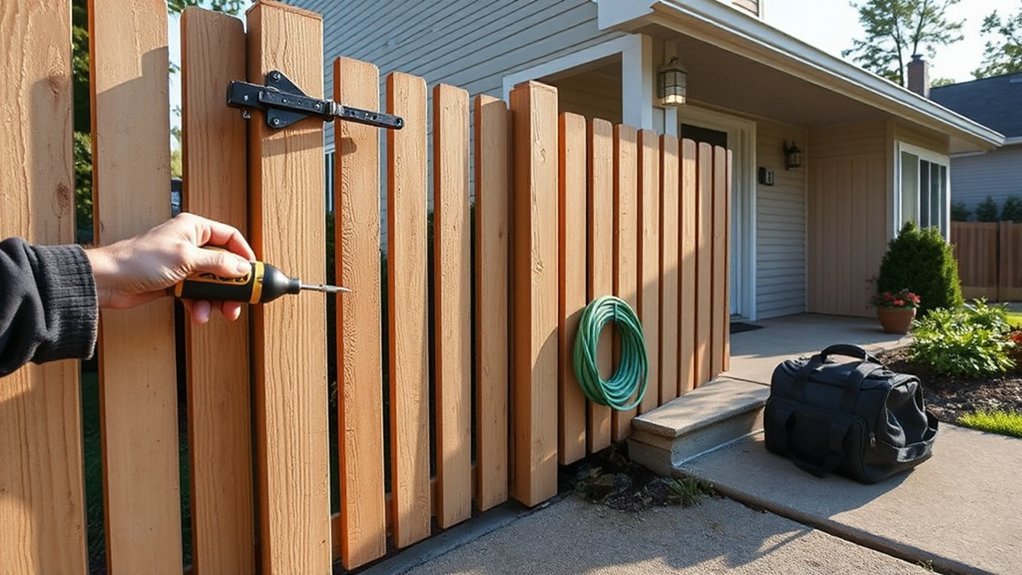
Before your property survey, you should tackle fast, high-impact fixes that surveyors flag immediately.
Patch visible cracks and holes in walls, ceilings, and external masonry, and secure any loose trim or fittings so defects don’t look active or worsening.
Fix leaks promptly and address damp at the source—replace failed seals, repair pipework, and improve ventilation—so moisture readings don’t raise avoidable concerns.
Patch Cracks And Holes
Although small cracks and holes might look purely cosmetic, a surveyor will often treat them as clues to movement, damp, or past water ingress—so it’s worth dealing with them properly. Don’t mask issues with sloppy wall repairs or quick cosmetic fixes; instead, make tidy, inspectable patches that show you’ve maintained the fabric.
- Rake out loose material, dust off, and slightly widen hairline cracks so filler bonds properly.
- Use the right product: fine surface filler for plaster, repair mortar for masonry, and mesh tape for recurring joint cracks.
- Fill in thin layers, let each cure, then sand flush to avoid ridges and “picture framing.”
- Prime bare patches and repaint to match, so repairs read as maintenance, not concealment.
Fix Leaks And Damp
If you leave leaks or damp untreated, a surveyor will assume there’s an ongoing defect until you prove otherwise.
Start with Leak detection: check under sinks, around toilets, radiators, and the boiler for staining, verdigris, swollen chipboard, or musty odour. Inspect ceilings below bathrooms and loft tanks for brown halos.
Reseal baths and showers, tighten compression fittings, and replace perished hoses or tap washers.
Clear gutter joints and downpipes, then confirm water discharges away from the wall.
For Damp prevention, improve airflow: unblock air bricks, fit or clean extractor fans, and keep trickle vents open.
Treat minor mould after fixing the moisture source; don’t just paint over it.
Document repairs with dated photos and receipts.
Documents to Have Ready for Your Surveyor

When you gather the right paperwork ahead of time, your surveyor can verify boundaries, identify legal constraints, and flag risks without wasting time chasing missing details. Solid survey preparation starts with assembling complete, current Property documents and keeping them accessible in one folder.
- Title register and title plan (or deed pack): confirm ownership, extents, and any rights or covenants.
- Previous survey reports: provide historic boundary evidence, benchmarks, and noted discrepancies.
- Planning permissions and Building Control sign-offs: validate compliant extensions, conversions, and structural alterations.
- Utility and drainage records (maps, easements, wayleaves): show buried services, access rights, and maintenance responsibilities.
If you’ve had boundary agreements or disputes, include correspondence and any signed determinations too.
Survey-Day Mistakes That Slow the Survey Down
With your title documents, past reports, and consents organised, the next thing that dictates how smoothly a survey runs is what happens on the day. Don’t miss the appointment window; poor Survey scheduling forces rushed inspections or re-visits.
Make sure you’re on site, keys ready, alarms disarmed, and access cleared to lofts, cellars, meters, and outbuildings. Don’t block inspection points with stored items or parked cars, and don’t restrict access “for safety” without providing PPE or an escort.
Keep pets secured so the surveyor can work uninterrupted. Don’t guess answers; have supplier details for utilities and any guarantees to hand.
Finally, don’t hide defects—disclosure supports accurate Property valuation and reduces follow-up queries later.
Frequently Asked Questions
How Much Does a Property Survey Usually Cost?
You’ll usually pay $300–$1,200 for a property survey, depending on lot size, terrain, and records. You’ll get clearer boundary markers and better survey accuracy if you provide deeds and allow full access.
How Long Does a Typical Property Survey Take?
You’ll usually wait 1–3 weeks; fieldwork often takes 2–6 hours. Like timing a relay, crews pass notes to protect Survey accuracy. If Property markers are missing, research and drafting add days.
Do I Need to Be Present During the Survey?
You don’t need to be present during the survey, but you should stay reachable. Guarantee Property access by opening gates and securing pets. Complete Survey preparation by marking hazards, clearing brush, and providing plats or permits.
Will a Survey Uncover Boundary Disputes With Neighbors?
Yes, a survey can reveal potential boundary disputes by providing Boundary confirmation against deeds, monuments, and existing fences. You’ll spot encroachments early, but resolution often needs Neighbor cooperation, documentation, and sometimes legal advice. You shouldn’t assume agreement.
How Often Should I Have My Property Surveyed?
Like a fencepost in fog, you should survey every 5–10 years, and before buying, building, selling, or after storms. You’ll secure boundary clarification and reduce legal implications when lines shift or disputes brew.
Conclusion
You’ve cleared access, tested systems, handled quick fixes, and lined up every document—so you’re close. On survey day, you’ll open gates, disarm alarms, secure pets, and keep utilities available, letting your surveyor move without delays. But one final detail can still change everything: the hidden obstruction you didn’t notice, the forgotten easement note, the unmarked boundary corner. Do one last walk-through, then step back and let the measurements tell the truth.