
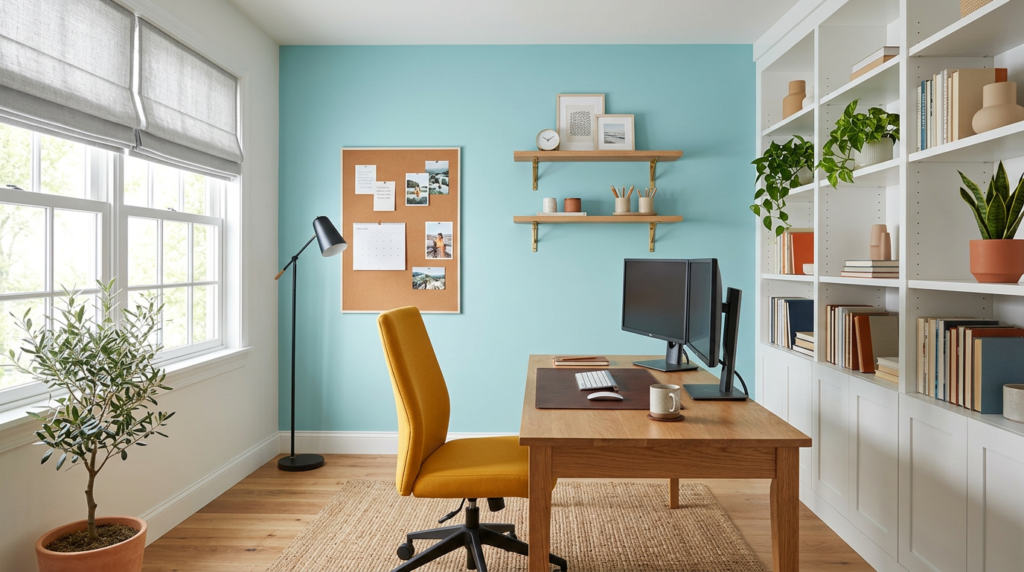
You can make your home office feel sharper or calmer just by changing the colour on the walls. Start by thinking about how you want to feel at your desk, then check how daylight and lamps shift the tone throughout the day. Soft off-whites and greiges keep things bright, while sage, navy, or a deep accent wall can add focus without clutter. The next choice is the one most people miss…
Pick a Home Office Colour for Your Mood
Whether you want to feel focused, calm, energised, or creatively fired up, your home office colour can set the tone the moment you sit down. Start by naming the feeling you need most on workdays, then choose a palette that supports it.
For focus, lean into cool neutrals, soft greys, or muted blues that quiet visual noise. If you’re after calm, try sage green, dusty teal, or warm beige to soften stress and steady your pace.
Need energy? Use crisp white with punchy accents like coral, marigold, or cobalt to keep you alert without overwhelm. For creativity, experiment with lavender, terracotta, or deep green, and pair them with varied textures.
Test paint swatches at eye level and live with them for a week.
Match Home Office Colours to Natural and Lamp Light
Once you’ve chosen a colour that fits the mood you want to work in, make sure it also behaves well in your room’s lighting, because the same paint can look radically different from morning sun to evening lamplight. Check which direction your windows face: north light reads cooler and can mute warm paints, while south light intensifies yellows and reds.
Paint large test swatches and watch them at three times—morning, midday, and night—before committing. Then match your bulbs: warm LEDs (2700–3000K) enrich earthy greens and terracottas, while cooler bulbs (3500–4000K) sharpen blues and crisp whites.
If you mix daylight and lamps, keep colour temperature consistent so your walls don’t flip between muddy and harsh while you work.
Neutral Home Office Colours That Stay Bright
If you want a neutral home office that still feels airy, choose shades with enough undertone to reflect light instead of swallowing it. Reach for warm off-whites with a hint of cream, pale greige, or soft taupe; they read calm but won’t look flat.
Skip stark, blue-white paint if your room feels cold, and avoid heavy beiges that turn muddy in low light.
Keep contrast gentle: pair your walls with bright white trim, light oak, and matte black accents to add definition without darkening the space. Use a low-sheen eggshell finish to bounce light and hide scuffs.
If you want depth, paint built-ins a shade darker than the walls, and keep the ceiling a clean white so the room lifts visually.
Green Home Office Colours for Calm Focus
Neutral shades keep a home office bright, but green adds the calm, focused energy you want for long work sessions. Choose a soft sage or dusty olive for walls to reduce visual noise while still feeling fresh.
If you want more depth, paint a single accent wall in forest green behind your desk to frame your screen and signal “work mode” without darkening the whole room.
Pair green with warm whites, light oak, and matte black hardware for a clean, modern look. Add texture through linen curtains, a wool rug, or a leather chair so the space feels grounded.
Finish with living plants or botanical prints to echo the palette and keep your mind steady.
Blue Home Office Colours That Boost Productivity
Because blue naturally reads as clean and controlled, it’s an easy way to make your home office feel more productive without turning it stark. Use mid-tone blues on the main walls to sharpen attention and reduce visual noise, then keep trim and ceilings crisp for contrast.
If you’re on video calls, choose softer denim or slate so your face doesn’t look washed out.
Add deeper navy behind your desk to anchor your workspace and make your screen feel brighter. Pair blue with white, charcoal, or light wood to keep the palette disciplined.
Bring in blue through cabinets, shelving, or a rug if you can’t repaint. Finish with matte paint to cut glare, and keep patterns minimal so your tasks stay front and center.
Warm Home Office Colours for a Cozy Feel
When you want your home office to feel inviting rather than clinical, warm colours do the heavy lifting without distracting you from the work. Start with soft terracotta, clay, or muted peach on one wall to add gentle energy and keep the space grounded.
If you prefer something calmer, choose creamy off-white, warm beige, or sand to brighten the room while still feeling snug. Pair these tones with honey oak, walnut, or rattan textures so the palette reads intentional, not overly sweet.
You’ll get the best balance by keeping undertones consistent: pick either golden warmth or rosy warmth and repeat it across paint, rugs, and curtains. Finish with warm metal accents like brass or bronze for polish. Keep contrast light.
Dark Home Office Colours That Still Feel Open
Warm shades bring comfort, but deeper tones can make your office feel sharper and more focused without shrinking it. Choose inky navy, charcoal, or deep forest green with a soft, matte finish; they absorb glare and keep screens easier on your eyes.
You’ll keep the room feeling open by balancing dark walls with a bright ceiling and consistent, high-CRI lighting that avoids shadows. If your office is small, pick one dark colour family and repeat it across walls, built-ins, and doors so lines blur and the space reads larger.
Use lighter flooring, simple window coverings, and reflective surfaces like glass or satin hardware to bounce light. Stick to clean edges and minimal visual clutter.
Add Accent Colours (Feature Wall, Trim, Décor)
Where should you add colour if you don’t want to repaint the whole room? Start with a feature wall behind your desk. It frames video calls, defines your work zone, and lets you test bolder shades like deep teal, rust, or olive without overwhelming the space. If paint feels like too much, use peel-and-stick wallpaper for the same impact.
Next, add colour through trim and small architectural details. Painting baseboards, a door, or built-in shelves a contrasting tone sharpens edges and makes neutrals look intentional.
Finally, layer décor accents you can swap anytime: a desk lamp, chair, rug, curtains, and art. Repeat one accent hue in three places to keep it cohesive, not chaotic.
Conclusion
You’ll work better when your home office colours match how you want to feel. Start with soft neutrals to keep the room bright and distraction-free, then layer in greens or blues for calm focus and productivity. If you crave warmth, bring in terracotta or muted peach. Don’t fear darker shades—use them as an accent to add depth without closing the space in. Finally, test paint in your lighting so it stays steady all day.