
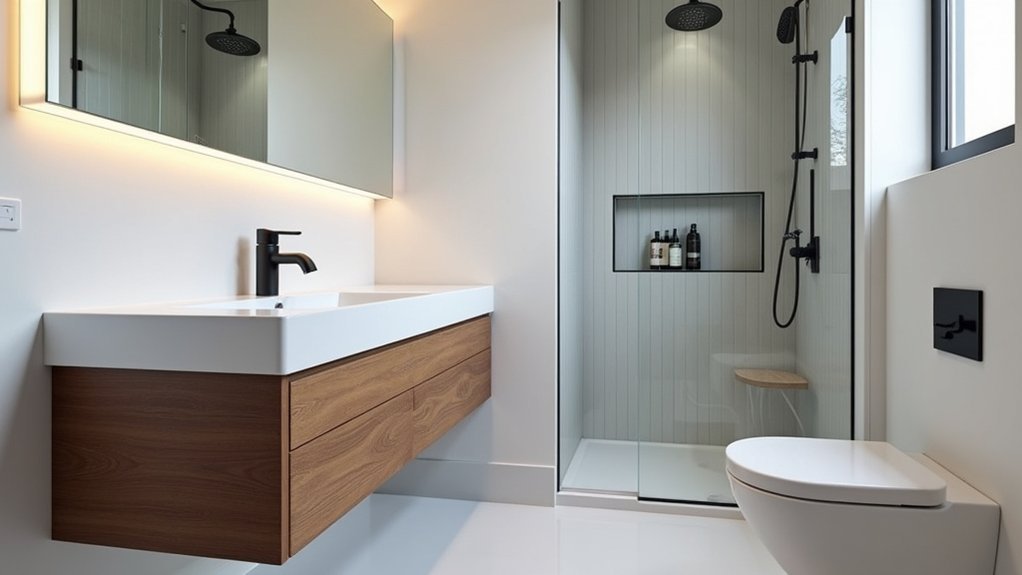
You can make a small bathroom feel larger without a full remodel if you start with measurements, a clear budget, and a plan for visual continuity. Swap a swing door for a pocket or barn style, choose wall-mounted fixtures and a drawer vanity, and add recessed niches to keep counters clear. Use a big mirror, light tile, and a frameless shower for a seamless look. Next, you’ll want to prioritize the upgrades that pay off fastest…
Key Takeaways
- Plan layout with accurate measurements and a 10–15% budget cushion to avoid costly plumbing moves and clearance issues.
- Save floor space by swapping swing doors for pocket or sliding barn doors, ensuring wall cavities are clear of plumbing and wiring.
- Choose compact fixtures like wall-mounted sinks, shallow drawer vanities, and wall-hung toilets to open sightlines and simplify cleaning.
- Add vertical and recessed storage with flush medicine cabinets, slim shelves, and shower niches to clear counters without crowding the room.
- Brighten and unify the space using light neutrals, 2–3 matching finishes, and grout that blends with tile to reduce visual clutter.
Plan Small Bathroom Upgrades (Budget + Measurements)
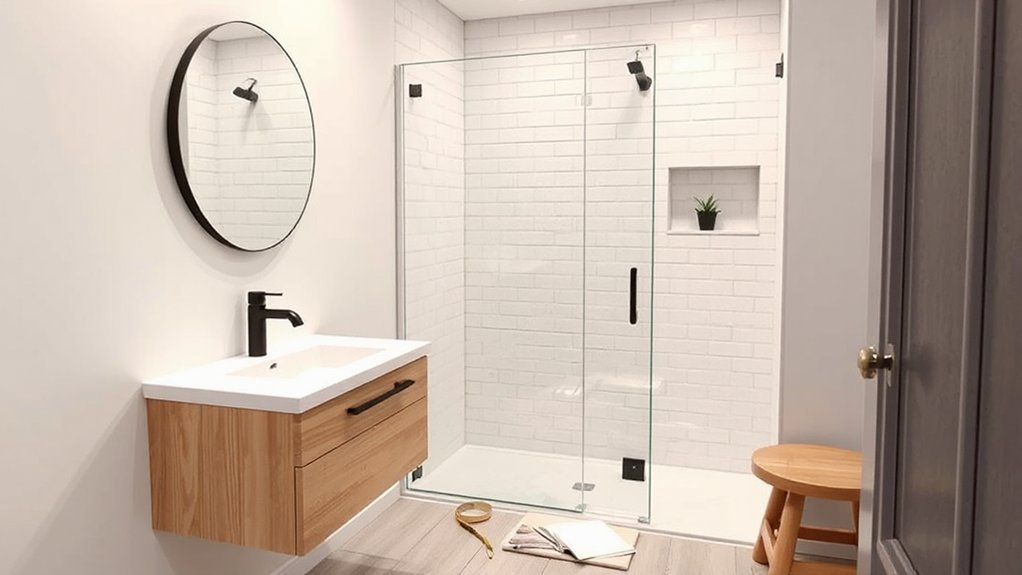
Before you buy a single tile or faucet, lock in two essentials: your budget and your measurements. Measure wall-to-wall width, vanity depth, toilet clearance, and the swing radius of drawers so you don’t create pinch points. Photograph plumbing locations and note vent stacks; moving them can blow costs fast.
Build a line-item budget with a 10–15% cushion, then rank upgrades by impact: lighting, storage, then finishes. Use painter’s tape to map new footprints on the floor and mark outlet heights for mirrors or sconces.
Choose Eco friendly materials like low-VOC paint, recycled-glass tile, and water-saving fixtures. If you crave character, price Vintage fixtures early so you can hunt deals without derailing timelines.
Replace Swing Doors With Pocket or Barn Doors
Because a standard swing door can steal several square feet of usable floor area, swapping it for a pocket or barn door instantly frees up room for a wider vanity, a slimmer storage tower, or simply safer clearance around the toilet.
Pocket options disappear into the wall, so you’ll need to confirm you’ve got a clear stud bay and no plumbing or wiring conflicts before you commit. If opening the wall isn’t practical, choose Sliding doors on a surface-mounted track; they’re faster to install and add a modern, boutique-hotel vibe.
For barn doors, pick a moisture-resistant slab, a quiet soft-close kit, and a floor guide to prevent sway. Add a privacy latch, and seal gaps with brush strips to cut sound and drafts.
Swap to Space-Saving Bathroom Fixtures
Once you’ve freed up swing space with a pocket or barn door, reclaim even more floor area by swapping in space-saving fixtures.
You can choose a wall-mounted sink—think slim-profile basins or corner styles—to open up the footprint and make cleaning easier.
Then pair it with a compact toilet alternative, like a short-projection model or wall-hung unit, to keep the room feeling lighter and more modern.
Wall-Mounted Sink Options
If your vanity eats up precious floor space, a wall-mounted sink gives you a cleaner, more open footprint without sacrificing daily function. You’ll find Wall mounted sink options that fit Modern bathroom designs, from slim rectangular basins to round bowls with integrated towel bars.
Choose a compact depth (14–18 inches) to keep walkways clear, and pair it with a wall-mounted faucet to free rim space and simplify wipe-downs. Add a narrow floating shelf or recessed medicine cabinet for essentials without crowding the basin.
For durability, pick vitreous china or solid-surface materials, and specify a concealed carrier rated for your wall type. Finish the look with a chrome or matte-black trap cover to keep plumbing tidy.
Compact Toilet Alternatives
Where can you steal back a few essential inches in a tight bath without compromising comfort? Start with a compact toilet that shortens projection, often 24–26 inches, so your knees clear the vanity.
Look for an elongated-bowl “compact” model for better ergonomics, and confirm rough-in (10 vs 12 inches) before you buy.
A wall-hung toilet saves floor space and cleans easily; pair it with an in-wall carrier rated for 500+ lbs and a slim dual-flush plate.
If you can’t open walls, choose a skirted, round-front space-saving commode with a concealed trapway for a sleeker, modern look.
Finish with a soft-close seat and quiet-fill valve to keep the upgrade feeling premium.
Choose a Drawer Vanity for Small Bathrooms
Choose a drawer vanity to get more usable storage without adding bulk, since drawers keep toiletries visible and easy to grab. You’ll reclaim counter space by sorting items into shallow top drawers and deeper lower ones for hair tools and backups.
Stick with a compact, wall-hung or slim-depth design so you keep clear floor space while still getting that clean, modern built-in look.
Maximize Storage With Drawers
Even when your bathroom’s footprint is tight, a drawer-style vanity can open serious storage without adding visual clutter. You’ll keep counters calm by assigning every item a drawer “zone”: daily skincare up top, hair tools in the middle, backups below.
Look for creative drawer layouts like shallow top trays for cotton pads and razors, plus deeper drawers that fit bottles upright.
Build innovative storage solutions into the setup: add adjustable dividers, clear bins, and non-slip liners so items don’t shift. Use a U-shaped drawer to wrap plumbing and reclaim wasted space.
Mount a magnetic strip inside a drawer for tweezers and nail clippers, and add a pull-out caddy for cleaning supplies. Label discreetly, and you’ll find everything fast.
Choose Compact Drawer Designs
Once you’ve mapped out what belongs in each drawer, the next win comes from picking a compact drawer vanity that fits your layout without crowding the room. Measure door swings, toilet clearance, and the walking lane, then choose a depth around 18–20 inches if space is tight.
Prioritize full-extension slides so you can reach the back without digging, and look for staggered compartments: a shallow top for grooming tools, deeper bottoms for bottles and rolls.
Floating vanities keep sightlines open and make cleaning easier, while tapered legs can add the same airy effect.
Stick with compact drawer styles that avoid bulky frames. Finish with modern drawer handles—slim pulls or edge tabs—to reduce snags and sharpen the look.
Upgrade to Wall Storage and Recessed Niches
If your counters and tub ledges keep disappearing under bottles, shifting storage onto the walls is the quickest way to reclaim usable space. Add slim storage shelves above the toilet or beside the mirror to corral daily essentials without crowding the sink. Choose powder-coated metal or sealed wood for moisture resistance, and keep depths under 5 inches so the room still feels open.
In the shower, install Wall niches between studs for a built-in look that’s on-trend and easy to clean. Place one niche at chest height for shampoo and a lower one for razors, or run a long horizontal niche to avoid clutter. Use contrasting tile or a stone sill for definition, and slope the base slightly so water drains. You’ll gain order fast.
Upgrade Lighting to Brighten a Small Bathroom
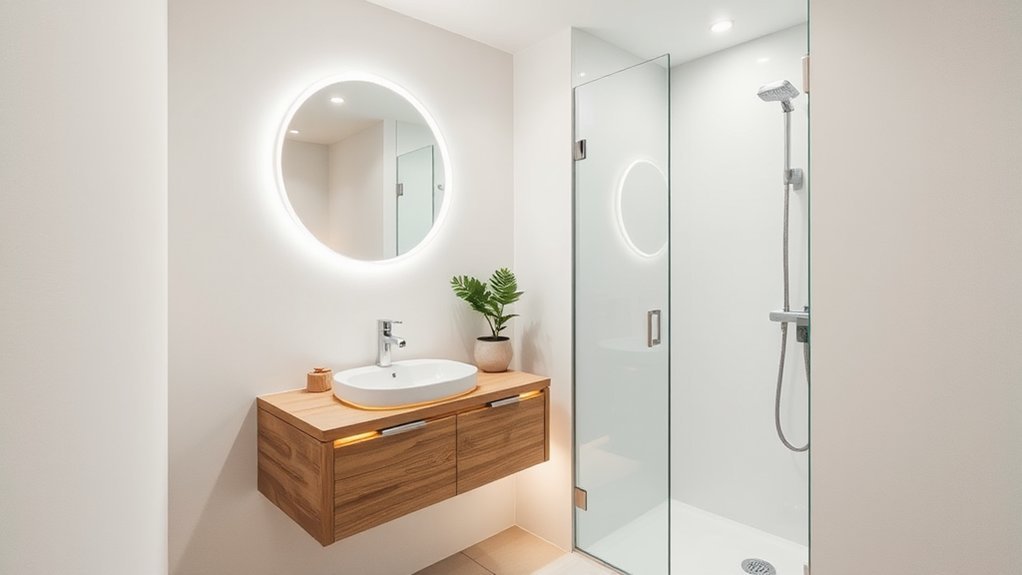
Because small bathrooms swallow shadows fast, upgrading your lighting is one of the quickest ways to make the space feel larger and cleaner. Swap a dated fixture for a low-profile LED flush mount or slim recessed lights to deliver even ambient lighting without visual clutter. Choose 3000K “soft white” for a modern, flattering tone, and aim for high CRI (90+) so skin tones and paint look true.
Then layer in task illumination where you actually need it: a damp-rated sconce or vertical LED bar beside the vanity reduces harsh under-eye shadows. Put everything on a dimmer so mornings stay bright and evenings feel calm.
If your ceiling is low, bounce light with a wide beam angle and matte white paint to soften contrast. Add a quiet exhaust-fan light combo if needed.
Use Mirrors to Double Light and Depth
Although a small bathroom can feel boxed in, the right mirror instantly amplifies light and adds visual depth without taking up floor space. Start with mirror placement: hang a large, wall-to-wall style above the vanity to stretch sightlines, or choose a tall, vertical mirror to lift the ceiling visually.
Position it opposite your brightest light source or doorway so light reflection bounces illumination deeper into the room.
Go frameless or use a slim metal frame for a current, minimal look, and keep edges close to cabinetry to avoid visual clutter. If you need storage, pick a mirrored medicine cabinet with a recessed install to stay flush.
For extra depth, add a narrow mirror panel beside the vanity or behind open shelving to multiply sparkle.
Pick Paint and Tile to Open Up the Space
When you choose paint and tile with intention, a small bathroom reads brighter, taller, and less busy. Start with light, warm neutrals or soft desaturated hues; they bounce light and calm visual noise.
Keep trim and ceiling one shade lighter than walls to lift the room, or color-drench in a pale tone for a seamless envelope. For color schemes, limit yourself to two to three finishes, and repeat them across hardware, grout, and textiles.
Choose tile patterns that stretch sightlines: vertical stacked subway to add height, large-format tile to reduce grout lines, or a subtle herringbone in the same tone for movement without clutter. Match grout close to tile color so edges don’t chop up the space.
Add Sleek Shower Upgrades That Save Space
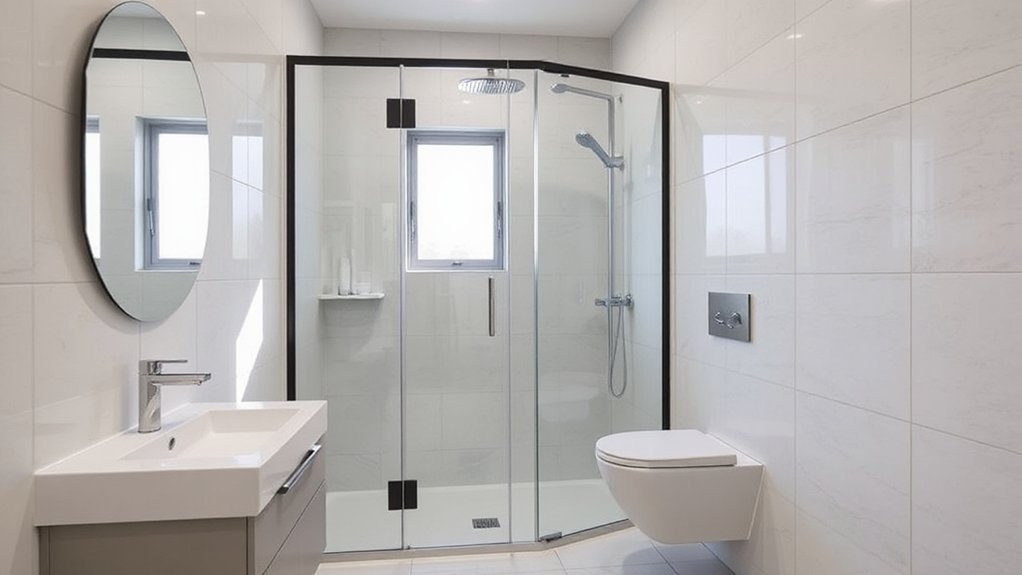
Three sleek shower upgrades can instantly buy you breathing room in a small bath: swap a swinging door for a frameless sliding panel (or a fixed glass screen). Recess your shampoo niche between studs instead of adding a caddy. And choose a wall-mounted valve with a handheld on a slim rail to keep the footprint tight while improving daily function.
To push the airy look further, specify a frameless enclosure with minimal clamps and clear glass so sightlines stay open. Pair it with a Rain shower head sized 8–10 inches, then keep the arm short so it doesn’t protrude.
Finish by tightening details you’ll feel daily:
- Use a linear drain at the back wall to simplify slope.
- Add a curbless threshold if your floor build-up allows.
- Choose a pressure-balanced valve for stable temperature control.
Finish With Slim Decor That Won’t Clutter
Because every surface in a small bath pulls visual weight, finish the room with slim decor that adds function without piling on clutter. Choose a narrow tray for the vanity to corral soap and skincare, then limit it to two daily items. Swap bulky canisters for wall-mounted dispensers and a floating toothbrush cup.
Add a thin, frameless mirror with a micro-shelf to hold a razor and hand cream. Use Minimalist decor that’s matte black, brushed nickel, or light oak to match your hardware and look intentional.
Keep towels streamlined: one ladder hook rail instead of multiple bars. Finally, pick clutter-free accessories like a lidded bin under the sink and a slim reed diffuser for a clean, spa-like finish.
Frequently Asked Questions
Do I Need a Permit to Remodel a Small Bathroom?
You might need a permit—check local Permit requirements and renovation regulations. If you’re moving plumbing, adding electrical, or changing layout, you’ll likely need one. Cosmetic updates like paint, fixtures, and tile often don’t.
How Long Does a Typical Small Bathroom Upgrade Take?
You’ll typically finish a small bathroom upgrade in 1–3 weeks. Picture fresh tile setting as Lighting enhancements go in and Storage solutions get tucked behind sleek vanities. Simple swaps take days; full reroutes stretch longer.
What’s the Best Way to Prevent Mold in a Tiny Bathroom?
Prevent mold by keeping humidity low: run your fan 20 minutes post-shower, crack a window, and choose ventilation solutions like a humidity-sensing fan. Clean grout weekly, fix leaks fast, and use mold resistant paint.
Can I Upgrade My Bathroom Without Replacing Existing Plumbing Lines?
Yes—you can, like tuning a song without changing the strings. Use Cosmetic updates: fixtures, lighting, paint, vanities. Add Alternative plumbing solutions: surface-mounted supply lines, macerating toilets, flexible connectors, and smart shutoffs—stylish, code-aware, low-demo.
What Bathroom Upgrades Increase Home Resale Value the Most?
You’ll boost resale most with updated Luxury fixtures, Modern lighting, and a refreshed vanity with stone top. Add a frameless glass shower door, low-flow toilet, and timeless tile; keep finishes cohesive and neutral.
Conclusion
When you upgrade a small bathroom, you’re really widening a path, not just moving fixtures. You measure first, then trade bulky swings for pocket doors, and heavy vanities for drawers and wall mounts. You carve clutter into the walls with niches, bounce daylight with mirrors, and keep paint and tile quiet and continuous. Finish with a frameless shower, linear drain, and slim trays—like clean footsteps—so the room feels open, current, and calm.