
You don’t need a lottery win to make your home feel new. You start by setting a tight budget with realistic UK costs, then you tackle quick wins: trade emulsion on tired walls, warmer lighting, and new handles that sharpen every room. Next, you stop heat leaking out with loft insulation and draught-proofing before you touch floors, kitchens, or bathrooms. The biggest gains often come from the smallest fixes, but only if you start in the right order…
Key Takeaways
- Set a clear renovation plan and budget, prioritise must-haves, and keep a 10–15% contingency for unexpected costs.
- Get three itemised quotes, confirm what’s included and VAT, and compare like-for-like to control labour and material spend.
- Refresh quickly with paint, warm LED lighting, and matching hardware updates for a cohesive look with minimal disruption.
- Upgrade floors cheaply by sanding and painting boards or laying peel-and-stick vinyl, then add rugs with grippy underlay for warmth.
- Cut bills by draught-proofing doors and windows and topping loft insulation to 270mm before spending on bigger upgrades.
Set Your Budget Renovation Plan (UK Costs)
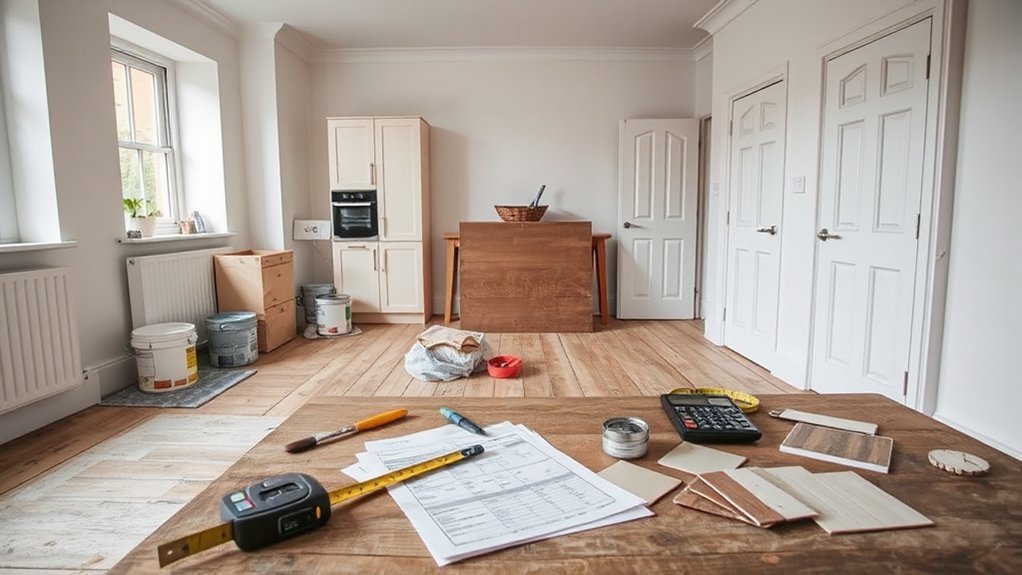
Before you pick up a paintbrush or call a tradesperson, set a clear renovation plan that matches what you can actually afford in the UK.
List must-haves, nice-to-haves, and what you’ll drop if costs rise.
Price basics: small room plastering often runs £200–£500; a new boiler can hit £2,000–£4,000; fitting a basic kitchen may start around £3,000–£8,000 plus labour.
Get three quotes, check what’s included, and confirm VAT.
Build a 10–15% contingency for surprises, especially in older terraces.
Use DIY renovation tips for prep, demolition, and sourcing reclaimed materials, but budget for qualified electrics and gas.
Plan Cost effective landscaping last, with phased paving and low-maintenance plants.
Quick Wins: Paint, Lighting, and Hardware
Although major refits can swallow your budget fast, you can make a UK home feel fresher in a weekend with three cheap upgrades: paint, lighting, and new hardware.
Start with paint: pick simple colour schemes (soft greys, warm whites, muted greens) and buy trade emulsion for better coverage per litre. Paint one feature wall or refresh tired woodwork for maximum impact.
Next, swap lighting. Replace yellowed bulbs with warm LED (2700–3000K), add a plug-in floor lamp, and fit an inexpensive shade to soften glare in typical UK rooms.
Finally, change hardware. Update cupboard pulls, door handles, and switch plates in matching finishes. Then tweak furniture arrangements to open walkways and highlight your newly brightened focal points.
Make UK Rooms Warmer: Insulation and Draught-Proofing
If your home feels chilly even with the heating on, you’ll get the biggest budget-friendly gains by sorting loft and roof insulation first.
Next, seal draughts around doors, windows, letterboxes, and loft hatches to stop warm air leaking out.
Then look at insulating suspended floors and problem walls, so your rooms stay warmer for less.
Loft And Roof Insulation
Because so much heat escapes through an uninsulated roof, topping up your loft insulation is one of the cheapest ways to make a UK home feel warmer and cut your bills.
Check what you’ve already got: many older homes have thin, patchy mineral wool. Aim for roughly 270mm total depth, keeping insulation clear of eaves so air can move and prevent damp.
Don’t block soffit vents; good attic ventilation protects timbers and stops condensation.
Insulate the loft hatch, and fit a simple cover over cold water tanks and pipes (not under the tank).
Before you add more, look for slipped tiles, torn felt, or daylight—basic roof repair now avoids wet insulation later.
If you’ve got a flat roof, consider adding rigid boards when you next re-cover.
Seal Draughts Around Openings
When cold air sneaks in through tiny gaps around doors, windows, letterboxes, and floorboards, your heating works harder for the same comfort. Seal those leaks and you’ll feel the difference straight away, especially in older UK terraces and semis.
Start with a quick draught hunt: run your hand around frames on a windy day, or use a candle (carefully) to spot movement.
Fit stick-on weather stripping to door and window stops, and add a brush strip to the bottom of external doors. Use draft excluders for letterboxes and keyholes, plus a simple door sausage for rooms you don’t use.
For floorboard gaps, apply flexible sealant or filler where boards meet skirting. Choose removable options in rentals and periodically check wear.
Insulate Floors And Walls
Where does most of your heat actually disappear to in a typical UK home—through the floor under your feet and the walls behind your sofa?
If you’ve got suspended timber floors, lift a board and fit mineral wool between joists, then staple a membrane to act as thermal barriers. For solid floors, add thick rugs and underlay as a cheap first step.
For walls, start with the simplest wins: fit foil radiator panels on external walls and move bulky furniture slightly forward to reduce cold spots.
If you can spend more, consider insulated plasterboard on problem rooms, or inject cavity wall insulation where suitable.
You’ll also cut noise: add dense underlay, acoustic sealant, and bookcases as low-cost soundproofing techniques.
Aim for steady warmth, not blasting boilers.
Cheap Flooring Refresh: Paint, Vinyl, and Rugs
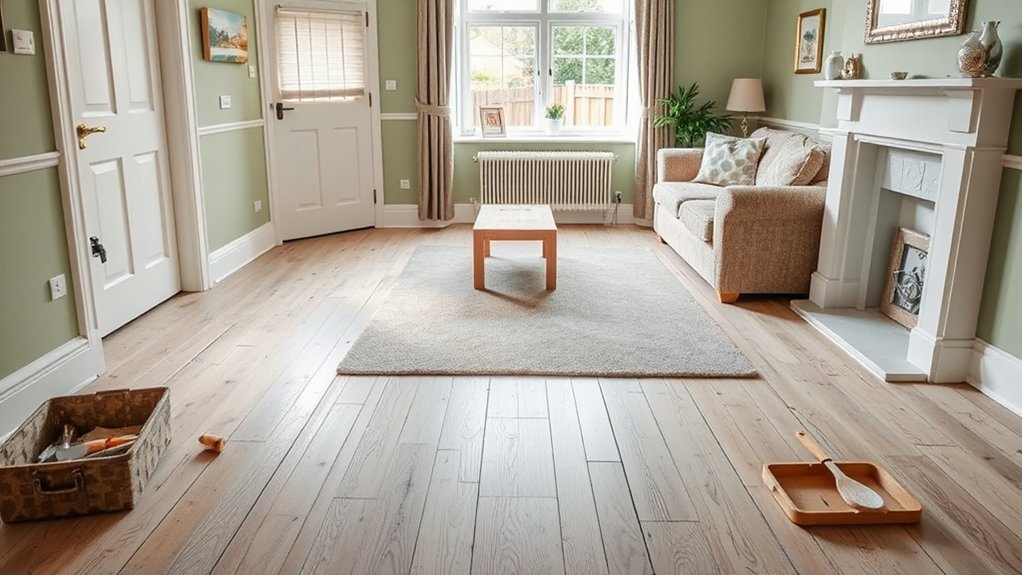
Although new flooring can swallow a renovation budget, you can refresh tired boards or dated laminate for far less with floor paint, peel-and-stick vinyl, and well-chosen rugs.
For Affordable flooring, start by sanding, cleaning, and using a UK-rated floor paint; add a clear topcoat in hallways to resist scuffs and muddy shoes.
If you rent or need speed, lay peel-and-stick vinyl tiles: snap chalk lines, stagger seams, and seal edges near bathrooms with flexible silicone.
Then use Creative rug ideas to hide wear and add warmth—layer a jute base with a washable runner, or choose a bold geometric rug to define a sitting area.
Pick grippy underlay to stop slips and protect what’s underneath.
Refresh a Kitchen Without Replacing Units
You can refresh your kitchen without ripping out the units by repainting your cabinet doors for a clean, modern look on a tight UK budget. Swap tired handles and hinges for new ones to instantly sharpen the finish without much effort.
If your counters are the main eyesore, you can apply a worktop wrap for a quick upgrade at a fraction of replacement cost.
Repaint Kitchen Cabinets
Ever wondered how to make a tired UK kitchen look new without paying for replacement units? Repainting your cabinets delivers a big change for a small outlay, especially if your carcasses are sound. Pick a durable, wipeable paint and a Kitchen color that suits Britain’s softer light; warm whites, sage, or deep navy often work well.
- Clean and degrease thoroughly, then lightly sand for keying and wipe off dust.
- Use a bonding primer for laminate or glossy doors, then apply two thin topcoats with a foam roller for a smooth finish.
- Let doors cure fully before rehanging, and label everything so refitting’s quick.
If your cabinet hardware looks dated, keep it for now and focus on a flawless finish.
Update Handles And Hinges
Why spend on new units when a simple swap of handles and hinges can make your kitchen feel sharper and more modern? Upgrading cabinet handles is one of the quickest UK-friendly refreshes, and you can do it with just a screwdriver and a tape measure.
Match the new hardware to your style: brushed nickel for a clean look, black for contrast, or brass to warm up painted doors. If you’ve got tired door knobs, replace them with consistent sizes across all doors for a neater finish.
Check the hole spacing (often 96mm or 128mm) so you don’t need to drill. While you’re at it, fit soft-close hinges to stop slamming and improve daily use.
Shop multi-packs online to keep costs down too.
Add New Worktops Wrap
How can a kitchen look brand new without ripping out perfectly good units? You can add a worktop wrap and instantly modernise the room for a fraction of replacement costs. A cost effective wrap mimics stone, concrete, or wood, giving you a stylish finish while keeping your cabinets and plumbing untouched.
Most UK DIYers can fit it in an afternoon with a sharp knife, squeegee, and patience.
- Clean and degrease the worktop, then dry fully to avoid bubbles.
- Measure twice, cut once, and wrap edges for a neat, water-resistant seal.
- Finish with matching upstands or a bead of clear silicone around sinks.
Choose heat- and moisture-rated films, and you’ll refresh your kitchen on a tight budget.
Budget Bathroom Updates That Look Brand New
Although a full refit can cost a fortune, you can make your bathroom look brand new with a few smart, budget-friendly updates that suit typical UK layouts.
Swap tired taps and shower heads for luxury fixtures in brushed brass or matte black; they’re quick to fit and instantly modern.
Re-grout and re-silicone around the bath and shower, then deep-clean or replace the seal on your shower screen.
Paint tiles with specialist bathroom paint or add peel-and-stick vinyl floor tiles to refresh dated patterns without ripping anything out.
Upgrade lighting to an IP-rated LED mirror and add smart technology like a motion sensor night light or a water-saving smart shower timer.
Finish with matching accessories and a new roller blind for a tidy, hotel feel.
Frequently Asked Questions
What Home Renovations Need Planning Permission in the UK?
You’ll need planning permission for big extensions, loft conversions beyond limits, major roof changes, front-facing alterations, new flats, boundary walls, and listed buildings. Check Planning restrictions and permitted developments with your council to avoid costly redraws.
Can I Renovate on a Budget While Keeping Period Features?
Yes, you can renovate on a budget and keep period features by prioritising Period preservation: repair sash windows, strip original doors, and restore fireplaces. Choose Budget friendly upgrades like draught-proofing, LED lighting, and reclaimed materials.
How Do I Find Trustworthy UK Tradespeople for Small Renovation Jobs?
Even if you hate chasing quotes, you’ll find trustworthy UK tradespeople by checking Online reviews, asking neighbours, and using Checkatrade/TrustMark. Get three itemised quotes, confirm insurance, agree Trade warranties in writing, and pay by bank transfer.
Are Budget Renovations Likely to Increase My Home’s Resale Value?
Yes, budget renovations can boost your resale value if you pick cost effective upgrades buyers notice. Use resale value strategies: refresh paint, improve kerb appeal, update lighting, and fix damp. You’ll avoid overcapitalising in most UK markets.
What DIY Renovation Work Must Be Certified Under UK Building Regulations?
You must certify notifiable DIY: electrical work in kitchens/bathrooms or new circuits, boiler/gas work (Gas Safe), structural alterations, drainage changes, and replacement windows. Use DIY safety, check renovation permits, and get council sign-off.
Conclusion
You don’t need a grand overhaul to give your UK home a “fresh start.” Stick to a clear budget, then lean on paint, brighter bulbs, and new handles for instant lift. Keep things cosy by topping up loft insulation and sealing those little gaps that let heat take a wander. If floors look tired, try vinyl, a rug, or floor paint. Update kitchens and bathrooms with fixtures and clever coverings—no “full refit” required.