You can choose Colour Ideas for Children’s Bedrooms that help your child sleep, play, and feel at home as they grow. Start by weighing age, mood, and natural light, then decide whether you need calm pastels, brighter play-zone hues, or a bold accent that adds personality without taking over. The right mix can make the room feel bigger, quieter, or more energising—but only if you know where to place colour and where to hold back…
How to Choose Children’s Bedroom Colours (Age, Mood, Light)
Although there’s no single “right” shade for every child, you can make colour choices that work by matching the room to your child’s age, the mood you want to create, and the light the space gets.
For toddlers, pick simple, friendly colours and keep contrast low so the room doesn’t feel busy.
For school-age kids, you can add bolder accents or a feature wall that fits their interests without overwhelming the space.
For teens, choose more mature tones and let them control pops of colour through textiles and art.
Use mood as your guide: energising brights suit play corners, while softer mid-tones keep a balanced feel.
In north-facing rooms, warm up colours; in sunny rooms, cool shades stay fresh.
Calming Children’s Bedroom Colours for Better Sleep
When you want your child to fall asleep faster and stay asleep longer, start with calming bedroom colours that signal “rest” rather than “play.” Choose soft, muted hues that lower visual stimulation at night.
Cool, dusty blues and blue-greens can feel breathable and quiet, especially on the main wall behind the bed. Gentle sage or greyed olive adds nature’s calm without looking cold.
Warm neutrals like oatmeal, greige, and creamy off-white keep the room cozy while reflecting light evenly. If you want a little colour, use muted lavender or smoky mauve in small doses, like bedding or curtains.
Avoid high-contrast combos and neon accents near the sleep zone. Keep trims and ceilings light for a settled, airy finish.
Pastel Children’s Bedroom Colour Schemes That Grow Well
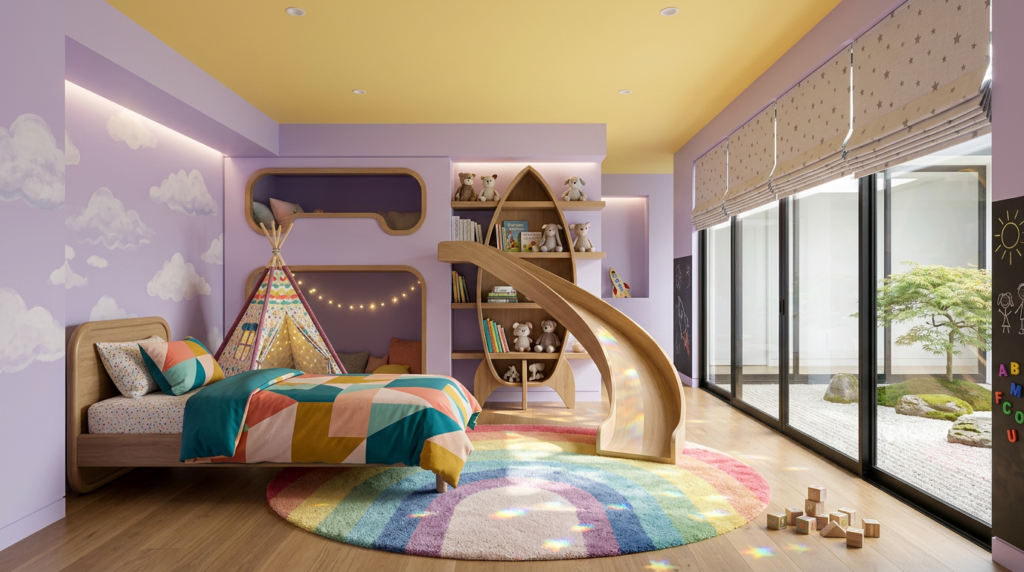
Because pastels soften a room without locking you into a babyish look, they’re one of the easiest colour paths to grow with your child. Start with a warm white base, then layer dusty pink, misty blue, soft mint, or muted lilac on one feature wall, bedding, or curtains.
Choose greyed-out pastels rather than sugary tones; they feel calmer now and more “designed” later. Keep the palette to two pastels plus a neutral so you can swap accessories as tastes change.
Add depth with natural wood, rattan, or light oak, and ground it with soft charcoal or tan in rugs and frames. When your child gets older, you can sharpen the look with black accents or richer textiles.
Bright Children’s Bedroom Colours for Play Zones
Pastels set a calm backdrop, but play zones thrive on bold colour that sparks energy and makes the “fun” area instantly clear. You can carve out this zone by choosing a vibrant palette—sunny yellow, turquoise, lime, or cherry red—and keeping it consistent across the play area.
Pair high-energy hues with plenty of white space so the room doesn’t feel chaotic, and pick finishes that handle scuffs and fingerprints.
If you’re working with a shared bedroom, give each child a distinct play colour to reduce squabbles and guide routines.
You’ll also want to consider light: bright north-facing rooms can take cooler tones, while dim corners benefit from warm, saturated shades.
Use Bold Accent Colours (Feature Walls, Trim, Textiles)
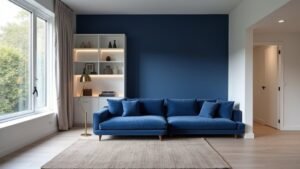
If you want maximum impact without repainting the whole room, use bold accent colours to create instant focus points. Pick one saturated shade—cobalt, coral, chartreuse, or plum—and repeat it in a few places so it feels intentional, not chaotic.
Paint a single feature wall behind the bed or desk to anchor the layout and make artwork pop. Add punch with trim: a bright door frame, window casing, or skirting line can sharpen a neutral scheme.
Bring colour in through textiles you can swap as tastes change—rug, bedding, curtains, and cushions. Choose patterns that include your accent hue plus two calmer tones to keep balance.
If you’re nervous, start small with lampshades and storage bins, then scale up.
Conclusion
You’ll get the best colour results when you match paint to your child’s age, mood, and the room’s natural light. Choose calming shades like misty blue or gentle mint where sleep matters most, then layer in soft pastels that’ll still feel right as they grow. For play zones, add brighter hits of yellow or turquoise. Finish with bold accents—feature walls, trim, or textiles—so the room feels lively without overwhelming them.