

If you want a bright, airy room, you can’t just grab any white and hope it works. Your natural light, bulb temperature, and nearby colors will shift a “clean” white into something icy, yellow, or flat. You’ll also need to line up undertones with your trim and floors so everything feels intentional. A few standout whites handle these variables better than most, but the best choice depends on one detail you might be missing.
Choose White Paint Based on Your Light
Because light shifts throughout the day, you should choose a white paint shade based on how your room actually reads in its natural and artificial lighting.
Start by noting your window direction: north light can feel cooler and dimmer, while south light stays warmer and brighter. In east-facing rooms, whites look crisp in the morning and duller later; west-facing rooms glow at sunset and can turn creamy.
Paint large swatches on multiple walls, not just one, and check them morning, noon, and night. Then test under the bulbs you actually use—LED, incandescent, or warm “soft white.”
If a white flashes gray, it’s too cool; if it looks yellowed, it’s too warm. Choose the one that stays clean.
Match White Paint Undertones to Trim and Floors
Even if you land on a white you love, its undertone has to play nicely with what’s already in the room—especially your trim and floors.
Start by identifying whether your trim reads crisp (cool) or creamy (warm). If your trim is bright white, choose a clean, neutral-to-cool wall white so it won’t look dingy.
If your trim is ivory or antique white, pick a warmer white to avoid a jarring contrast.
Next, check your floors. Honey oak and red-toned wood push pink or yellow, so you’ll want a white with a gentle beige undertone. Gray-stained or slate floors favor whites with subtle gray.
Always test beside baseboards and on the floor plane.
Best White Paint for Sunny Rooms
Once your white works with your trim and floors, pay attention to the light—sunny rooms can shift the same paint dramatically. In strong daylight, creamy whites can turn yellower, and stark whites can feel glaring.
You’ll usually get the most balanced look with a soft, neutral white or a slightly cool white that won’t amplify warmth. Try Benjamin Moore Chantilly Lace for a crisp, clean result, or Sherwin-Williams Pure White for a flexible, less blinding option.
If your room gets golden afternoon sun, consider a gentle greige-leaning white like BM White Dove to keep walls calm. Sample on multiple walls, then check morning, noon, and sunset to confirm it stays airy, not harsh, all day.
Best White Paint for Low-Light Rooms
In a low-light room, how do you keep white paint from looking dull, gray, or slightly dingy? You’ll want a white with a warm undertone that mimics daylight and lifts shadows. Skip icy, blue-based whites; they amplify gloom and read sterile.
Instead, reach for soft off-whites with gentle cream, beige, or greige notes that reflect what little light you have and keep walls looking clean.
Try Benjamin Moore White Dove (OC-17) for a balanced warmth that still feels crisp, or Sherwin-Williams Alabaster (SW 7008) for a cozy, welcoming glow.
If your room has northern exposure, consider Farrow & Ball Wimborne White for subtle warmth without turning yellow. Pair these with brighter trim and satin finishes for extra bounce.
How to Test White Paint Samples at Home
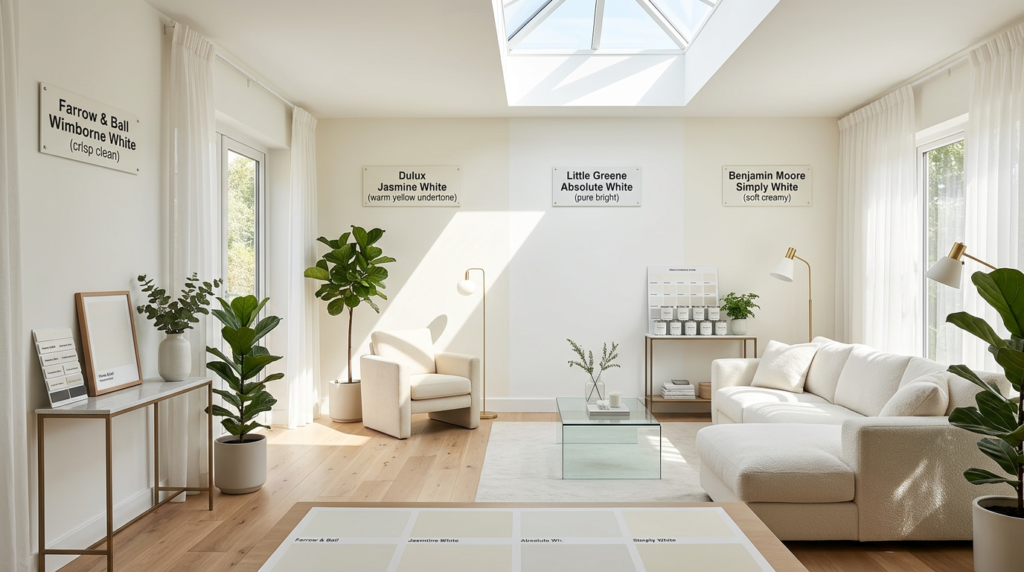
Warm whites can brighten a low-light room on paper, but they’ll still shift once they’re on your walls under your actual lighting. Buy sample pots or peel-and-stick swatches, then test at least three whites side by side: one warm, one neutral, one cool.
Paint two coats on poster board, not the wall, so you can move it and avoid patchy edges. Make each sample big (at least 12×12) and place it near trim, flooring, and upholstery.
Check it morning, midday, and at night with lamps on. Stand back six feet, then view it up close to spot undertones. Live with it for two days before you commit.
Conclusion
You’ll get the brightest, airiest results when you choose white paint that fits your room’s light and finishes. In sunny spaces, crisp whites stay clean and reflective, while low-light rooms often look better with softer whites that won’t turn gray or flat. Pay attention to undertones so your walls, trim, and floors don’t clash. Before you commit, test large samples in multiple spots and check them morning to night.