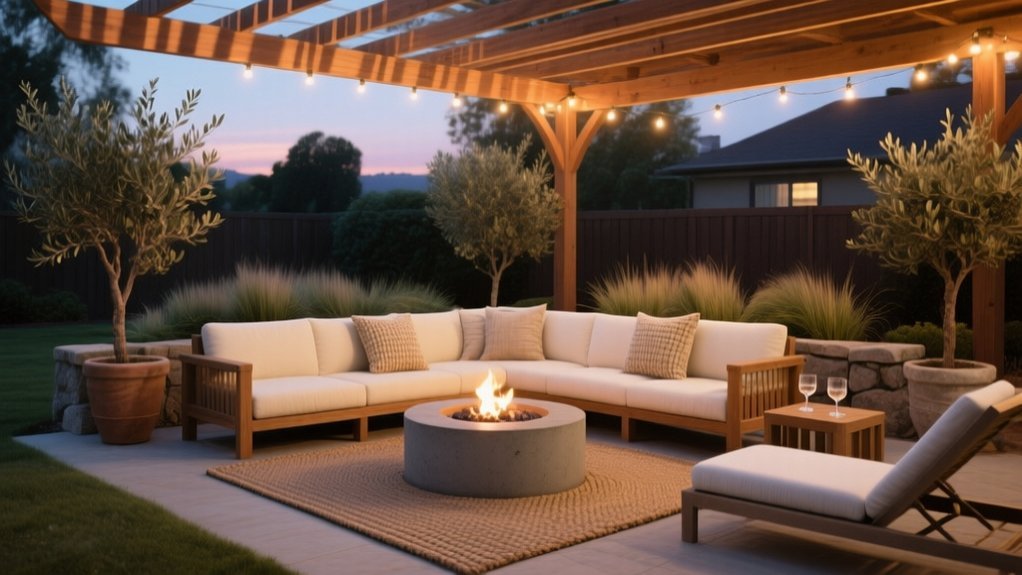
You make an outdoor space feel like a living area by planning it like a room. Start by defining how you’ll use it, set a firm budget with a 10–15% buffer, and note sun, wind, privacy, and slope constraints. Measure everything, then sketch a scaled layout with clear 36–48 inch paths. Create distinct dining and lounging zones, add shade and screens, and choose supportive, durable furniture. Keep going to see layouts, material picks, and finishing details.
Key Takeaways
- Define activities, budget, and site constraints early, reserving 10–15% for surprises like drainage, electrical, and grading.
- Measure accurately and create a scaled plan that includes doors, utilities, slopes, and sun/wind patterns before buying furniture or materials.
- Zone the space like indoors: dining near the kitchen, lounging oriented to views or a fire feature, with 36–48 inches for circulation.
- Choose living-room-comfort furniture with durable frames, supportive ergonomics, and quick-dry, UV-stable cushions sized to fit the layout.
- Add shade, privacy, and layered lighting with pergolas or umbrellas, screens or tall plantings, and dimmable fixtures plus weather-resistant textiles.
Define Needs, Budget, and Site Constraints
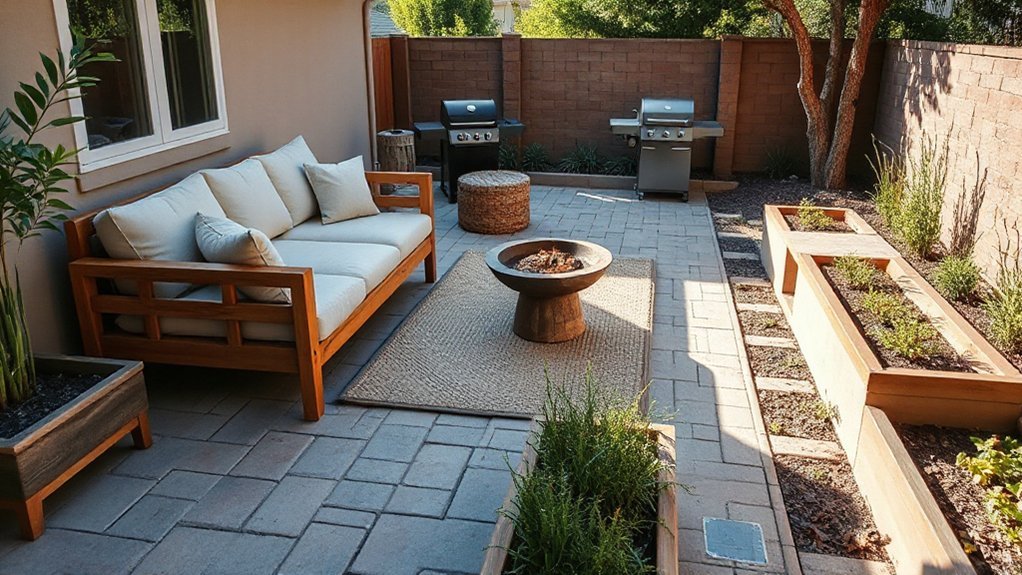
Before you sketch a single bed line or buy materials, define exactly how you’ll use the outdoor space, what you can realistically spend, and what the site will allow.
List primary activities—dining, lounging, play, gardening—and rank them so spending follows priorities.
Set a hard budget range and reserve 10–15% for site surprises like drainage fixes, electrical runs, or base prep.
Audit constraints you can’t ignore: sun and shade patterns, prevailing wind, privacy exposure, noise sources, slopes, and existing utilities or easements.
Match Landscaping options to constraints: drought-tolerant planting for hot exposures, permeable paving for runoff, windbreaks where gusts funnel.
Lock in Maintenance considerations early by choosing finishes, plant types, and irrigation complexity you’ll actually maintain weekly.
Measure Your Space and Sketch the Layout
Once you’ve nailed down priorities and constraints, turn those ideas into dimensions you can trust by measuring the site and sketching a scaled layout. Use a tape measure or laser to record overall length and width, slopes, and existing hardscape edges. Mark fixed elements—doors, stairs, utilities, drains, trees, and property lines—then verify clearances for walkways and maintenance access.
Transfer measurements onto graph paper or a simple digital plan at a consistent scale, and note sun exposure, prevailing wind, and sightlines from key windows. Place major features as rectangles or circles, keeping realistic footprints.
Leave margins for plant selection by plotting mature canopy widths and root zones. Indicate material notes and preliminary color schemes so finishes coordinate early. Double-check dimensions before buying anything.
Zone Outdoor Living Areas for Dining and Lounging
With a scaled plan in hand, start assigning clear zones so dining and lounging don’t compete for the same square footage. Place dining closest to the kitchen door or grill run to shorten trips and keep traffic out of the relaxation area.
Set lounging deeper in the yard, oriented toward the best view, fire feature, or shade line. Define edges with hardscape breaks, planting bands, or low walls for clean landscape integration without building barriers.
Maintain 36–48 inches for primary circulation, and create a straight service path between cooking, dining, and cleanup.
Consider outdoor acoustics: keep conversation seating away from street noise, and use hedges, fences, or water to mask sound.
Add lighting cues to reinforce each zone at night.
Pick Outdoor Furniture for Indoor-Level Comfort
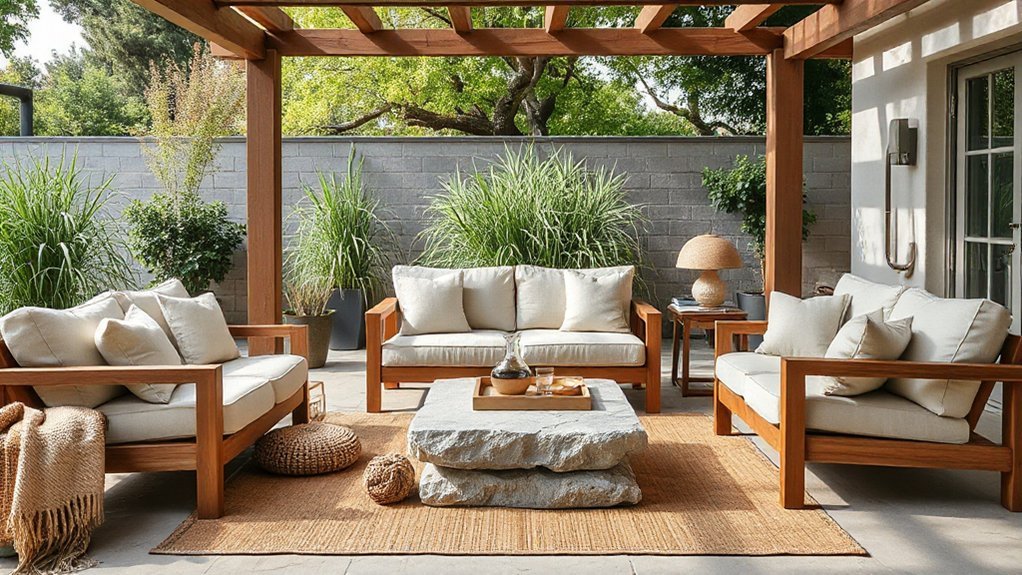
How do you make an outdoor setup feel as comfortable as your living room? Start with furniture built for ergonomic comfort: choose lounge chairs with supportive back angles, proper seat depth, and armrests that let your shoulders relax.
Prioritize cushions with high-density foam and quick-dry cores, then add washable, solution-dyed covers that won’t fade or stretch.
Next, evaluate material durability before style. Pick powder-coated aluminum for rust resistance, teak or ipe for stable frames, and all-weather wicker with UV inhibitors for consistent texture.
Confirm stainless or coated hardware, reinforced joints, and weight limits that match how you’ll use each piece.
Finish by testing sit height against side tables so drinks, books, and plates stay within easy reach.
Add Shade and Privacy to Outdoor Living Areas
Where do you feel exposed—overhead from harsh sun, or sideways from neighbors’ sightlines? Map exposure by time of day, then place coverage where you actually sit. For shade solutions, start with a cantilever umbrella for flexible coverage, or install a pergola with adjustable louvers for consistent control. If wind’s an issue, choose a vented canopy and secure bases to decking or concrete.
Next, build privacy barriers that still breathe. Use slatted screens set at a 30–45° angle to block views without trapping heat. Add tall planters with clumping bamboo, boxwood, or ornamental grasses to soften edges and absorb sound. Keep clearances for doors, grills, and walk paths so your outdoor room stays usable.
Finish Outdoor Living Areas With Lighting and Textiles
After you’ve dialed in shade and privacy, use lighting and textiles to make the space functional after dark and comfortable for longer hangs. Start with layered ambient lighting: string lights for ceiling glow, wall sconces for task zones, and low path lights to define edges. Put everything on dimmers or smart plugs so you can shift from dinner brightness to lounge-level softness. Choose warm color temperatures (2200–2700K) to keep faces flattering and glare low.
Then add weather resistant textiles that you can hose off or throw in the wash. Use outdoor rugs to anchor seating, quick-dry cushions for comfort, and a few weighted throws for cool nights. Stick to solution-dyed acrylics and UV-stable weaves so colors don’t fade fast. Store spares in a sealed deck box.
Frequently Asked Questions
How Do I Maintain Outdoor Cushions and Fabrics to Prevent Mold and Fading?
Clean cushions monthly: brush off debris, spot-wash with mild soap, rinse, dry fully—Cushion cleaning prevents mold. Store in ventilated bins, use Fabric protection spray with UV blockers, rotate cushions, and cover during storms.
What Permits or HOA Rules Might Apply to Building an Outdoor Living Space?
Like stepping onto thin ice, you’ll need permits if you add roofs, decks, electrical, gas, or plumbing. Check Building codes for setbacks, load, fire. Review HOA regulations for materials, heights, lighting, and approvals.
Which Plants Work Best to Reduce Bugs Around Outdoor Seating Areas?
You’ll cut bugs by planting Native plants that attract predators and adding pest repellent herbs like lavender, rosemary, basil, mint (contained), and citronella grass. Border seating, avoid overwatering, and prune regularly for airflow.
How Can I Weatherproof Outdoor Electronics Like TVS, Speakers, and Outlets?
You’ll weatherproof outdoor electronics by choosing Weather resistant materials, using IP-rated enclosures, and adding covers. Mount under eaves, seal cable entries, use drip loops, install GFCI outlets, and follow Electrical safety codes.
What’s the Best Way to Keep Pets Safe and Comfortable in Outdoor Living Areas?
You’ll keep pets safe and comfortable by installing Pet proof fencing, removing toxic plants, and adding shade and cooling mats. Provide Safe outdoor shelters with ventilation, fresh water, and supervision, plus secure gates.
Conclusion
You’ve built your outdoor room like a wise captain outfitting a ship: you’ve checked the map (needs, budget, constraints), measured the deck, and set clear stations for dining and lounging. You’ve chosen seating that holds you like an indoor sofa, raised sails with shade and privacy, and trimmed the rigging with layered light and weather-ready textiles. Now step outside—your yard won’t feel exposed; it’ll feel lived-in, day and night.