
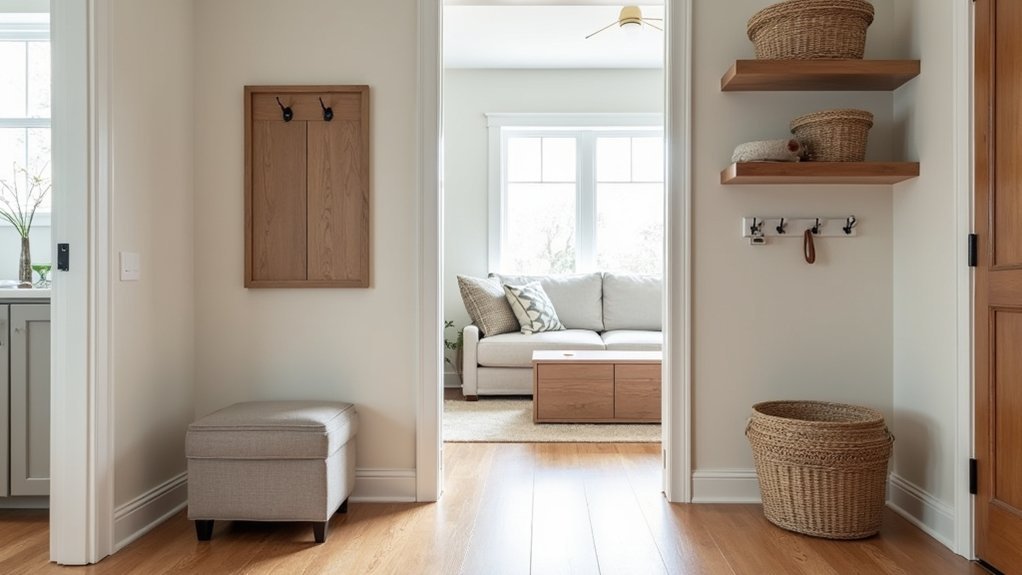
Sort what you own, store what you keep, and donate what you don’t. You’ll free space fast by using a simple keep/donate/store bin setup, then you’ll gain even more by going vertical with shelves, hooks, and a pegboard. You can also steal unused space with over-the-door racks, under-bed bins for off-season items, and slim corner shelves. Add an ottoman or bench with hidden storage, then label zones so everything stays put—but there’s one spot you’re probably wasting right now…
Key Takeaways
- Declutter quickly using Keep/Donate/Store bins, touching each item once and donating anything unused for a year.
- Create task-based zones with labeled bins (coffee, baking, cleaning) so everything has a clear, easy-to-find home.
- Add vertical storage like floating shelves, wall hooks, or pegboards to use empty wall space without taking floor space.
- Maximize doors and closets with over-the-door racks, extra closet rods, pull-out drawers, and slim under-bed bins for seasonal items.
- Maintain space with weekly 10-minute resets, returning items immediately, and keeping heavy items low and frequently used items at eye level.
Declutter Fast With a Keep/Donate/Store System
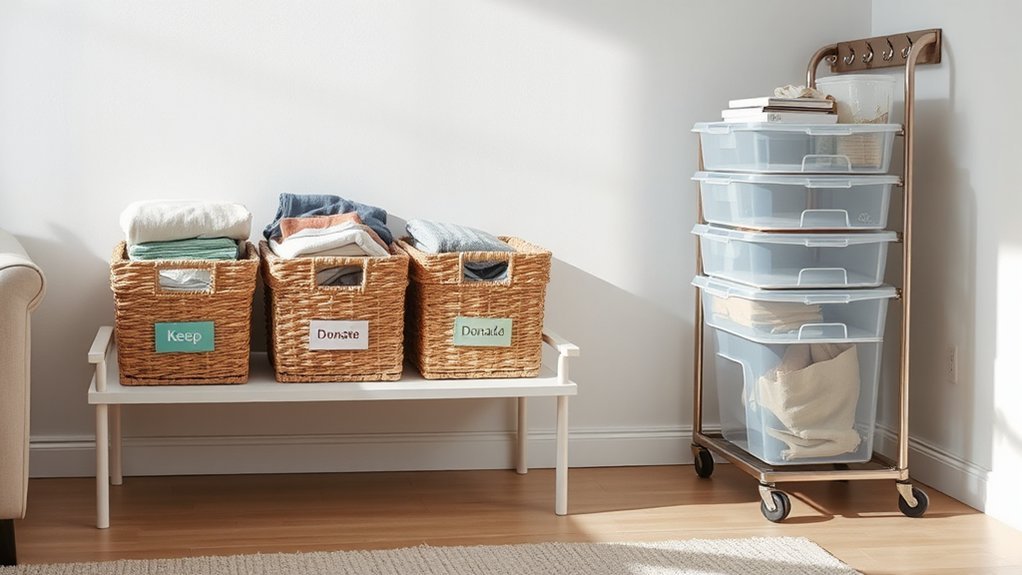
When you need storage space fast, you don’t have to reorganize everything—you just have to sort with intent. Grab three bins or bags labeled Keep, Donate, and Store, then work one surface at a time: a drawer, a shelf, a countertop. Touch each item once and decide immediately. Keep only what you use weekly or what supports current routines.
Donate anything in good condition you haven’t used in a year. Store seasonal, sentimental, or project-based items in a labeled tote and move it to a storage unit if it crowds daily zones.
After sorting, reset your furniture arrangement to protect clear pathways and accessible drawers. Group kept items by task, place the most-used at arm’s reach, and you’ll maintain the gains.
Go Vertical: Wall Shelves, Hooks, and Pegboards
You’ll gain storage fast by using your walls, not your floors. Install floating wall shelves for books, bins, and décor.
Then add multiuse wall hooks near entries, closets, and utility areas to hang bags, coats, tools, and cords.
For the most flexible setup, mount a modular pegboard system and rearrange cups, baskets, and brackets as your storage needs change.
Install Floating Wall Shelves
One of the fastest ways to reclaim storage space is to install floating wall shelves and put your unused wall area to work. Mount them above desks, sofas, or laundry zones to keep essentials within reach while clearing counters and floors. Treat them like floating furniture: choose sturdy brackets, match shelf depth to what you’ll store, and keep heavier items on lower shelves.
Find studs with a scanner, level carefully, and use rated anchors when studs aren’t available. Group items in bins to prevent visual clutter and make cleaning easier.
In kitchens, add a narrow shelf for spices and oils; in bathrooms, store towels and baskets. Pair shelves with wall planters to free windowsills and dress up dead space. Keep 12–16 inches between shelves for tall items.
Add Multiuse Wall Hooks
Floating shelves handle folded and stackable items well, but wall hooks tackle the awkward stuff that clutters chairs, counters, and entry tables. Install multiuse wall hooks near drop zones to corral coats, bags, dog leashes, keys, and headphones before they spread.
Choose hooks with a wide profile and a rated load that matches what you’ll hang; metal hooks anchored into studs hold the most. If you can’t hit a stud, use heavy-duty drywall anchors and respect the manufacturer’s weight limits.
Look for versatile mounting options—screw-in, adhesive, or over-the-door—so you can add storage in rentals, closets, and narrow hallways. Mount lower hooks for kids and higher hooks for bulky items, and leave 6–8 inches between hooks to prevent tangles.
Use Modular Pegboard Systems
Modular pegboard systems turn a blank wall into adjustable storage, so the space can evolve as your needs change. Mount panels into studs, then map zones for tools, pantry items, or craft supplies. Keep frequently used items at eye level, and reserve higher rows for lightweight overflow.
Choose a layout that supports modular organization: bins for small parts, shelves for jars, and cups for brushes or keys. Use pegboard accessories like J-hooks, double hooks, brackets, and magnetic strips to match each item’s shape and weight. Label bins, outline tool silhouettes, and keep a small “reset” section empty for new gear.
Audit monthly, rehang what you actually use, and retire duplicates. This keeps surfaces clear and retrieval fast.
Use Over-the-Door Racks for Instant Storage
Put your closet doors to work with an over-the-door rack to hold shoes, belts, bags, or cleaning supplies without sacrificing shelf space. Choose a rack with padded hooks and adjustable tiers so it fits your door thickness, closes cleanly, and won’t scuff paint.
In the kitchen, add one to the pantry door for spices, snacks, and wraps, and you’ll free up whole shelves instantly.
Maximize Closet Door Space
When your closet feels cramped, the door can become a high-impact storage zone in minutes. Add an over-the-door rack to hold items you reach for daily, then reclaim shelf and floor space without drilling.
If you’ve got sliding doors, use a slim, no-bulk hanger system on the inside wall near the opening so it won’t snag. Pair the setup with better closet lighting so you can see labels and grab what you need fast.
Install, load, and maintain it like this:
- Measure door thickness and clearance; choose hooks that won’t rub trim.
- Assign zones: accessories, shoes, bags, cleaning tools.
- Add bins or pockets; keep heavier items low for stability.
- Check monthly: tighten hooks, purge duplicates, reset categories.
Add Pantry Door Storage
One over-the-door rack can turn your pantry door into a dedicated storage wall in under 10 minutes. Choose a rack with adjustable tiers so you can fit spices, snack bags, and small jars without wasted airspace. Measure door thickness first, then pick hooks that won’t scrape the frame or prevent the door from closing.
For better pantry organization, group items by use: baking, breakfast, weeknight meals. Put everyday items at eye level, heavier bottles on lower tiers, and light packets up top. Add labeled bins to keep loose items from tipping.
If you store cans, select a rack rated for the weight and tighten all screws. These door storage solutions free shelves for bulk items and reduce clutter fast.
Fix Your Closet With Shelves, Rods, and Drawers
Although closets often look like a simple box with a single rod, you can double or even triple their usable space by adding the right mix of shelves, hanging rods, and drawer inserts. Start by measuring wall-to-wall width and hanger height so you don’t waste vertical space. Add Closet lighting so you can see every shelf and keep clothing organization consistent.
- Install a top shelf for bins, bags, and folded items you use weekly.
- Add a second rod below the main rod for shirts, skirts, and kids’ clothes.
- Use pull-out drawers or modular cubes for socks, belts, and tees; label fronts.
- Mount slim hooks on side walls for hats, ties, and handbags without blocking hang space.
Finish by grouping items by type and color to maintain order daily.
Store Off-Season Items in Under-Bed Bins
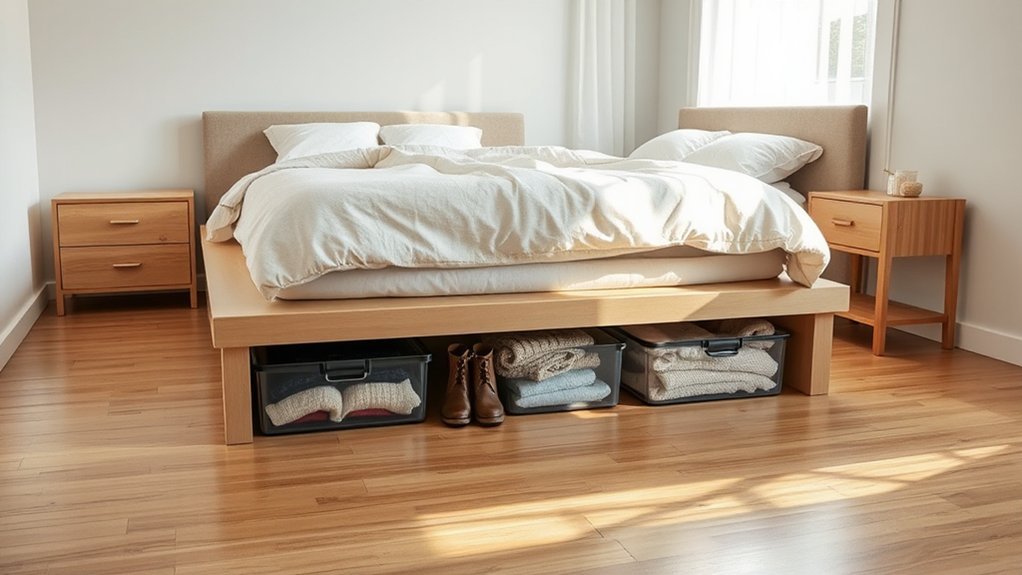
Ever wonder where all that bulky winter gear can go once the weather shifts? Put it to work in Seasonal storage under your bed. Measure your bed’s clearance first, then choose low-profile bins with rigid sides so they slide smoothly and don’t collapse.
Pick lidded, dust-resistant containers; vacuum bags inside bins add extra capacity for coats and comforters while keeping items dry. Sort by category (holiday décor, sweaters, extra blankets) and label both the lid and the front edge for quick access.
For Under bed organization, use bins with wheels or fabric handles, and keep frequently used items closest to the foot of the bed. Rotate contents seasonally and donate anything you didn’t use last year.
Turn Corners Into Storage With Slim Shelving
If you’ve got empty corners collecting dust, you can turn them into high-function storage by installing slim corner shelving that fits the room’s tightest angles. Measure both walls and choose shelves no deeper than 6–8 inches so you don’t crowd walkways. Anchor into studs or use rated drywall anchors, then keep heavier items on lower tiers to prevent tipping.
Use these corner nooks to store what you reach for often without sacrificing floor space:
- Stage entry essentials: keys, mail sorter, small tray.
- Build a bathroom tower: towels, toiletries in labeled bins.
- Create a kitchen spice and oil zone with a lip rail.
- Add a home office hub for notebooks, chargers, and files.
Finish with matching brackets for a clean, built-in look.
Add Hidden Storage With Ottomans and Benches
When you need storage that doesn’t add visual clutter, choose an ottoman or bench with a lift-top or pull-out drawers to stash items out of sight while adding everyday seating. Place one in your entry to hold shoes, leashes, and seasonal accessories, or set a storage bench at the foot of your bed for extra linens and pillows.
Look for sturdy hinges, smooth glides, and a weight rating that fits how you’ll use it. Upholstered tops add comfort, while wipeable faux leather works well in high-traffic zones.
Choose models with hidden compartments for remotes, chargers, or kids’ toys, and pick concealed drawers when you need quick access without lifting the lid. Measure clearances so drawers open fully and don’t block walkways.
Keep It Organized With Bins, Labels, and Zones
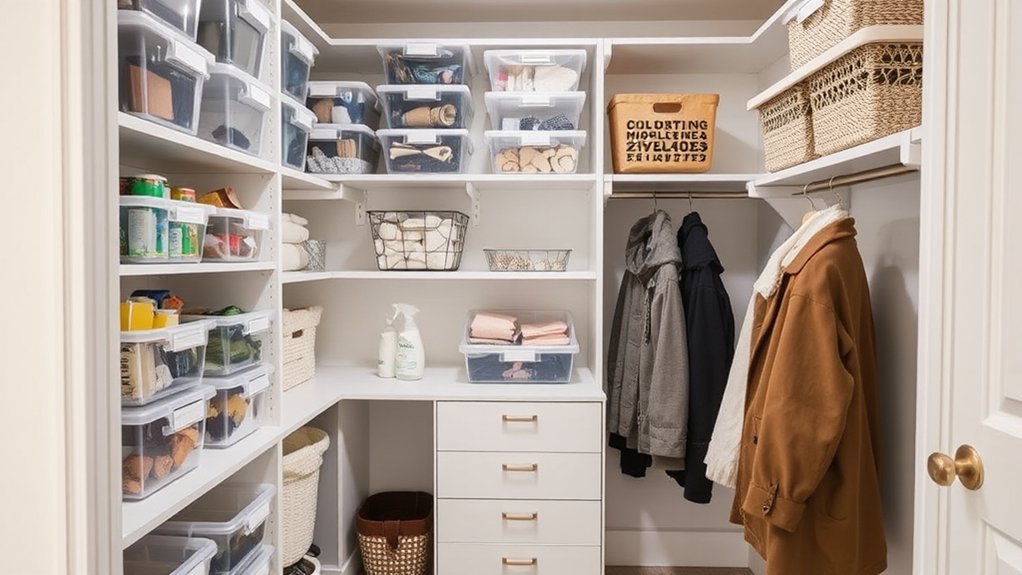
Although extra storage helps, you’ll keep it usable only by assigning every category a “home” with bins, clear labels, and simple zones. Start by grouping like items, then commit to Container organization that matches how you actually reach for things. Keep zones consistent—cleaning, pantry, paper, kids—so you don’t reshuffle weekly. Use durable bins sized to the shelf depth, and leave 10–15% open space for overflow.
- Sort fast: discard duplicates, then keep only what you use monthly.
- Bin by task: “coffee,” “baking,” “lunch,” not vague “kitchen.”
- Label smart: apply Labeling techniques—large font, front-facing, and date perishables.
- Maintain rules: return items immediately, and do a 5-minute weekly reset.
Frequently Asked Questions
How Can I Store Belongings Safely in a Damp Basement or Garage?
Control humidity first: run a dehumidifier, seal leaks, and use desiccants for moisture control. Store items in gasketed plastic bins on pallets. Keep airflow. Improve shelving organization with metal racks, labeled bins, and elevated electronics.
What Storage Upgrades Increase Home Value Without Major Renovations?
You’ll boost home value with Smart shelving in closets/garage, built-in-looking organizers, and Modular furniture that adds hidden storage. Upgrade lighting, add adjustable rails, and use matching bins; buyers see function, cleanliness, and flexibility.
How Do I Prevent Pests From Damaging Stored Clothes and Linens?
Lock pests out like sealing a ship’s hull: wash and fully dry fabrics, then store them in Pest proof containers. Add Natural repellents (cedar, lavender) in sachets, keep areas clean, cool, and inspect quarterly.
What Are Renter-Friendly Storage Solutions That Won’T Damage Walls?
You’ll use Rental friendly solutions like tension rods, over-the-door racks, freestanding shelves, and under-bed bins. For Wall safe storage, choose adhesive hooks rated for weight, command strips, and removable pegboards; avoid screws.
How Can I Maximize Storage Space in a Small Kitchen Pantry?
Sure, keep your pantry tiny—then maximize it by going vertical. Add adjustable Shelving units, group items in labeled Organizational bins, decant staples, use door racks, and stackable risers so you can see and grab everything.
Conclusion
With a quick keep/donate/store sweep, you’ll free space immediately and stop clutter from spreading. Install shelves, hooks, and a pegboard to use every inch of vertical wall, then add over-the-door racks where you need instant capacity. Upgrade your closet with rods, drawers, and shelf dividers, and stash off-season gear in under-bed bins. Use slim corner shelving and storage ottomans for hidden volume—it’ll feel like you added a whole new room.