Flooring can make a room feel slower when you choose low-glare, low-contrast surfaces that don’t visually “buzz” and assemblies that quiet footsteps. Go for warm, muted tones (greige, taupe, sage), matte finishes, and consistent patterns like long planks or large-format tiles. Add cushioned underlayment, cork, or dense rugs to cut echo and impact noise. With fewer reflections and startling sounds, you’ll naturally move and breathe easier—and there’s more to optimize by room.
Key Takeaways
- Use warm, muted, low-contrast colors to soften visual boundaries and reduce the feeling of motion.
- Choose long planks or large-format tiles with gentle grain or veining to create calmer, slower visual rhythm.
- Prefer matte or low-sheen finishes to cut glare and sparkle that can make a room feel busy.
- Add softer layers—carpet, cork, rugs, and cushioned underlayment—to absorb sound and reduce sharp footfall energy.
- Keep patterns consistent and low-variation, using decorative inlays sparingly to prevent visual restlessness.
What Is “Slow Living” Flooring, Exactly?
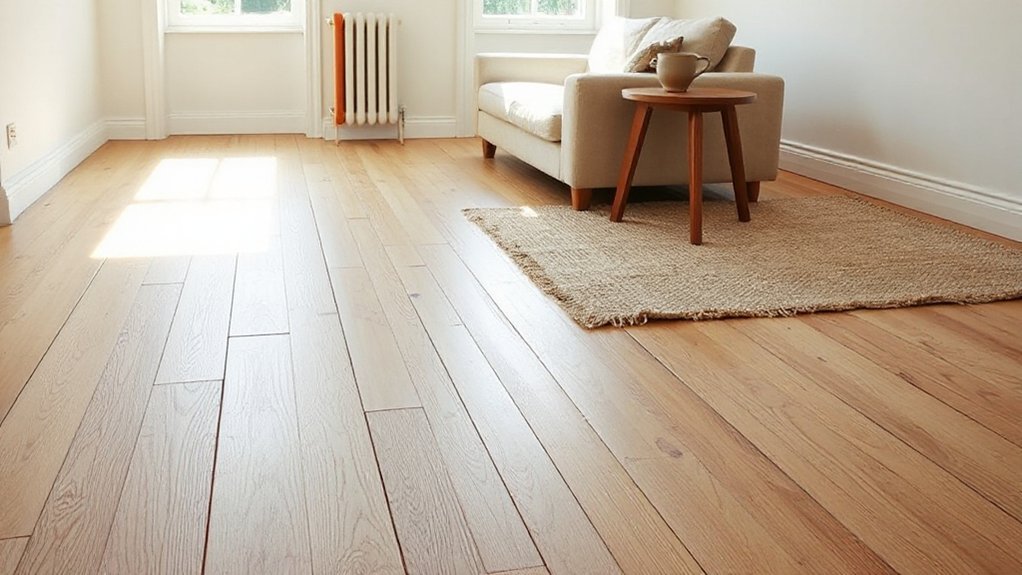
Because your floor is the surface you live on every day, “slow living” flooring prioritizes calm, durability, and low-maintenance comfort over quick trends. You choose materials that age well, feel good underfoot, and don’t demand constant upkeep—think real wood, quality engineered planks, cork, linoleum, or matte porcelain.
You aim for tonal harmony: stable, nature-leaning hues that reduce visual noise and make spaces feel cohesive from room to room. You also use textural contrast strategically—subtle grain, soft-matte finishes, or gentle variation—to add depth without busyness.
Slow living flooring supports daily rhythms: it’s repairable, easy to clean, and compatible with rugs, pets, and high traffic. You’re building a long-term backdrop, not a momentary statement.
Which Calm Flooring Features Matter Most?
Once you’ve committed to slow living flooring as a long-term backdrop, the next step is choosing the features that actually keep a room feeling calm day after day. Prioritize surfaces that look settled, wear gracefully, and support easy routines rather than constant upkeep. Choose understated textures that hide minor marks, and stick to cohesive tones that don’t fight your Decorative accents. Calm comes from consistency, so avoid high-contrast patterns that visually “speed up” a space. Also weigh flooring durability: if it dents, scratches, or stains easily, you’ll spend energy managing it instead of living in it.
- Matte or low-sheen finish to reduce visual glare
- Warm, muted color palette for steadier sightlines
- Subtle, natural texture that camouflages everyday wear
- Proven flooring durability with simple, forgiving maintenance
How Does Flooring Affect Sound and Stress?
Even if you don’t notice it right away, your flooring sets the baseline for how noisy—and how stressful—a room feels. Hard, continuous surfaces bounce footfalls and voices, making echoes linger and your nervous system stay on alert. Softer, layered assemblies improve Sound absorption, so noise decays faster and the space feels steadier.
To control sound, you can choose a resilient surface, add an acoustical underlayment, and seal gaps at connections so vibrations don’t travel. In multi-level homes, you’ll want impact-rated pads to cut thuds from steps and dropped objects. In open plans, breaking up large hard spans reduces reflections and sharpness. When the room sounds calmer, you’ll experience stress reduction without changing lighting, layout, or furniture.
What Flooring Textures Feel Calm Underfoot?
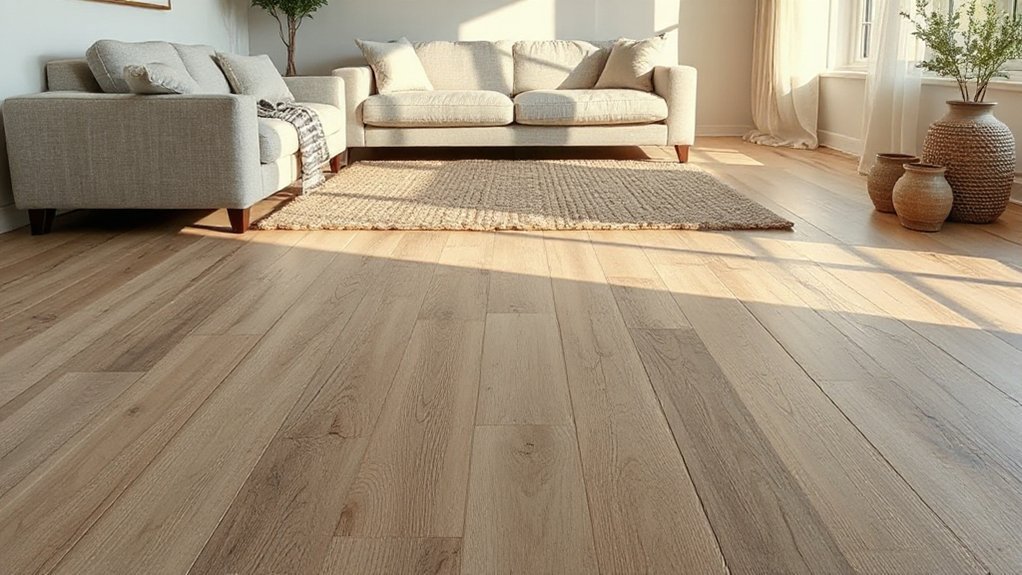
When you want a room to feel calmer the moment you step in, focus on textures that cushion pressure and stay consistent underfoot. You’ll relax faster when the surface absorbs micro-impacts, reduces foot fatigue, and doesn’t shift or snag as you move.
- Low-pile wool or dense Textured rugs: quiet, supportive, and stable, especially with a firm pad.
- Cork: naturally springy, warm, and forgiving for bare feet during slow routines.
- Matte-finish engineered wood with light wire-brushing: subtle grip, less slap, fewer “hard” sensations.
- Rubber or linoleum with a smooth-matte emboss: resilient, even, and easy to clean without feeling clinical.
Pair these with soft vertical texture like a moss wall to reinforce the grounded feel.
Which Flooring Colors Feel Restful (Not Busy)?
Because your eyes scan the floor more than you realize, a restful color reads as one continuous, low-contrast “field” that doesn’t chop the room into visual noise. Choose mid-to-light neutrals with muted undertones: warm greige, soft taupe, sandy beige, pale oak, or gentle mushroom. These Restful shades smooth progressions to walls and furniture, so your brain stops “checking” boundaries. Keep contrast low by matching floor value to major textiles—rug, sofa, curtains—within one to two shades. If you want color, go desaturated: smoky blue-gray, sage, clay, or charcoal-brown rather than crisp black or bright white. Build Color palettes around one dominant floor tone, then repeat it in small accents to keep the room slow. Avoid high-gloss finishes that exaggerate contrast.
What Flooring Patterns Keep a Room Quiet Visually?
If you want the floor to fade into the background, pick patterns that read as one consistent rhythm from wall to wall. You’ll get the quietest look when repeat, scale, and direction stay predictable, and when Textured patterns don’t create sharp contrast. Favor muted tones and low-variation graining so your eye doesn’t hop between “features.” Keep shifts minimal, and align boards or tiles to the room’s longest sightline to reduce visual chatter.
- Use long, linear planks with subtle grain, not cathedral bursts.
- Choose large-format tile or slab looks with calm, cloudy movement.
- Stick to tone-on-tone herringbone or chevron only at wide scale.
- Avoid high-contrast borders, tiny mosaics, and mixed widths in one field.
Is Carpet the Quietest Relaxing Flooring Option?
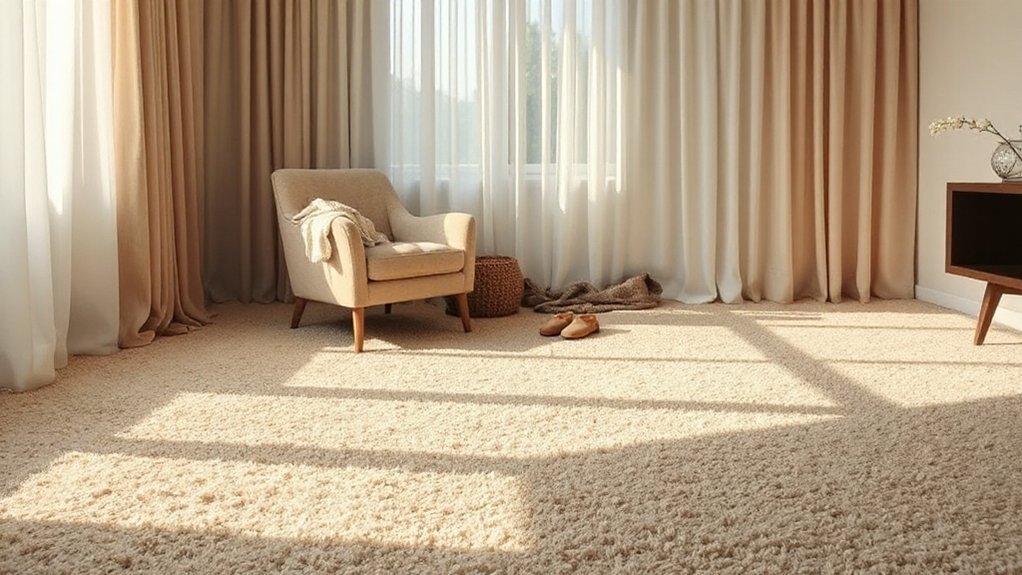
If you want the quietest, most relaxing floor underfoot, carpet usually leads because it absorbs footfall and cuts echo better than hard surfaces. You’ll get the biggest noise reduction when you pair it with the right underlay, since density and thickness control impact sound and room “hush.” Choose pile with intent—denser, higher piles tend to soften and quiet more, while low pile keeps things tighter and easier to maintain.
Carpet Noise Reduction Benefits
How much quieter can a room feel when you swap hard surfaces for carpet? You’ll notice less clatter, fewer sharp echoes, and a calmer background that makes conversations softer and movement feel slower. Carpet absorbs high-frequency sound and damps footfall energy, so everyday activity doesn’t bounce around the room. If you’re comparing soundproofing options, carpet gives immediate acoustic insulation without changing walls or ceilings.
- Cuts impact noise from steps, toys, and chair movement
- Reduces echo, improving speech comfort and perceived calm
- Lowers perceived loudness of TVs, music, and appliances in-room
- Helps limit sound transfer through floors in multi-level homes
You’ll also feel fewer “startle” sounds, which supports relaxation and focus.
Underlay And Pile Choices
Where does carpet get its “quiet, relaxing” reputation from—just the fibers, or what sits underneath? Underlay does most of the acoustic work, absorbing footfall impact before it hits the subfloor. Choose dense felt or high-quality rubber if you want the calmest room; they dampen vibration better than thin foam. Match the underlay thickness to your door clearances and traffic level so the carpet doesn’t feel spongy.
Pile height shapes both sound and mood. A slightly taller, plush pile height softens steps and reduces high-frequency noise, but it can show tracks and compress faster. For busy rooms, pick a medium pile with tight twist; you’ll keep comfort while maintaining quiet performance over time. Consider your climate and allergies too.
When Does Wood Flooring Feel Warm and Slow?
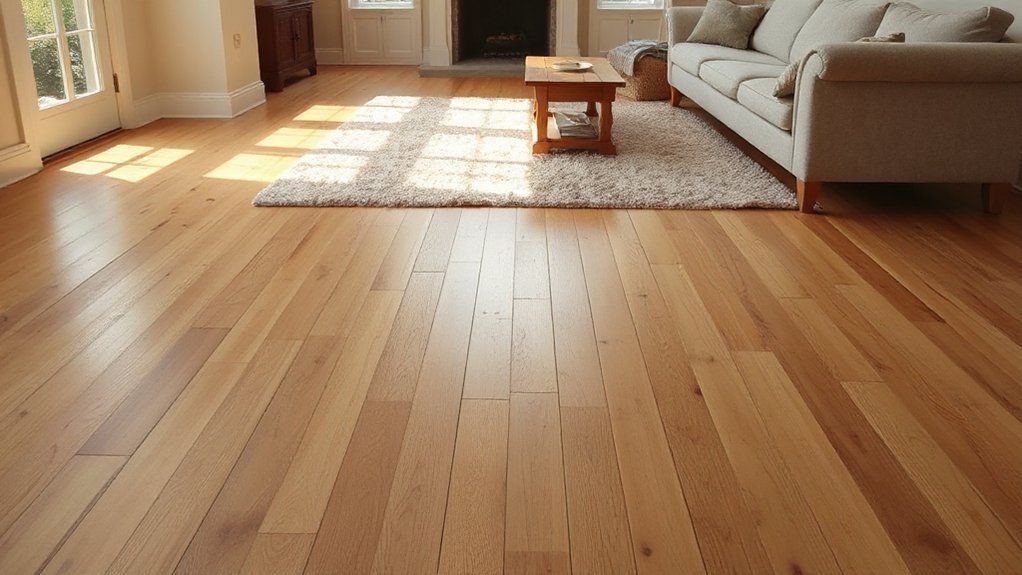
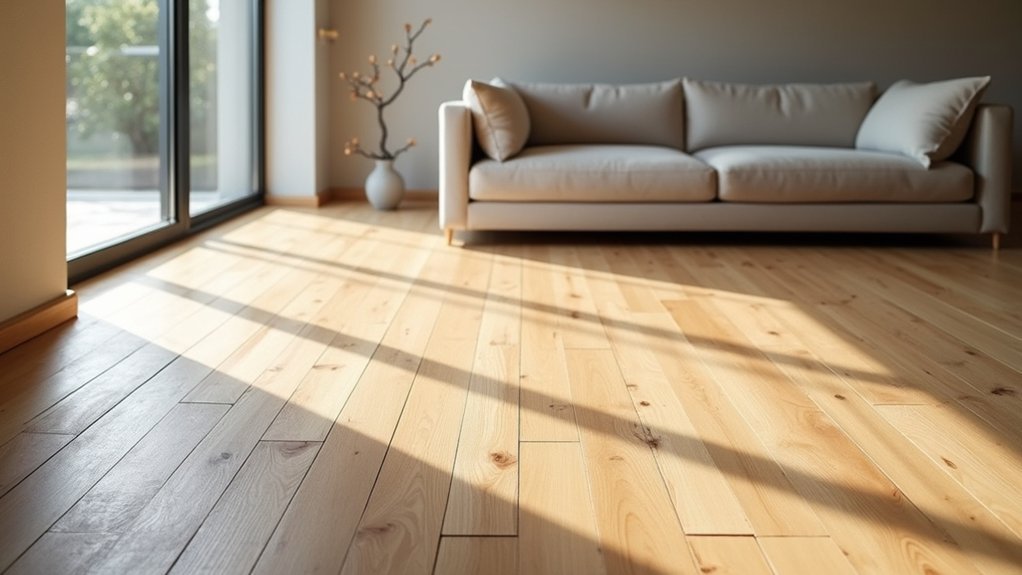
Wood flooring feels warm and slow when you pair sunlight with amber tones and choose wide planks that visually calm the room. You’ll reinforce that ease with gentle grain and matte finishes that soften glare and reduce the “busy” look. Add a soft underfoot layer—like a quality pad or cork underlayment—and you’ll get a quieter, warmer step that encourages you to move slower.
Sunlight And Amber Tones
When sunlight hits amber-leaning floors—think honey oak, warm maple, or stained walnut—the room instantly reads warmer and slower because the light amplifies golden wavelengths instead of bouncing cool and flat. You’ll notice how Sunlit ambiance softens edges, reduces visual tension, and makes movement feel less rushed. Amber hues work best when you manage glare and keep surrounding finishes quiet.
- Aim for south- or west-facing light to deepen warmth, not bleach it.
- Choose a matte or satin finish to diffuse highlights and slow the scene.
- Pair with warm-white bulbs (2700–3000K) so night lighting matches daytime tone.
- Use simple, warm neutrals on walls and rugs to let the floor set the pace.
Wide Planks, Gentle Grain
After you’ve tuned the light to flatter amber tones, plank scale and grain pattern decide whether that warmth reads calm or busy. Choose wide planks to slow the eye: fewer seams mean fewer visual interrupts, so the room feels more continuous and settled. Aim for boards 7–10 inches if your space can handle the proportion; in small rooms, stay wide but not oversized to avoid a cartoon effect. Favor gentle, consistent grain over high-contrast cathedrals and heavy striping, which can feel restless. Rift- or quarter-sawn looks read orderly and support minimalist elegance, while lightly varied plainsawn brings rustic charm without chaos. Keep knots smaller and spaced out so you get character, not clutter.
Matte Finishes, Soft Underfoot
Because sheen controls how light skates across the floor, a matte or low-sheen finish makes amber tones feel warmer and the whole room read slower and quieter. You’ll notice fewer sharp reflections, so your eyes don’t dart around; they settle. Pair that matte sheen with cushioned underlayment or a slightly resilient species, and your steps land with less snap and more hush. Textured finishes add grip and micro-shadow, which visually softens movement and hides daily scuffs, keeping the calm intact. Aim for these specs when you want wood to feel warm and slow:
- Matte sheen (10–25 gloss) to cut glare
- Brushed or wire-scraped textured finishes for depth
- Cork/rubber underlayment for quieter footfall
- Felt pads and rugs to maintain softness
Why Cork Flooring Feels Soft, Quiet, and Springy
How can a hard-looking floor feel cushioned underfoot and keep a room quieter? Cork does it by trapping air in millions of tiny cells, so each step compresses and rebounds instead of transmitting impact. You get a gentle “give” that reduces fatigue when you stand and cook or pace during calls.
For sound, Cork insulation dampens footfall and softens echo, so a room feels calmer and slower without adding rugs everywhere. Pair cork planks with a soft underlay and you’ll cut vibration even more, especially in upstairs rooms. Choose thicker wear layers for better resilience, and seal edges to keep moisture out. You’ll notice fewer sharp noises, less heel click, and a springier stride that encourages unhurried movement.
Do Tile and Stone Floors Still Feel Calming?
Where do tile and stone floors land on the “calm” scale when they look hard and feel cool? They can still slow a room down if you manage glare, noise, and visual busyness. Stone reads grounded and timeless; tile can feel crisp and orderly. But both amplify footsteps and reflect sound, so calm comes from the surface and layout details, not just the material.
- Choose matte or textured finishes to cut sparkle and soften echoes.
- Use larger formats and tighter joints to reduce visual “grid” speed.
- Add Decorative inlays sparingly; too many lines can feel restless.
- Prioritize warmer undertones and consistent veining to keep your eye moving slowly.
You’ll get calm through restraint, not shine.
How to Choose Relaxing Flooring by Room
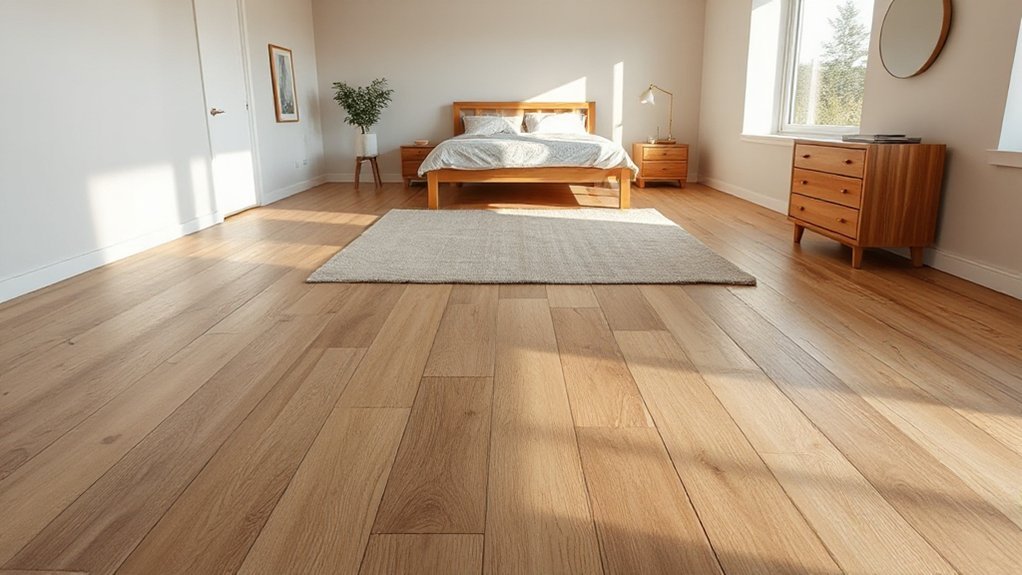
Match your flooring to what you need to feel in each room, because comfort cues change with the space. In the bedroom, you’ll want calm, quiet underfoot materials; in the living room, you’ll choose warm, cozy surfaces that handle daily traffic. In the bathroom, you’ll prioritize spa-like finishes with grip and water resistance so it stays soothing, not slippery.
Bedroom Calm Flooring
Because your bedroom should cue rest the moment you walk in, choose flooring that stays quiet underfoot, feels warm, and keeps glare low. Prioritize soft acoustics, stable temperature, and a matte finish so your space slows you down at night and eases you into mornings. Even if you’ve planned Outdoor patios or focused on Kitchen durability elsewhere, here you’ll want serenity first, then easy care. Use this checklist:
- Pick cork, carpet tiles, or padded vinyl for sound-damping comfort.
- Choose wide-plank wood or LVP in low-sheen, natural tones to reduce visual buzz.
- Add an underlayment to cut footfall noise and improve insulation.
- Avoid high-gloss tile; if you love tile, use large-format matte with a plush rug.
Keep seams minimal and edges tight to prevent clicks and creaks.
Living Room Cozy Choices
Although the living room hosts more movement than a bedroom, you can still make it feel cozy by choosing flooring that softens sound, stays comfortable under bare feet, and visually warms the space. Start with surface feel: cork and carpet tiles add cushion and strong acoustic insulation, helping conversations sound calmer and footsteps fade. If you prefer hard floors, choose matte-finish engineered wood or luxury vinyl with an underlayment to reduce echo and chill. Use color psychology to slow the room: mid-tone warm oak, honey, or greige reads welcoming without turning heavy; avoid high-contrast, busy patterns that speed up the eye. Finish the system with a thick rug pad and area rugs to zone seating and dampen noise where you lounge most.
Bathroom Spa-Like Surfaces
When you want your bathroom to feel like a spa, start with flooring that stays safe, warm, and visually calm in constant moisture. Choose matte, low-contrast surfaces that reduce glare and slow the room down. Prioritize slip resistance and underfoot comfort so you can move quietly from shower to sink and keep bathtub serenity intact.
- Pick porcelain or ceramic with a DCOF suited for wet areas; avoid glossy finishes.
- Add radiant heat or pair with a thick bath rug to boost towel warmth without trapping water.
- Use large-format tiles or micro-cement to cut grout lines and visual noise.
- Seal natural stone or choose stone-look tile for calm texture and easy maintenance.
Keep transitions flush, and choose warm neutrals for a softer, slower feel.
Frequently Asked Questions
How Do I Maintain Slow-Living Flooring Without Harsh Chemicals?
Maintain your flooring with Non toxic cleaning: sweep often, damp-mop using diluted castile soap, and spot-clean quickly. Refresh protection using Eco friendly finishes like plant-based oils or hardwax. Ventilate well, avoid ammonia, bleach, and heavy fragrances.
What Flooring Options Are Best for Households With Pets?
For pet-friendly floors, you can choose luxury vinyl, porcelain tile, or sealed bamboo; they offer strong scratching resistance. When little accidents happen, you’ll clean fast. Prioritize textured finishes, washable rugs, and easy pet hair removal.
Can Relaxing Flooring Choices Increase a Home’s Resale Value?
Yes, relaxing flooring can boost your resale value if you choose timeless luxury textures and apply color psychology. You’ll attract more buyers, photograph better, and justify higher offers when you install durable, low-maintenance materials.
How Much Does Calm Flooring Typically Cost per Square Foot?
You’ll typically pay $3–$12 per sq ft for calm flooring—budget vinyl versus premium hardwood. Use cost comparison: laminate $2–$6, cork $5–$10. Balance material durability: tile lasts longest, cork feels softer.
Which Slow-Feel Flooring Is Safest for Allergies and Asthma?
You’ll do safest with hard, sealed floors: natural linoleum or cork with low-VOC finish, or sealed hardwood. They’re Eco friendly materials and top hypoallergenic options. Avoid wall-to-wall carpet; choose washable rugs instead.
Conclusion
When you pick slow-living flooring, you’re shaping how your room feels minute to minute. Prioritize quieter, softer surfaces, calm textures, and low-contrast, natural colors so your space reads as restful, not “busy.” Sound matters more than you think: studies show noise levels can raise stress hormones like cortisol, and a 10 dB increase is often perceived as roughly twice as loud. Choose flooring that absorbs sound, warms the palette, and supports slower routines.