
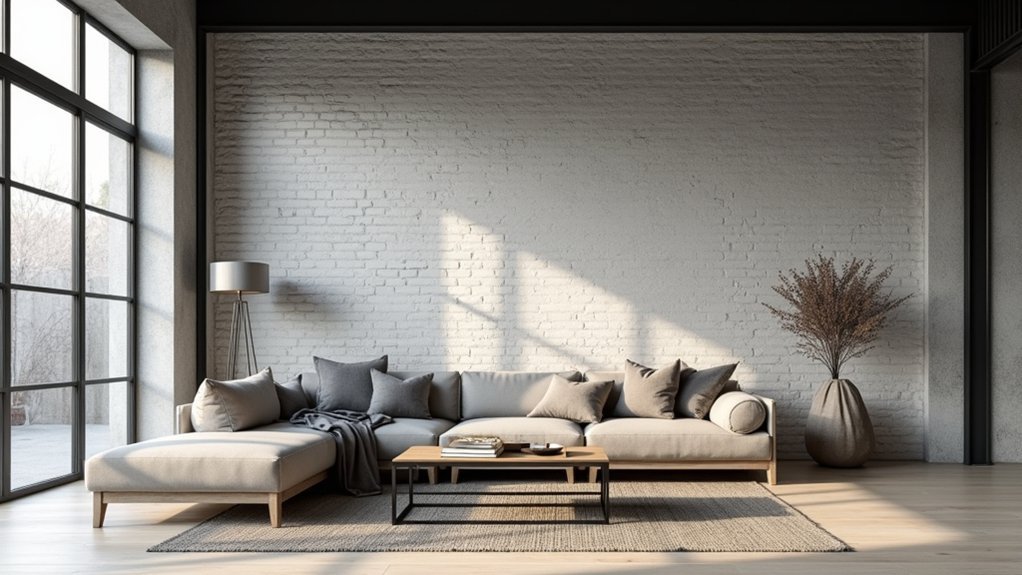
Start with a calm base of warm white or soft greige, then add charcoal or matte black in small doses. You’ll balance warm wood, honest steel, and raw concrete, keeping joins clean and proportions simple. Choose disciplined, clean-lined furniture in solid timber and blackened metal, and mix in one or two vintage factory accents. Layer lighting with dimmable ambient, focused task lamps, and warm LEDs. Finish with wool, linen, flatweave rugs, graphic art, and greenery—there’s plenty more to refine next.
Key Takeaways
- Start with a calm base: warm white or soft greige walls, layered with concrete grey and muted tones.
- Mix honest materials: oak or warm wood where you touch, blackened steel for structure, and concrete as a restrained backdrop.
- Choose disciplined furniture: clean-lined sofa, robust dining table, and simple shelving with visible brackets; avoid fussy or sculptural shapes.
- Make lighting a feature: simple pendants, exposed bulbs, and warm LEDs, layered with task and accent lights on dimmers.
- Add warmth sparingly: caramel leather, terracotta accents, vintage industrial pieces, and soft textiles like wool throws, linen cushions, and flatweave rugs.
Nail the Scandinavian Industrial Look: 5 Rules
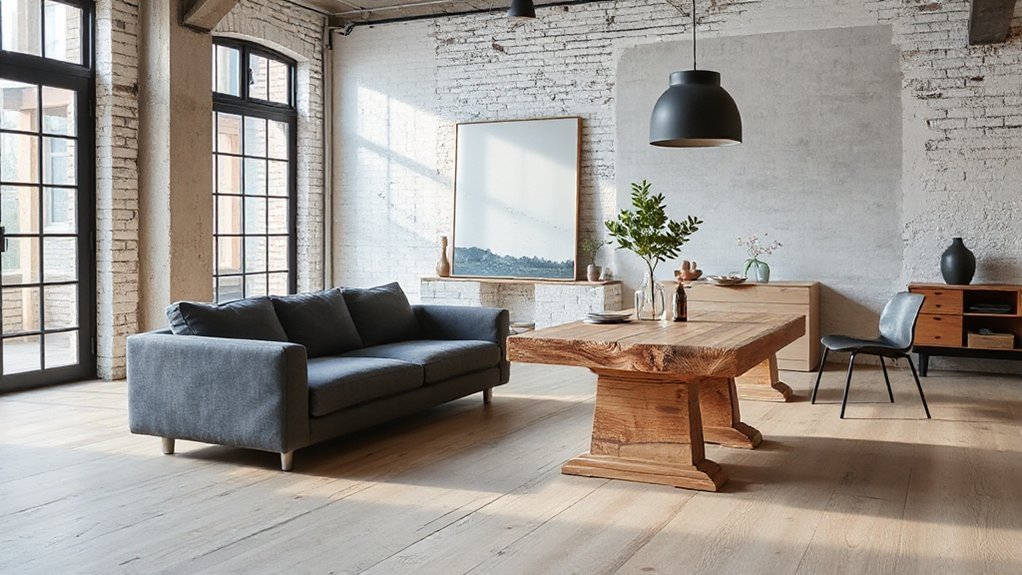
Although Scandinavian and industrial styles can feel like opposites, you can make them work together by sticking to a few clear rules. First, keep the palette calm: whites, greys, and muted tones stop the space feeling harsh. Second, choose clean-lined furniture and avoid fussy profiles so the room stays disciplined. Third, use lighting as a statement—simple pendants, exposed bulbs, and track spots—then control glare with warm LEDs. Fourth, add Vintage accents sparingly: a factory stool, an old clock, or aged hardware gives grit without clutter. Fifth, soften every hard edge with Textured textiles: wool throws, linen curtains, and a flatweave rug improve acoustics and comfort. Edit ruthlessly; if an item doesn’t earn its place, remove it.
Mix Scandinavian Industrial Materials (Wood, Steel, Concrete)
Three materials do most of the heavy lifting in a Scandinavian industrial scheme: warm wood, honest steel, and raw concrete, and you’ll get the balance right by assigning each one a clear role. Use wood where you touch and linger: floors, dining tops, bench seats, and open shelving, keeping grain visible for comfort and mixed textures. Bring steel in as the structural accent: table legs, shelving frames, stair rails, or lighting, and repeat it in two to three places so it reads intentional. Let concrete act as the calm backdrop underfoot or overhead: polished screed, a worktop, or a feature wall, then soften edges with timber trims. Push material contrasts through junctions—steel against wood, concrete against timber—while keeping joins clean and proportions simple.
Build a Scandinavian Industrial Color Palette That Feels Warm
To keep Scandinavian industrial interiors from feeling cold, you need a palette that balances crisp neutrals with a few deliberate warm notes. Start with warm white or soft greige on walls, then layer charcoal, matte black, and concrete grey in smaller doses to keep contrast controlled. Pull colour palette inspiration from Nordic winter light: muted, not murky.
Add warmth through mid-tone oak, caramel leather, and terracotta or clay-red accents. Choose warm accent options that look authentic against steel: brass, aged copper, tobacco, rust, and ochre. Keep saturation low and repeat each warm note at least twice so it reads intentional. Finally, use black sparingly and avoid bright primary colours; they fight the calm, utilitarian mood.
Choose Scandinavian Industrial Furniture (Clean, Sturdy Shapes)
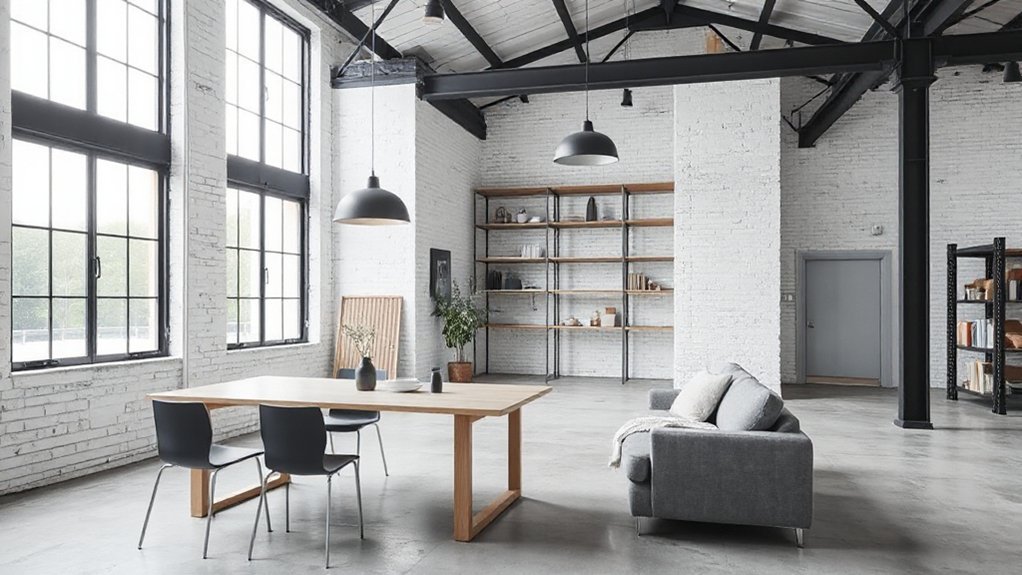
When you choose furniture for a Scandinavian industrial space, focus on clean lines, honest materials, and shapes that look built to last. Prioritise solid timber, leather, and blackened steel, and skip anything fussy or overly sculptural. Anchor the room with a pared-back sofa, a robust dining table, and simple shelving with visible brackets. Choose pieces with slim profiles and strong legs so the layout feels open, not heavy.
Balance new with Vintage accents: a factory stool, a worn oak bench, or a patinated metal cabinet adds character without clutter. Keep surfaces disciplined with minimalist accessories—one ceramic vase, a wool throw, a single tray—so the furniture does the work. If it doesn’t earn its place, don’t buy it.
Layer Scandinavian Industrial Lighting to Avoid a Cold Feel
Clean, sturdy furniture sets the structure, but lighting decides whether your Scandinavian industrial room feels crisp or cold. You’ll need to layer lighting so hard surfaces don’t read as harsh and shadowy.
Start with ambient illumination: a dimmable ceiling fixture or track heads on a warm LED (around 2700–3000K). Then add task lights where you work and read—metal desk lamps, adjustable wall lights, or a pendant over the table—aimed to reduce glare. Finish with low-level accent light to soften corners: a slim floor lamp behind seating or LED strips under shelves. Use matte shades or opal diffusers to spread light evenly. Keep controls simple: dimmers and separate switches let you tune mood without changing fittings.
Finish With Scandinavian Industrial Decor (Texture, Art, Plants)
How do you stop Scandinavian industrial from feeling stark once the big pieces are in place? You finish with deliberate decor that adds warmth without clutter. Start with Textural accents: a wool throw over a leather chair, a woven rug to soften concrete, and linen cushions to break up metal frames. Keep colours muted, but mix matte and brushed finishes for depth. Add Artistic elements that suit the architecture—graphic prints, black-and-white photography, or abstract line work in slim frames. Hang one larger piece rather than many small ones to maintain calm. Then introduce plants to humanise hard surfaces: a tall rubber plant by a window, trailing pothos on a shelf, or herbs in simple pots. Use earthy planters, not glossy ones.
Frequently Asked Questions
How Do I Make Scandinavian Industrial Work in a Small Apartment?
Make it work by keeping walls pale, choosing slim furniture, and using multifunction storage. Add Exposed brick as one feature, then balance it with warm textiles. Install Vintage lighting, and keep metal accents minimal.
What Are Budget-Friendly Ways to Achieve Scandinavian Industrial Style?
You can do it cheaply: 70% of the look comes from lighting and texture. Buy Vintage lighting second-hand, add Metal accents via hardware, use matte paint, open shelving, and thrifted timber stools for warmth.
How Do I Blend Scandinavian Industrial With Existing Traditional Architecture?
You blend Scandinavian industrial with traditional architecture by keeping original mouldings, then layering clean-lined Vintage furniture, neutral textiles, and purposeful Metal accents. Use matte black lighting, exposed hardware, and minimal clutter so heritage features stay dominant.
Which Flooring Types Best Suit Scandinavian Industrial Interiors?
Choose wide-plank oak, polished concrete, or matte microcement; they’re the steady ground beneath a cool, bright sky. Keep neutral palettes, add metal accents via trims or thresholds, and seal surfaces for hard-wearing practicality.
How Can I Incorporate Scandinavian Industrial Style in Rental-Friendly Ways?
Use removable hooks and peel-and-stick film to add Vintage lighting and Metal accents without damage. Choose neutral textiles, modular shelving, and framed prints. Swap hardware and bulbs, then store originals so you can revert.
Conclusion
Treat Scandinavian industrial design like a well-built bridge: it carries warmth across raw structure. You’ve followed the rules—pairing wood with steel and concrete, using a calm palette, choosing clean, sturdy furniture, and layering light so shadows don’t harden the room. Now let texture, art, and plants act as the final rivets. When every element earns its place, your space won’t feel stark; it’ll feel quietly powerful and liveable.