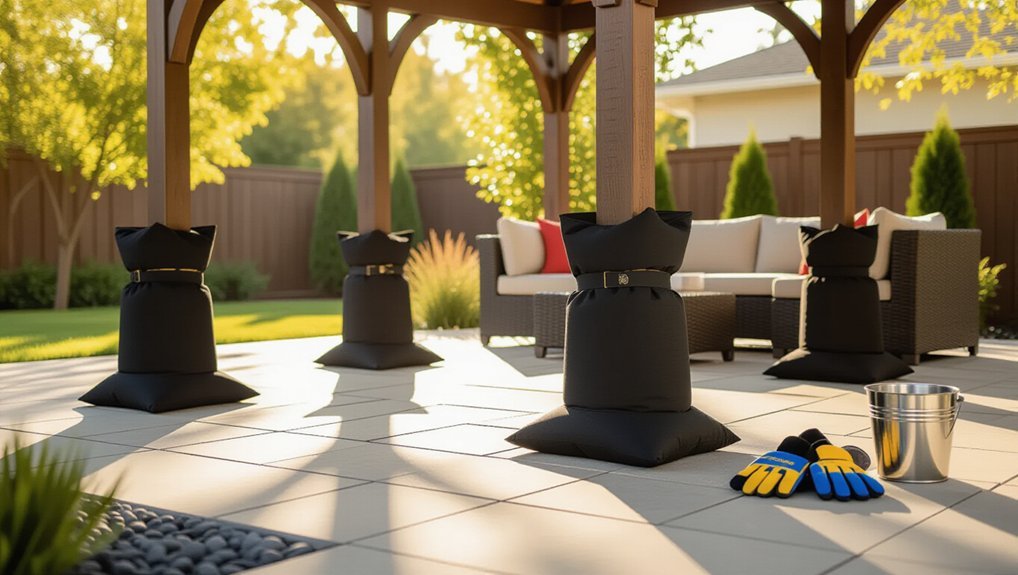
You can anchor a gazebo without drilling by combining ballast, straps, and grip on the right surface. On patios or concrete, clean off algae, dry the slabs, then fit high-friction pads and add filled leg bases or sandbags on every corner. On decking, clamp weight bases and strap legs to joists or sturdy posts, protecting boards from load. On grass, use screw-in ground anchors with tension straps set away from the legs. Next, you’ll see how to size this for wind.
Key Takeaways
- Match no-drill anchors to your surface: friction pads for concrete, straps for decking, and screw-in ground anchors for soil or grass.
- Prep the surface for grip: sweep debris, remove algae, degrease glossy areas, and let everything dry before placing pads or mats.
- Add weight at every leg using fillable bases, sandbags, or water weights, keeping ballast low, even, and centered.
- Use UV-stable ratchet or cam straps to secure the gazebo to fixed features like railings, posts, or heavy planters.
- Recheck and retension after wind or rain, and reduce canopy height or remove side panels when strong winds are forecast.
Pick a No-Drill Gazebo Anchor by Wind + Weight
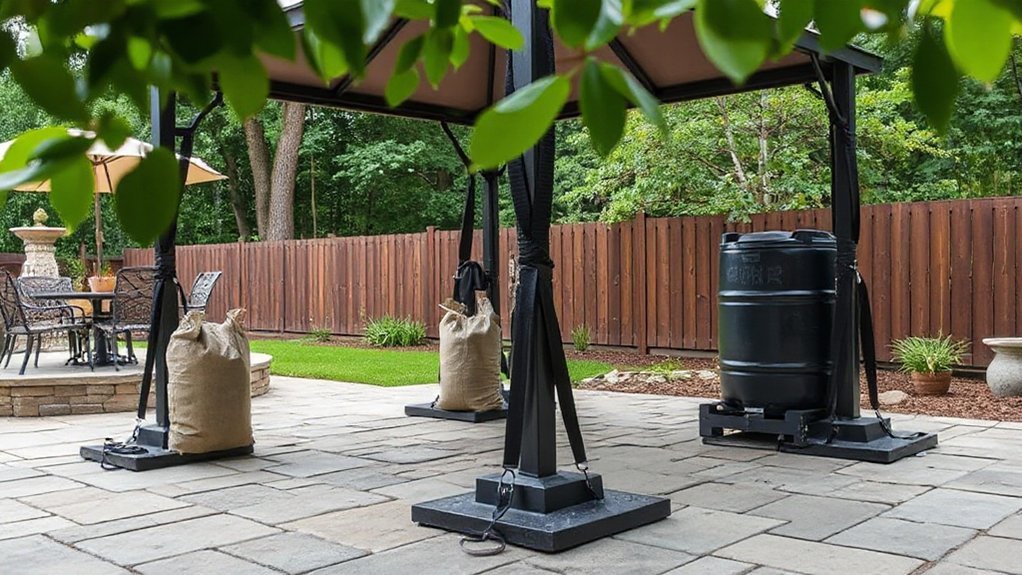
Before you buy any no-drill gazebo anchor, match it to your site’s wind exposure and the gazebo’s total weight, because that’s what decides whether it stays put or turns into a sail. Start with your local conditions: an exposed coastal garden or high-rise terrace needs higher-rated ballast than a sheltered patio.
Check the gazebo’s frame weight, then add the canopy, side panels, and anything you hang from it. Choose anchoring that can exceed that load and won’t creep in gusts; look for tested working loads, not vague “heavy duty” claims.
If you want Decorative alternatives, use filled planters or disguised ballast bags, but don’t let aesthetic considerations reduce capacity. Recheck after rain, as waterlogged fills shift and loosen.
No-Drill Gazebo Anchoring by Surface (Concrete, Deck, Soil)
Although the anchor hardware might look similar on the shelf, you need to match your no-drill setup to the surface you’re fixing into, because concrete, decking, and soil all fail in different ways under gusts.
On paving or concrete, use non-marking rubber feet and high-grip pads to stop skating; clean off algae first, common on UK patios.
On timber decking, spread the load with wide webbing straps around joists or posts, not just boards, so you don’t lift a plank.
On soil or grass, choose screw-in ground anchors and tension straps, set away from the legs for a better angle.
- Concrete: anti-slip pads + friction mats
- Deck: straps around structure, protect boards
- Soil: augers + guy lines, check after rain
Recheck tension when you add Decorative accessories or seasonal decorations.
Use Weighted Leg Bases for No-Drill Gazebo Stability
When you can’t drill into the ground or decking, weighted leg bases give you the quickest, most predictable way to stop a gazebo walking or lifting in UK gusts. Choose Weighted bases designed for your frame size, and match them to the leg profile so they clamp firmly without play.
Fillable bases work well on patios and composite decks because they spread load and don’t mark the surface. Position one base per leg, keep the gazebo square, then tension the canopy so wind can’t pump it.
For better wind resistance, add cross-bracing and lower the roofline if your model allows. In exposed gardens, increase total weight and check each base after the first windy day, then weekly.
Use Sandbags/Weight Bags Without Tripping Hazards
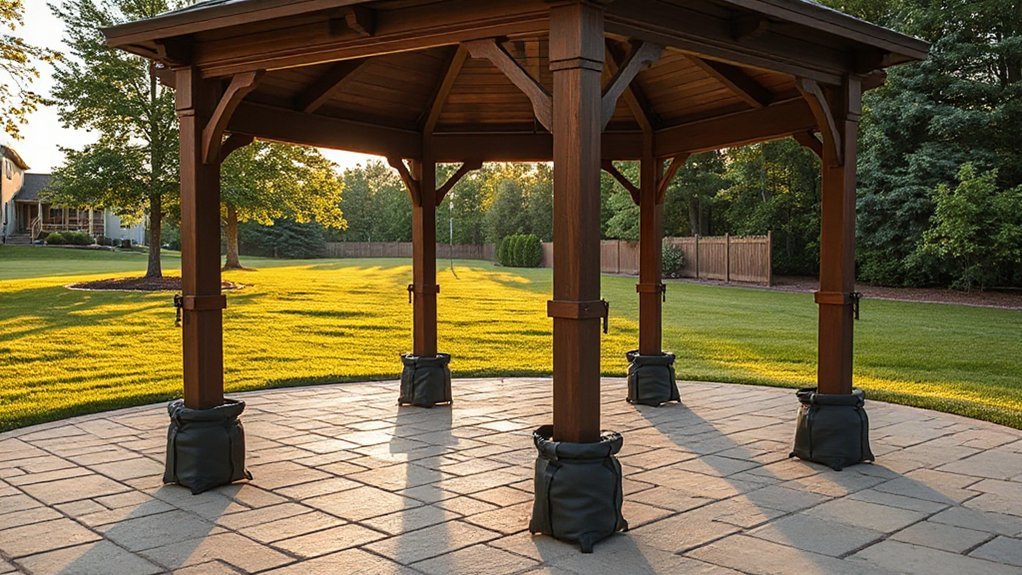
If you need flexible, no-drill anchoring, sandbags and purpose-made weight bags hold gazebo legs down effectively—but you’ve got to place them so nobody trips. Choose UV-stable, double-stitched bags and fill them consistently, then keep every weight tight to the leg line so foot traffic stays clear on UK patios, lawns, and decking.
For extra security, use the leg’s strap points and don’t let loose webbing trail.
- Push bags fully under the valance line, not out in the walkway
- Strap them snugly around each leg, then tuck tails into the buckle
- Pick decorative options (woven-look covers, neutral colours) to meet aesthetic considerations while still staying visible in low light
Use Water Weights for Temporary No-Drill Anchoring
For a temporary, no-drill hold, you can use water weights that suit your gazebo legs—purpose-made ring weights, jerrycan-style containers, or stackable bases.
You’ll get the best stability by placing equal weight at each corner and keeping the load low and centred so the frame stays balanced in gusty UK weather.
Set them up on level ground, fill them safely on site, then empty, cap, and store them dry to prevent leaks, algae, and frost damage.
Choosing Water Weight Types
Why choose water weights over other no-drill options? You’ll get solid stability without scuffing patios, and you can empty them for easy transport in the boot. In the UK, they’re ideal for renters and for pop-up gazebos on slabs, decking, or compacted ground where pegs won’t bite.
When comparing Water weight options, prioritise tough, UV-stable plastic and wide bases that resist tipping. Go for units with screw caps that seal tightly and handles you can grip with wet hands.
For anchoring flexibility, choose styles that match your frame and setup speed:
- Ring weights that wrap around gazebo legs
- Stackable containers you can add or remove
- Dual-fill models that accept water (or sand later)
Proper Placement And Balance
Because water weights don’t bite into the ground like pegs, you’ve got to win stability through placement and balance: sit one weight tight to each leg, keep them square to the frame (not skewed on an angle), and spread the load evenly so no corner lifts when the wind catches the canopy.
Before you commit, check ground stability: on patio slabs, set each weight flat and fully supported; on grass, level the feet so the frame isn’t rocking.
Aim for clean, matching spacing on all sides so the gazebo’s centre of gravity stays over the footprint. If one side faces the prevailing breeze, don’t “double up” there unless you mirror it elsewhere; uneven weight distribution twists the legs and loosens joints.
Re-check after tensioning.
Setup, Filling, And Storage
A good water-weight setup starts before you even uncap the filler: check each weight for cracks, seat it tight against the leg, then fill it in place so you don’t have to carry a sloshing load across the patio. Use a hose or watering can and fill to the marked line; underfilling reduces stability, overfilling strains seams.
Keep your Furniture arrangement set first so you’re not dragging legs after you’ve anchored them, and confirm Shade coverage before you commit to the final footprint.
- Tighten straps or clips so the weight can’t rock on paving
- Add a splash of Milton or a drop of washing-up liquid to slow algae
- Fit caps firmly, then wipe threads to prevent leaks
For storage, drain fully, air-dry, and stack out of frost in a shed.
Strap a Gazebo Down to Railings, Posts, or Planters
If you can’t drill into your patio or decking, you can still secure a gazebo by strapping it to fixed, heavy features such as balcony railings, fence posts, or large planters. Use UV-stable ratchet straps or cam-buckle webbing rated for outdoor loads, and run each strap from the gazebo leg to the anchor point at a low angle to reduce lift.
For railing reinforcement, strap around the vertical posts rather than thin infill panels, and protect paintwork with a sleeve or old towel. On timber posts, avoid sharp edges that could cut the webbing.
For planter stabilization, choose wide, heavy planters (ideally concrete or stone), place them on level ground, and strap through handles or around the base so they can’t tip in gusts. Check tension after 30 minutes.
Add Non-Slip Pads to Stop Gazebo Legs Sliding
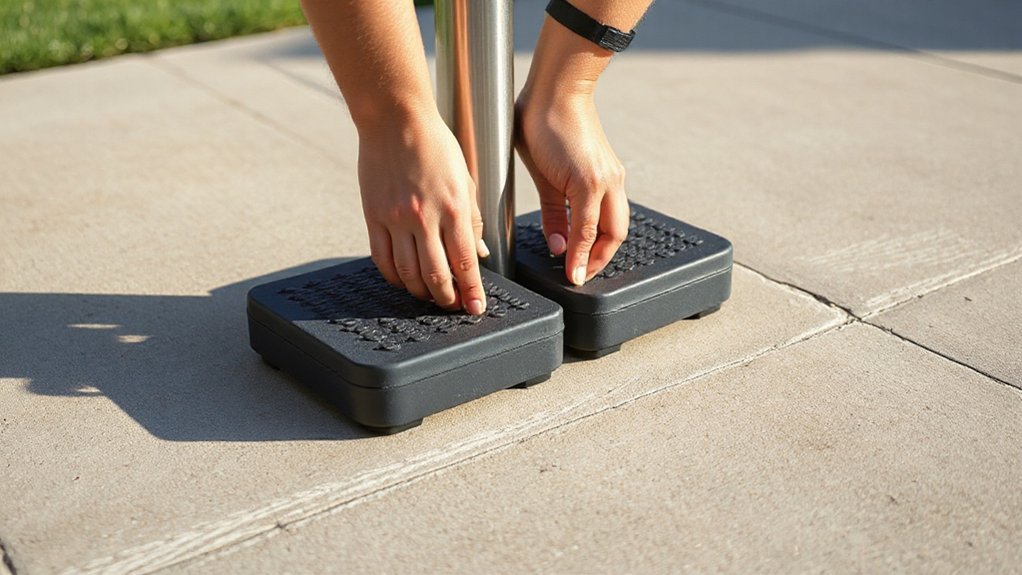
Fit heavy-duty non-slip grip pads under each gazebo leg to stop it skating across patio slabs or decking. Choose pads rated for outdoor use and the weight of your frame, not thin furniture dots that squash flat.
Clean and dry the surface first so the pads adhere properly and don’t peel when the wind picks up.
Choose Heavy-Duty Grip Pads
Wondering why your gazebo still creeps across the patio even with weight on the legs? You need Heavy duty grip pads that bite into the ground and cushion vibration, so the feet don’t skate on smooth paving.
Choose pads designed for outdoor UV and rain, with a high-friction rubber face and a tough backing that won’t split under point loads.
Focus on Surface compatibility, because what works on decking can fail on porcelain or concrete. Match the pad to your setting and gazebo foot shape:
- Textured rubber pads for paving slabs and concrete
- Soft, wider pads for composite or timber decking gaps
- Heat- and water-resistant pads for smooth tiles and resin patios
Fit one under each leg, keep them centred, and check they still grip after windy weekends.
Clean Surface For Adhesion
Even the best heavy-duty grip pads won’t hold properly if the patio’s dusty, green with algae, or slick with furniture polish, so sort the surface before you stick anything down. Start with proper surface preparation: sweep grit, then wash with warm water and a drop of washing-up liquid.
For algae on slabs or decking, use a patio cleaner, scrub, and rinse well. Let everything dry fully; UK humidity can leave a damp film that kills grip.
Degrease glossy concrete or tiles with isopropyl alcohol and a lint-free cloth. Lightly key sealed surfaces with fine abrasive paper if the manufacturer allows it.
Use smart adhesion techniques: apply pads at 10–25°C, press hard for 30 seconds, and keep the gazebo unloaded for 24 hours.
No-Drill Gazebo Anchoring Mistakes in Wind and Rain
When wind picks up and rain starts driving sideways, small no-drill anchoring mistakes can turn your gazebo into a liability fast. You can’t rely on weight alone; gusts funnel under canopies and lift legs, especially on patios and decking. To keep Wind resistance and rain protection working together, you’ve got to avoid common errors.
- You underweight corners: use proper ballast on every leg, not just two, and match it to UK wind forecasts.
- You place anchors on slick, wet slabs: pads and suction feet slide; dry, degrease, then fit anti-slip mats.
- You ignore drainage and pooling: sagging roofs dump water, shifting loads and loosening straps.
Check straps after the first shower, re-tension, and lower the canopy if the Met Office warns of strong winds.
Frequently Asked Questions
Do No-Drill Gazebo Anchors Violate HOA or Apartment Rules?
They can, depending on your lease or HOA covenants, so you must check first. Even Fake anchors and other Temporary solutions may breach rules about fixtures, safety, or appearance; ask written permission, then comply.
Will Anchoring Without Drilling Void My Gazebo Warranty?
It can, like a tightrope over fine print, if you ignore manufacturer terms. You should check UK warranty exclusions: Portable solutions and Temporary fixes may count as misuse. Keep receipts, follow instructions, and get written confirmation.
How Do I Anchor a Gazebo on Uneven Ground Without Drilling?
You anchor it by levelling each leg with adjustable feet or packers, then securing with portable solutions like weighted bags. Spread ballast for proper weight distribution, tension guy lines, and recheck after wind in UK conditions.
Can I Safely Use a Gazebo on a Rooftop or Balcony Without Drilling?
Yes, you can, but only if you control wind uplift and load limits—better safe than sorry. Use temporary solutions like ballast bags, check weight distribution, protect membranes, and secure legs to heavy, non-slip mats.
How Should I Store No-Drill Anchors During Winter or Storms?
Store no-drill anchors indoors, cleaned and fully dry; seal in a labelled tub with desiccant for Winter storage. For storm protection, remove weights early, cover pads, and stack flat to prevent warping.
Conclusion
When you anchor a gazebo without drilling, you’re not fighting the weather—you’re outsmarting it. Match your method to UK gusts and your surface: weighted leg bases on patios and decks, sandbags or water weights on hardstanding, and straps to solid railings or hefty planters. Add non-slip pads so legs don’t skate in rain. Avoid light loads and loose straps; they’re kites waiting to happen. Keep checking tension as conditions shift.