
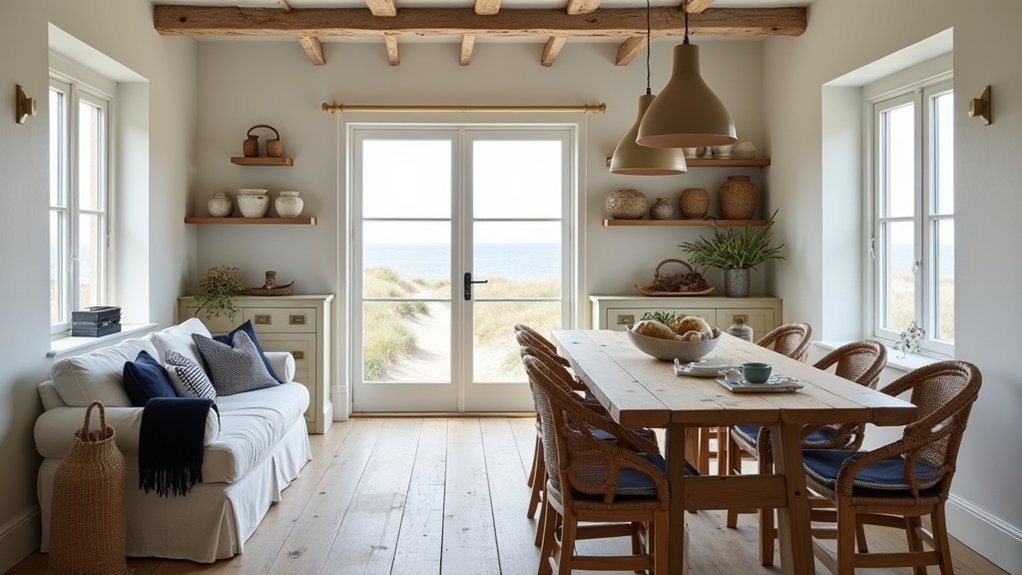
We’ll renovate a fisherman’s cottage from the outside in, starting with structural checks, drying, and smart drainage so coastal moisture can’t win. Next, we’ll weatherproof with salt-resistant cladding, stainless or galvanized fasteners, and watertight flashings and sealants. Inside, we’ll preserve beams and beadboard, then layer sea-washed blues and greens with sandy neutrals, linen, jute, and durable paints and floors. We’ll finish with hard-working storage, humidity-ready baths, and warm, breezy lighting—and there’s plenty more to guide your next decisions.
Key Takeaways
- Inspect and stabilize structure first: sill plates, joists, roof framing, and load paths; address settlement before cosmetic upgrades.
- Control coastal moisture by mapping wet areas, improving drainage and ventilation, and using vapor-smart insulation to prevent rot and mold.
- Weatherproof with salt-resistant cladding, marine-grade seals, corrosion-resistant fasteners, and durable flashings like aluminum or copper.
- Preserve original character by salvaging beadboard, repairing beams, refinishing floors, and using discreet trim details that match historic profiles.
- Create a coastal interior with sun-faded blues/greens, sandy neutrals, natural textures, and durable finishes that resist mildew, sand, and daily wear.
Set Priorities: Structure, Moisture, Budget
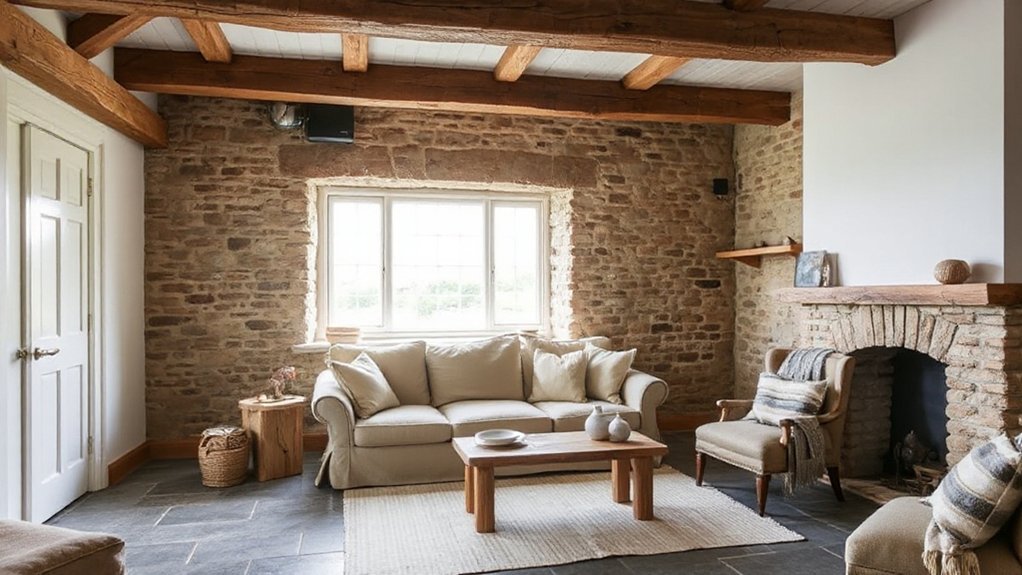
Before we choose paint colors or built-ins, we’ve got to set priorities that protect the cottage and keep the renovation on budget. We’ll start with Structural integrity: inspect sill plates, joists, and roof framing, then stabilize settlement, sister compromised members, and verify load paths before touching finishes.
Next, we’ll plan Moisture control from the inside out—map wet areas, improve site drainage, add targeted ventilation in kitchen and bath, and specify vapor-smart insulation where walls need it.
We’ll sequence work so messy demolition and drying happen first, then rough mechanicals, then trim and cabinetry.
Finally, we’ll lock a realistic allowance plan: reuse sound doors, refinish original floors, and reserve contingency for hidden rot so design decisions stay intentional.
Weatherproof First for Salty Coastal Air
Before we chase finishes, we’ll weatherproof for salty coastal air by specifying salt-resistant exterior materials that won’t pit, peel, or stain.
We’ll guide you toward corrosion-tolerant fasteners, durable cladding, and trim details that shed water cleanly and protect edges.
Then we’ll lock it all in with marine-grade seals and coatings at joints, penetrations, and end grain, so the cottage stays crisp through wind-driven spray.
Salt-Resistant Exterior Materials
Why do coastal cottages age faster than inland homes? Salt-laden air, wind-driven grit, and constant moisture abrade surfaces and force fasteners to fail.
To stay ahead, we specify salt resistant exterior materials that look tailored, not utilitarian: fiber-cement shiplap for crisp shadow lines, kiln-dried cedar for controlled movement, and marine-grade stainless or hot-dip galvanized hardware to prevent staining at joints.
For roof edges and flashings, we choose aluminum or copper where budgets allow, detailing clean hemmed edges to reduce snag points.
Around doors and windows, we favor composite trim for sharp reveals and stable miters.
Then we elevate character with coastal inspired paint techniques—thin washes, sun-faded striping, and restrained patina—applied over substrates built to last.
Marine-Grade Seals And Coatings
Because salt aerosol and wind-driven rain infiltrate even the tightest joints, we treat marine-grade seals and coatings as the first layer of design—not an afterthought. We spec marine grade seals at every window stool, board seam, and flashing lap, then build a coating schedule that matches exposure: satin where hands touch, matte where glare would cheapen the room.
Our coastal coating techniques start with moisture meters and careful prep, so paint becomes protection, not makeup. We’ll show you how each finish choice supports the cottage’s calm, lived-in beauty while resisting blistering and creep.
- You’ll feel the relief of quiet, draft-free corners.
- You’ll trust trim lines that stay crisp through storms.
- You’ll enjoy doors that don’t swell and stick.
- You’ll keep that sea-washed palette luminous, year after year.
Preserve Original Cottage Details (Beams, Beadboard)
Even if we’re updating layouts and systems, we’ll keep the cottage’s original beams and beadboard as the visual backbone of the renovation. That commitment to Historical preservation protects the home’s proportions and patina while giving every new element a clear reference point.
We’ll inspect beams for checking, insect damage, and past notching, then sister or epoxy-consolidate only where structure demands it, leaving tool marks visible. For beadboard, we’ll salvage boards whenever possible, patch with matching thickness and profile, and align seams to existing bay rhythms.
We’ll strip failing finishes gently, then re-seal to stabilize grain and reduce seasonal movement. Thoughtful architectural detailing—clean shadow gaps, consistent casing returns, and discreet fasteners—lets these originals read intentional, not merely old.
Choose a Sea-Washed Coastal Color Palette
Now we’ll set the cottage’s tone with a sea-washed coastal palette that feels lived-in, not themed. We’ll lean on sun-faded blues and greens for cabinetry, trim, or built-ins, keeping the saturation muted like salt-softened paint.
Then we’ll anchor everything with sandy neutrals and crisp whites on walls and ceilings to bounce light and let the original details read cleanly.
Sun-Faded Blues And Greens
When we lean into sun-faded blues and greens, we capture the quiet, sea-washed character that makes a fisherman’s cottage feel authentic rather than themed.
We’ll build a layered palette of Sun faded hues—chalky sky blues, weathered teal, and softened sea-glass green—then repeat them with intent across walls, joinery, and textiles to create coastal charm without shouting.
- A misty blue ceiling that feels like morning fog rolling in
- A green-painted dresser with rubbed edges, like a well-used boat locker
- Striped linen cushions that echo old deck chairs and salt air
- A deep blue door or shutter that grounds the view and calms the room
Keep finishes matte and slightly imperfect so light reads as patina, not polish.
Sandy Neutrals And Whites
Sun-faded blues and greens set the coastal mood, but sandy neutrals and soft whites give the cottage its light and breathing room. We’ll layer warm ivories on walls, then ground them with oat, dune, and drift-sand textiles so the palette reads calm, not flat.
We’ll choose matte, chalky finishes that diffuse glare and hide salt-spray wear, and we’ll repeat the whites across trim, ceiling, and built-ins to sharpen daylight.
For depth, we’ll mix linen upholstery, bleached oak, and sisal underfoot, then add restrained contrast with putty grout and pale stone.
We’ll echo Beachside flora through seagrass baskets and dried stems, and we’ll place heavier weaves where Coastal wind patterns push drafts, keeping comfort without visual weight.
Add Natural Textures (Wood, Linen, Jute)
Because a fisherman’s cottage relies on honest materials more than ornament, we’ll layer in natural textures—weathered wood, breathable linen, and rugged jute—to build warmth and depth without losing the home’s coastal simplicity.
We’ll mix Seaside textures with Rustic accents so every surface feels quietly collected, not themed. Choose boards with visible grain for open shelving, a linen slipcover that drapes softly, and a jute runner that grounds the room underfoot.
Keep tones sun-faded and tactile, letting light skim across fibers and knots to animate the neutrals you’ve set.
- Run your hand along worn timber and feel the story.
- Let linen curtains breathe and soften morning glare.
- Anchor seating with jute that feels like dunes.
- Add a woven basket and hear the quiet order.
Pick Durable Finishes for a Fisherman’s Cottage
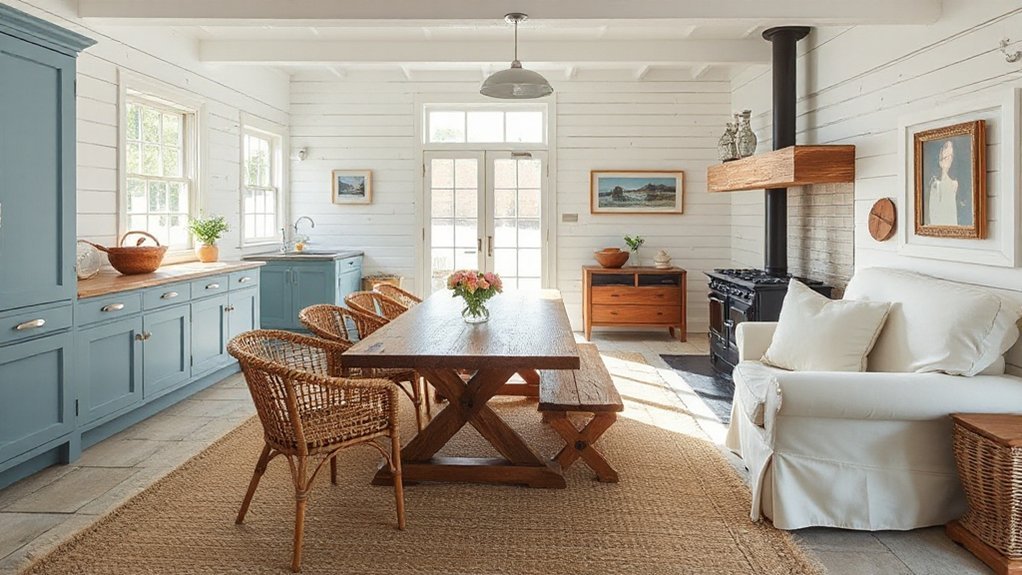
Natural textures set the mood, but durable finishes keep a fisherman’s cottage looking composed through wet boots, salty air, and daily wear.
We’ll specify marine-grade paint in a soft eggshell for walls and trim; it wipes clean and resists mildew without a plastic shine.
For floors, we’ll choose sealed engineered oak or porcelain that reads like weathered boards, paired with matte grout that won’t yellow.
We’ll protect woodwork with hardwax oil or waterborne poly—Eco friendly finishes with low VOCs and dependable abrasion resistance.
For hardware and lighting, we’ll stick to powder-coated aluminum or brushed stainless to dodge corrosion.
Then we’ll balance warmth with modern minimalist materials: microcement, compact laminate, and tempered glass for clean edges.
Update the Fisherman’s Cottage Kitchen for Real Life
Now we’ll update the fisherman’s cottage kitchen to handle real life, starting with coastal-friendly surfaces that resist salt air, spills, and sand. We’ll prioritize hard-wearing countertops, wipeable backsplash materials, and cabinetry finishes that won’t swell or stain.
Then we’ll tighten the plan with smart storage—full-height cabinets, pull-outs, and toe-kick drawers—so the smallest footprint works like a proper kitchen.
Durable Coastal-Friendly Surfaces
Even if the kitchen still wears its fisherman’s-cottage charm, we need surfaces that can handle salt air, sandy feet, wet raincoats, and daily cooking without constant babying. We’ll specify honed quartz or dense porcelain for counters: nonporous, stain-proof, and calm beside cabinet colors drawn from Marine flora and Coastal fauna.
For floors, we’ll choose textured porcelain planks or sealed microcement; both resist grit, puddles, and slip hazards. We’ll run a marine-grade satin paint or limewash on walls, then cap splash zones with glazed zellige or large-format ceramic to cut grout upkeep.
Finish with brushed stainless or unlacquered brass that ages honestly, not messily.
- Cool stone under bare feet after surf
- Salt-spray wipes away in one pass
- Sunlit glazes shimmer like tidal pools
- Scuffs read as story, not failure
Smart Storage For Small Spaces
Where do we hide the real-life clutter—wet boots, dog leads, market bags, and the avalanche of mugs—without stripping a fisherman’s cottage kitchen of its ease? We build storage into every inch, then keep sightlines calm.
We’ll run full-height cabinetry to the ceiling for seldom-used platters, add a shallow rail shelf for everyday plates, and specify deep drawers for pans so nothing stacks precariously. A toe-kick drawer swallows trays; Hidden compartments behind the banquette backrest stash pet gear and shopping totes.
We’ll choose multi functional furniture: a pull-out prep table that doubles as breakfast perch, and an island on concealed casters with integrated recycling.
Finally, we’ll add peg rails and hooks near the door, so damp items drip safely, not on floors.
Coastal Bathrooms Built for Humidity and Easy Cleaning
Because salt air and steamy showers team up to punish every surface, we design coastal bathrooms to shed moisture fast and wipe clean without fuss. We’ll specify mold resistant tiles with tight grout joints and a satin sealer, so splashes don’t linger and mildew doesn’t get a foothold.
We pair them with Rust resistant fixtures in brushed nickel or marine-grade stainless, keeping the look crisp even after years of spray and steam. A quiet, high-CFM fan with a humidity sensor clears the room before mirrors fog and trim swells, while washable eggshell paint keeps walls resilient.
- You step onto a dry floor, not a damp sponge.
- You breathe easier in air that feels freshly rinsed.
- You admire finishes that stay bright, never pitted.
- You clean in minutes, then get back to the sea.
Smart Storage for Sandy Gear and Wet Boots
How do we stop sand, salt, and soggy neoprene from migrating past the entry? We build a true wet-zone: a recessed, slip-resistant tile mat with a linear drain, plus a wall-mounted spray tap for quick rinses.
We’ll guide you to closed storage that works hard—marine-grade ply lockers with vent slots, pull-out perforated trays, and a removable boot rack that lifts to mop beneath. Add a lidded bin for gloves and leashes, and a narrow cabinet for detergents to keep fumes contained.
A built-in bench with a wipeable cushion lets you gear up without clutter. Finish with restrained Seashell decor on a sealed shelf, and place Coastal plantings outside to catch grit before it comes in.
Breezy Lighting and Vintage Coastal Styling
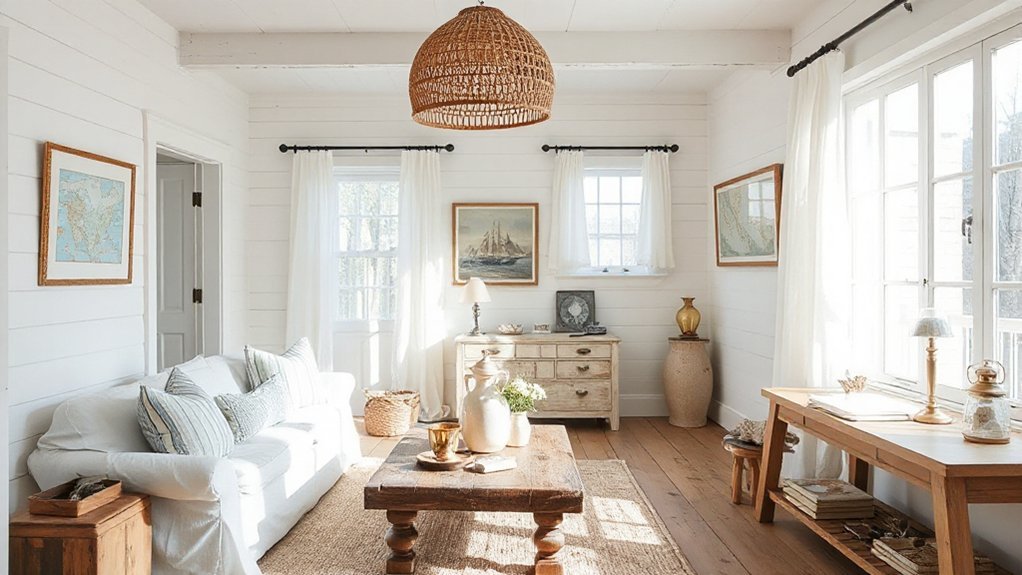
Once the wet-zone keeps grit and dripping gear contained, we can let the cottage feel light again, starting with breezy lighting and vintage coastal styling that suits a working shoreline home. We’ll layer beachside lighting: a glass-encased pendant at the entry, dimmable sconces along the hallway, and a warm LED filament lamp over the table to mimic late-afternoon sun.
Keep finishes honest—brushed brass, galvanized steel, and rope-wrapped details—so patina feels earned, not staged. Then we’ll edit in vintage nautical decor sparingly, giving each piece breathing room against whitewashed boards and linen.
Aim for calm contrast: weathered wood, crisp stripes, and sea-glass greens.
- A lantern glow that feels like safe harbor
- A brass porthole mirror catching dawn
- A chart print recalling hard-won routes
- A worn oar above the hearth, quietly proud
Frequently Asked Questions
Do I Need Special Permits to Renovate a Coastal Fisherman’s Cottage?
Yes, we’ll likely need permits, especially for structural, electrical, or exterior changes. We’ll check Building codes, coastal setbacks, and Historical preservation rules. Let’s consult your local planning office and a licensed architect early.
How Can I Improve Energy Efficiency Without Changing the Cottage’s Exterior?
We can boost efficiency invisibly—heat loss through walls and roofs can hit 35%, so prioritize Insulation upgrades. Specify interior storm panels or Energy saving windows, air-seal gaps, add smart thermostats, and upgrade efficient HVAC systems.
What Insurance Considerations Apply During and After Coastal Renovations?
We’ll review Coastal insurance and add Renovation coverage for builder’s risk, liability, and materials on-site; after completion, we’ll update limits for wind/flood, document finishes, guarantee code compliance, and require contractor certificates and endorsements.
How Do I Address Lead Paint or Asbestos in an Older Seaside Cottage?
Like sanding a storm-worn hull, we’ll first test surfaces, then hire certified pros for Lead paint removal and asbestos mitigation. We’ll seal rooms, use negative air, dispose safely, and rebuild with low-VOC, durable finishes.
What Timeline Should I Expect for a Full Cottage Renovation Near the Coast?
Expect 4–9 months for a full coastal cottage renovation, depending on permits, weather, and trades. We’ll sequence demolition, structural fixes, MEP, finishes, then Coastal decor and nautical accents, with contingency built-in.
Conclusion
When we renovate a fisherman’s cottage, we balance romance with rigor: charm beside durability, patina next to protection. We’ve shored up structure, sealed out salt air, and kept what matters—aged beams, beadboard, honest imperfections. Then we layer in sea-washed color, linen and jute, warm woods, and lighting that feels breezy, not bare. With a hardworking kitchen, humidity-ready bath, and storage for sandy gear, the cottage lives beautifully—and cleans easily.