
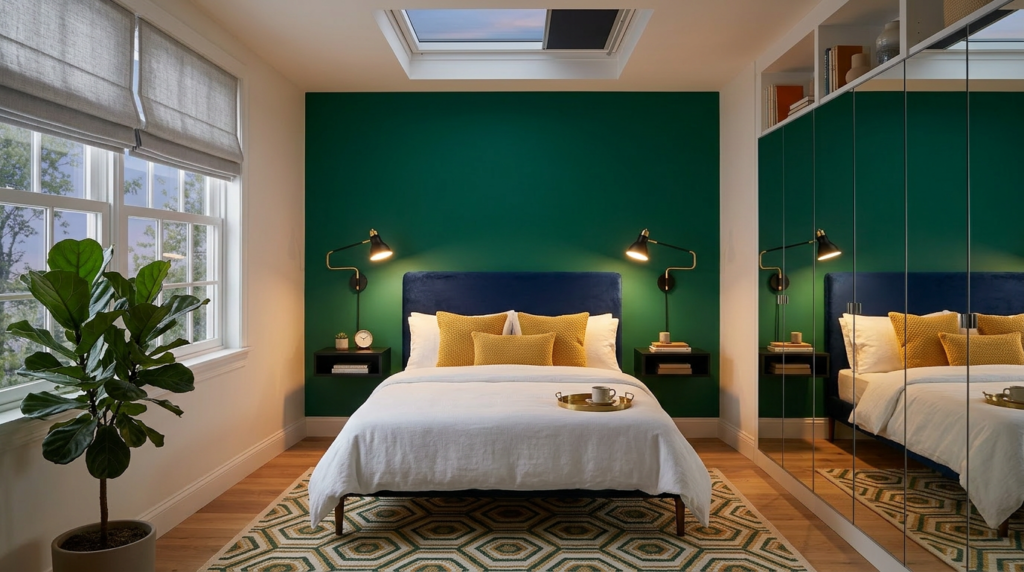
You don’t need more square footage to make your bedroom feel bigger; you need smarter colour choices. Start with light, airy shades like crisp white, soft pastel, or warm greige to open the space, then add depth with a single dark wall behind your headboard. You can even raise the room visually with a subtle two-tone ceiling. But the real difference comes from how you match paint to light, finish, and décor—so what should you choose first?
Choose Light Small Bedroom Paint Colours (White, Greige, Pastel)
If you want your small bedroom to feel bigger and brighter, start with light paint colours like crisp white, warm greige, or soft pastels. These shades bounce daylight around the room, soften harsh shadows, and make tight corners recede.
Choose a clean white if you want a fresh, airy look, or pick a creamy white to keep it cozy. Greige gives you the same open feel with a hint of warmth, so your space won’t read sterile.
Pastels like blush, misty blue, or pale sage add personality while staying light enough to expand the room visually. Keep trim and ceiling in a similar light tone to reduce contrast and create a seamless, taller look overall.
Use Dark Small Bedroom Colour Ideas on One Wall
Light paints open up a small bedroom, but you can still work in richer colour without shrinking the space. Paint one wall in a deep shade to create focus, then keep the others light to maintain brightness.
Choose the wall behind your headboard or the one you see first; it’ll anchor the room and make it feel intentional, not cramped.
Go for inky navy, charcoal, forest green, or aubergine, and use a matte or eggshell finish to soften glare.
Tie the dark wall to the rest of the scheme with bedding, a rug, or artwork that repeats the tone.
If your room gets little daylight, pick a dark colour with warm undertones so it won’t look flat.
Lift Ceilings With Two-Tone Paint (Walls vs Ceiling)
Even with limited square footage, you can make a low ceiling feel taller by using a two-tone paint approach that separates the walls from the ceiling. Paint the ceiling a lighter shade than the walls so your eye travels upward, not outward.
Keep the wall colour grounded, then fade the upper portion by taking the ceiling colour down 4–8 inches, creating a “halo” band that visually lifts the plane.
For more height, paint crown molding and trim the same colour as the ceiling to erase hard edges.
If you want drama without shrinking the room, choose a mid-tone on walls and a crisp, pale ceiling. You’ll get cleaner lines, better proportion, and a room that reads taller instantly.
Match Small Bedroom Colours to Light, Finish, and Décor
Because your bedroom’s paint interacts with daylight, bulb temperature, and sheen, the best small-bedroom colour choice is the one that matches your lighting, finish, and décor instead of fighting them.
If you get cool north light, choose warmer off-whites, soft greiges, or muted blush to keep the room from feeling flat. If you get warm afternoon sun, cooler pale blues or gentle sages can balance the glow.
Under LEDs, check the Kelvin rating: 2700K warms colours; 4000K can sharpen them.
Finish matters in tight spaces. Use matte or eggshell on walls to hide texture and reduce glare; reserve satin for trim if you want cleaner wipeability.
Finally, sample beside your bedding, curtains, and wood tones so undertones align.
Add Accent Colours With Soft Contrast and Repetition
When you’re working with a small bedroom, accent colours look best when they contrast softly rather than shout. Pick one main neutral, then choose one or two accents that sit a step away on the colour wheel—dusty blue with warm greige, muted terracotta with creamy white, sage with soft blush. You’ll get definition without visual clutter.
Repeat those accents in small, deliberate hits so your eye connects the room: a cushion stripe echoed in a throw, bedside lamp base, and framed print; a rug detail mirrored in curtain edging. Keep saturation low and finishes consistent—matte textiles, brushed metal, pale wood—so accents feel cohesive.
Use contrast through texture, too: boucle, linen, and wool add depth without shrinking the space visually.
Conclusion
You don’t need a big room to make a bold colour statement. Start with light, airy shades like white, greige, or soft pastels to open the space up. If you want drama, add a single dark accent wall behind your bed for instant depth. Paint your ceiling and walls in two tones to lift the height, then tie everything together with lighting, finishes, and décor. Repeat subtle accents for a polished, spacious feel.