
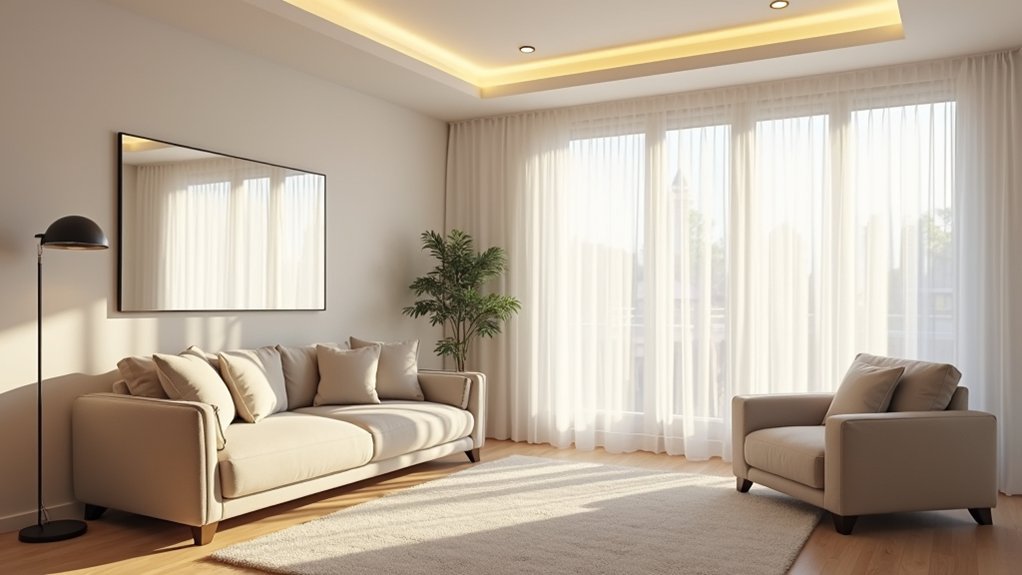
If your home feels dim or harsh, you can fix it quickly by starting with a room-by-room audit and a simple plan for layered light. You’ll get better results when you combine ambient, task, and accent fittings, choose the right lumen output and colour temperature, and place fixtures to cut shadows. Add dimmers or smart controls for flexibility, and you’ll notice the difference at once—especially when you address the spots most people miss…
Key Takeaways
- Audit each room at night, noting fixtures, switch controls, bulb types, and obstructions; replace flickering or buzzing lamps with quality LEDs.
- Use layered lighting: ambient for overall comfort, task for work areas, and accent to highlight features and add depth.
- Choose bulbs by lumens, colour temperature, and CRI; warm 2700K for relaxing rooms, neutral 3000–4000K for kitchens and halls.
- Improve distribution by spreading fixtures, overlapping light beams, and adding under-cabinet strips, desk lamps, and wall lights to reduce shadows and glare.
- Maximise daylight with mirrors and light curtains, and add dimmers, smart scenes, or motion sensors for flexible, energy-efficient control.
Audit Your Home Lighting (Quick Checklist)
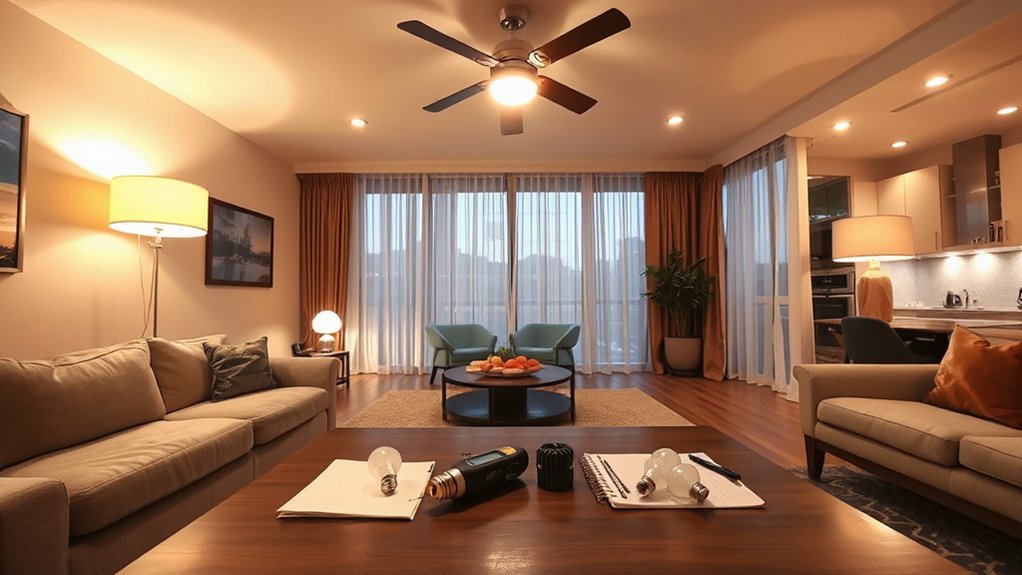
Before you buy new bulbs or fittings, take ten minutes to audit what you’ve already got. Walk each room and note every light point, switch location, and what it actually controls. Check lampshades for dusting and colour cast, and see whether furniture blocks light. Photograph the room at night to judge lighting aesthetics objectively.
Next, read the bulb labels: wattage (or lumens), colour temperature (K), and fitting type (B22, E27, GU10). Replace any mixed colour temperatures in the same space, and bin flickering or buzzing lamps. Confirm you’re using LEDs, not halogen, for energy efficiency.
Test dimmers for compatibility with LED bulbs, and check bathroom lights meet IP ratings. Finally, track which lights stay on longest; those deserve the best bulbs.
Plan Ambient, Task, and Accent Layers
Start by setting your ambient light level so each room feels evenly lit without glare, using ceiling fittings, wall lights, or dimmable LEDs suited to UK homes.
Then add focused task lighting where you work—under-cabinet strips in the kitchen, a proper desk lamp in the study, and bright mirror lights in the bathroom.
Finish with accent lights to highlight artwork, alcoves, or shelving, giving the space depth and a more polished look.
Define Ambient Light Levels
Although a single bright fitting can light a room, you’ll get a far better result by defining your ambient light level first, then layering task and accent lighting to suit how you actually use the space.
Aim for comfortable, even illumination that lets you move around safely without glare or harsh shadows.
In UK homes, start by evaluating daylight and room size, then choose fittings that give broad light distribution—ceiling, wall, or indirect uplighting all work.
Match the color temperature to the room’s feel: warmer (around 2700K) for lounges and bedrooms, neutral (3000–4000K) for kitchens and hallways.
Use dimmers where possible so you can shift levels from daytime to evening, and check lampshade and diffuser choices don’t choke output.
Add Focused Task Lighting
Once you’ve set a comfortable ambient level, add focused task lighting wherever you work, read, cook, or apply makeup so you’re not relying on the main fitting. Put an adjustable desk lamp by your WFH setup, a reading light beside the sofa or bed, and under-cabinet LEDs over kitchen worktops.
In bathrooms, choose an IP-rated mirror light to reduce shadows and improve accuracy. Aim light onto the task, not into your eyes: use shades, diffusers, and tilt heads to control glare.
Pick cooler white (around 4000K) for kitchens and studies, and warmer tones for winding down. Add dimmers or smart bulbs for personalized lighting, letting you match brightness to time and task.
Highlight With Accent Lights
Task lighting handles the practical jobs, so use accent lights to add depth and draw the eye to what you want noticed. Fit LED spots to wash a feature wall, add picture lights over artwork, or tuck strip lighting under shelves to lift collections.
Get your fixture placement right: angle adjustable heads at 30–45 degrees to cut glare and avoid harsh shadows on faces. Use uplighters behind plants or sofas to soften corners and make rooms feel taller.
Match colour temperature to the space—2700K for cosy living areas, 3000K for cleaner kitchens and halls—and keep it consistent within each room.
Put accent circuits on dimmers, and you’ll shift the mood without rewiring. Easily.
Choose Bulbs: Lumens, Kelvin, and CRI
If you want lighting that actually suits the room, you need to choose bulbs by performance, not just wattage. In UK shops, check lumens for brightness, Kelvin for warmth, and CRI for colour accuracy. You’ll get better energy efficiency and longer bulb lifespan when you match output to use, then pick quality LEDs with a reputable brand and warranty.
- Lumens: 400–800 for most bedside lamps; 1,000+ for kitchens
- Kelvin: 2,700K cosy; 3,000–3,500K neutral; 4,000K crisp task light
- CRI: aim for 90+ in living spaces and bathrooms
- Beam angle: wide for general glow, narrow for highlights
- Dimmable rating: confirm compatibility with your existing dimmer switch
Place Fixtures for Even, Shadow-Free Light
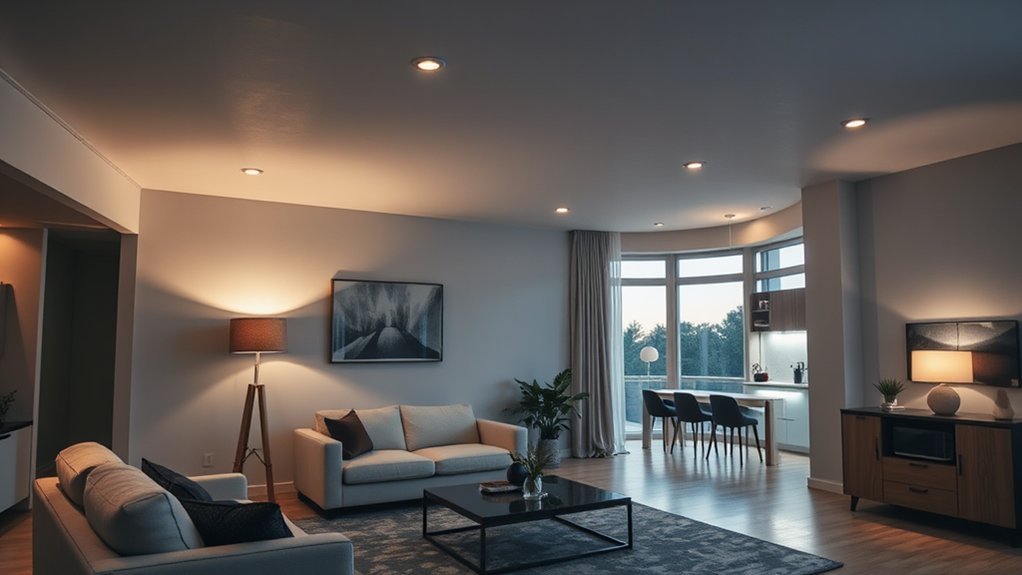
Two placement rules fix most lighting problems: spread light sources around the room and aim them so they overlap. Start with your ceiling fitting, then add wall lights or floor lamps on opposite sides to balance brightness and reduce harsh contrast. Keep fittings out of corners where light pools and leaves the centre gloomy.
For Shadow prevention, avoid placing a single pendant directly above seating; it throws facial shadows and makes the room feel flat. Instead, position pendants slightly off-centre or use two smaller fittings spaced evenly.
In hallways, use multiple downlights with consistent spacing rather than one bright fitting at the end.
Good Fixture placement also means matching height: mount wall lights at eye level and angle shades towards walls to soften spill.
Add Task Lighting (Kitchen + Home Office)
Because general room lighting rarely hits worktops and screens cleanly, you’ll get better results by adding dedicated task lights in the kitchen and home office. Choose lighting fixtures that put light exactly where your hands and eyes work, then match colour temperature to the job so you don’t strain or misread colour.
- Fit under-cabinet LED bars to wash prep areas, keeping them clear of splashes and heat.
- Use a shaded pendant over islands, hung high enough to avoid glare when you’re standing.
- Add an adjustable desk lamp with a diffused head, aimed across the keyboard, not at your eyes.
- Pick 3000–4000K in kitchens; use 4000K for focused office tasks.
- Put task lights on separate switches or dimmers for quick control.
Use Accent Lighting to Add Depth and Focus
Use accent lighting to give your rooms depth and direct attention where it matters. You can highlight architectural features like alcoves, coving, and fireplaces.
Then build layered light zones with wall lights, LED strips, and a few well-placed spots. Add targeted task accents—such as under-cabinet or picture lights—so key areas stay clear and comfortable without turning on every ceiling fitting.
Highlight Architectural Features
When you treat accent lighting as a design tool rather than an afterthought, you can draw the eye to your home’s best architectural details and add instant depth. Aim light precisely, and you’ll make period features feel intentional, not fussy. Choose fittings that suit UK ceiling heights and wiring routes, and keep glare off sightlines by angling beams onto texture, edges, and relief.
- Graze brick or stone with slim LED wall washers for crisp shadowing.
- Frame fireplaces or alcoves with Decorative wall sconces on dimmers.
- Pick out ceiling medallions with a discreet uplight above a pendant.
- Wash coving with hidden LED tape to sharpen profiles without hotspots.
- Use adjustable spotlights to emphasise arches, panelling, and stair newels.
Test positions at night before fixing, then fine-tune aiming and dimming.
Create Layered Light Zones
Once you’ve highlighted key features, shape the rest of the room with layered light zones so it works for everyday living, not just looks good. Build a clear lighting hierarchy: ambient for general movement, accent to add depth, and softer background glow to stop corners feeling flat. Use dimmable circuits where possible, and consider smart bulbs if rewiring isn’t practical in UK homes.
Plan zone differentiation by mapping how you use the space: seating, dining, circulation, and display. Keep each zone on its own switch or scene, so you can change mood without over-lighting.
Add wall lights to widen the room, place LED strips on shelves for gentle emphasis, and use uplighters to lift low ceilings. Choose warm-white LEDs (around 2700K) for comfort.
Use Targeted Task Accents
Although ambient and layered zones set the overall mood, targeted task accents make a room genuinely work by putting light exactly where your eyes need it. You’ll cut strain, sharpen detail, and add depth without over-lighting the whole space.
Choose fittings with controllable beams and proper Light diffusion so glare doesn’t bounce off glossy worktops or screens. Match Color temperature to the task: cooler for precision, warmer for winding down.
- Fit under-cabinet LEDs for food prep and sink areas
- Use a swing-arm wall lamp for reading beside sofas or beds
- Add a desk task light with a diffused lens for WFH
- Install picture lights to focus artwork and lift walls
- Angle floor spotlights to graze textured plaster and shelving
Boost Natural Light With Mirrors and Curtains
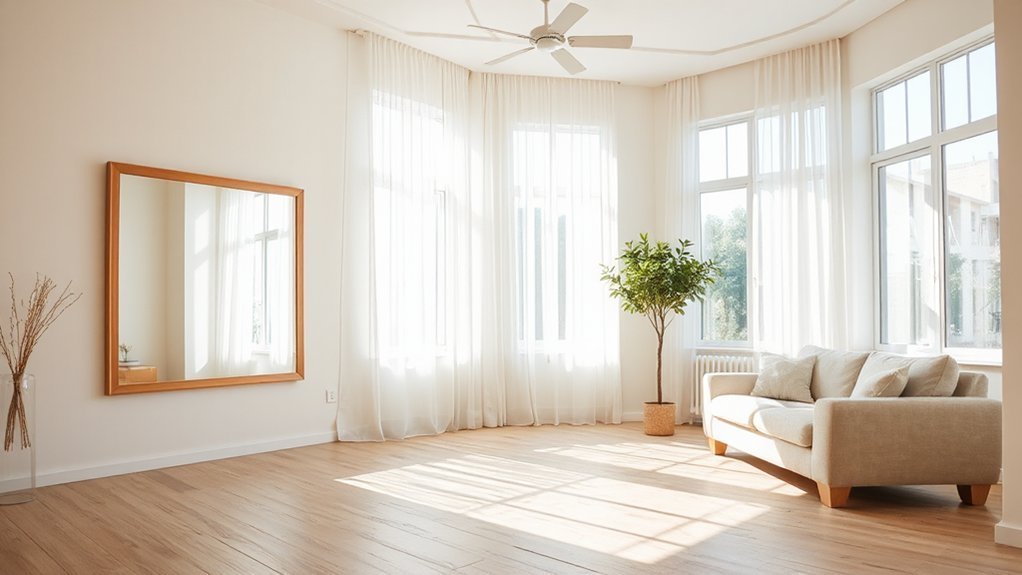
How do you make a room feel brighter without touching the electrics? Start with mirror placement. Hang a large mirror opposite a window to bounce daylight deeper into the space, or angle it to reflect the sky rather than a dark hallway. In narrow UK terraces, try a tall mirror at the end of a corridor to pull light through. Keep frames slim and pale so they don’t visually absorb brightness.
Next, rethink curtain styles. Swap heavy lined drapes for lightweight voiles, sheers, or linen blends that soften glare but still let sun in. Fit curtains wider and higher than the window reveal, so you can stack them clear of the glass. Choose light, warm neutrals to lift walls and maximise daylight year-round.
Add Dimmers and Smart Controls for Flexibility
Even if you keep the same fittings, you can transform the feel of a room by adding dimmer switches and smart controls. You’ll soften glare for evenings, brighten task zones for cooking, and cut energy use without changing bulbs.
In the UK, use a qualified electrician for mains work and confirm your dimmer matches LED lamps to avoid flicker.
For Smart home convenience, choose hubs and switches that support schedules, scenes, and voice control, then layer lighting automation for effortless routines.
- Fit LED-compatible dimmers in living rooms and bedrooms
- Set timed scenes for mornings and wind-down
- Add motion sensors for halls, landings, and loos
- Use app control to manage lights when you’re away
- Link lighting to heating or security for smarter triggers
Frequently Asked Questions
What Lighting Upgrades Add the Most Home Value Before Selling?
You’ll add most value by fitting LED downlights, Smart dimmers, and upgrading tired fixtures. Install Decorative sconces in halls and lounges, and improve kitchen task lighting. Choose UK-compliant fittings and warm-white bulbs for broad appeal.
How Can I Reduce Glare and Eyestrain From Bright LEDS?
Reduce glare by fitting LED diffusers, choosing warm 2700–3000K lamps, and aiming fittings away from sightlines. Install Smart dimmers to lower output in evenings, add matte shades, and avoid bare bulbs in UK rooms.
Are There Lighting Changes That Help With Sleep and Circadian Rhythm?
Yes—think of light as your body’s conductor. You’ll boost sleep by using circadian lighting: keep mornings bright/cool, evenings warm/dim. Fit sleep friendly bulbs (2700K), use timers, and avoid blue light after 9pm.
How Do I Choose Fixtures That Match My Home’s Style and Ceiling Height?
Match fixture styles to your home’s era—Victorian, mid-century, contemporary—and keep finishes consistent. For ceiling height, allow 2.1m clearance under pendants; use semi-flush on low ceilings, chandeliers only on higher rooms.
What Are Common Lighting Mistakes Renters Should Avoid Without Rewiring?
In the UK, you’ll spend about 90% of time indoors, so don’t waste it with glare and harsh colour temps. Use portable lamps for layers, choose dimmable bulbs, avoid low-lumen lighting and mismatched shades.
Conclusion
You’ll get the best results when you treat lighting like a toolkit, not a single ceiling pendant. Audit each room, then layer ambient, task, and accent light for even coverage. Choose LED bulbs by lumens, Kelvin, and high CRI so colours look true. Place fittings to cut glare and shadows, add targeted task lights in the kitchen and office, and use mirrors and lighter curtains to stretch daylight. Finish with dimmers or smart controls.