
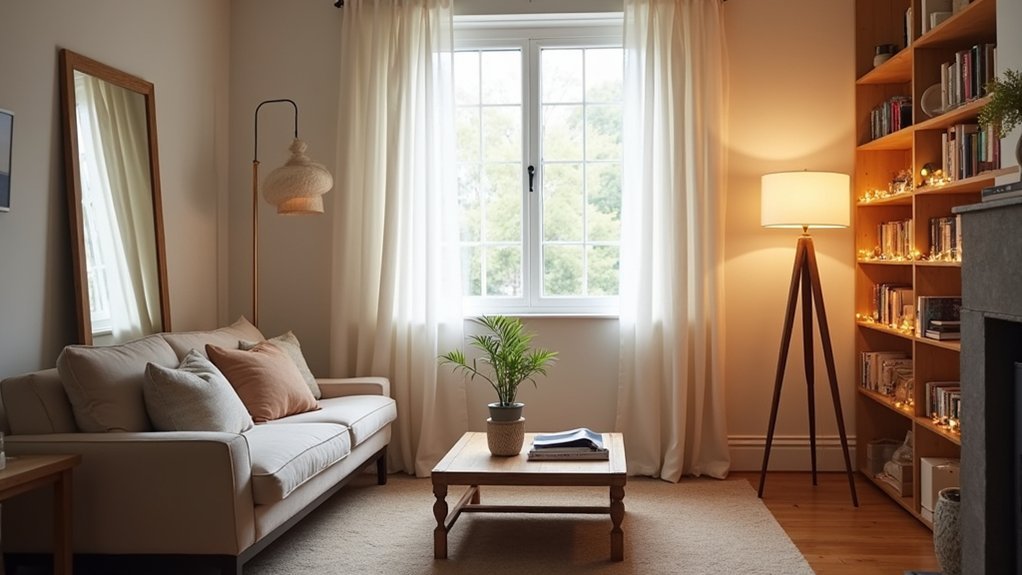
Walk through your rooms at dusk and mark gloomy corners and task spots, then fix what you’ve got first: clean shades, re-aim fittings, and swap tired bulbs for higher-lumen LEDs. Choose warm white (2200–2700K) for bedrooms and cool white (4000–5000K) for kitchens and home offices, and pick high-CRI LEDs for worktops and desks. Add plug-in floor and table lamps, fit lighter shades, and use mirrors to bounce light. Keep going for more smart, budget-friendly upgrades.
Key Takeaways
- Walk through rooms at dusk, identify shadowy task zones, and map quick fixes like lamp repositioning and shade cleaning.
- Replace dim bulbs with higher-lumen LEDs, choosing lumens for function and consistent color temperatures across connected spaces.
- Add plug-in floor, table, or desk lamps to create layered ambient and task lighting without rewiring.
- Swap dark or small lampshades for larger, light-colored diffusers to boost brightness and reduce harsh shadows.
- Use timers, smart plugs, or plug-in dimmers to automate schedules and adjust mood lighting while cutting energy waste.
Spot Dark Corners and Task Areas Fast
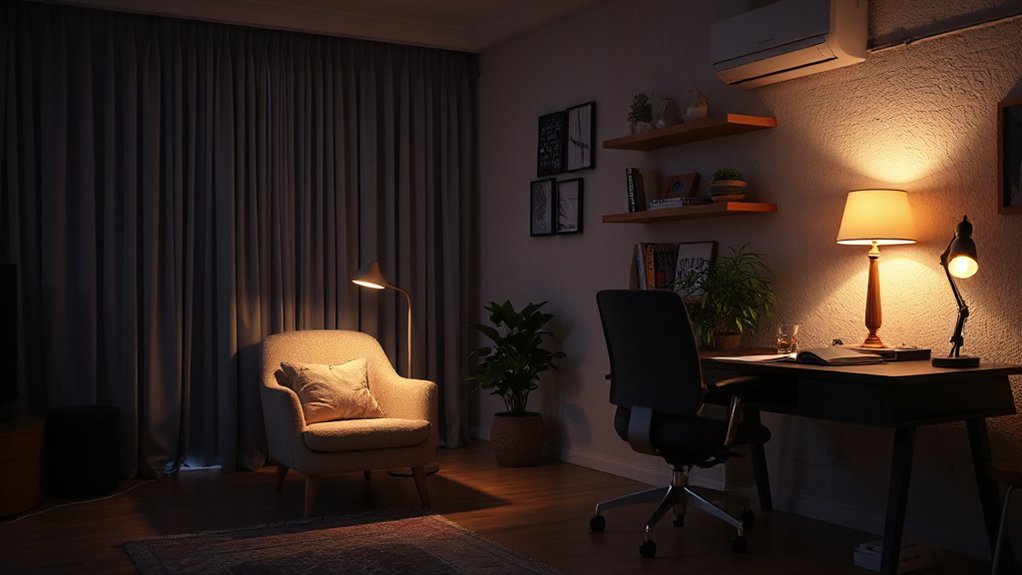
Before you buy a single bulb, walk through each room at dusk and note where the light fails—shadowy corners, worktops, desks, and reading spots. Switch on your usual ceiling fixtures, then stand where you actually live: at the hob, by the mirror, at the sofa. If your face looks flat or your hands cast hard shadows, you’ve found a task gap.
Next, map what you see to surfaces. Dark paint, a matte Accent wall, and heavy curtains swallow light; glossy tiles and pale walls bounce it back. Mark problem zones with masking tape, then measure the distance to the nearest fitting or socket. You’ll plan quick wins—repositioned lamps, cleaner shades, or better aiming—without guessing.
Upgrade Home Lighting With Higher-Lumen LEDs
Once you’ve pinpointed where the room falls flat, the quickest upgrade is often swapping in higher-lumen LED lamps rather than adding new fittings. Check the lumen figure on the box, not “wattage equivalent”, and match it to the job: higher lumens for worktops, desks, and reading spots, lower where you want softer pools of light. Keep your lampshades and diffusers in mind; darker shades and opaque glass will swallow output, so a lumen bump can restore balance without changing the look. In most UK homes, modern LEDs give strong brightness with excellent energy efficiency, so you’ll cut running costs while improving visual comfort. Buy reputable, flicker-free bulbs and you’ll also get long life and real cost savings over time.
Choose Warm vs Cool Bulbs by Room
Choose warm white bulbs in bedrooms to soften the space and support proper wind-down at night. Switch to cooler white in task areas like the kitchen, utility room, or home office so you can see detail clearly. Keep the look cohesive across your home by sticking to a tight colour-temperature range and adjusting only where function demands it.
Warm Light For Bedrooms
Although cool light can look crisp in a kitchen or utility, your bedroom benefits far more from warm white bulbs that soften shadows and help you wind down. Aim for 2700K (or 2200K for a candle-like glow) to flatter skin tones and reduce that stark, clinical feel common with cooler lamps.
For bedside ambiance, fit dimmable LED bulbs in your table lamps and add an inline dimmer if your switch isn’t compatible. Layer light: a shaded pendant or ceiling fitting for general glow, plus bedside lamps set slightly lower than eye level to avoid glare. Choose opal bulbs or fabric shades to diffuse hotspots and keep cosy bedroom lighting consistent. If you’re on a budget, swap just the bedside bulbs first—you’ll notice the change immediately each night.
Cool Light For Task Areas
If you’re prepping food, tackling paperwork, or doing DIY, cool white light keeps edges sharp and colours accurate, so you make fewer mistakes. Aim for a higher Color temperature in kitchens, utility rooms, home offices, and workshops—around 4000K to 5000K—so surfaces read cleanly and you stay alert.
Use focused task lighting rather than cranking up the whole room: under-cabinet LED strips for worktops, a bright desk lamp with an opal diffuser to cut glare, and a directional spotlight over a bench. Choose high-CRI LEDs (90+) to keep paint, fabrics, and food true to life. Stick to dimmable fittings where possible, but keep the beam tight and the shade matte to avoid harsh reflections.
Balance Color Temperature Homewide
Because your eyes notice colour shifts from room to room, you’ll get a calmer, more “designed” feel by setting a clear colour-temperature plan across the house. Start with a baseline: 2700K–3000K for lounges, bedrooms, and hallways to keep skin tones flattering and evenings relaxing. Use 3000K–4000K in kitchens, utility rooms, and home offices where you need crisp contrast for chopping, cleaning, and paperwork. In bathrooms, choose 3000K at the ceiling, then 4000K at the mirror for accurate grooming. Stick to one temperature per open-plan zone to protect light uniformity, and buy the same lamp brand where possible so Color temperature matches. Check bulb boxes for Kelvin, not “warm/cool” marketing labels.
Add Plug-In Lamps for Better Home Lighting
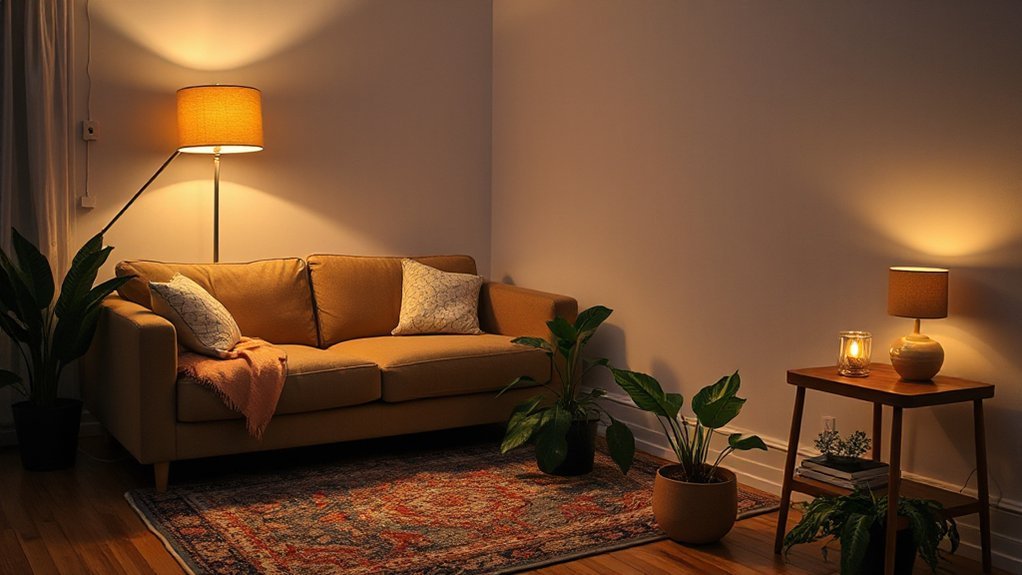
Where can you get an instant lighting upgrade without calling an electrician? Add plug in lamps exactly where your ceiling light can’t reach. You’ll create layered light that feels intentional, not accidental, and you can do it in minutes with a standard UK socket.
Start with portable lighting that targets tasks: a floor lamp beside the sofa for reading, a slim desk lamp for WFH, and a small table lamp on a hallway console to soften nighttime routes. Aim light at walls or curtains to bounce brightness and make rooms feel larger. Keep cable runs tidy with adhesive clips and route leads behind furniture for a cleaner look. Choose warm-white LED bulbs (around 2700–3000K) and higher lumens for darker corners.
Swap Lamp Shades to Spread Light Wider
Plug-in lamps give you flexible light, but the shade often decides how far that light actually travels. Swap a deep, dark drum for a paler, wider silhouette to push illumination across the room. Choose a larger diameter (without exceeding the bulb’s heat limits) so light escapes at the sides, not just top and bottom. Prioritise Shade materials that transmit light: linen, cotton, parchment, or opal glass beat heavy velvet or metal for general brightness. If glare’s an issue, pick a lined shade with a light interior to soften hotspots while still spreading output. Keep fittings right: check UK bayonet (B22) versus screw (E27) and harp height, so the bulb sits centred. Use trims as Decorative accents, not blockers.
Bounce Home Lighting With Mirrors and Light Paint
Even if you don’t change a single fitting, you can make a room feel brighter by bouncing the light you already have. Start with smart mirror placement: hang a mirror opposite a window to throw daylight deeper into the space, or angle it to reflect a table lamp without showing the bulb. In narrow UK terraces, try a tall mirror at the end of a hall to extend sightlines and lift the gloom.
Next, use paint as a reflector. Light colored walls in warm whites, soft stone, or pale greige will amplify both daylight and lamplight, especially in north-facing rooms. Choose a durable, wipeable matt for living areas, and a subtle eggshell in kitchens and bathrooms for extra bounce without obvious sheen.
Layer Home Lighting to Soften Harsh Shadows
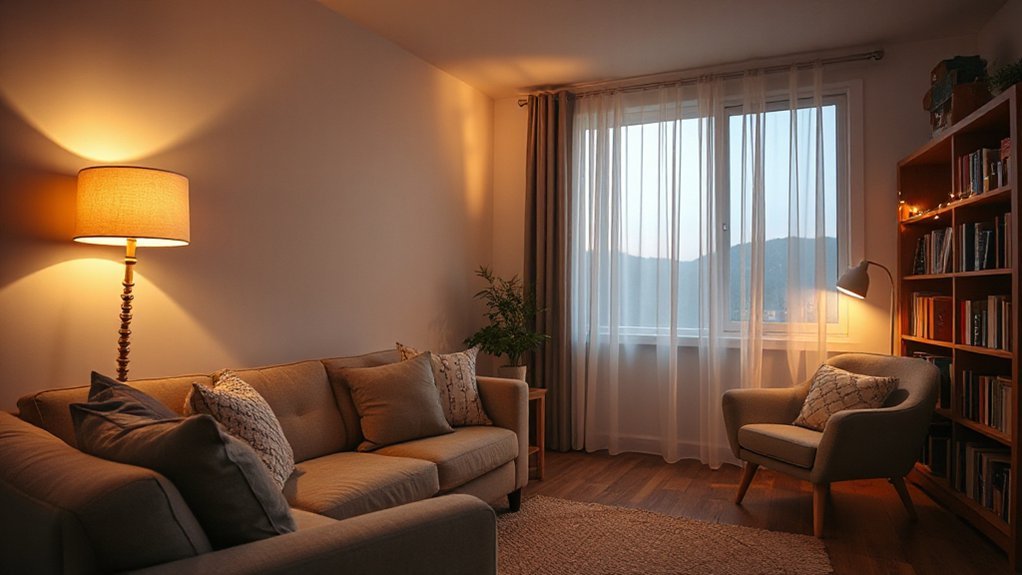
Although one bright ceiling light can tick the “lit” box, it also throws hard shadows under your eyes, across worktops, and into corners, so your room feels flatter and less comfortable. You’ll get a calmer, more expensive look by mixing light levels and positions.
Start with ambient light: keep the ceiling fitting, but use a warm LED (around 2700K) and a shade that diffuses. Add task light where you work—an under-cabinet strip in the kitchen, a desk lamp by your laptop, or a reading light by the sofa. Finish with accent light: a floor lamp aimed at a wall, or a small table lamp on a sideboard to lift dark zones. These layering techniques improve shadow management, reduce glare, and make rooms feel deeper.
Use Smart Plugs, Timers, and Plug-In Dimmers
Once you’ve layered ambient, task, and accent lighting, you’ll get an even better result by controlling when and how bright each lamp runs. Smart plugs let you schedule table lamps for dusk, set bedtime shut-offs, and create “away” routines that make your home look lived-in—ideal in UK winter evenings. Choose models that work with your hub or Alexa/Google, and check they’re rated for your lamp’s wattage.
For finer mood control, add plug-in dimmers or inline dimmer switches to compatible lamps, then set scenes for dining, films, or winding down. Stick to dimmable LED bulbs to avoid flicker and buzzing. Keep controls consistent: one timer for hall lighting, another for living areas, and you’ll gain polish without rewiring.
Frequently Asked Questions
Do Higher-Wattage Bulbs Increase My Electricity Bill Significantly?
Yes, higher-wattage bulbs can raise your bill if you run them often. Wattage impact directly increases energy consumption per hour. In the UK, choose efficient LEDs to keep costs low and maintain balanced, attractive lighting.
How Can I Improve Lighting in a Rental Without Drilling Holes?
Like turning night into day, you can improve a rental’s lighting without drilling by using Temporary fixtures and Portable solutions: adhesive LED strips, plug-in sconces, floor lamps, and clamp lights. Choose warm 2700K bulbs, stylish shades.
Are LED Bulbs Safe to Use in Enclosed Fixtures?
Yes, you can use LED bulbs in enclosed fittings if the packaging states Enclosed fixture safety and matches wattage. LEDs have low LED heat emission, but trapped warmth shortens life. Choose reputable UK brands, warm-white.
What Lighting Changes Help Reduce Eye Strain When Reading or Working?
Like a librarian’s desk, you’ll cut eye strain by using glare-free task lighting, positioning it to the side, and choosing 3000–4000K colour temperature. Add ambient fill, dimmers, and reduce screen reflections with shades.
How Do I Choose Lighting That Complements My Wall and Floor Colors?
Match colour temperature to your palette: warm white flatters creams, timber, and reds; cool white suits greys and stone. Use wall color coordination with sample bulbs, and check flooring harmony under evening light in situ.
Conclusion
Walk through your rooms like an editor with a red pen, spotting gloomy corners and starved worktops. Swap in higher-lumen LEDs, then match colour temperature to purpose: warm for lounging, cooler for kitchens and desks. Add plug-in lamps, wider shades, and mirrors to throw light like ripples across a pond, and soften shadows with layered sources. Finally, fit smart plugs, timers, or plug-in dimmers so your lighting behaves on cue, every day.