
Sustainability in interior design means you create a space that looks great and performs well while cutting carbon, reducing waste, and protecting indoor air quality. You keep and repair what you can, then specify durable, low-VOC materials like FSC-certified timber, reclaimed metals, and water-based paints and sealants. You choose efficient lighting and appliances, add proper ventilation, and fit water-saving taps and dual-flush WCs. Keep going to see simple checks and best practice.
Key Takeaways
- Sustainability in interior design reduces environmental impact through low-waste choices, lower carbon footprints, and healthier indoor environments.
- It prioritizes reusing existing elements, repairing over replacing, and designing long-lasting interiors with timeless, adaptable layouts.
- It specifies durable, low-toxicity materials and finishes, such as FSC timber, reclaimed metals, natural insulation, and low-VOC paints and sealants.
- It plans for end-of-life by using modular, demountable components and furniture that can be reupholstered, repaired, or recycled.
- It improves operational performance with efficient lighting, appliances, ventilation, and water-saving fixtures, supporting occupant well-being and long-term value.
What Is Sustainable Interior Design?
How do you create a home that looks good without costing the earth? You practise sustainable interior design: you plan spaces to cut waste, reduce carbon, and protect health while still delivering a polished finish. You start with the fabric of the building, keeping serviceable floors, doors, and fireplaces, and you specify repairs over replacements. You choose durable, low-VOC paints, FSC-certified timber, and recycled or reclaimed materials, then you source locally to reduce transport miles. You design for longevity, selecting timeless forms shaped by Historical influences and respecting a property’s Cultural significance, from Victorian terraces to post-war semis. You also consider end-of-life: modular joinery, demountable fittings, and furniture you can reupholster, not landfill.
Why Sustainable Interiors Matter
Why does sustainable interior design matter beyond the buzzwords? Because your choices shape carbon, indoor air quality, and long-term value. In UK homes and workplaces, energy use, materials, and waste drive emissions; better specifications cut lifecycle impact without sacrificing performance. You also protect health by reducing VOCs and prioritising durable, repairable finishes that won’t off-gas or fail early.
You’ll meet rising client and occupier expectations, support UK net-zero aims, and reduce risk as regulations and procurement standards tighten. Sustainable storytelling helps you explain provenance, longevity, and maintenance in plain terms, building trust rather than greenwash. Ethical sourcing strengthens that narrative: you back responsible forestry, fair labour, and transparent supply chains, so your scheme performs socially as well as environmentally. Ultimately, you create interiors that last, adapt, and cost less to run.
A Simple Checklist for Sustainable Design Choices
If you want sustainable interiors without getting lost in labels, use a tight checklist that steers every specification decision. Start with what you can keep: retain layouts, reuse joinery, and upcycle furniture before you buy new. When you must purchase, choose UK-made or EU-sourced items, ask for EPDs, and confirm FSC or PEFC timber. Prioritise salvaged brick, reclaimed boards, and recycled-content metals that still suit Urban aesthetics. Specify low-VOC paints, water-based lacquers, and formaldehyde-free sheet materials, and request product take-back schemes. Check durability ratings for contract use, and choose repairable fittings with spare parts available. Reduce waste on site: set cutting schedules, order to take-off, and separate skips. Document decisions so your Artistic expression stays accountable.
Core Principles: Health, Footprint, and Longevity
Start with health: you’ll protect indoor air quality by specifying low-VOC paints, formaldehyde-free boards, and proper ventilation, so your space supports day-to-day wellbeing. Then cut your footprint by choosing responsibly sourced timber, recycled-content finishes, and local suppliers, and by designing to reduce waste on site. Finally, you’ll lock in sustainability by prioritising durable materials and adaptable layouts that can be repaired, reconfigured, and kept in use for years.
Indoor Air And Wellness
How often do you think about the air you’re actually breathing at home? Indoor air and wellness sit at the heart of sustainable interior design because you can’t call a space “healthy” if it triggers headaches, asthma, or poor sleep. Start with ventilation: use trickle vents, keep extractor fans running during and after showers, and choose a cooker hood that vents outside, not recirculates. Manage moisture to prevent mould—aim for steady heating and use a dehumidifier if needed. Specify low-VOC paints, sealants, and adhesives, and let new furniture off-gas before heavy use. Add Indoor plants, but don’t rely on them for air purification alone; pair them with a HEPA air purifier and regular filter changes.
Lowering Environmental Impact
Where does your room’s environmental impact actually come from—materials, energy use, or the choices you’ll replace in five years? Start by auditing what you specify: choose FSC-certified timber, recycled steel, and low-impact insulation; avoid high-VOC paints and solvent-heavy adhesives to protect health. Cut your footprint by prioritising local UK suppliers, reclaimed boards, and refurbished furniture, which reduces transport emissions and landfill. Specify LED fittings, smart controls, and high-efficiency appliances, and pair them with draught-proofing and layered window treatments to lower heating demand. For Urban aesthetics, lean on exposed brick, recycled concrete, and powder-coated metal that suit city flats without excessive new resource use. Let Cultural influences guide responsible sourcing—support heritage makers, fair trade textiles, and traceable materials.
Durable, Adaptable Design
Reducing your room’s footprint doesn’t stop at low-impact materials and efficient kit; it also depends on how long the scheme stays fit for purpose. Choose hard-wearing flooring, scrubbable paints, and robust joinery, then specify repairable products with replaceable parts and clear warranties.
Design for change: use modular sofas, demountable shelving, and adjustable lighting so you can reconfigure without ripping out plasterboard. Keep layouts flexible with generous clearances and standard sizes for appliances and worktops, making future refits simpler and cheaper. Protect health by prioritising low-VOC finishes and easy-clean surfaces that don’t harbour dust or mould. Aim for Sustainable aesthetics that won’t date quickly, and layer Eco friendly textures—wool, linen, cork—through removable pieces you can refresh, not bin.
Sustainable Materials: What to Choose and Why
When you’re choosing sustainable materials for an interior, the smartest place to start is with what the product is made from, how it’s sourced, and what happens to it at end of life. Prioritise low-toxicity, long-life options that suit UK homes and can be repaired, refinished, or recycled.
- FSC-certified timber or reclaimed boards for joinery and flooring
- Recycled-content metals and glass for fittings, shelves, and splashbacks
- Natural insulation such as sheep’s wool or wood fibre to reduce heat loss
- Eco friendly finishes: water-based paints, hardwax oils, and low-VOC sealants
Check for third-party standards (FSC, PEFC, EU Ecolabel) and ask for technical data sheets. Avoid composite products with heavy formaldehyde resins unless you can specify E0/E1 grades.
How to Source Sustainable Products Responsibly
Although sustainability labels can look reassuring, you’ll source products more responsibly by tracing the supply chain and checking the evidence, not the marketing. Ask suppliers for third-party certificates (FSC, PEFC, Cradle to Cradle), Environmental Product Declarations, and UKCA/CE documentation where relevant. Request factory addresses, audit summaries, and clear statements on fair labor, including living wage commitments and grievance processes. Prioritise local and UK-made goods to cut transport impacts, but still verify raw-material origins. Check durability, repairability, and take-back schemes, and confirm spare parts availability. Specify Eco friendly packaging, and insist on minimal plastics and returnable pallets. Use written specifications in your procurement schedule, and keep a simple due-diligence file for clients and Building Control queries.
Low-VOC Paints and Safer Finishes
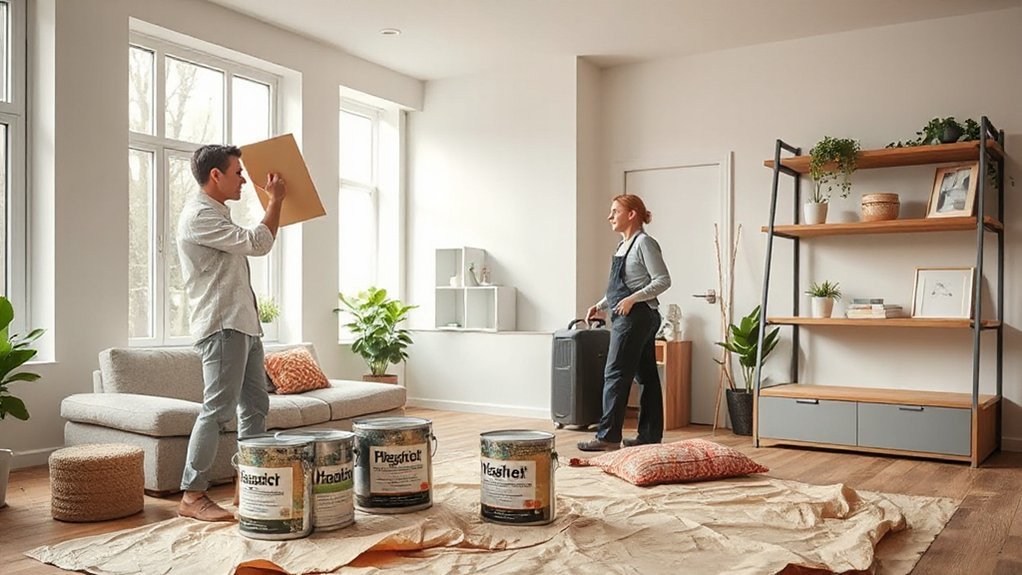
Choose low-VOC paints to cut indoor air pollution, reduce lingering odours, and make rooms healthier for you, children, and pets. You’ll identify safer finishes by checking the tin and SDS for low-VOC content and water-based formulations, plus independent labels such as EU Ecolabel. Apply in thin coats, keep windows on the latch, run extract fans where you’ve got them, and maintain good cross-ventilation until the paint’s fully cured.
Benefits Of Low-VOC Paints
Because most paints release volatile organic compounds (VOCs) as they dry, switching to low‑VOC options can quickly improve indoor air quality without compromising on colour or durability. You’ll notice fewer lingering odours, making redecorating easier in lived‑in homes and flats, especially where windows don’t open wide or you’re relying on natural lighting rather than constant extraction. Low‑VOC emulsions also support a healthier whole‑room scheme, pairing neatly with eco friendly furnishings and breathable textiles while keeping your environmental impact in check. For best results, plan your repaint around good ventilation and realistic drying times.
- Reduce headaches and throat irritation during decorating
- Keep rooms usable sooner, ideal for nurseries and bedrooms
- Lower overall chemical load across multiple coats and touch‑ups
- Support compliance-focused refurbishments in rented properties
Identifying Safer Finishes
When you’re specifying finishes for a sustainable scheme, you’ll get better results by checking the product data than relying on “eco” claims. Ask for the Safety Data Sheet and look for low or zero VOC content in grams per litre, plus confirmation of compliance with UK/EU regulations.
Prioritise water-based paints, varnishes, and lacquers, and avoid products listing formaldehyde, added isocyanates, or high aromatic solvents. Check for third-party labels you can verify, such as EU Ecolabel, Nordic Swan, or Blue Angel, and make sure the certification applies to the exact product and sheen level. For Eco friendly finishes on wood, choose plant-oil hardwax oils or water-based sealers with declared ingredients. If you need Non toxic coatings, favour mineral silicate paints and limewash with transparent technical datasheets.
Application And Ventilation Tips
Two factors decide whether low-VOC paints and safer finishes stay truly “low impact” on site: how you apply them and how well you ventilate the space. You’ll cut off-gassing by keeping lids sealed, mixing only what you need, and sticking to the manufacturer’s coverage rates. Schedule wet trades early, then purge the room before you install soft furnishings, biophilic design elements, or set ambient lighting.
- Use microfibre rollers and quality brushes to reduce overspray and waste.
- Maintain cross-ventilation: open windows plus extractor fans; aim for a steady through-draught.
- Keep heating moderate; avoid high heat that accelerates VOC release and dries too fast.
- Protect occupants: wear a suitable mask, isolate the zone, and ventilate 48–72 hours post-coat.
Indoor Air Quality: Ventilation, Filtration, and Fabrics
Even if you’ve sourced low-impact materials, poor indoor air quality can undermine a sustainable scheme faster than you’d expect. Prioritise controllable ventilation: use trickle vents, open windows on opposite elevations for crossflow, and ensure extractor fans in kitchens and bathrooms vent outdoors, not into the loft. If you’ve a wood burner, fit an external air supply and book an annual sweep. Add filtration where you can: choose an MVHR or portable HEPA unit, and change filters on schedule. Keep fabrics clean and low-emission—buy upholstery and carpets with low-VOC certifications, avoid stain-guard sprays, and wash new textiles before use. Indoor plants support air purification, but don’t rely on them alone; regulate moisture to deter mould.
Energy-Smart Lighting and Appliances
Swap legacy bulbs for LEDs and fit dimmers, occupancy sensors, and daylight controls so you’re only using light when you need it. Choose appliances with strong Energy Rating labels (A–G) and low annual kWh figures, and prioritise the right size over extra features. When you specify both, you cut running costs and carbon without compromising comfort or performance.
LED Lighting And Controls
Although you can make big gains with insulation and efficient heating, lighting still offers one of the quickest, lowest-disruption wins: switch to LED lamps and pair them with smart controls so you only use power when you need it. Today’s LED innovation gives you high lumens per watt, longer lifespans, and better colour rendering, so you can cut bills without compromising ambience. Specify warm white (around 2700K) for living spaces, and use task lighting to avoid over-lighting rooms. Then use smart controls to reduce waste automatically and consistently.
- Fit PIR occupancy sensors in WCs, cupboards, and hallways
- Add daylight sensors near windows to dim fittings smoothly
- Use time schedules for exterior and communal areas
- Choose dimmable drivers and compatible switches to prevent flicker
Energy-Efficient Appliances Selection
Once you’ve cut lighting waste with LEDs and smart controls, you’ll get the next biggest day‑to‑day savings by choosing energy‑efficient appliances that match how you actually use your home. Start with the Energy Label: prioritise A‑rated fridges, freezers, dishwashers, and washing machines, and compare kWh/annum, not just the letter. Size matters—don’t buy a larger capacity than you need, and choose heat‑pump tumble dryers if you dry often. In the kitchen, induction hobs waste less heat than gas and improve indoor air quality. Check standby draw on TVs, routers, and chargers, and switch to smart plugs where useful. When you’re specifying Eco friendly furniture, plan integrated appliance vents properly. Align appliance loads with solar from Sustainable landscaping where possible.
Water-Saving Fixtures and Finish Choices
When you’re planning a sustainable interior, you can cut water use quickly by specifying efficient fixtures and moisture-tolerant finishes that won’t need constant replacement. Prioritise Water conservation by choosing taps, WCs, and showers with proven fixture efficiency ratings, and check WRAS approval for reliable performance. In bathrooms, match low-flow products with finishes that handle humidity, limescale, and cleaning without sealing failures.
- Fit dual-flush WCs and aerated basin taps to reduce litres per use.
- Specify low-flow showers (around 6–8 L/min) and consider thermostatic valves for steady delivery.
- Choose porcelain tiles, microcement, or high-quality vinyl in wet zones for easy wipe-downs.
- Use mould-resistant grout and water-based sealers with low VOCs to protect substrates.
Design for Durability, Repair, and Flexibility
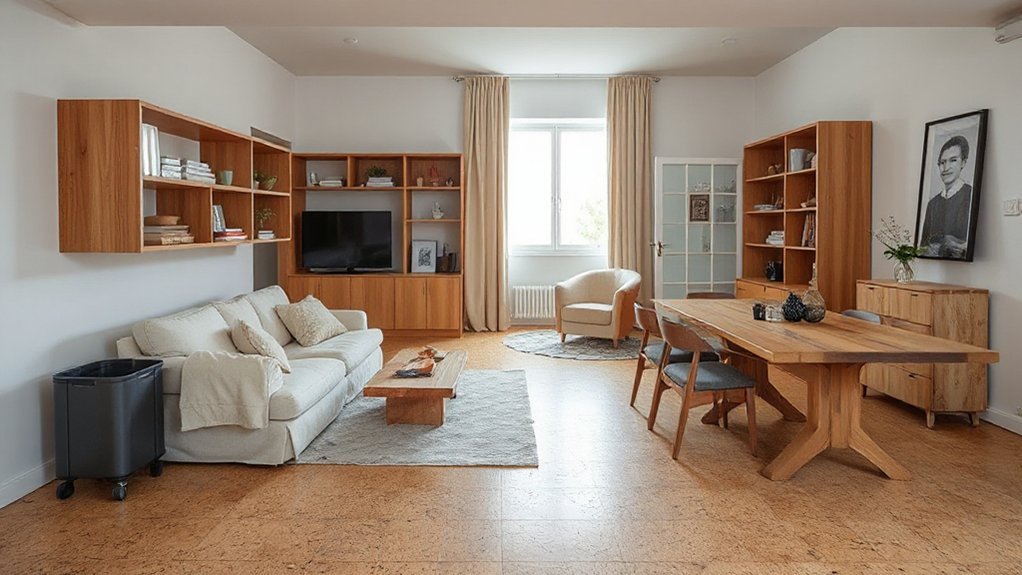
Water-efficient fixtures and resilient wet-room finishes cut consumption, but you’ll lock in bigger carbon and cost savings by making the whole interior last longer and adapt better. Specify hard-wearing surfaces with high abrasion ratings, sealed edges, and commercial-grade fittings in high-traffic zones. Choose standard sizes for doors, worktops, and tiles so future replacements slot in without major disruption. Design services for access: removable boxing, demountable panels, and clearly labelled isolators at the consumer unit. Prioritise repairable products with spare parts, screw fixings, and long warranties from UK suppliers. Build flexibility with movable storage, modular joinery, and lighting on track systems. Pair minimalist aesthetics with fewer, better materials, and add biophilic design through robust planting zones and daylight-friendly layouts. It’ll age well, and upkeep stays simple.
Reduce Renovation Waste (Reuse, Salvage, Recycle)
How much of your “new” interior could actually come from what’s already on site? Start with a pre-strip audit: list what you can keep, repair, or refit before you book a skip. Ask your contractor to quote for careful removal, not smash-and-grab, and set up separate bags for timber, metals, plasterboard, and WEEE to suit UK recycling streams. Use salvage yards and reclamation dealers for matching pieces, and prioritise Vintage furniture over flat-pack replacements. Turn offcuts into Upcycled decor so you reduce purchasing and disposal in one move.
- Retain existing doors, ironmongery, and skirting; rehang or respray.
- Lift and relay floorboards; patch with reclaimed boards.
- Reuse kitchen carcasses; upgrade fronts, worktops, and taps.
- Donate fixtures via Reuse Network or local charities.
Green Certifications to Look For (LEED, WELL, FSC)
Although “eco” labels can feel like marketing noise, recognised green certifications give you a quick, comparable way to check that products and fit-outs meet verified standards. For whole projects, look for LEED or BREEAM equivalents: you’ll see credits for low-carbon materials, efficient M&E, metering, and renewable energy integration. If occupant health matters, specify WELL for air quality, daylighting, acoustics, and access to Urban greenery via terraces, living walls, or nearby green space. For timber, insist on FSC-certified boards, joinery, and flooring; you’ll reduce deforestation risk and improve supply-chain traceability. Ask your designer or contractor for certificates, scope notes, and product chain-of-custody details, then keep them in your O&M file for handover and future refits too.
Frequently Asked Questions
How Do I Create a Sustainable Interior Design Budget Without Overspending?
Set a firm cap, prioritise essentials, and price options in advance. Choose eco friendly materials, source reclaimed pieces, and invest in energy efficient appliances. Compare UK suppliers, use trade discounts, and phase upgrades to avoid overspending.
Can Renters Make Sustainable Interior Upgrades Without Violating Lease Terms?
Yes, you can—choose Temporary fixtures and Removable decor that don’t damage surfaces. Use command strips, tension poles, draft excluders, LED bulbs, washable rugs. Check your tenancy agreement, photograph condition, and get written consent for changes.
What Sustainable Design Choices Work Best in Historic or Heritage Homes?
Nearly 40% of UK homes predate 1945, so you’ll prioritise breathable insulation, lime plasters, and draught-proofing that respects historic preservation and cultural significance. Choose secondary glazing, LED retrofits, repair over replace, and reversible fixings.
How Do I Balance Sustainability With Specific Style Preferences Like Minimalist or Luxe?
You balance minimalist or luxe tastes by prioritising Eco friendly materials and refined, durable finishes. Choose Energy efficient lighting, invest in quality staples, hire UK suppliers with FSC certification, and avoid trend-led waste through timeless palettes.
What Are Common Greenwashing Red Flags When Shopping for “Eco-Friendly” Decor?
Watch for vague claims, missing proof, and unverifiable offsets. Check Eco labels authenticity via UKAS-accredited certification, demand Sustainable material sourcing details, avoid “natural” buzzwords, distrust huge discounts, and compare product EPDs and FSC/PEFC numbers.
Conclusion
Sustainable interior design means you choose healthier, lower-impact, longer-lasting spaces. You’ll cut carbon and clutter by specifying sensible, certified materials, fixing draughts, and fitting frugal taps and dual-flush loos. Prioritise paint with low VOCs, FSC timber, and durable finishes you can repair, not replace. Plan for flexibility so rooms adapt as life changes. Salvage what you can, sort site waste, and check LEED or WELL where relevant. Small steps, solid savings.