
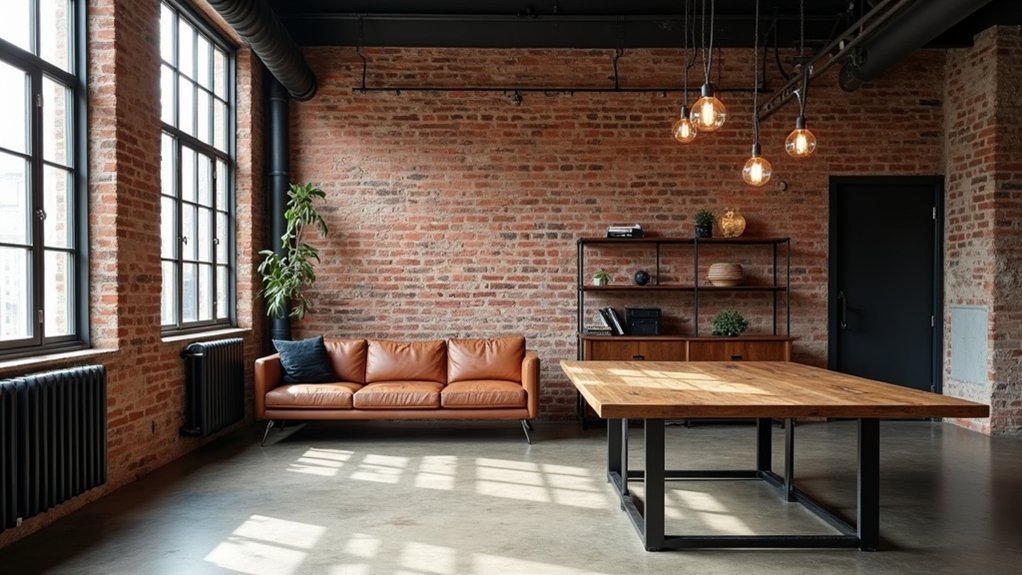
You’ll get an industrial interior design look by planning open, function-first layouts with long sightlines and disciplined negative space. Keep infrastructure visible—ductwork, beams, and exposed fasteners—so the space feels engineered, not decorated. Build the palette with raw brick, concrete, and matte metals, then warm it with reclaimed wood and leather. Choose linear, utilitarian furniture, consistent hardware finishes, and layered 2700–3000K lighting. Keep décor minimal and modular, and there’s more ahead.
Key Takeaways
- Prioritize open layouts, clear circulation, and disciplined negative space, letting structure and materials define the room.
- Showcase exposed infrastructure like brick, beams, ductwork, and fasteners to create an engineered, function-first aesthetic.
- Use core materials—concrete, metal, reclaimed wood, and brick—paired for contrast, with matte or lightly sealed finishes.
- Keep a low-saturation neutral palette, adding warmth through wood and brick, and maintain consistent metal tones across hardware.
- Choose utilitarian furniture and industrial lighting, layering task and ambient sources while minimizing décor to preserve a clean, workshop-like feel.
Core Industrial Interior Design Style Elements
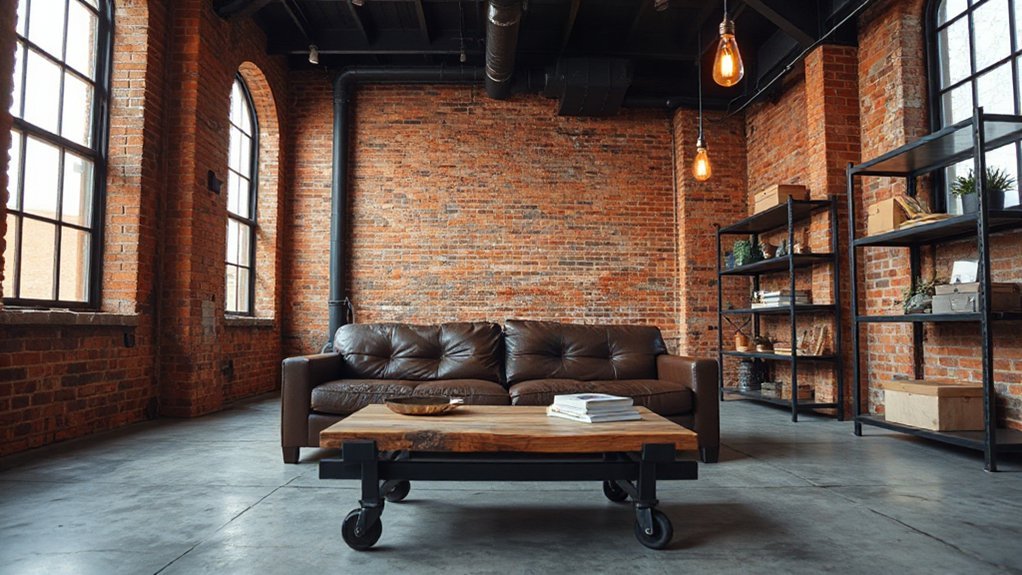
What makes industrial interior design instantly recognizable? You emphasize function-first planning, exposed infrastructure, and disciplined negative space. You keep layouts open, circulation clear, and sightlines long, echoing industrial design history rooted in factories and warehouses. You highlight structural rhythm with repeating bays, grids, and modular proportions. You specify furniture with utilitarian profiles, robust joinery, and honest silhouettes, avoiding ornament. You control the palette with low-saturation neutrals and targeted contrast so key forms read quickly. You integrate Industrial lighting innovations by layering task, ambient, and accent sources: adjustable arms, track runs, and glare-controlled pendants. You manage acoustics with strategic zoning, soft goods, and baffles so hard surfaces don’t overwhelm. You finish with minimal, durable accessories.
Industrial Materials: Brick, Metal, Concrete, Wood
You anchor industrial style by specifying honest, workhorse materials: exposed brick surfaces, metal accents and fixtures, concrete planes, and reclaimed wood. You keep brick raw or lightly sealed, select metal in matte black or brushed finishes, and use concrete for floors, counters, or feature walls to control reflectance and wear. You balance the hardness with reclaimed wood shelving or furniture, keeping grain and patina visible while sealing it for durability.
Exposed Brick Surfaces
An exposed brick surface anchors industrial interiors with authentic texture, thermal mass, and a clear read of the building’s structure. You’ll get the best results by evaluating condition first: check for spalling, efflorescence, loose mortar, and prior paint. Repoint joints with compatible lime-based mortar, not hard Portland mixes that trap moisture and crack brick faces.
You should clean gently—low-pressure water, soft bristle, and pH-neutral cleaner—then let walls dry fully before sealing. Use a breathable matte sealer if dusting is an issue; avoid glossy coatings that flatten character. Plan lighting to rake across the wall and emphasize relief. Pair brick with vintage signage for period credibility, and align openings so the wall reads continuous behind exposed ductwork.
Metal Accents And Fixtures
Once brick sets the tone with rough texture and visible structure, metal accents sharpen the industrial read with crisp lines, reflectivity, and honest joinery. Use steel, iron, or aluminum in railing, shelving, frames, and hardware so you signal utility without looking unfinished. Specify a consistent finish—blackened, brushed, galvanized, or raw—then repeat it across Metal fixtures to control visual noise.
Prioritize durable details: exposed bolts, weld beads, and rivets work when they’re aligned and intentional. Choose industrial lighting with cage shades, goosenecks, or linear pendants, and size it by task: 30–50 foot-candles at counters, 10–20 in circulation zones. Manage glare with matte reflectors, diffusers, and 2700–3000K lamps for warmth. Seal bare metal to prevent fingerprints, oxidation, and rust.`
Concrete And Reclaimed Wood
Few material pairings read as distinctly industrial as concrete and reclaimed wood: concrete delivers mass, fire resistance, and a seamless, monolithic surface, while salvaged timber adds warmth, grain, and history to keep the space from feeling clinical. Specify concrete finishes by function: polished for high-traffic floors, honed for slip control, or board-formed for tactile walls. Seal with a penetrating densifier to reduce dusting and staining, and control cracking with saw-cut joints and proper curing. Balance it with reclaimed wood textures on shelving, ceiling beams, or a butcher-block island, but stabilize boards to prevent cupping. Use a matte oil or hardwax to preserve patina. Keep alternatives crisp with blackened steel edging, and you’ll maintain durability without losing character.
Warm Industrial Color Palettes (With Examples)
To keep an industrial space feeling livable, you’ll anchor the palette in earthy neutrals—taupe, clay, charcoal—then sharpen it with controlled metal tones like brushed steel, aged brass, or matte black. You can warm the hard surfaces by pairing these neutrals with mid-tone woods (walnut, oak) and red-brown brick, which add visual mass and reduce the “cold warehouse” effect. For a reliable example, run greige walls with black steel frames, layer in walnut shelving, and let exposed brick act as the dominant warm accent.
Earthy Neutrals And Metals
While industrial interiors often lean cool and stark, you can warm the look by pairing earthy neutrals with metal finishes that carry natural depth. Specify clay, sand, mushroom, or charcoal bases, then balance them with patinated brass, blackened steel, or bronzed hardware. Keep undertones aligned (yellow-warm neutrals with brass; blue-gray neutrals with gunmetal) to avoid visual noise. Prioritize Sustainable sourcing and vintage repurposing for metals; aged finishes hide wear and reduce refinement energy.
- Matte putty walls + brushed brass pulls
- Warm taupe upholstery + blackened steel table base
- Greige plaster + bronzed sconce arms
- Charcoal concrete + copper accents
- Sand linen + galvanized shelving
Limit shiny chrome, and repeat one dominant metal 3–5 times for cohesion. Use 20–30% metal as contrast.
Warm Wood And Brick
How do you keep an industrial space from reading cold without losing its grit? You lean on warm wood and brick to rebalance steel, concrete, and glass. Specify reclaimed oak, walnut, or ash with a matte, low-sheen finish; it absorbs glare and adds thermal perception. Pair it with exposed brick in clay, russet, or soot-washed tones, then seal it with a breathable matte coating to control dusting without gloss. This palette respects Industrial history—timbers, kiln-fired masonry, and hardwearing joinery—while acknowledging urban influence through rough textures and visible repairs. For examples, run walnut shelving against red brick, add blackened steel brackets, and ground the room with tan leather. Keep lighting at 2700–3000K to preserve warmth.
Industrial Interior Design Furniture & Lighting Picks
Which pieces actually sell the industrial look without turning your room into a warehouse set? Start by choosing Industrial furniture styles that balance mass with clean geometry: steel frames, solid wood tops, and upholstery in leather or tightly woven canvas. Keep proportions low and linear so circulation stays open, and specify matte finishes to control glare and fingerprints.
Then lock in performance-driven Industrial lighting fixtures. Prioritize layered light—task, ambient, and accent—using metal shades and exposed hardware, but manage warmth with 2700–3000K LEDs and high CRI for accurate color.
- Steel-and-wood dining table with squared legs
- Low-profile leather sofa on a sled base
- Riveted metal credenza with soft-close drawers
- Adjustable-arm task lamp with cast joints
- Cage pendant or linear bar light on dimmer
Industrial Décor Ideas: Shelving, Art, Hardware (No Clutter)
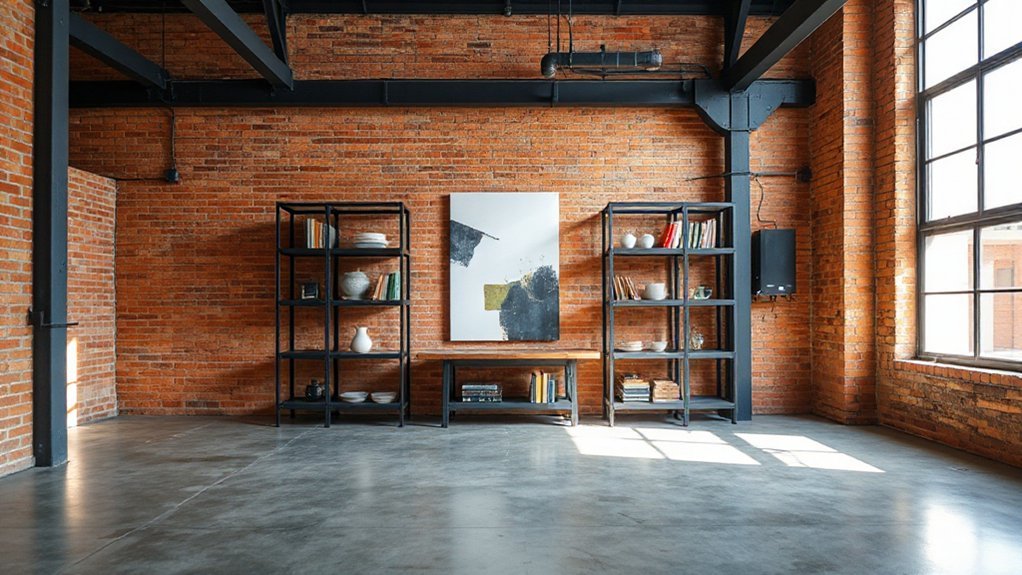
Because industrial rooms rely on negative space as much as raw materials, your décor has to work like infrastructure—not filler—so you get the attitude without visual noise. Use pipe shelving as a fixed system: anchor it into studs, keep spans short, and limit depth to what you’ll actually store. Curate shelves like a workbench—two or three repeat materials, consistent container heights, and no more than one focal object per bay. For art, go oversized and minimal: one large print, blueprint, or Vintage signage panel beats a gallery wall and preserves visual flow. Choose hardware that reads “factory spec”: exposed fasteners, blackened steel pulls, and knurled knobs. Match finishes across doors, lighting, and shelving brackets so the room feels engineered, not accessorized.
Industrial Style in Small Spaces (Budget/Renter Tips)
Industrial décor works best when it behaves like built-in infrastructure, and that mindset helps even more when you’re styling a small space on a budget or under a lease. Focus on durable, modular pieces that add function first, then texture. Use Affordable apartment upgrades that read architectural, not ornamental, and rely on Rent friendly decorating tips that leave no damage.
- Clamp-on pipe lamps to free floor space and add task lighting
- Peel-and-stick concrete-look vinyl tiles for entryways or backsplashes
- Tension-rod “C-channel” curtains to mimic factory windows without drilling
- Slim metal shelving on freestanding uprights; anchor with removable straps
- Matte-black switch plates, pulls, and faucet aerators for instant hardware cohesion
Keep the palette tight (black, warm wood, gray), and let one raw surface dominate.
Frequently Asked Questions
How Do I Soundproof an Industrial-Style Room With Hard Surfaces?
You’ll reduce noise by adding Acoustic panels on walls/ceiling, sealing gaps with weatherstripping, laying dense rugs with underlay, and hanging Soundproof curtains over windows. You’ll also add bookshelves and soft furnishings to absorb reflections.
Which Indoor Plants Complement Industrial Décor Without Looking Out of Place?
Want plants that won’t clash? Choose snake plants, ZZ plants, rubber trees, and pothos; they deliver Urban greenery with Minimalist foliage. Use matte-black planters, group by height, and place near bright indirect light.
What Are the Best Window Treatments for an Industrial Interior?
Choose roller shades, steel-framed blinds, or linen panels in charcoal tones; you’ll control glare and keep clean sightlines. Add metal accents on hardware, and coordinate finishes with lighting fixtures. Avoid fussy valances; prioritize durability.
How Can I Make Industrial Style Child- and Pet-Friendly?
Choose rounded-edge Industrial furniture, anchor pieces to studs, and apply low-VOC sealants. Swap glass for acrylic, hide cables, and mount Lighting fixtures high with guards. Add washable rugs, slipcovers, gates, and closed storage.
How Do I Blend Industrial Design With Farmhouse, Boho, or Mid-Century Styles?
You blend industrial with farmhouse, boho, or mid-century by setting a 70/30 material split. Like my shop’s “weld-and-wood” shelf, pair Rustic accents with clean lines, then unify using Vintage lighting and consistent metals.
Conclusion
You don’t need a loft or a big budget to get industrial style right. Stick to core materials—exposed brick, blackened steel, concrete, and reclaimed wood—then balance them with warm neutrals and targeted lighting. If you worry it’ll feel cold or unfinished, you’re missing the control layer: add texture (rugs, leather, wood grain) and consistent hardware finishes. Keep décor functional—open shelving, oversized art, minimal clutter—and your space stays clean, durable, and intentional.