
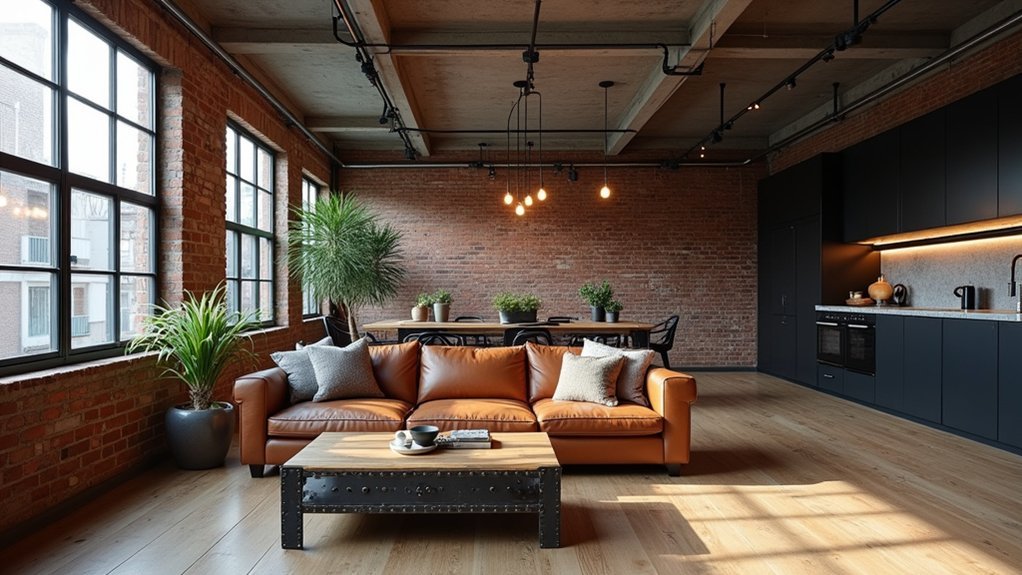
Industrial chic works best when you treat your home like a refined warehouse conversion. Start with honest surfaces—exposed brick and bare concrete—then patch and seal them with low-sheen finishes that keep the patina “used, not ruined”. Pick one dominant metal (blackened steel or aged brass) and add reclaimed timber for warmth. Stick to warm or cool neutrals using a 70/20/10 split, and layer dimmable 2700–3000K lighting. Keep accessories edited—there’s more to refine.
Key Takeaways
- Industrial chic blends exposed, honest construction from factories with softened, livable elements, celebrating function and authentic “used, not ruined” patina.
- Start with brick and concrete: clean, patch, and seal with low-sheen breathable products, keeping imperfections like chips and soot for character.
- Choose a restrained palette using a 70/20/10 split, sticking to warm or cool neutrals and adding texture through wood, wool, linen, and leather.
- Layer warm, dimmable lighting (2700–3000K) with pendants, sconces, and discreet uplights to enhance textures and avoid harsh warehouse glare.
- Use substantial, clean-lined furniture and curated vintage accents, repeat one dominant metal finish, and avoid clutter by grouping accessories and adding plants or curtains.
Industrial Chic Interior Design: Meaning & Origins
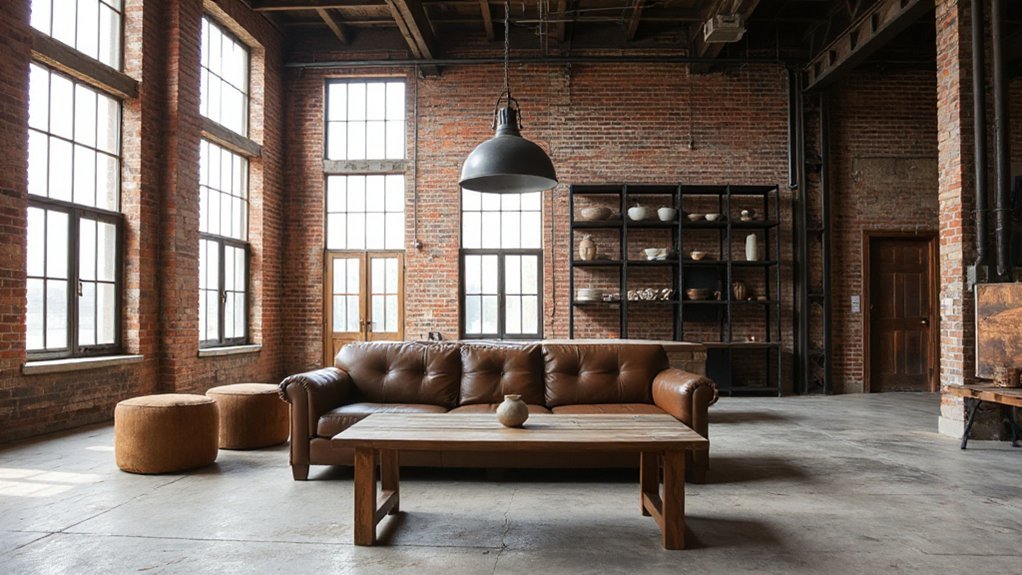
Where did industrial chic interior design come from, and what does it actually mean? It grew out of converted factories and warehouses, especially in post-war cities where makers needed cheap space. When those buildings became homes, you kept the working bones on show and softened them with liveable pieces. That contrast is the point: hard, honest construction balanced by comfort and considered styling.
You define the look by celebrating function, not hiding it. Think utilitarian forms, workshop influence, and a “used, not ruined” patina. In Urban lofts, this means you choose furniture that feels engineered, then add character with reclaimed finds such as Vintage signage. Keep it coherent: pick a limited palette, repeat metals, and let a few heritage details carry the story without turning it into a theme.
The Industrial Chic Blueprint: Start With Surfaces
Start your industrial chic scheme with the hard surfaces: expose brickwork and concrete, then seal and patch them so they read intentional, not unfinished. Refine metal finishes by choosing one dominant tone and controlling sheen, so pipes, frames, and fixtures look cohesive rather than chaotic. Balance the hardness with timber—mix reclaimed and smooth-grain wood textures to add warmth without losing that utilitarian edge.
Expose Brick And Concrete
Two surfaces set the industrial chic mood faster than anything else: exposed brick and bare concrete. If you’ve got original masonry, strip back paint carefully and repoint with lime mortar so it can breathe. Seal it with a matt, vapour-permeable product to stop dusting without adding shine. For a Vintage industrial feel seen in Urban lofts, keep imperfections—chips, soot marks, uneven colour—but clean with a stiff brush and mild detergent.
With concrete, you don’t need perfection; you need it sound. Patch cracks, grind high spots, then apply a clear, low-sheen sealer to reduce staining and make mopping easy. Warm the hard look with layered textiles and timber, and use directional lighting to emphasise texture rather than colour.
Refine Metal Finishes
Exposed brick and concrete set the backdrop; metal finishes give industrial chic its edge and keep it feeling intentional rather than scrapyard. Choose a tight palette—blackened steel, aged brass, or galvanised zinc—and repeat it across the room so it reads designed, not random. Let metal patina show on feature pieces, but control it: seal raw steel with clear lacquer and wax brass to slow spotting. Use brushed finishes where hands touch most, as they hide fingerprints and soften glare under UK lighting. Keep shine in check; one polished accent is plenty. Picture it like this:
- Matt black steel door furniture on pale concrete
- Brushed nickel tapware against crisp white tile
- Patinated brass pendant over a simple table
- Galvanised shelving with neat, flush fixings
Balance Wood Textures
Although metal and masonry bring the bite, wood textures stop industrial chic feeling cold and echoey, so you’ll want to balance them with intent. Start with one dominant timber note, then layer two supporting tones. Use Reclaimed wood for flooring, shelving, or a dining top to add grain, dents, and warmth without losing edge. If you’ve got Wooden beams, expose them and keep the finish matte; avoid high-gloss varnish that fights the raw palette. Match timber undertones to your metals: pair warm oak with blackened steel, cooler ash with brushed nickel. Break up large brick or concrete runs with timber panelling or slatted screens. Finally, repeat wood in smaller touches—stools, frames, and handles—to unify the room.
Signature Industrial Chic Materials (Brick, Metal, Wood)
Start with exposed brick and treat it as your main statement wall—clean it, seal it, and let its texture do the work. Layer in raw metal accents through steel shelving, iron-framed glazing, or matte black fittings to sharpen the industrial edge. Finish with reclaimed wood in worktops, flooring, or open shelving, so you soften the space and keep it feeling lived-in.
Exposed Brick Statements
When you want an industrial chic space to feel authentic rather than staged, let brickwork do the heavy lifting. Choose one dominant wall and keep it honest: clean it, repoint crumbling mortar, then seal it to control dust without adding shine. If your bricks are too orange, you can limewash for a softer, heritage look while keeping texture. Balance the roughness with purposeful styling, not clutter, and use lighting to pull out shadows and depth.
- A reclaimed brick feature wall behind a leather sofa
- A slim black-framed mirror to bounce light across the courses
- Vintage signage mounted with discreet fixings, centred at eye level
- Factory inspired fixtures above, angled to graze the surface
Keep surrounding paintwork muted so the brick reads as the statement.
Raw Metal Accents
Two raw metal accents can shift a room into industrial chic faster than any themed accessory: choose one dominant metal finish (blackened steel, brushed stainless, or aged brass) and repeat it in purposeful, touchable places such as a coffee-table frame, shelving brackets, pendant shades, or cabinet pulls. Keep the rest restrained so the metal reads intentional, not cluttered. Mix sheen with care: pair matte frames with one polished detail, and avoid competing tones. If you want age without mess, specify sealed metal patinas on handles or light fittings. For a tougher, workshop note, use galvanized finishes on planters, utility shelving, or a splashback trim; they resist moisture and wipe clean. Balance weight by spacing pieces evenly, and anchor tall items securely.
Reclaimed Wood Warmth
Although brick and metal set the industrial backbone, reclaimed wood brings the warmth that keeps the space liveable. Use it to soften hard edges without losing grit, and let grain, knots, and saw marks stay visible. Seal with a matte oil or hardwax for durability; avoid glossy varnish that looks fake. Balance tones by pairing mid oak with black steel and concrete, then layer lighting to prevent the wood reading too rustic. To dial in reclaimed wood warmth, focus on tactile, hardworking pieces:
- A salvaged scaffold-board dining top with steel trestle legs
- Weathered wall cladding behind open shelving
- Chunky floating mantels over exposed brickwork
- Vintage signage mounted on timber, lit by a caged sconce
Keep joins tight, and treat for pests.
Industrial Chic Color Schemes (Warm vs. Cool Neutrals)
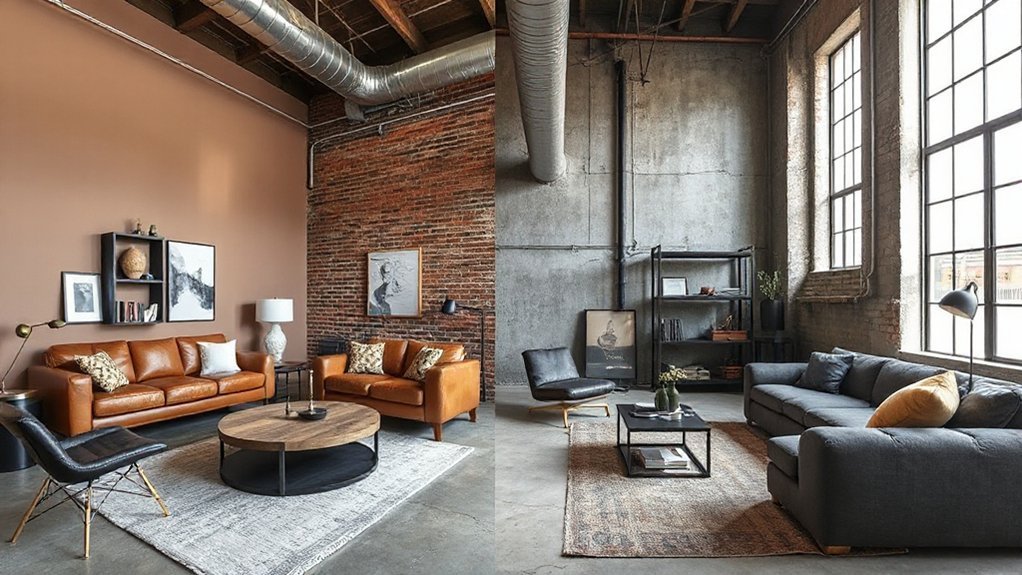
If you want industrial chic to feel intentional rather than stark, lock in your neutral base early and decide whether you’re steering warm or cool. Warm neutrals (oat, putty, greige) soften brick and timber and support calm focus; cool neutrals (concrete grey, charcoal, off-black) sharpen steel lines and read more urban. Use neutrals’ psychological impact to guide rooms: warmer for lounging, cooler for work zones. Apply colour scheme pairing techniques by fixing a 70/20/10 split—70% base neutral, 20% secondary (lighter or darker within the same temperature), 10% accent. Keep undertones consistent across paint, upholstery, and rugs. Balance matte walls with slightly textured textiles so the palette doesn’t fall flat.
Industrial Chic Lighting That Feels Cozy, Not Harsh
Once you’ve set your neutral direction, use lighting to add warmth and depth without losing that industrial edge. You’ll avoid that harsh warehouse feel by layering sources and choosing the right colour temperature. Keep general illumination soft (around 2700–3000K) and dimmable so you can shift from task to relaxation. Use cosy ambient lighting to smooth shadows across brick, concrete, and steel, then introduce warm accent fixtures to highlight architectural details without glare.
- Opal glass globes on black pendants for softened pools of light
- Wall-mounted swing-arm lamps aimed down, not out, to cut dazzle
- LED filament bulbs in wire cages, set on a dimmer for control
- Discreet uplighting to wash beams or exposed pipework with warmth
Industrial Chic Furniture & Décor (Plus Textiles to Soften It)
With lighting warmed and layered, let your furniture and décor carry the industrial structure while textiles stop the space feeling stark. Choose low, substantial pieces: a leather or charcoal linen sofa, a reclaimed timber coffee table, and metal-framed shelving. Keep lines clean, with visible fixings and honest materials. Add Vintage accessories that feel collected, not themed—factory stools, enamel signage, old toolboxes, and battered trunks for storage. Balance hard edges with touchable layers: a wool rug underfoot, a chunky knit throw, and linen cushions in rust, oat, or deep green. Hang statement artwork large-scale to anchor a wall; think monochrome photography, architectural prints, or abstract canvases. Finish with ceramic vases and smoked glass to soften reflections without losing grit.
Industrial Chic Mistakes (And Easy Fixes)
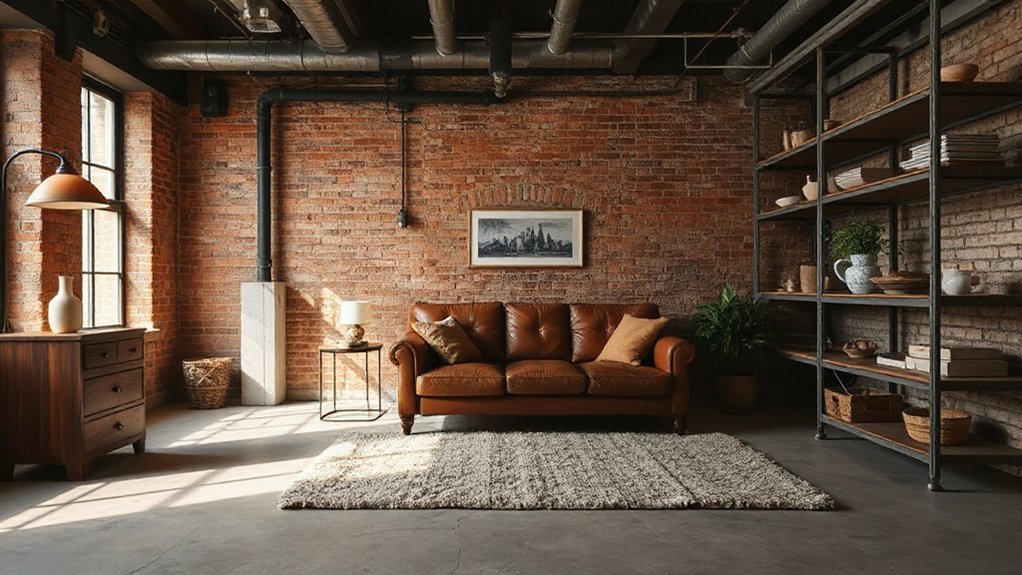
Although industrial chic thrives on raw finishes and pared-back pieces, a few common missteps can make your space feel cold, cluttered, or contrived. You’ll get it right by editing hard, balancing texture, and choosing authentic details over gimmicks. Avoid these pitfalls and apply the fixes below:
- You overdo exposed brick and black metal; add warm oak, tan leather, and a wool rug to lift the room.
- You pick harsh Industrial chic lighting; layer pendants with dimmable wall lights and a shaded table lamp.
- You scatter too many Vintage industrial accessories; group them in threes and leave clear surfaces.
- You ignore scale; pair a large factory clock with slim shelving, not another bulky unit.
Finish with plants and soft curtains for comfort without losing edge.
Frequently Asked Questions
How Do I Blend Industrial Chic With Existing Traditional Furniture?
Blend industrial chic with traditional furniture by keeping your classic pieces, then add Modern lighting, metal accents, and raw timber. Use Vintage accessories sparingly, unify tones with neutral paint, and introduce concrete or leather for contrast.
Is Industrial Chic Suitable for Small Apartments or Studio Layouts?
Yes—industrial chic suits small flats; studios can feel 30% larger with lighter walls and layered lighting. Use an Urban loft palette, keep furniture slim, add Rustic accents sparingly, and maximise vertical storage.
What Are Budget-Friendly Ways to Achieve Industrial Chic Without Renovations?
You can nail industrial chic cheaply by swapping in Vintage lighting, adding Metal accents, and styling open shelving. Use reclaimed wood trays, concrete-effect paint on accessories, thrifted factory stools, and black hardware; you won’t need builders.
How Do I Keep Industrial Chic Kid- and Pet-Friendly?
Make industrial chic kid- and pet-friendly by pretending it’s a regulated factory: follow Industrial safety, cap sharp corners, anchor shelving, choose washable rugs, and use Kid proof finishes on sealed wood, metal, and walls.
Where Can I Source Authentic Industrial Salvage Pieces Locally?
You can source authentic industrial salvage locally at reclamation yards, architectural salvage merchants, auction houses, and charity warehouses; ask builders’ merchants for leads. Hunt Vintage lighting and Reclaimed wood pieces via local Facebook groups and Gumtree.
Conclusion
Industrial chic works when you balance raw structure with comfort. Start by refining your surfaces, then layer brick, metal, and wood with warm or cool neutrals that suit your light. Choose lighting that’s soft and directional, not glaring, and anchor the room with sturdy furniture plus textiles to calm the edges. Avoid going too cold or too cluttered—edit hard, add warmth. Get that mix right and your space will look a million times more considered.