You can fit carpet over laminate in the UK without lifting boards, but you must keep the laminate floating. Check for swelling, gaps, damp marks, and movement, then vacuum and level any high spots. Don’t nail, staple, or glue into the laminate; use a loose-lay or tension fit with perimeter edging and threshold strips fixed to the subfloor. Choose a vapour-barrier, mould-resistant underlay and tape seams. There’s more to know about tools and fixing ripples.
Key Takeaways
- Confirm carpet-over-laminate suits the room; avoid spill-prone kitchens, allow for raised floor height, and check door and threshold clearances.
- Inspect and repair laminate for swelling, gaps, damp stains, and movement; ensure a flat surface, then remove trims and vacuum thoroughly.
- Use a floating, loose-lay installation; don’t nail, staple, or glue into laminate, and keep perimeter expansion gaps clear.
- Choose moisture-safe, mould-resistant underlay with a vapour barrier; tape seams and run membrane slightly up the skirting.
- Fit and tension carpet with a knee kicker/stretcher, tuck edges neatly, and use transition strips screwed into the subfloor, not laminate.
Decide If Carpet Over Laminate Is a Good Idea
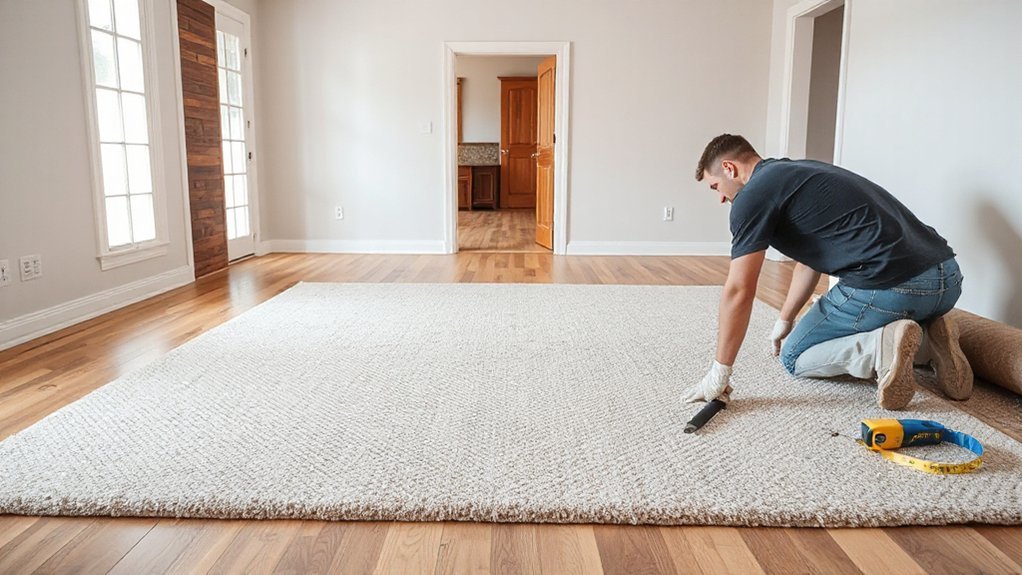
Before you commit to laying carpet over laminate, check whether it’s genuinely the best option for your room and your budget. You’ll gain warmth and noise reduction, which suits bedrooms, loft conversions, and upstairs flats where footfall travels. You’ll also hide tired laminate without the cost and mess of lifting it.
You should still weigh the downsides: you’ll lose the easy-clean, spill-friendly surface that works well in kitchens, hallways, and homes with pets or allergies. You’ll raise floor height, which can affect door clearance and threshold strips, and you may need gripper and underlay that add cost. Choose a Carpet style that matches use: hard-wearing twist for traffic, softer saxony for comfort. Get color coordination right with walls, skirting, and trims for a finished look.
Check Laminate Condition, Flatness, and Movement First
Before you lay carpet over laminate, you must check the boards are sound and the surface is flat, or you’ll feel every fault underfoot. Inspect for damage like swelling, chipped edges, gaps, or damp staining, and sort repairs before you go any further. Then test for movement by walking the floor and pressing near joints—if it flexes or clicks, fix the cause first or your carpet and underlay won’t sit right.
Inspect For Damage
Although carpet can disguise minor cosmetic wear, you should inspect the laminate carefully for damage, unevenness, and any signs of movement, because problems underneath will quickly telegraph through the underlay and carpet. Walk the room in good light and mark scuffs, chipped edges, water staining, bubbling, or swollen joints—common near external doors and radiators. Check for high spots, dips, and lifted seams with a straightedge; even a few millimetres can show through, regardless of Carpet thickness. Replace broken planks, trim raised lips, and fill small gaps with a suitable laminate repair kit. If you’re planning Color coordination, confirm you’re not simply hiding a stain that indicates moisture. Vacuum thoroughly so grit won’t create ridges under the underlay.
Test For Movement
Where does carpet usually fail over laminate? Right at the joints, where the laminate flexes and the underlay can’t bridge movement. Before you buy underlay or decide on carpet fiber types and carpet colour options, prove the floor is stable. Walk every board in trainers, then press along seams and at door thresholds; you shouldn’t feel a click, spring, or hear squeaks. Run a 2m straightedge (or long level) across the room and check for rocking; any dips need levelling compound, not thicker carpet. Finally, test expansion: remove a threshold strip and confirm a proper gap at the perimeter. If movement persists, fix the laminate first or lift it and reinstall correctly.
Pick an Install Method That Won’t Damage Laminate
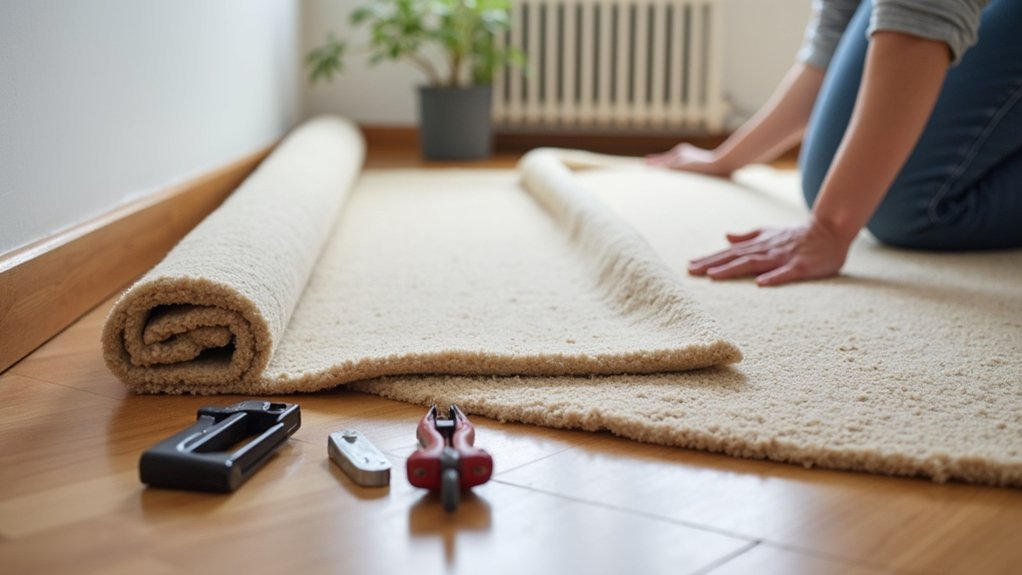
Since laminate relies on a click-lock floating system, you’ll need an installation method for your carpet that keeps the boards intact and doesn’t involve nails, staples, or glue. Choose a fully floating, loose-lay fit using perimeter gripper-free edging, or use a tensioned fit where the carpet’s held by room geometry and door bars rather than fixings through the laminate. In the UK, pick transition strips and threshold bars that screw into the subfloor at the doorway (not into the laminate), or use adhesive-free clamp-style bars. Keep Carpet padding separate and unfixed; let it sit flat so the laminate can expand and contract. Use the right installation tools—knee kicker, bolster, and sharp knife—to stretch cleanly without dragging or scuffing the boards.
Choose a Moisture-Safe Carpet Pad for Laminate
To protect your laminate from damp and spills, you’ll need a carpet underlay that manages moisture properly. Choose from vapour-barrier pad options such as combined underlay-and-membrane products or separate polythene sheeting where needed, especially over concrete subfloors common in UK homes. You should also prioritise mould-resistant padding materials (like closed-cell foam or rubber) so you don’t trap moisture and risk odours or damage.
Vapor Barrier Pad Options
- Foil-faced PU felt: strong moisture block for kitchens and ground floors
- PE film-backed foam: thin, budget-friendly, suits low-pile carpet
- Separate polythene + firm crumb rubber: best when you need higher load support
Tape seams with vapour tape, run the membrane up skirting a touch, and keep fixings minimal to protect the laminate.
Mold-Resistant Padding Materials
A vapour barrier pad helps, but it won’t stop musty smells if the underlay itself holds damp, so choose a mould-resistant carpet pad that stays dry and breathable on top of laminate. Go for closed-cell rubber, DPM-rated foam, or felt with an anti-microbial treatment approved for domestic use. Avoid cheap spongey PU underlay in kitchens, conservatories, or ground-floor flats where humidity spikes. Check the tog rating so you don’t trap heat and moisture; a medium tog usually suits UK rooms with central heating. Look for products that meet BS EN standards and state “mould resistant” on the datasheet. For Mold prevention, keep edges sealed and let spills dry fast. These steps protect padding longevity and help your carpet wear evenly.
Tools and Materials to Install Carpet Over Laminate
Before you lay a single strip of carpet, you’ll need the right kit to protect the laminate and get a clean, long-lasting finish. Start with a quality underlay suitable for laminate, plus a vapour barrier if you’re over concrete. Choose gripper rods designed to sit without damaging the boards, and keep expansion gaps clear at skirtings and door bars. You’ll also need the right tools for accurate cuts and firm stretching, especially when fitting around thresholds and radiators. When selecting Carpet fiber types and Carpet color options, match durability and shading to UK traffic levels and light.
- Knee kicker and carpet stretcher
- Utility knife with hooked blades and spare blades
- Tucking tool, tape measure, and straightedge
Fix Ripples, Squeaks, and Loose Carpet Edges
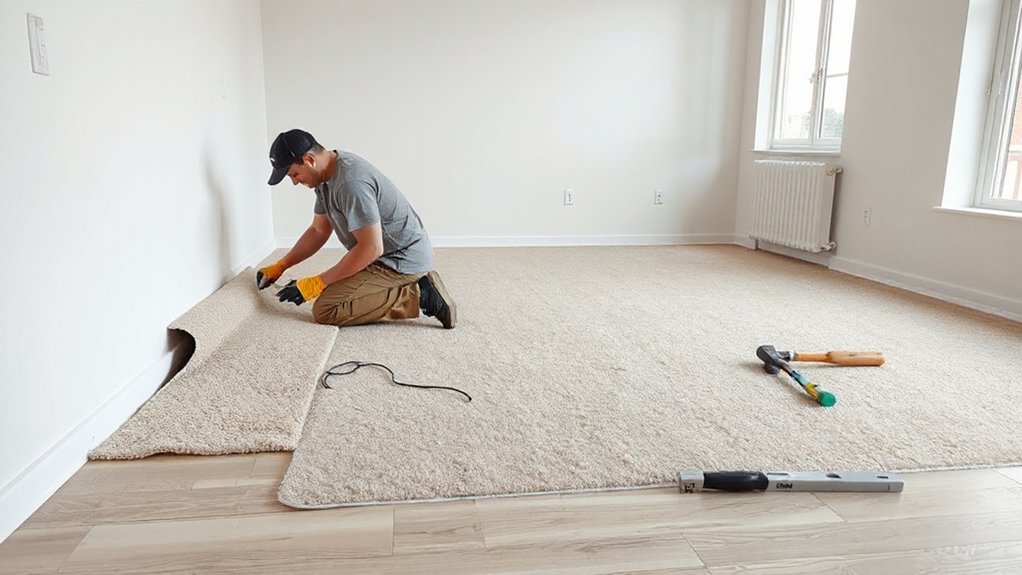
Once you’ve got the right underlay, grippers, and cutting tools in place, focus on the three problems that show up most when carpeting over laminate: ripples, squeaks, and loose edges. Deal with ripples first using carpet stretching techniques: hook the carpet onto the gripper, then use a knee kicker (or power stretcher for bigger rooms) to tension it towards the opposite wall. Re-seat it on the gripper and trim cleanly.
For squeaks, lift the edge and check the laminate isn’t moving; add a thin underlay patch or retape the underlay joints, then refit the carpet tight.
Loose edges usually mean poor tucking. Use a bolster to push the carpet into the gap, and finish with Carpet seam sealing on joins to stop fraying.
Frequently Asked Questions
Will Carpet Over Laminate Affect Underfloor Heating Performance?
Yes, carpet over laminate will reduce underfloor heating performance because you add thermal insulation, slowing heat transfer. You’ll notice longer warm-up times and lower output. You must also tackle installation challenges: TOG ratings, underlay choice.
How Do I Clean and Maintain Carpet Installed Over Laminate?
You tend your carpet like a cottage garden: prune often, uproot weeds quickly. Keep vacuum maintenance weekly, use a beater on low. For stain removal, blot fast, use pH-neutral cleaner, dry thoroughly.
Can I Install Carpet Over Laminate on Stairs or Landings?
Yes, you can install carpet over laminate on stairs or landings, but you must prioritise stair safety and carpet adhesion. Use gripper rods, underlay, and nosing trims; don’t staple laminate; check Building Regulations.
What’s the Typical Cost Difference Versus Removing Laminate First?
You’ll typically save £2–£6/m² by not removing laminate, but you risk poorer Carpet durability. Test the theory: does saving now cost later? Removal adds uplift/disposal labour. You’ll still need proper Installation tools.
Will Carpet Over Laminate Impact Home Resale Value or Buyer Preferences?
Yes, it can: UK buyers often prefer original laminate, so you’ll need strong fashion trends and colour coordination to win them over. If you keep it reversible and disclose it, you won’t dent value.
Conclusion
You don’t have to rip out your laminate to get a warmer, quieter room. If you’ve checked it’s flat, sound, and not shifting, you can fit carpet with a non-damaging method, the right moisture-safe underlay, and tidy edge finishing. Worried it’ll trap damp or void your warranty? Choose a breathable pad, keep expansion gaps clear, and avoid full-spread glue. You’ll feel the difference every morning—cosier, safer, and calmer.