
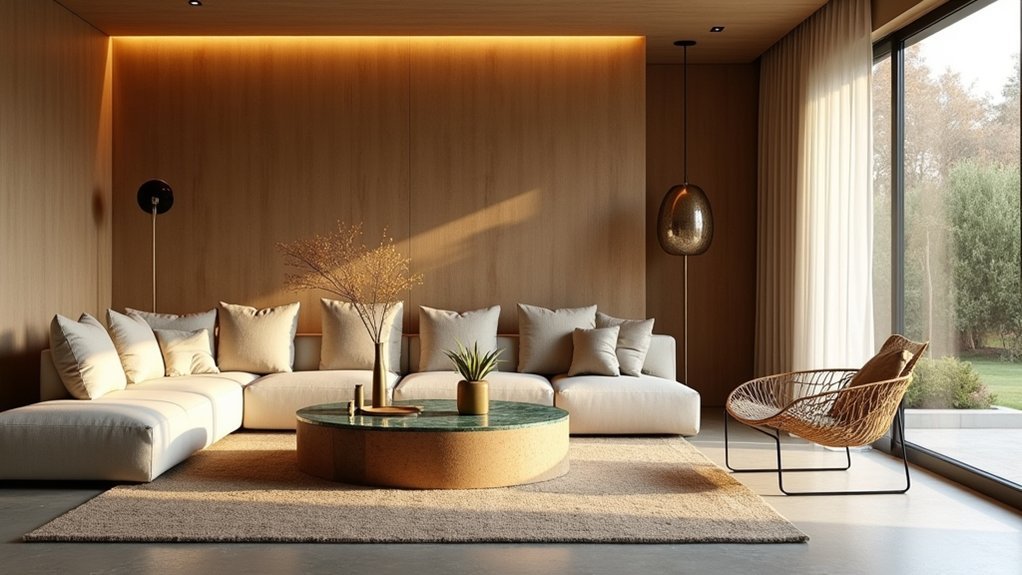
Elevate your space by mixing unexpected materials you can actually live with. You’ll sharpen sightlines with honed concrete or microtopping, add edge using blackened steel details, and keep brick matte with a low-sheen sealer. Warm it up with cork panels, rattan lighting, and clay accents for acoustic and tactile depth. Go modern with terrazzo, resin, or acrylic for crisp lines and controlled shine. Next up: smart tests, slip ratings, and easy swaps.
Key Takeaways
- Try cork walls or inserts for warmth, sound absorption, and a soft counterpoint to hard modern surfaces.
- Add blackened steel details—shelving, door frames, or island trim—for sharp industrial contrast and architectural definition.
- Use terrazzo with bold chips or colored binder to introduce pattern and color without relying on busy decor.
- Specify resin surfaces for wet-gloss depth, translucency, and embedded pigment effects that feel custom and gallery-like.
- Use acrylic accents for crisp edges and “floating” shadow lines that visually lighten heavy furniture and shelving.
How to Pick Materials: Budget, Durability, Upkeep
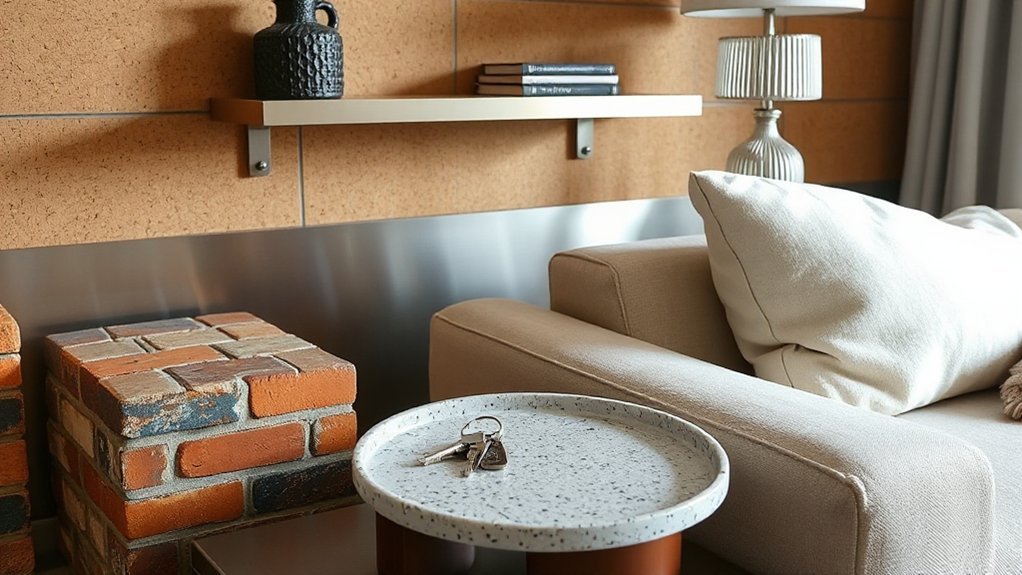
Before you fall for a material’s look on a mood board, match it to how you’ll actually live—and what you can realistically spend. Start by pricing the full install: underlayment, edge details, sealers, and labor, not just the surface. If you’re renovating in phases, choose finishes you can re-order and that age consistently.
Next, pressure-test durability. In high-traffic zones, prioritize scratch resistance, stain tolerance, and UV stability; in wet areas, confirm slip ratings and moisture limits. Ask for samples and abuse them with wine, oil, and a scrub brush.
Finally, be honest about upkeep. If you won’t reseal yearly, don’t buy porous. Specify sustainable sourcing, and lock in color coordination across lighting, undertones, and adjacent textures.
Industrial Contrast: Concrete, Steel, Brick
Why does industrial contrast feel so modern even in older spaces? You’re layering honest, hardworking surfaces—concrete, steel, and brick—so the room reads crisp, intentional, and architectural. Specify a honed concrete hearth or microtopping to streamline sightlines, then introduce blackened steel via slim shelving, door frames, or a mixed-metal island detail. Exposed brick adds rhythm; keep it matte, seal it low-sheen, and let its imperfections stay visible. For Eco friendly options, choose recycled-content steel and low-VOC sealers, or source locally made concrete mixes. Lean into vintage repurposing with salvaged brick, reclaimed steel lintels, or factory cart hardware as drawer pulls. You’ll get edge without feeling cold.
Warm Texture: Cork, Rattan, Clay Accents
Even if your palette stays neutral, cork, rattan, and clay accents instantly warm a space by adding tactile depth and soft, organic movement. Use cork on a pinboard wall, cabinet inserts, or a slim credenza top to soften hard lines and improve acoustics without visual clutter. Bring in rattan through a sculptural pendant, a cane-front console, or dining chairs; its natural fibers read airy, not rustic, when you pair it with clean silhouettes and tailored upholstery. Finish with clay: matte planters, hand-thrown vases, or a small table lamp base that adds grounded color and subtle irregularity. Specify pieces from Sustainable sources, and you’ll get texture that feels current, client-friendly, and easy to layer across seasons.
Modern Finishes: Terrazzo, Resin, Acrylic
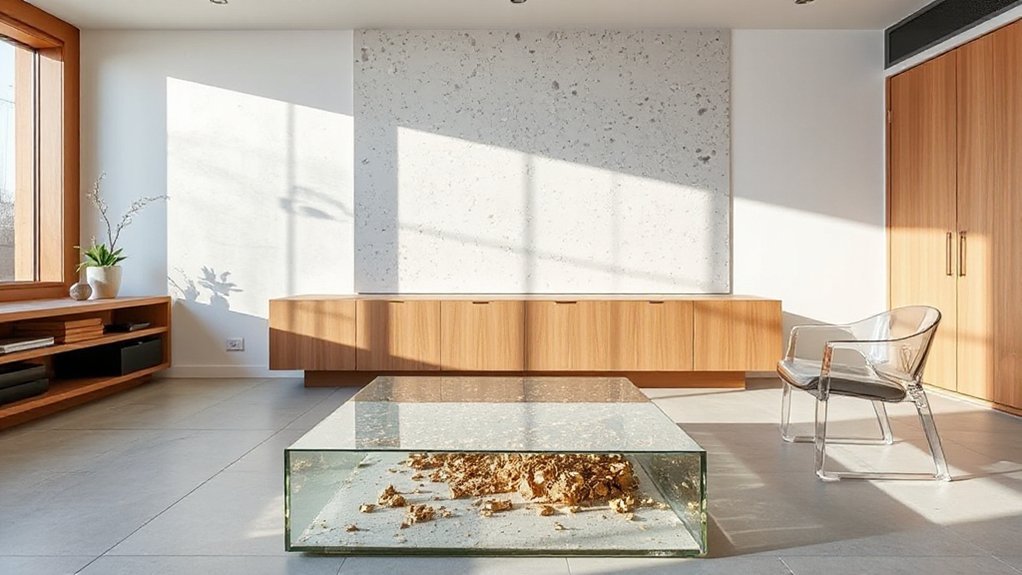
Once you’ve layered in warm, organic texture, modern finishes like terrazzo, resin, and acrylic sharpen the look with clean light play and graphic pattern. Terrazzo brings Unique patterns through aggregate size and chip mix; specify tight micro-terrazzo for a calmer read, or oversized stone for a more editorial vibe. Use Bold color in the binder or chips to echo art and textiles without adding visual clutter.
Resin delivers depth and a wet-gloss sheen that feels custom; you can tune translucency, embed pigment, or introduce subtle veining for a luxe, controlled statement. Acrylic adds crisp edges and floating shadow lines, ideal when you want pieces to visually “disappear” while still looking high-design. Balance these finishes with matte neighbors so reflections stay intentional.
Easy Placements: Panels, Surfaces, Swaps (No Reno)
If you’re craving a material refresh without permits or a demo crew, focus on easy placements—panels, surface upgrades, and strategic swaps that deliver high impact fast. Try peel-and-stick fluted wood, cork, or recycled felt panels behind the bed or sofa to add depth and acoustic comfort. Upgrade tired countertops with thin porcelain slabs or microcement overlays for a seamless, modern read. Swap cabinet pulls for brushed aluminum or leather tabs, and replace switch plates with stone composite for a quiet-luxury detail. For Eco friendly solutions, prioritize FSC veneers, low-VOC finishes, and reclaimed trims. Use Creative patterning with checkerboard cork tiles, ribbed panel grids, or alternating matte/gloss laminates. You’ll get a designer look while keeping timelines short and budgets predictable.
Frequently Asked Questions
What Unexpected Materials Are Safest for Homes With Toddlers or Pets?
Choose cork, natural linoleum, and sealed concrete—they’re resilient, wipeable, and gentle underfoot. Specify non toxic finishes and stain resistant fabrics like performance wool or solution-dyed acrylic. You’ll get elevated texture without worry.
Do Any of These Materials Improve Acoustics in Echo-Prone Rooms?
Yes—you’ll reduce echo by using cork panels, felted wool, and upholstered wall tiles as Acoustic insulation. You’ll apply Sound absorption techniques with rugs, drapery, and textured ceilings, keeping your space stylish and client-ready.
Which Options Are Best for Allergy-Sensitive Households?
You’ll do best with sealed cork, polished concrete, and glazed ceramic since you can wipe them clean. Specify non toxic finishes, avoid wall-to-wall carpet, and choose hypoallergenic textiles like tight-weave cotton or performance linen.
How Do These Materials Affect Resale Value in Different Housing Markets?
In hot markets, you can boost resale 3–5% with on-trend finishes. You’ll track market trends: luxe cities reward novelty, conservative areas prefer classics. You’ll emphasize material durability—buyers pay more for low-maintenance, long-wearing surfaces.
Where Can I Source Sustainable or Reclaimed Versions of These Materials?
You can source Reclaimed wood through architectural salvage yards, deconstruction firms, and FSC-certified dealers; verify moisture and provenance. For recycled metal, use local fabricators, scrap-based mills, and resale marketplaces; request material certs and finish samples.
Conclusion
You’ve got more than finishes—you’ve got a toolkit. Let concrete and steel act like a city skyline: crisp, confident, grounding. Bring in cork, rattan, and clay as your hearth flame—warm, tactile, quietly luxe. Add terrazzo, resin, or acrylic like jewelry: polished, playful, light-catching. When you choose with budget, durability, and upkeep in mind, every panel, surface swap, or peel-and-stick moment becomes a small key that reveals a bigger, bolder home.