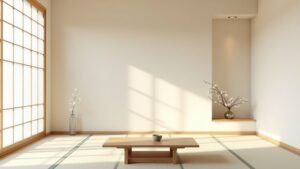
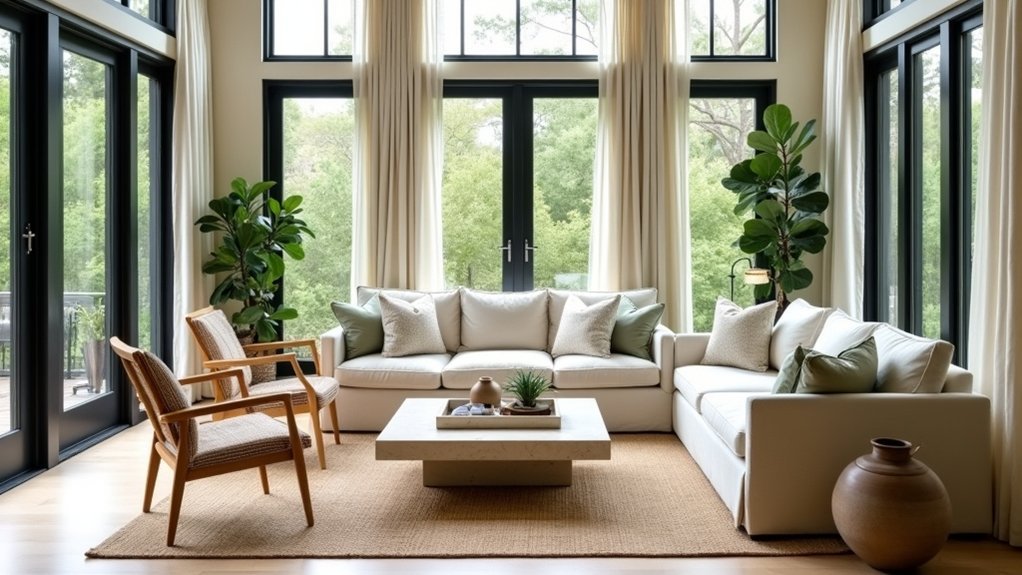
Start by mapping circulation so you keep a 36-inch clear route from the door, then define one purpose per zone—conversation, lounging, or plants—anchored with a rug or console. Control glare and heat with solar shades, optional UV tint, and top-down/bottom-up privacy. Stick to low-contrast neutrals and muted greens that echo the view, warmed by wood and matte black accents. Choose slim, leggy furniture and compact side tables, then finish with layered rugs and plush textiles. Keep going for designer-level layout and styling moves.
Key Takeaways
- Plan circulation first, keeping a 36-inch clear path from entry to seating for an airy, stress-free layout.
- Zone the room by purpose—reading, conversation, dining, or plants—and anchor each area with a rug or console.
- Control glare and privacy with solar shades or top-down/bottom-up blinds, adding ceiling-track blackout curtains for nighttime use.
- Choose a low-contrast palette that echoes outdoor greens, pairing warm whites and muted sages with warm wood and matte black accents.
- Use slim, leggy furniture with compact side tables, then layer performance textiles and minimal decor for softness without visual clutter.
Plan a Calm Sunroom Layout (Zones + Flow)
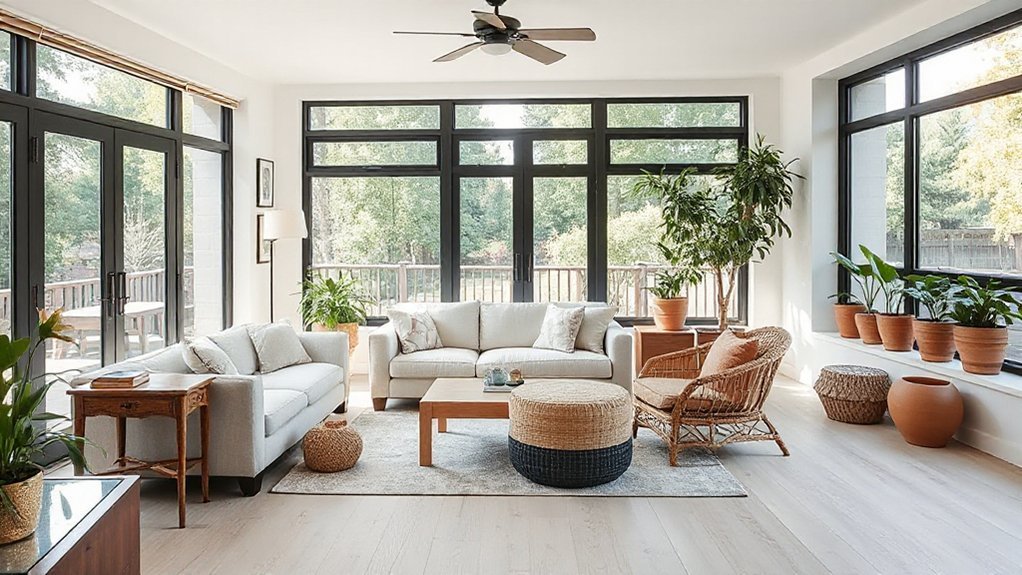
If you plan your sunroom layout around distinct zones and an easy walking path, you’ll create a calmer space that feels intentional instead of cluttered. Start by mapping circulation first: keep a 36-inch clear route from door to seating. Then assign functions—conversation, reading, dining, plants—so furniture supports one purpose per area. Anchor each zone with a rug or a console to prevent drift, and float seating to face views, not walkways. Use a compact side table in every seat to eliminate random surfaces. Plan outlets and Lighting control locations before you place anything, so lamps and switches land where you’ll actually use them. Finally, position taller pieces where you need Privacy solutions, like along low windows or beside doors, without blocking light.
Fix Glare, Heat, and Privacy With Light Control
Because sunrooms amplify daylight, you’ll want light control that tackles glare, heat gain, and privacy at the same time—without dimming the whole space. Start by identifying when the room feels harshest; then layer solutions so you can fine-tune light hour by hour. Prioritize products that look tailored from inside and clean from the exterior.
- Add solar shades for daytime glare reduction and preserved views.
- Use window tinting to cut UV and heat while keeping a crisp, minimal look.
- Install top-down/bottom-up shades to protect sightlines without sacrificing light.
- Keep blackout curtains on a ceiling track for movie nights, naps, or street-facing privacy.
Mount hardware high and wide to expand glass visually, and choose cordless or motorized controls for a sleek finish.
Choose Calming Sunroom Colors That Suit the View
Match your sunroom palette to what you see through the glass, especially the outdoor greens that already calm the space. You’ll get the most serene result with soft neutrals—warm whites, light taupes, muted sages—that support the view instead of competing with it. Keep contrast low across walls, upholstery, and trim so your eye moves smoothly from indoors to outdoors.
Harmonize With Outdoor Greens
When your sunroom frames a lush yard or tree line, you’ll get the calmest result by letting that greenery lead your palette. Echo what you see through the glass so your outdoor views feel continuous, not competing. Pull one dominant leaf tone and one supporting stem tone, then repeat them in textiles, paint, and accessories with disciplined restraint. If you use indoor greenery, match pot and planter finishes to those same greens to keep the room intentional.
- Sample exterior foliage at morning and late-afternoon light
- Choose a muted sage or moss for large surfaces
- Add deeper pine accents in trims, frames, or a rug border
- Balance with warm woods and matte black hardware for structure
Soft Neutrals, Low Contrast
If your view already carries the visual drama—sky, trees, water, or rooftops—soft neutrals with low contrast let it stay in control. Build your palette from warm whites, oatmeal, sand, and pale greige, then repeat tones across walls, upholstery, and drapery so the eye moves quietly. Choose matte finishes to cut glare and keep daylight gentle.
Use neutral color schemes with a tight value range: think ivory rug, linen sofa, and blond-wood tables rather than stark black accents. If you want definition, add it through texture—bouclé, cane, jute, or slubby linen—instead of color. Keep art minimal and frames light. Understated decor, like ceramic vessels and a single branch, reads intentional and serene.
Pick Sunroom Furniture Scaled for the Space
Although a sunroom invites you to linger, it still needs furniture that fits its footprint and circulation paths. Start by mapping a clear walkway (at least 30 inches) from doors to windows, then choose Sunroom furniture with slimmer profiles and visible legs to keep sightlines open. Prioritize space optimization by sizing pieces to the room’s narrowest dimension, not its widest view.
- Choose armless lounge chairs instead of bulky recliners
- Use a compact settee or loveseat over a full sofa
- Select nesting or pedestal tables to reduce visual weight
- Add a storage bench that doubles as extra seating
Keep layouts symmetrical if the room is long and narrow, and float seating slightly off the glass to prevent crowding and glare. Measure, tape, then commit.
Add Cozy Texture With Rugs, Pillows, and Throws
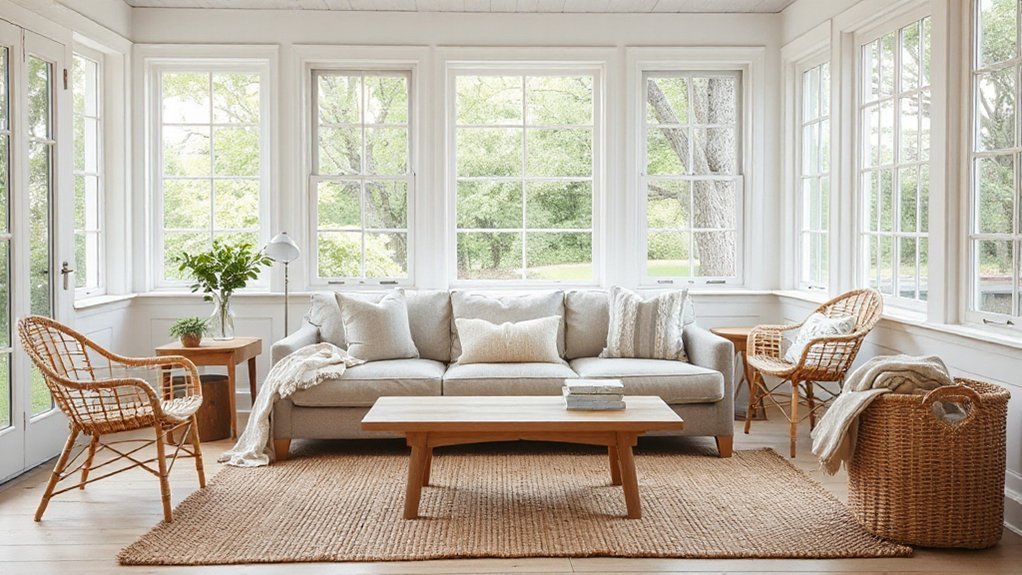
Anchor your sunroom with layered rugs to add warmth, reduce echo, and define seating zones without heavy furniture. Then build comfort with plush pillows and throws, mixing nubby knits, linen, and soft velvet for a tactile, serene look. Keep the palette tight and vary texture instead, so the room feels cozy yet clean and intentional.
Layered Rugs For Warmth
When your sunroom’s light makes the space feel a bit bare, layered rugs add instant warmth and a polished, designer finish. You’ll soften hard surfaces, define seating zones, and visually anchor airy furniture without blocking that bright, open feel. Choose tactile textures that stand up to sun exposure and daily traffic, then layer with intention: a larger, low-profile base plus a smaller statement rug on top for depth and contrast. Keep edges aligned with key furniture legs so it reads tailored, not fussy.
- Start with a flatweave or indoor-outdoor rug as the base
- Add a smaller wool or jute rug for tactile textures
- Limit the palette to two neutrals plus one accent tone
- Use a thin rug pad to prevent shifting and ripples
Plush Pillows And Throws
A few well-chosen plush pillows and throws instantly make your sunroom feel finished and inviting, without sacrificing that airy, light-filled vibe. Stick to performance fabrics or washable covers so you won’t stress about pollen, pets, or iced drinks. Mix textures—bouclé, linen, chunky knit—in a tight palette to keep the look calm but layered.
Scale matters: use larger pillows (22–24 inches) on deep seating, then add one lumbar for structure. Drape a throw over the arm or basket two extras for a styled, ready-to-lounge feel. Coordinate colors with your Window treatments so patterns don’t compete, and echo trim tones for cohesion. At night, let Outdoor lighting warm up the textiles; choose soft, dimmable fixtures to keep everything serene.
Style It Simply: Plants, Art, and Clutter-Free Surfaces
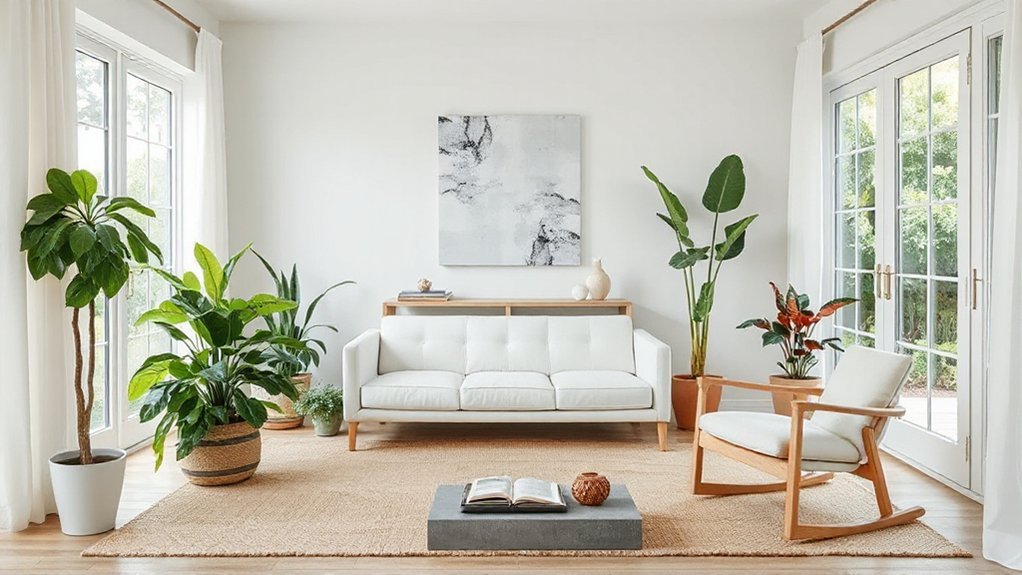
Because a sunroom already delivers the drama with natural light, you’ll get the most serene result by styling it simply: treat plants as your primary “accessory,” hang one or two intentional art pieces, and keep surfaces clear. Aim for minimalist decor so the view and greenery stay in charge, then use statement artwork to add a focused punch without visual noise.
- Group plants in odd numbers; vary height, not pot color.
- Choose one oversized print or two small pieces with matching frames.
- Edit tabletops: one tray, one candle, one book—nothing else.
- Hide utilities in lidded baskets so cords and remotes disappear.
Keep a clear path to the windows, and you’ll reinforce calm. If you add anything, make it purposeful and easy to dust.
Frequently Asked Questions
Do Sunrooms Need Special Building Permits or HOA Approval?
Yes, you’ll usually need building permits, and you may need HOA approval too. Check Sunroom zoning and HOA restrictions early. Submit drawings, setbacks, and materials. It prevents delays and guarantees your sunroom matches neighborhood design standards.
What’s the Best HVAC Option to Keep a Sunroom Comfortable Year-Round?
Choose a ductless mini-split heat pump; it cools and heats like a quiet lighthouse through all seasons. Pair it with window treatments and smart lighting design to control glare, boost comfort, and cut energy bills.
Which Flooring Materials Handle Moisture, UV Exposure, and Temperature Swings Best?
Choose porcelain tile, luxury vinyl plank, or sealed concrete; you’ll get top Moisture resistance, UV durability, and stability through temperature swings. Use exterior-rated grout, underlayment, and expansion gaps, and avoid hardwood or laminate here.
How Do I Protect Indoor Plants From Pests and Seasonal Sunroom Temperature Drops?
You’ll stop pests and cold snaps by acting before they do—because your ficus isn’t paying rent. Practice Plant pest prevention: quarantine, inspect weekly, wipe leaves, use neem. For Seasonal temperature management, add thermal curtains, space heater, and night trays.
What’s the Typical Cost Range for Furnishing and Finishing a Serene Sunroom?
You’ll typically spend $3,000–$15,000 to finish and furnish a serene sunroom, depending on flooring, lighting, and glazing. Choose durable outdoor furniture, layer decorative accessories, and allocate 10–15% for window treatments and contingencies.
Conclusion
Pull your serene sunroom together by zoning the layout, controlling light, and choosing a palette that echoes your view. Scale furniture to fit, then layer rugs, pillows, and throws for quiet comfort without visual noise. Keep styling intentional: a few strong plants, one or two artworks, and clear surfaces do more than extra décor ever will. Want the room to feel instantly calmer? Edit harder than you decorate, and let the light lead.