
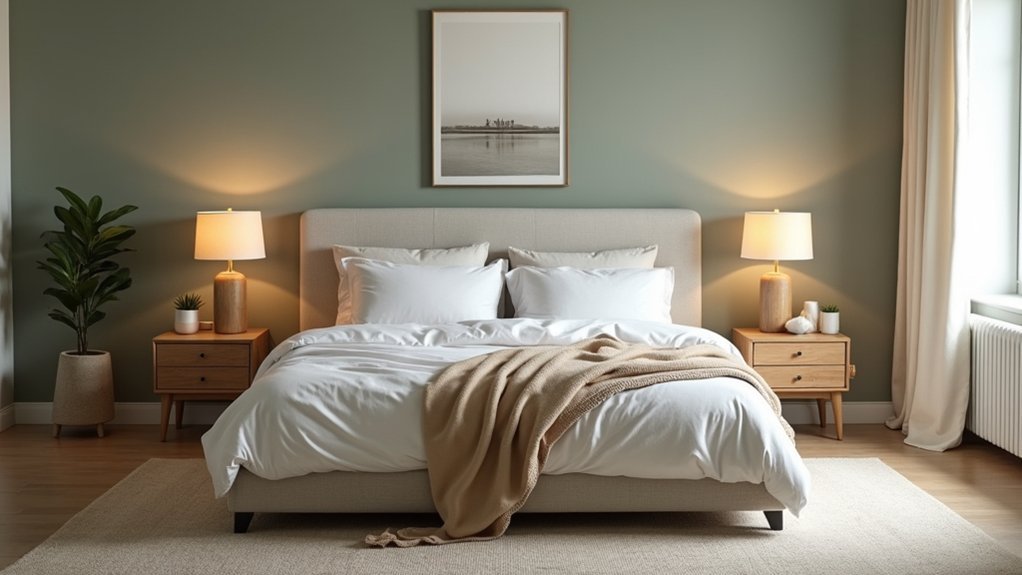
Design a harmonious bedroom by keeping it cool (16–19°C), genuinely dark with blackout lining, and quiet using soft furnishings or white noise. Choose calm, low-saturation colours like warm greys, sage, or chalky blues, and pair them with matt finishes, linen, wool, and wood to reduce glare. Keep sightlines clear, surfaces mostly empty, and storage lidded. Use layered, warm LEDs (2200–2700K) after sunset and avoid harsh ceiling lights. Keep going for a simple room-by-room plan.
Key Takeaways
- Keep the bedroom cool (16–19°C), dark with blackout lining, and quiet using soft furnishings or white noise.
- Choose calm, low-saturation colors and natural materials like linen, cotton, wool, and wood to reduce visual stress.
- Use layered, warm lighting (2200–2700K) with lamps and dimming; avoid harsh ceiling lights and blue-rich bulbs at night.
- Arrange furniture for clear walkways and sightlines, placing the bed away from the doorway and keeping surfaces mostly clear.
- Improve comfort and air quality with breathable bedding, supportive mattress and pillows, and gentle airflow via vents or cracked windows.
Set Up a Sleep-Friendly Bedroom (Quick Checklist)
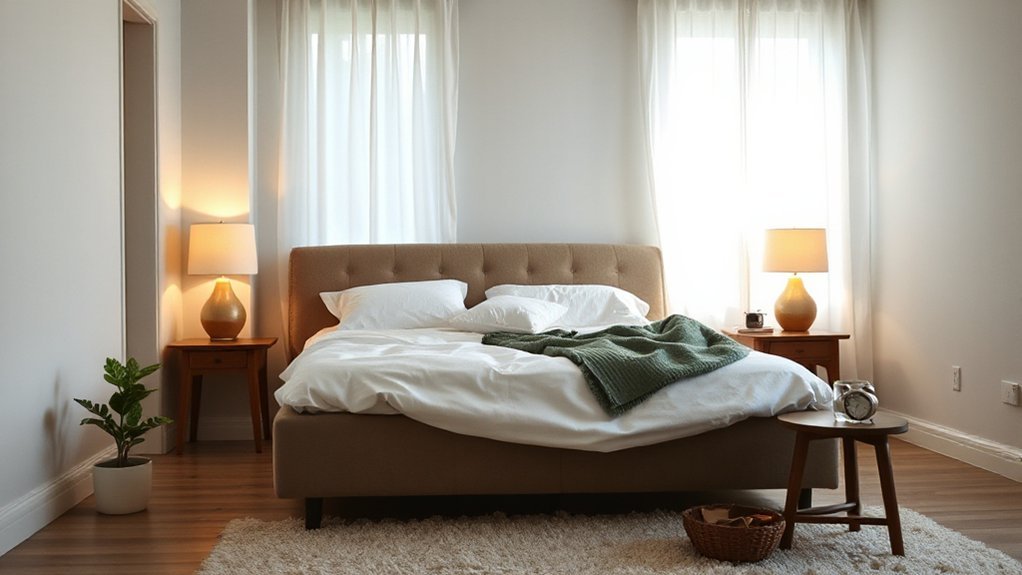
Although you can’t control every factor that affects sleep, you can stack the odds in your favour by treating your bedroom like a calm, purpose-built sleep space: keep it cool (around 16–19°C), make it genuinely dark with proper blackout lining, reduce noise with soft furnishings or white noise, and prioritise a supportive mattress and pillows that suit your sleeping position. Next, tidy visual clutter: Sleep psychology links mess with heightened cognitive load, so keep surfaces clear and cables hidden. Place your bed so you can see the door without lining up directly with it; bedroom feng shui calls this the “command position”, and it also supports a basic sense of safety. Use low-glare bedside lighting (warm LEDs) and put chargers outside arm’s reach. If you snore, consider a humidifier for winter heating.
Pick Calming Bedroom Colors and Natural Materials
Because your brain reads colour and texture as “signals” of safety or stimulation, the palette and materials you choose can make it easier to wind down at night. Use Color psychology to steer decisions: soft, low-saturation hues (warm greys, chalky blues, sage, clay) tend to feel quieter than high-contrast brights. In UK light, test paint on all walls and view it morning and evening; north-facing rooms can skew cool, so balance with warmer undertones.
Back colour with natural, tactile finishes. Choose matt paint, linen or cotton bedding, wool throws, and oak or ash furniture to reduce glare and add visual calm. Pair these with Mood lighting: warm LEDs (around 2700K) and shaded lamps soften surfaces and keep the room restorative.
Create a Clutter-Free, Quiet Bedroom Layout
When you keep your bedroom layout simple and clutter-free, you reduce visual “noise” that can keep your mind alert at bedtime. Aim for clear sightlines from the door to the bed, and keep surfaces mostly empty so your brain reads the room as “finished”. Use built-in wardrobes, under-bed drawers, and lidded baskets as storage solutions to prevent piles that collect dust and demand attention.
Prioritise a calm furniture arrangement: place the bed away from the doorway if you can, keep walking routes at least 60cm wide, and avoid squeezing in extra pieces that block airflow. Choose soft-close hinges, felt pads, and a solid rug to dampen sound, especially in UK terraces and flats. Keep chargers and cables contained in a bedside drawer.
Use Bedroom Lighting That Protects Your Sleep Cycle
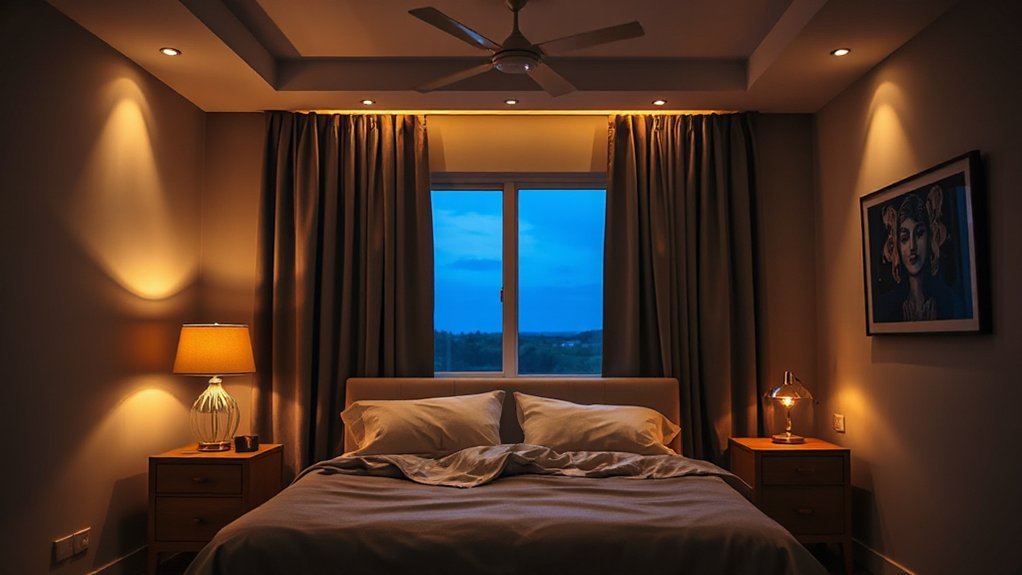
To protect your sleep cycle, design your bedroom lighting around circadian cues: keep evenings warm and dim, and mornings bright and cool. Use lamps and wall lights on separate circuits so you can layer light, not flood the room. Aim for warm white (about 2200–2700K) after sunset, and avoid bare bulbs or bright ceiling fittings that push blue-rich light into your eyes. Fit blackout-ready window dressings, then add low-level pathway lighting for night-time trips without switching on the main light. Smart lighting helps: schedule gradual dimming, set a “wind-down” scene, and trigger a gentle sunrise alarm. This supports your Circadian rhythm, which research links to faster sleep onset and better next-day alertness. Choose UK-compliant fittings and glare-controlled shades.
Get Temperature, Bedding, and Airflow Right for Sleep
Although décor sets the mood, your bedroom’s temperature, bedding, and airflow largely determine how quickly you drop off and how often you wake. Aim for 16–19°C, the range sleep studies commonly link with better rest, and plan temperature control with a programmable thermostat, TRVs, or a quiet fan rather than blasting the radiator at bedtime.
Your bedding selection should match your body and the UK’s changeable seasons: choose breathable cotton or linen sheets, and use a layered duvet (or separate summer/winter togs) so you can adjust without overheating. Add a wool topper if you run cold; it regulates moisture well. Keep air moving: crack a window, use trickle vents, and pick an extractor on low if your room gets damp. Clean filters to reduce allergens.
Frequently Asked Questions
How Do Bedroom Scents Like Lavender Affect Sleep Quality?
Lavender scents can improve your sleep quality by easing anxiety and lowering heart rate, supporting faster sleep onset. You’ll get Aromatherapy benefits with controlled scent diffusion techniques—like reed diffusers—kept subtle to avoid irritation.
Should I Remove Mirrors From the Bedroom for Better Sleep?
You don’t need to remove mirrors, but you should control them. For example, a London renter slept better after moving mirror placement away from the bed; reflective surfaces can boost light and arousal—cover or angle them.
Can Indoor Plants Improve Bedroom Air Quality Without Disrupting Sleep?
Yes—indoor plants can modestly improve air quality, and they won’t disrupt sleep if you choose low-fragrance varieties. Prioritise Air purification with smaller pots, and nail Plant placement away from beds, minimising damp, mould, and allergens.
What Type of Sound Machine Is Best for Light Sleepers?
You’ll sleep best with an adjustable, non-looping white noise machine offering fan or broadband noise, precise volume steps, and a warm nightlight. Choose a UK-approved model with timer and sound therapy tracks, low hiss.
Is It Okay to Sleep With Pets in the Bedroom?
Yes, it’s okay—if you manage the trade-offs. But here’s the catch: Pet allergies and Sleep disturbances rise. You’ll sleep better if you set clear zones, wash bedding weekly, and use HEPA filtration.
Conclusion
You don’t need a full refurb or a huge budget to sleep better. Start with evidence-led design moves: calm, muted colours, natural textures, and a layout that keeps clutter and noise out of sight and mind. Use warm, dimmable lighting in the evening to protect your circadian rhythm, then keep the room cool with breathable bedding and steady airflow. In most UK homes, these tweaks are practical—and your sleep can improve quickly.