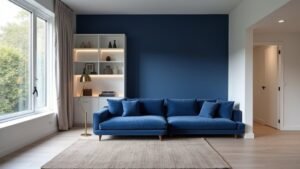
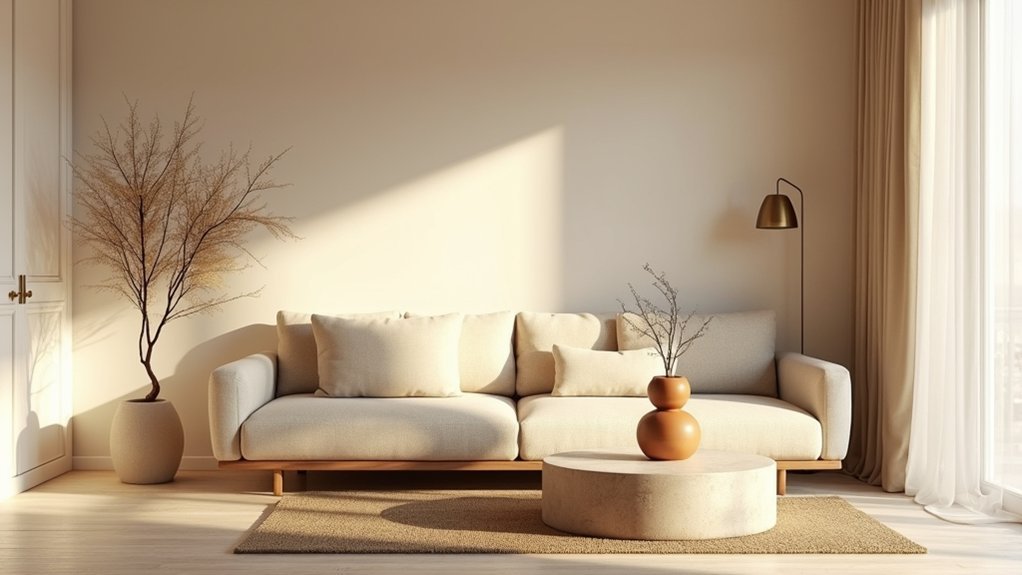
Warm minimalism gives you the calm, uncluttered feel of minimalism, but you soften it with warm neutrals, natural textures, and a lived-in ease that suits UK light and smaller rooms. You prioritise function, negative space, and clear sightlines, then anchor each room with one hero piece and keep surfaces spare. You choose matte, softly brushed finishes, tactile linen and wool, and muted tones like oat, clay, and smoke. Next, you’ll see how to apply it room by room.
Key Takeaways
- Warm minimalism balances pared-back rooms with cozy textures and a lived-in feel, avoiding stark or cold minimalism.
- It prioritizes function and negative space, keeping surfaces and sightlines clear to create calm, airy spaces.
- The palette uses warm, muted neutrals like oatmeal, clay, greige, and soft whites with consistent undertones.
- Natural materials and varied finishes—oak, linen, wool, stone, brushed brass—add depth through texture rather than clutter.
- Decor is curated and meaningful, using fewer high-quality pieces and layered warm lighting to highlight craftsmanship and comfort.
What Is Warm Minimalism?
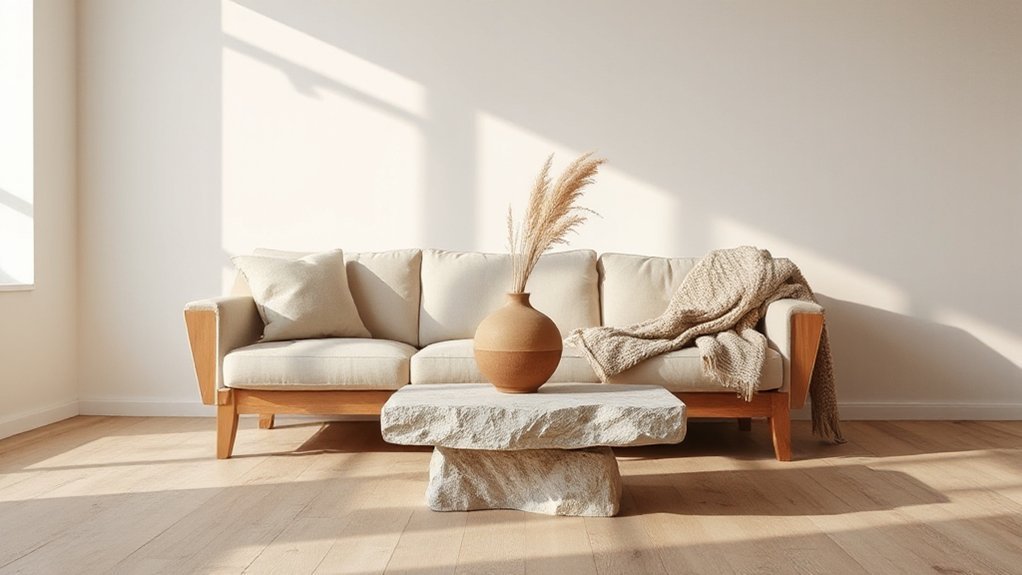
Where does minimalism end and warmth begin? Warm minimalism defines that threshold: you keep the discipline of pared-back spaces, but you soften the experience so your home feels lived-in, not clinical. You prioritise function and negative space, yet you choose finishes and tones that support comfort and calm. In UK homes, where light shifts fast and rooms often work hard, this approach helps you edit without stripping character. You rely on Color psychology to steer mood—muted neutrals, clay, oat, or smoke can steady energy better than stark white. Importantly, you treat style as lifestyle integration: storage, circulation, and daily rituals shape decisions, so the design serves how you actually live. You don’t chase trend; you curate.
What Warm Minimalism Looks Like (Hallmarks)
Although warm minimalism stays intentionally spare, you’ll recognise it by the way it balances clean lines with tactile comfort. You’ll see fewer, better pieces: a slim sofa with a wool throw, a timber dining table, linen curtains that soften daylight typical of UK homes. Storage stays disciplined, yet surfaces aren’t sterile; you’ll layer matte ceramics, brushed brass, and hand-thrown vessels for quiet texture.
Your palette leans warm and grounded—chalky whites, oatmeal, clay, and muted olive—guided by color psychology to calm and steady the room. You’ll prioritise natural materials, honest joins, and gentle curves over sharp glare. Cultural influences show up subtly in craft: Scandinavian joinery, Japanese restraint, and British heritage details like oak floorboards or a fireplace surround, kept uncluttered and functional.
Warm Minimalism vs. Minimalism: Key Differences
While both styles prize restraint, you’ll feel a clear shift in mood: classic minimalism often chases visual purity—crisp whites, hard edges, and empty space—whereas warm minimalism keeps the edit but softens the experience with layered neutrals, natural textures, and lived-in comfort suited to UK light and everyday routines.
In practice, you’ll specify fewer high-contrast surfaces and more tactile finishes: oak, linen, wool, limewash. Minimalism can read stark in north-facing British rooms; warm minimalism uses Color psychology to steer calm through taupe, clay, and muted greens rather than pure white. You’ll also prioritise sustainable design, choosing durable, repairable pieces and fewer synthetics. Where minimalism may favour hidden storage and seamless lines, warm minimalism lets honest joinery and gentle patina show.
Why Warm Minimalism Feels Cozy
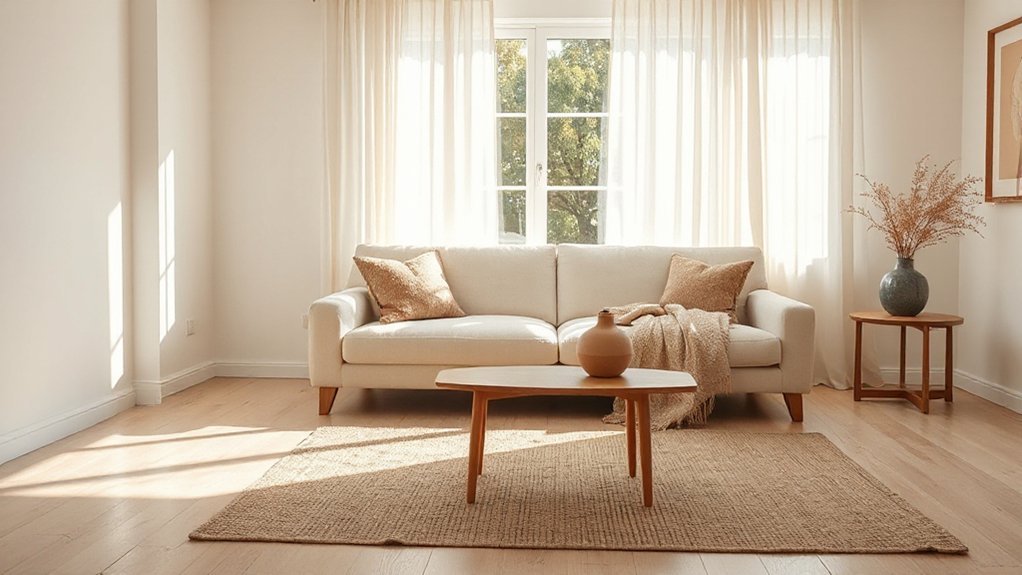
Warm minimalism feels cosy because you balance clean lines with soft textures and gentle layers that take the edge off a pared-back scheme. You’ll land the look by sticking to warm neutrals—think oat, biscuit, and clay—so the room reads calm rather than cold. Finish with natural materials like oak, linen, and wool, and you’ll get that quietly inviting, lived-in warmth that suits UK homes.
Soft Textures, Gentle Layers
When you strip a room back to its essentials, texture becomes the main way you add comfort without adding clutter. You’ll feel the difference immediately: Textile softness turns clean lines into something you want to live with, not just look at. Choose one hero throw, a pair of touchable cushions, and a rug that quietens footsteps—each item earns its place through tactility, not pattern or excess.
Use gentle layering to build warmth in a controlled way. Stack a lightweight throw over a tailored sofa cover, or place a small wool runner over a larger flatweave so the floor reads calm but inviting. Keep finishes matte and pile heights mixed, and you’ll get depth without visual noise. Your space stays minimal, yet undeniably cosy.
Warm Neutrals, Natural Materials
Because cool whites can read stark under Britain’s often-grey daylight, you’ll get a cosier, more lived-in feel by grounding the room in warm neutrals—chalky oatmeal, putty, biscuit and clay—and pairing them with honest natural materials like oak, wool, linen, rattan and stone. You’re aiming for Color harmony: keep undertones consistent, so creamy walls don’t clash with pinkish timbers or blue-grey slates. Let Natural lighting lead decisions—north-facing rooms suit warmer, yellow-based off-whites, while south-facing spaces can handle deeper taupe and terracotta. Choose matte paints, limewash, and softly grained wood to diffuse glare and add depth. Use stone, ceramics, and woven fibres to bring tactility without visual noise, and you’ll keep minimalism calm yet unmistakably snug.
Warm Minimalism Principles: Edit, Soften, Function
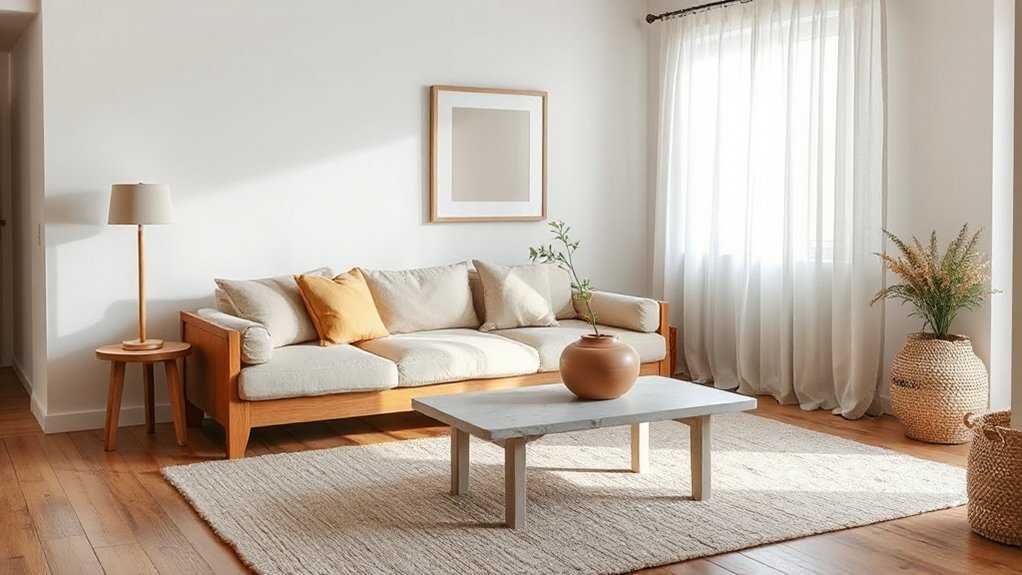
Although the look feels effortless, warm minimalism runs on three disciplined principles: edit, soften, and function. You start by editing: remove anything that doesn’t earn its place, keeping a tight palette and clear silhouettes to maintain color harmony. Next, you soften: swap harsh contrasts for warm neutrals, introduce tactile layers like wool, linen, and oak, and choose rounded profiles that feel inviting in a UK terrace or new-build flat. Finally, you function: let spatial arrangement follow how you live—clear routes from hall to kitchen, lighting that supports work and rest, and storage that hides clutter without fighting the architecture. When each item supports comfort and purpose, the room reads calm, current, and unmistakably considered. Yet still personal, never clinical.
Negative Space: The “Breathing Room” Rule
You let rooms breathe by resisting the urge to fill every corner; in a UK home, clear sightlines and open floor space make even compact layouts feel calm. You balance objects with space—leave generous gaps around furniture and groupings so each piece reads with intent. You then use that breathing room to spotlight key elements, whether it’s a statement chair, a piece of art, or a well-placed lamp.
Let Rooms Breathe
When every surface competes for attention, even the best pieces lose their impact. To let rooms breathe, you’ll treat negative space as a deliberate design element, not an absence. In UK homes where light can be limited, clear sightlines and uncluttered thresholds make spaces feel brighter and calmer. Edit with intent, then stop before the room feels “done”; that pause is the point.
- Leave a hand’s width around key objects so they read cleanly.
- Keep one wall or shelf section visibly empty for visual rest.
- Use closed storage to hide daily clutter, especially in hallways.
- Rotate accents through Seasonal decorating to support Artistic expression without crowding.
You’re curating air as much as furniture, so your best pieces speak clearly.
Balance Objects And Space
A well-balanced room pairs each object with enough negative space to let it register properly, and that “breathing room” is a rule, not a nice-to-have. You’re aiming for calm, not emptiness, so treat space as part of the composition rather than leftover floor.
Start with furniture placement: pull bulky pieces off the walls only where it improves circulation, and keep clear sightlines through doorways typical of UK terraces and flats. Leave a consistent margin around key zones—sofas, dining sets, bedside tables—so edges don’t visually clash. Use fewer, larger items instead of many small ones; they read cleaner against open space. Maintain colour harmony by limiting your palette and letting negative space carry the lighter tones, which keeps the room warm and coherent.
Highlight Key Elements
Where does the eye land first in a warm minimalist room? It lands on what you’ve curated, and negative space makes that choice feel intentional. Use the “breathing room” rule: give each key piece clear margins, so your space reads calm, not bare. In UK homes, this matters in tighter terraces and flats—air around objects creates perceived width and light.
- Anchor one hero item (sofa, sideboard, or artwork) and let it lead.
- Keep surrounding surfaces sparse: one stack, one vase, nothing more.
- Control sightlines: clear a metre around doorways and main walk paths.
- Add meaning through Cultural influences and Artistic interpretations, not clutter.
You’ll highlight craftsmanship, texture, and tone, while the room stays warm, edited, and quietly confident.
Warm Minimalist Color Palettes (With Examples)
Three cues define a warm minimalist palette: soft, light-reflective neutrals, a restrained earthy accent, and a consistent undertone that keeps the scheme calm rather than clinical. In UK homes, start with warm whites, oatmeal, stone, or greige, then lock in Colour harmony by choosing either yellow-based or red-based undertones and sticking to them room to room.
Example 1: Warm white walls, pale oak-toned trim, and a single clay or terracotta note in artwork. Example 2: Putty cabinetry, mushroom upholstery, and a muted olive accent on one internal door. Example 3: Sand, taupe, and soft black for contrast, with brass kept minimal. For Texture pairing, vary sheen only: matte walls, satin woodwork, and one glossy ceramic piece to catch light.
Materials and Textures That Add Warmth
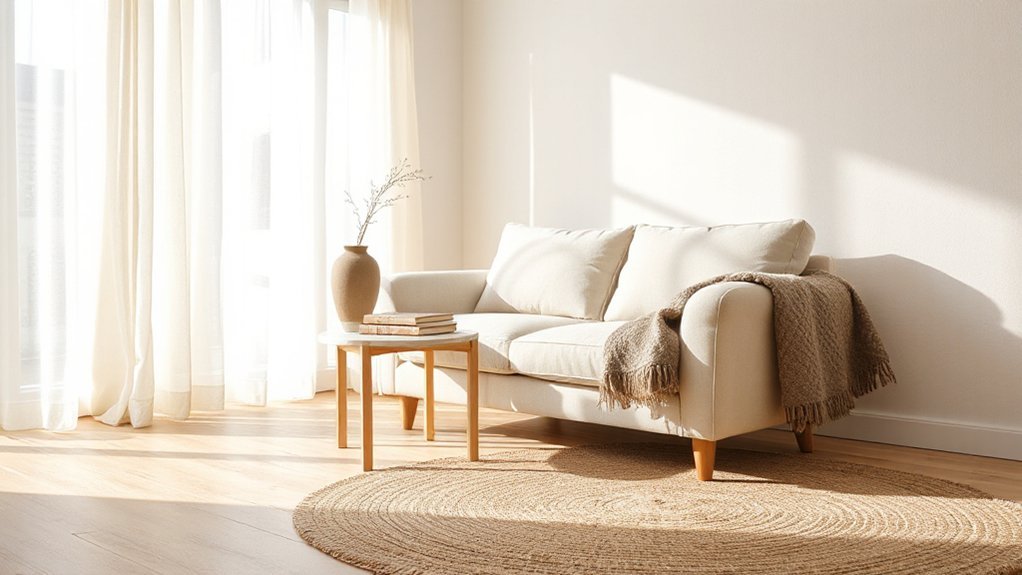
Although warm minimalism keeps the palette quiet, you’ll make it feel genuinely inviting by choosing materials that carry natural variation and a soft hand-feel: pale oak or ash with a matte finish, limestone or travertine-look porcelain with gentle movement, brushed brass rather than mirror chrome, and linen, wool, and boucle for upholstery and curtains. Prioritise Material warmth by mixing tactility with restraint, so each surface earns its place. In UK homes, you’ll notice the difference most in winter light, when sheen and texture can read cold.
- Choose timber with visible grain, not high-gloss lacquer
- Layer Textile textures: slubbed linen, felted wool, nubby boucle
- Balance stone or porcelain with warmer metals and leather accents
- Keep finishes matte or softly brushed to avoid glare
Furniture Shapes: Clean Lines, Soft Curves
Once you’ve set the mood with warm, tactile finishes, the silhouette of your furniture does the next layer of work: it keeps the room feeling pared back without turning it stark. Choose pieces with clean, legible profiles—slim arms, simple plinths, and unfussy joinery—to hold the minimalist line. Then soften the scheme with curves: a rounded coffee table, a barrel-back chair, an arched headboard. You’ll get ease and approachability without clutter.
Plan furnishing layouts around negative space; let circulation read clearly in a UK-sized flat. Keep focal pieces low and grounded to avoid visual noise. For colour coordination, stick to a tight palette and repeat tones across upholstery and timber, so the shapes—not contrast—do the talking.
Lighting for Warm Minimalism (Bulbs + Layers)
You’ll set the mood for warm minimalism by choosing warm bulb temperatures (around 2700K–3000K) that flatter natural materials and keep whites from looking harsh. Then you’ll build depth with layered light: ambient for overall glow, task for function, and accent to pick out texture and form. Get this balance right and your space feels calm, considered, and unmistakably UK-home cosy without visual clutter.
Choosing Warm Bulb Temperatures
If you want warm minimalism to feel intentional rather than yellow or flat, start with bulb temperature. In most UK homes, 2700K is your safe baseline for a cosy ambiance without making whites look nicotine-tinted. Drop to 2200K in evening-only spaces when you want an ambient glow with richer shadows. Go up to 3000K where you need clean colour reading, but keep it consistent within sightlines so rooms don’t clash.
- Choose 2700K for everyday living rooms and bedrooms
- Use 2200K for snug corners and late-night winding down
- Reserve 3000K for kitchens, utility rooms, and bathrooms
- Check CRI 90+ so timber, linen, and clay tones stay true
Layering Ambient Task Accent
Where does warm minimalism fall apart fastest? In flat, single-source lighting. You can buy the right warm bulbs, but without layers your room looks dull by day and harsh at night. Start with ambient: a dimmable ceiling fitting or wall lights that wash surfaces evenly. Add task light where you work—reading chair, kitchen prep, bedside—using focused beams and glare control. Finish with accent: a table lamp on a sideboard, picture light, or concealed LED to lift texture and timber. This is Color psychology in practice; warm pools of light make neutrals feel richer and skin tones kinder. Control each layer separately with dimmers and smart scenes for emotional comfort. In UK homes, favour plug-in lamps over rewiring.
Decor Rules: Fewer Pieces, More Meaning
Although warm minimalism favours restraint, it never settles for emptiness; it asks you to curate. You choose fewer objects, but each one must earn its place through proportion, craftsmanship, and story. Treat every surface like a gallery wall: negative space frames your Artistic expression, while Cultural influences quietly ground the scheme—think a hand-thrown British stoneware vessel, a reclaimed oak bowl, or a textile with heritage weaving.
- Limit yourself to one hero piece per sightline.
- Repeat materials (oak, wool, clay) to build cohesion.
- Edit by function: if it doesn’t serve, store or donate.
- Prefer tactile, imperfect finishes over high-gloss shine.
Keep groups odd-numbered, align heights, and leave breathing room. You’ll get calm, not coldness, and meaning without clutter.
Warm Minimalism by Room: Living, Bed, Kitchen
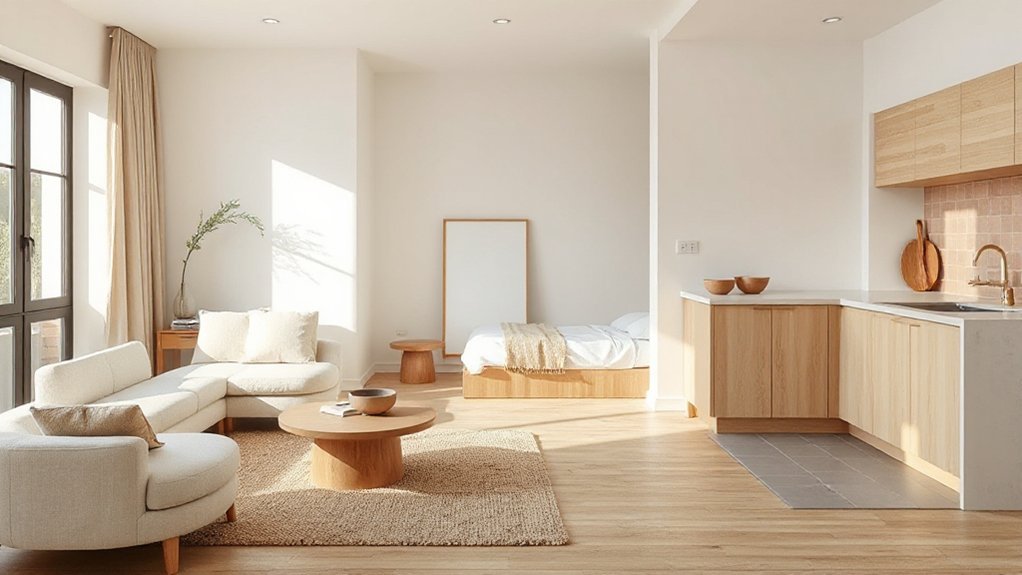
Once you’ve edited down to pieces with real purpose and presence, the next step is placing them with intent in each room. In the living room, anchor the scheme with a well-made sofa in wool or cotton-linen, a single statement rug, and warm, dimmable lighting; keep surfaces calm, then add Seasonal decor through one ceramic bowl of foliage or a switchable cushion cover. For Pet friendly design, choose tight weaves, washable throws, and closed storage to hide toys. In the bedroom, prioritise a pared-back palette, layered bedding, and one bedside sconce each; add texture with oak, boucle, or brushed brass. In the kitchen, keep worktops clear, use matching canisters, and display only everyday crockery on open shelves.
Edit Your Home: Keep, Store, Donate
Before you buy another storage box, edit what you already own with a simple keep–store–donate framework, so every item earns its place. Warm minimalism relies on disciplined Home organization: you curate, not cram. Work one zone at a time, and decide quickly—if it doesn’t support daily life or the mood you want, it goes.
- Keep pieces you use weekly and that suit your palette, scale, and light.
- Store seasonal or sentimental items in labelled lidded tubs (under-bed, loft, or cupboard).
- Donate duplicates and “almost-right” buys to British Heart Foundation, Shelter, or local charity shops.
- Reset surfaces: return the best objects, then leave breathing space.
These decluttering strategies protect your layout, improve flow, and make your textures—oak, linen, wool—feel intentional.
Warm Minimalism on a Budget: 7 Quick Wins
Seven small tweaks can make your home feel calmly curated without blowing your budget: focus on light, texture, and editing, then upgrade only what you touch every day. 1) Swap bulbs for warm 2700K LEDs and add a dimmer for instant calm. 2) Use colour psychology: paint one wall in oatmeal, clay, or soft sage; keep the rest crisp. 3) Layer one tactile throw and two cushion covers in wool or linen, not polyester. 4) Replace mixed hangers with one timber set; your wardrobe looks boutique. 5) Upgrade handles on cupboards with brushed brass or black—low cost, high impact. 6) Introduce one large plant in a simple terracotta pot. 7) Shop second-hand and refinish what you own; these sustainability practices keep the look authentic.
Warm Minimalism Mistakes (And Easy Fixes)
Although warm minimalism aims for calm, it can tip into bland, cold, or oddly cluttered if you get the balance wrong. The fix is usually a tighter edit, better texture, and more intentional colour—think well-judged neutrals, not “all beige.” In UK homes, light levels matter, so you must plan warmth with lamps, not just paint.
- Too many micro-decor items: group objects, then leave breathing space.
- Flat materials: add wool, linen, oak, and matte ceramics for depth.
- Ignoring Sustainable design: buy fewer, better pieces; prioritise repair and resale.
- Forgetting Cultural influences: display one meaningful artwork or heirloom, not a random trend.
Keep sightlines clear, choose one hero texture per room, and you’ll stay serene, not sterile.
Frequently Asked Questions
Is Warm Minimalism Compatible With Maximalist Art Collections?
Yes, you can pair warm minimalism with maximalist art collections if you curate ruthlessly. Use Art integration through intentional grouping, and maintain Color harmony via a tight palette, generous negative space, and considered lighting for UK homes.
How Do I Warm up a Minimalist Home With Pets and Kids?
Like a hearth in winter, you’ll warm a minimalist home by layering washable textiles, choosing a soft colour palette, and prioritising family-proof furniture selection. Add baskets, indoor plants, and framed kids’ art; keep pathways clear.
Can Warm Minimalism Work in a Rental With Strict Decor Rules?
Yes, it can. You’ll use rent friendly decor like peel-and-stick hooks, washable rugs, and layered lighting. You’ll add budget friendly warmth through textured throws and warm bulbs, keeping within UK tenancy rules.
What Are the Best Houseplants for a Warm Minimalist Look?
Test the theory that fewer, sculptural plants read warmer: choose rubber plant, snake plant, ZZ, and olive. Use disciplined plant placement—one per zone—and calm colour palette choices: matte terracotta, sand, and charcoal pots.
How Do I Maintain Warm Minimalism With ADHD or a Busy Schedule?
You’ll maintain warm minimalism by standardising colour palettes, scheduling 10-minute resets, and using decluttering strategies: one-touch filing, labelled baskets, and a weekly charity bag. Choose wipe-clean finishes, limit décor to three pieces, and automate shopping.
Conclusion
Warm minimalism isn’t about living with nothing; it’s about living with intention. When you edit, soften, and prioritise function, your home starts to breathe—calm, but never cold. I once helped a client in a London terrace clear a single overstuffed shelf; we donated 28 items, and the room instantly felt a size bigger. That’s the metaphor: remove the clutter, and the warmth arrives. Keep what works, store what supports, and let texture do the talking.