
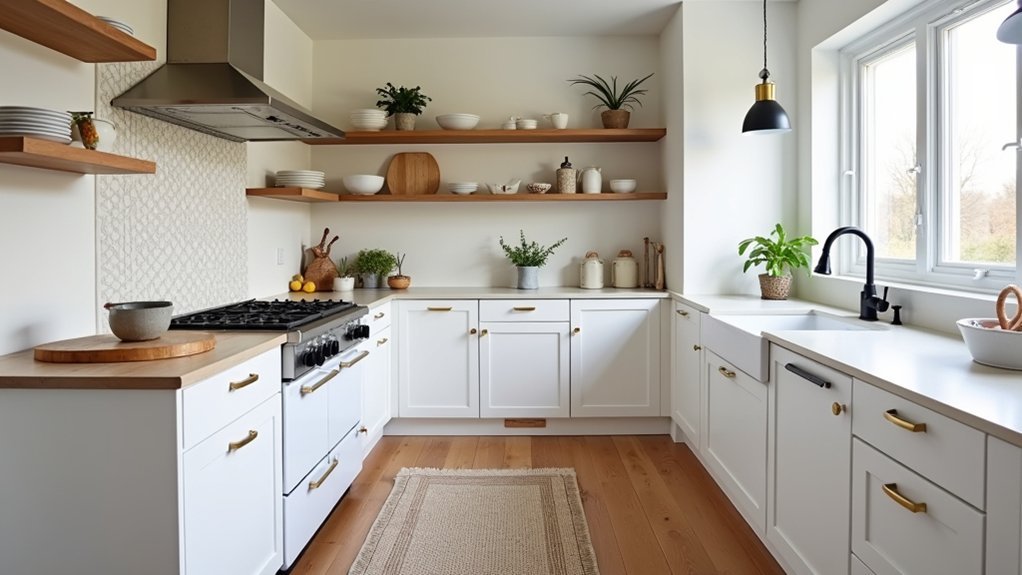
You can refresh your kitchen fast by changing cabinet colour, but you’ll want to weigh light, style, and resale before you commit. Bright whites keep things clean and modern, while warm creams and greiges add softness without feeling dated. If you need more contrast, try two-tone cabinets or go bold with navy, sage, or charcoal. The real difference shows up when you pair colour with counters, backsplash, and hardware—and that’s where choices start to narrow.
How to Pick a Cabinet Colour (Light, Style, Resale)
Whether you’re starting from scratch or repainting, you’ll pick the right cabinet colour faster if you weigh three things upfront: how much natural and artificial light your kitchen gets, the style you want to reinforce (modern, classic, rustic, or in-between), and how safe you need the choice to be for resale.
In low-light rooms, choose lighter midtones or warm neutrals so cabinets don’t read flat. In sunny spaces, you can go deeper without shrinking the room.
Match undertones to fixed finishes: pair warm cabinets with brass, wood, and creamy stone; pair cool shades with chrome, stainless, and crisp quartz.
For style, lean into contrast for modern, soft blends for classic, and earthy pigments for rustic.
If resale matters, avoid polarizing hues and prioritize timeless, widely appealing choices.
Bright White Cabinet Colour Ideas
Once you’ve considered your kitchen’s light, style, and resale goals, bright white cabinets often land as the cleanest, safest pick—and they still leave room for personality. They bounce light around small kitchens, sharpen sightlines in open plans, and make counters and hardware stand out.
To keep white from feeling flat, choose a finish that matches your lifestyle: satin hides fingerprints better, while high-gloss looks sleek and wipes clean fast. Pair bright white with bold contrast—matte black pulls, brushed brass, or stainless—so the cabinetry reads intentional, not builder-basic.
Add depth with a darker island, a graphic backsplash, or veined stone counters. If you’re repainting, ask for a durable cabinet enamel and a washable, scuff-resistant topcoat.
Warm Neutral Cabinet Colours (Cream to Greige)
If bright white feels a bit too crisp in your space, warm neutrals—ranging from creamy off-whites to soft greige—give you the same versatile backdrop with a gentler, more lived-in warmth.
Choose cream when you want a cozy, classic look that flatters wood floors and brass or black hardware. Reach for light taupe if your counters have beige or warm veining, since it keeps undertones aligned.
Go greige when you’re balancing warm and cool elements; it plays well with stainless appliances and concrete or quartz surfaces.
To keep cabinets from looking flat, pick a finish with subtle depth and sample it in both daylight and evening light. You’ll get softness without sacrificing a clean, updated feel.
Two-Tone Cabinet Colour Ideas That Add Contrast
Because a single cabinet colour can read flat in some kitchens, two-tone cabinetry adds instant contrast while still feeling cohesive. Start with a simple split: lighter uppers to keep sightlines open, deeper lowers to ground the room and hide scuffs.
You can also invert it on a tall pantry wall to create a focal point without new tile. Pair warm white uppers with charcoal, espresso, or forest green bases for a classic, high-contrast look.
If you want softer separation, combine greige with muted sage, or beige with clay. Tie the two colours together with one countertop, consistent hardware, and a repeat of each tone in textiles or decor.
Keep sheen consistent for a polished finish.
Blue Cabinet Colour Ideas (Navy, Denim, Sky)
Why do blue cabinets work in nearly any kitchen style? You get instant depth without the heaviness of black, and blue plays well with warm woods, crisp whites, and brushed metals.
Start with navy if you want a tailored, high-end look; it grounds open shelving and makes brass or chrome hardware pop. Choose denim blue for an easy, lived-in vibe that softens modern lines and hides everyday smudges better than pale neutrals.
Go sky blue when you want lightness; it brightens small kitchens and pairs cleanly with white tile, marble-look counters, or pale oak.
Keep your backsplash simple, then add texture through ribbed glass, matte pulls, or woven stools for cohesion. Add layered lighting for balance.
Green Cabinet Colour Ideas (Sage to Forest)
Green cabinets bring the same grounding effect you love in blue, but with a fresher, nature-forward warmth that suits everything from modern to farmhouse. If you want an easy, lived-in look, choose soft sage; it pairs effortlessly with white walls, warm wood, and brushed brass hardware.
For a crisp, updated vibe, try eucalyptus or minty green with light quartz and clean-lined pulls.
When you’re craving more depth without going heavy, olive green adds richness and hides daily smudges better than pale tones. You can also go forest green for a classic, tailored feel, especially with butcher block, terrazzo, or creamy subway tile.
Keep the palette balanced with warm neutrals, and add texture through rattan stools, linen shades, and leafy plants.
Dark Cabinet Colour Ideas (Charcoal to Black)
If you want instant drama without a full renovation, dark cabinets—from smoky charcoal to true black—deliver a sleek, high-contrast look that still feels timeless.
Charcoal reads softer than black, so you can anchor an open kitchen without making it feel heavy. Go near-black for a tailored, modern vibe that pairs well with stainless appliances and crisp white walls.
To keep the space bright, balance dark doors with light countertops, reflective backsplashes, and plenty of layered lighting.
Choose a matte finish for a velvety, design-forward feel, or a satin sheen if you want easier wipe-downs and subtle glow.
Add warm metallic hardware to prevent a cold look, and repeat the dark tone in small accents so the palette feels intentional.
Wood Cabinet Finishes (Oak, Walnut, Maple)
Looking for warmth and texture that never goes out of style? Wood cabinet finishes bring instant character and read as timeless rather than trendy. You can lean rustic, modern, or somewhere between just by choosing species and sheen.
Choose oak when you want pronounced grain and a relaxed, lived-in feel. Rift- or quarter-sawn oak looks cleaner and more linear, while a light stain keeps it airy.
Pick walnut for richer depth and a sleek, upscale vibe; its darker tone hides minor wear and adds drama without paint.
Go with maple for a smooth, subtle grain that feels crisp and contemporary; it takes stain evenly and also looks great in clear, natural finishes.
Whatever you choose, you’ll get warmth that lasts.
Pair Cabinet Colours With Counters, Backsplash, Hardware
Once you’ve picked a cabinet colour, build a cohesive palette by echoing its undertones in your counters, backsplash, and hardware.
If your cabinets read warm (creamy white, greige, honey wood), choose countertops with beige veining or warm quartz, and pick a backsplash with soft ivory or tan notes.
If they’re cool (crisp white, navy, sage-leaning gray), lean into marble-look surfaces with blue-gray veining and a backsplash with cooler whites.
Use hardware to sharpen the look: brushed brass warms and elevates; chrome and nickel keep things bright; matte black adds contrast.
Repeat one metal in faucets and lighting for unity, then add one accent finish only if the room feels flat.
Always test samples under your kitchen’s lighting.
Conclusion
You’ve got plenty of ways to refresh your kitchen just by changing cabinet colour. Choose bright white for a crisp, modern feel, or warm creams and greiges for cozy polish. Try two-tone cabinets to boost contrast and depth, or go bold with navy or forest green for a tailored look. If you love timeless character, lean into oak or walnut finishes. Finish strong by matching counters, backsplash, and hardware for a pulled-together result.