
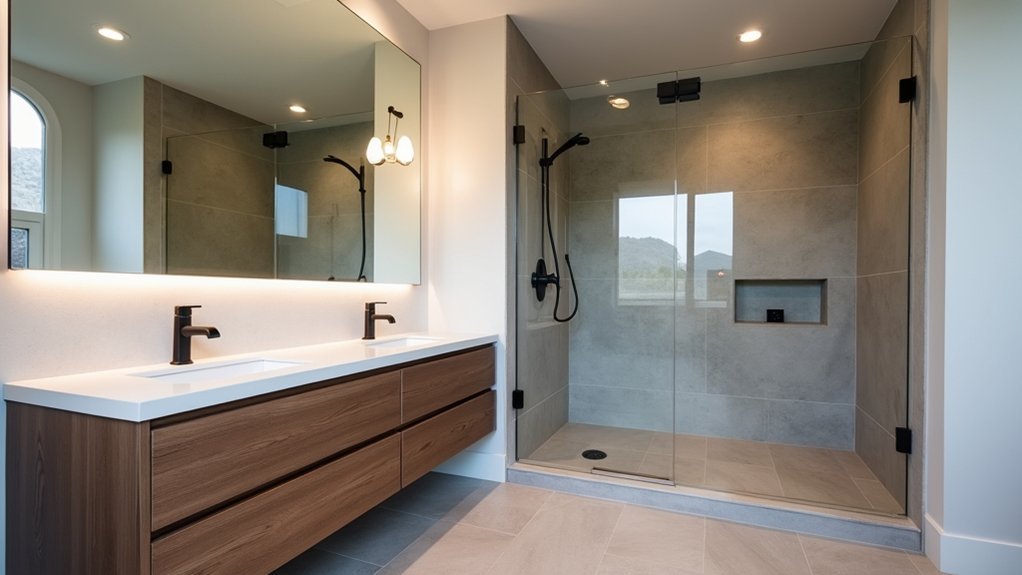
Your bathroom is a control panel for daily comfort, and every upgrade should earn its footprint. You’ll get the best ROI by pairing durable, modern surfaces like large-format porcelain or microcement with cohesive hardware finishes such as matte black or brushed nickel. Add layered LED lighting, swap in water-saving fixtures, and prioritize slip-resistant flooring to balance style with performance. The question is where your budget should hit first—and which quick wins you can knock out this weekend…
Key Takeaways
- Upgrade water-saving fixtures and valves first: 1.5 GPM showerheads, 0.5 GPM aerators, dual-flush toilets, and pressure-balanced controls.
- Use large-format, slip-resistant porcelain with rectified edges and epoxy or urethane grout to minimize grout lines and maintenance.
- Layer lighting with high-CRI dimmable LEDs: ambient ceiling, mirror task lights, and wet-rated shower or toe-kick accents for depth.
- Create a cohesive modern look by matching fixture finishes and swapping hardware, faucets, and shower trims for fast, high-impact refreshes.
- Add smarter storage with recessed medicine cabinets, wall-hung vanities, full-extension drawers, and vertical organizers to reduce countertop clutter.
Choose the Right Bathroom Updates for Your Budget
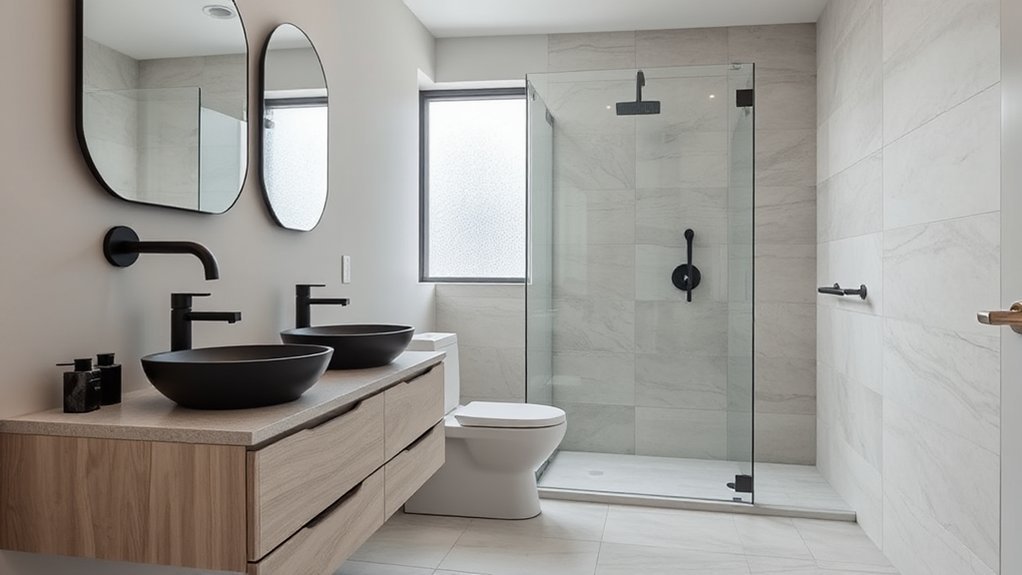
If you plan your bathroom updates around a clear budget, you’ll get the biggest visual and performance gains where they matter most. Start with Budget planning that ranks upgrades by ROI: water efficiency, durability, and resale appeal.
Allocate first to plumbing fixtures, ventilation, and waterproofing; these protect finishes and prevent callbacks. Next, target surfaces that read “new” fast—large-format porcelain, microcement, or matte wall tile—while keeping layout changes minimal to avoid re-roughing costs.
Use disciplined material selection: specify slip-resistant flooring (DCOF ≥0.42), sealed grout, and moisture-rated paint. Choose PVD-coated hardware and anti-scale shower glass for lower maintenance.
Price alternates by performance, not looks: acrylic solid-surface tops can mimic stone, and porcelain slabs can replace marble. Document allowances and lead times to avoid change orders.
High-Impact, Low-Effort Bathroom Updates (DIY-Friendly)
You can modernize your bathroom fast by swapping fixtures and hardware—think matte black, brushed nickel, or mixed-metal combos—and you’ll get an immediate visual upgrade without moving plumbing.
Replace your faucet, showerhead, towel bar, and cabinet pulls with matching finishes to tighten the design and improve performance.
Then add paint accents on the vanity, trim, or a single feature wall in moisture-rated paint to sharpen contrast and push a current, high-end look.
Swap Fixtures And Hardware
While a full remodel demands time and permits, swapping fixtures and hardware delivers an immediate, modern upgrade with basic tools and minimal downtime.
Start with the faucet: choose a WaterSense model in matte black, brushed nickel, or mixed metals for a current look and lower flow. Match it with a pressure-balanced shower valve trim, and verify rough-in compatibility before you buy.
Update towel bars, robe hooks, and toilet levers with decorative hardware that shares a consistent finish and geometry. If you like character, pair clean-lined sinks with Vintage fixtures in unlacquered brass or polished chrome.
Use a stud finder, add toggle anchors where needed, and seal escutcheons with silicone to prevent water intrusion. You’ll modernize function, reduce leaks, and sharpen the room’s visual rhythm fast.
Refresh With Paint Accents
Because paint changes light and contrast more than almost any other DIY move, a few targeted accents can modernize a bathroom in a single weekend.
Use Color psychology to steer perception: cool blue-gray lowers visual noise for spa calm, while warm clay or taupe adds softness under harsh LEDs.
Pick one focal plane for an accent wall—behind the vanity or tub—to create depth without shrinking the room.
Prep like a pro: degrease, scuff-glossy surfaces with 220-grit, then prime stains and bare drywall.
Choose a satin or semi-gloss bath formula with mildewcides for wipeable durability.
Sharpen lines with low-tack tape and pull it at 45° while paint is tacky.
Seal edges around trim with paintable caulk.
Lighting Upgrades That Look Good and Work
You’ll get a bathroom that looks current and performs better when you layer lighting—ambient for overall illumination, task lighting at the mirror, and a subtle accent to add depth.
You can upgrade the vanity zone with energy-efficient LED fixtures that deliver high CRI color accuracy and consistent output for grooming. Pair them with dimmers and warm-to-neutral color temperatures so you control glare, mood, and power use without sacrificing style.
Layered Lighting For Function
Even if your fixtures look high-end, a single overhead light can’t deliver the clarity, comfort, and mood a modern bathroom needs. Build a layered plan: start with ceiling ambient glow that fills shadows without harsh hotspots; use a dimmer to tune it from morning to wind-down.
Next, add task illumination at the mirror with vertical lights mounted at eye height on both sides to reduce under-eye shadows and improve color accuracy for grooming. If side mounting isn’t possible, use a wide, diffused bar above the mirror and push it forward to wash your face evenly.
Finish with accent lighting—recessed spots for niches, toe-kick strips for night navigation, or a shower downlight with a wet-rated trim. Control zones separately for flexibility.
Energy-Efficient Vanity Fixtures
While vanity lighting sets the tone for your whole bath, it also drives daily energy use, so upgrading to high-efficiency LED fixtures pays off fast without sacrificing style. Choose fixtures rated 90+ CRI and 2700–3000K for flattering skin tones, and aim for even vertical illumination beside the mirror to cut shadows. Look for dimmable drivers and flicker-free specs, especially if you shave or apply makeup.
Select housings made with Eco friendly materials like recycled aluminum or low-VOC finishes for cleaner indoor air. Add smart technology—occupancy sensors, daylight sensing, and app or voice dimming—so lights run only when needed. Pair LEDs with an Energy Star-rated mirror cabinet for integrated task lighting and tidy wiring.
Modern Fixture Swaps: Faucet, Showerhead, Hardware
If your bathroom still relies on dated chrome or mismatched metals, a modern fixture swap delivers the fastest visual upgrade with the least disruption. Start by picking one finish family—matte black, brushed nickel, or warm brass hardware—and apply it consistently across faucet, shower trim, and towel bars.
Choose faucets with ceramic-disc cartridges and aerators rated 1.2–1.5 GPM for clean flow and longevity. Upgrade your showerhead to a pressure-compensating model with 1.8 GPM output and easy-clean nozzles to resist scale.
If you’re keeping Vintage fixtures, match undertones with adapters or bridge fittings instead of forcing incompatible threads. Confirm rough-in compatibility, measure spout reach, and use PTFE tape plus new supply lines for leak-free installs.
Storage Upgrades to Cut Bathroom Clutter
Because countertop sprawl makes a bathroom feel smaller and harder to clean, targeted storage upgrades give you the biggest day-to-day payoff without touching plumbing. Start with a mirrored medicine cabinet that’s recessed for a flush look and adjustable shelves that fit tall bottles. Add wall-mounted ledges or slim picture shelves near the sink for daily items, then corral them in matching trays for fast Clutter control.
Use vertical zones: install behind-door organizers, a towel bar with integrated hooks, and stackable bins inside a linen closet. For wet areas, choose rustproof corner caddies and adhesive rails rated for steam. Swap in labeled, translucent containers so you can inventory at a glance. Creative storage keeps surfaces clear, speeds wipe-downs, and supports a cleaner modern aesthetic.
Vanity Upgrades That Free Up Space
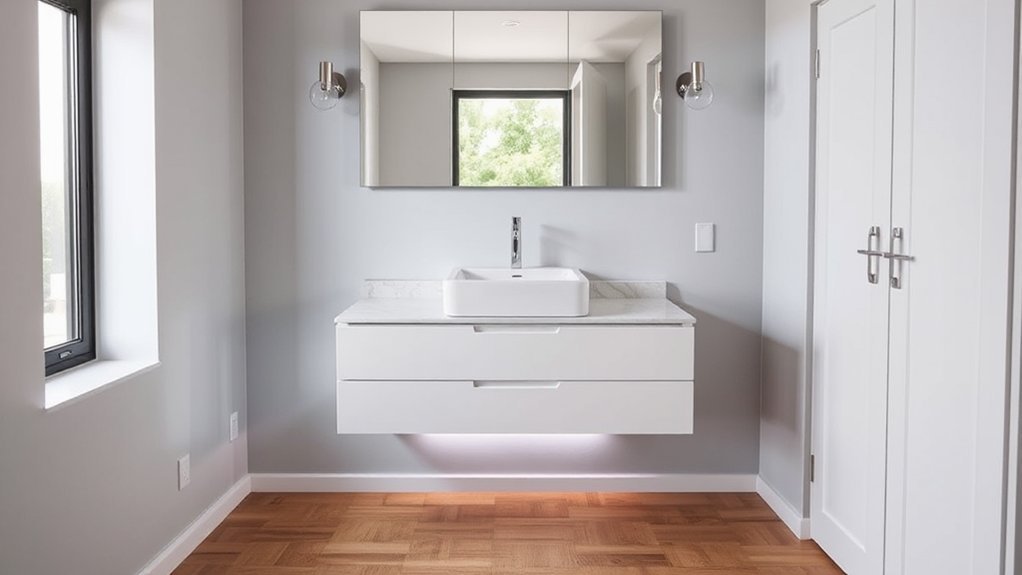
Even when you don’t move plumbing, upgrading the vanity can reclaim floor area and make your layout feel intentionally modern. Swap a bulky cabinet for a wall-hung vanity with a recessed toe-kick; you’ll gain visual clearance and easier cleaning.
Choose a compact-depth box (18–20 inches) and a rectangular basin to keep counter utility without crowding circulation.
For Vanity organization, specify full-extension drawers with dividers instead of doors, so every inch stays accessible. Add under sink solutions like a U-shaped drawer, slide-out shelves around the trap, and a pull-out waste bin to eliminate dead zones.
If you need two users, pick a double-drawer stack with one centered sink rather than a double basin. Finish with integrated power and shallow medicine-storage.
Spa-Style Shower and Tub Upgrades
Once your vanity footprint feels clean and efficient, the shower or tub becomes the next high-impact zone for a modern, spa-leaning upgrade.
Start with a thermostatic mixing valve and pressure-balancing control so temperature stays locked even when other fixtures run.
Add a rainfall shower on a ceiling drop for full-body coverage, then layer a handheld on a slide bar for rinse-down, cleaning, and accessibility.
If you want true wellness, spec Luxury steam with a properly sized generator, insulated supply line, and a digital control mounted outside the spray path.
For tubs, a freestanding soaking model with a deep well beats jetted systems for low-maintenance quiet.
Finish with a linear drain for faster evacuation and a frameless enclosure to keep sightlines open.
Tile and Surface Upgrades: Floors, Walls, Grout, Tops
After you’ve dialed in your wet-zone fixtures, upgrade your tile and surfaces to lock in a modern look and reduce maintenance. Go large-format porcelain on floors and shower walls to cut grout lines and visually widen the room.
Add slip resistance with matte finishes or textured surfaces on the shower pan and main walkway. Use rectified edges for tighter joints, then specify high-performance, stain-resistant grout (epoxy or urethane) in a tone that matches the tile for a seamless field.
For a focal zone, install Marble mosaics on a niche back, bench face, or feature band, but keep it sealed and away from heavy staining areas.
On tops, choose quartz or sintered stone for durability and low porosity. Match edge profiles to your hardware geometry.
Paint, Finishes, and Water-Saving Upgrades That Last
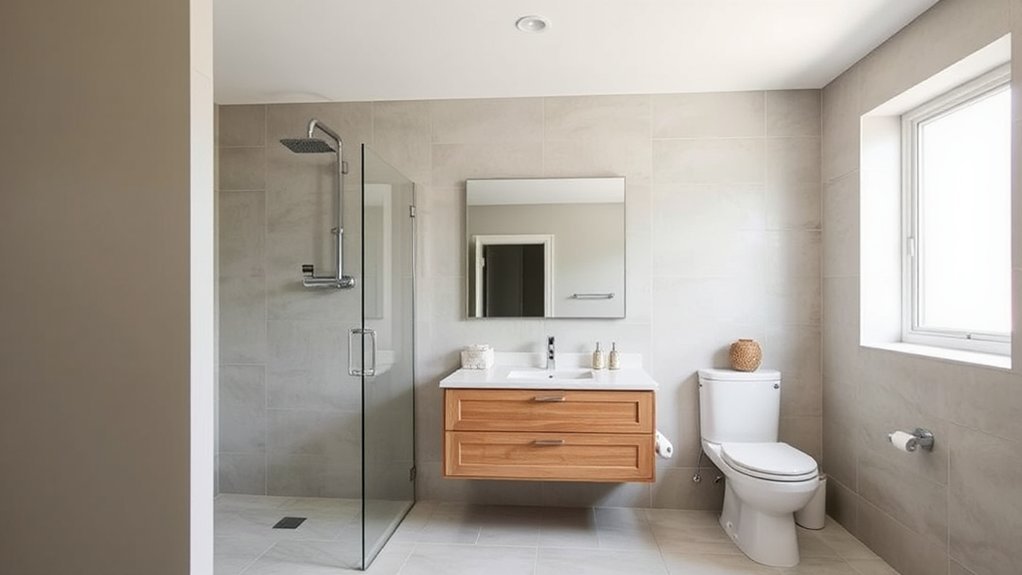
Tile and tops set the visual field; paint, metal finishes, and water-saving specs lock in durability and day-to-day performance. Specify Eco friendly paints with low-VOC, scrubbable acrylic-alkyd or bath-rated epoxy for splash zones, and prime stains to stop tannin bleed. Keep ceilings in mildew-resistant matte to hide steam marks while limiting glare.
For hardware, commit to sustainable finishes like PVD-coated chrome, brushed nickel, or matte black; they resist fingerprints and won’t pit under cleaners. Match sheen across faucets, shower trims, and accessories to avoid visual noise.
Upgrade to a 1.5 gpm showerhead, 0.5 gpm aerators, and a dual-flush or 1.28 gpf toilet; you’ll cut water use without sacrificing spray pattern or bowl rinse. Choose ceramic cartridges and serviceable parts for longevity.
Frequently Asked Questions
Do I Need a Permit for Bathroom Renovations in My Area?
You’ll likely need a permit if you change plumbing, electrical, walls, or ventilation; cosmetic swaps often don’t. Check local Permit requirements and renovation regulations with your building department, and confirm contractor licensing, inspections, and timelines.
How Long Does a Typical Bathroom Remodel Take From Start to Finish?
A typical bathroom remodel takes 3–8 weeks from start to finish. You’ll move faster with prefab shower fixtures and stocked tile. Custom bathroom lighting, permits, and inspections add time. Plan for punch-list delays.
What Bathroom Updates Increase Home Resale Value the Most?
You’ll boost resale most with a midrange refresh: upgrade to luxury fixtures, add smart technology, replace dated vanity/countertops, improve lighting and ventilation, and retile wet zones. You’ll prioritize neutral finishes and water-efficient hardware.
How Do I Choose a Contractor and Avoid Common Renovation Scams?
Start with contractor vetting: verify license, insurance, and permits; check recent references and lien waivers. For scam prevention, use itemized contracts, milestone payments, no large deposits, documented change orders, and escrow if possible.
What Are the Best Accessibility Upgrades for Aging-In-Place Bathrooms?
Want safety without sacrificing style? Add grab bars anchored into studs, choose curbless walk in showers with linear drains, install non-slip flooring, raise comfort-height toilets, widen doorways, and use lever faucets plus brighter layered lighting. You’ll reduce falls.
Conclusion
You don’t need a full gut remodel to make your bathroom feel like a modern suite. Start where ROI is loudest: swap to water-saving fixtures, cohesive matte finishes, and layered LED lighting that cuts shadows like a clean blade. Add smart storage and a floating vanity to lift the room visually. Upgrade surfaces with large-format porcelain or microcement for fewer grout lines and easier maintenance. Finish with slip-resistant flooring—quiet safety underfoot.