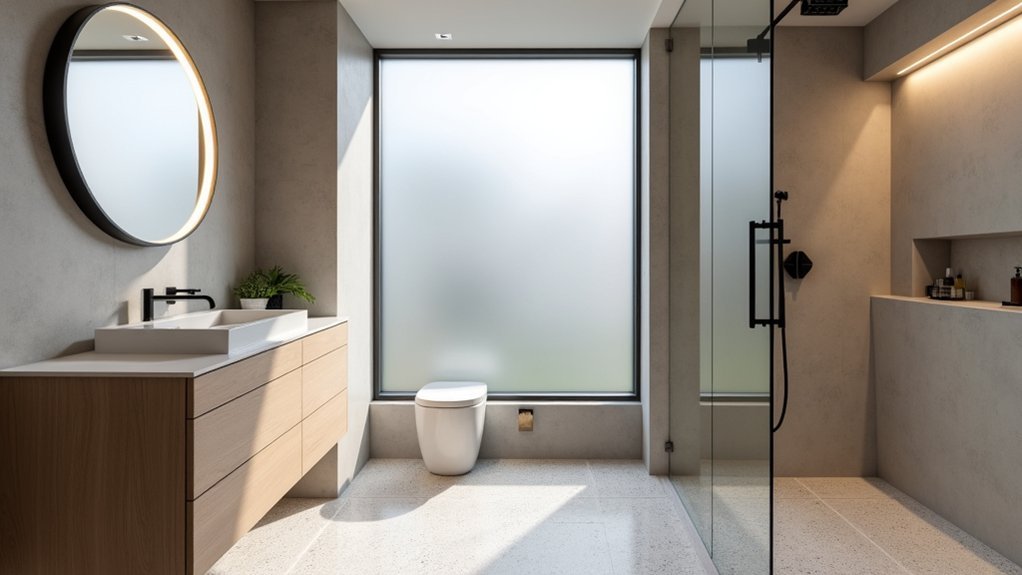
You’ll get a modern 2025 bathroom faster if you set a clear budget, lock your layout, and plan plumbing and electrical before you fall for finishes. Then you can commit to durable surfaces like large-format, slip-resistant porcelain tile and quartz or sintered stone tops. Keep the look cohesive with one primary metal finish, streamlined fixtures, layered lighting, and storage that disappears. The key move that separates “updated” from truly modern is…
Key Takeaways
- Set a clear budget with 10–15% contingency, finalize a cohesive palette early, and align scope with your lighting plan.
- Keep layouts efficient; confirm plumbing, venting, clearances, and a power plan before choosing fixtures or tile.
- Use modern, durable surfaces: large-format matte porcelain tile, stain-resistant grout, and mold-resistant satin paint for easy upkeep.
- Choose streamlined fixtures and limit metals: one dominant finish for 70–80% plus one accent, repeating each finish at least twice.
- Add hidden storage and subtle tech: recessed medicine cabinet, shower niches, quiet humidity-sensing fan, high-CRI dimmable lighting, and optional heated floors.
Set Your Modern Bathroom Remodel Budget and Scope
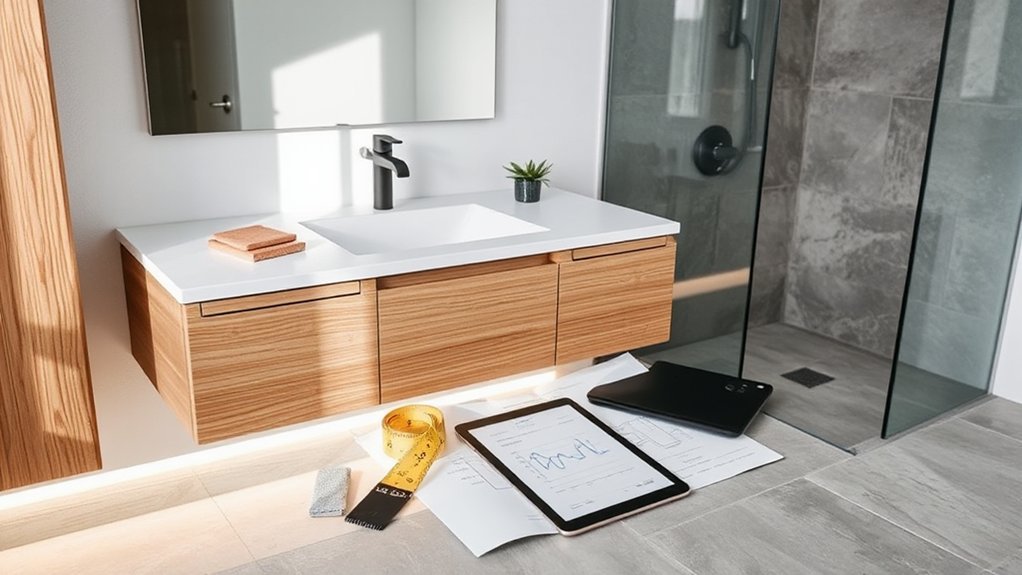
Before you pick tile, fixtures, or paint, lock in your modern bathroom remodel budget and scope so every decision stays on track. Start by pricing your must-haves versus nice-to-haves: vanity storage, shower upgrades, heated floors, and smart ventilation. Assign a realistic range, then reserve 10–15% for contingencies so surprises don’t derail the plan.
Define what stays and what changes—demo level, surface updates, and whether you’re revitalizing or fully replacing. Tie your scope to a clear Lighting design target (layered ambient, task, and accent) because it affects fixture counts and costs.
Choose a cohesive Color palette early to prevent expensive last-minute swaps and to keep materials aligned with 2025’s warm neutrals and muted greens.
Plan Layout, Plumbing, and Electrical Before Finishes
Once you’ve set your budget, map the layout and lock your plumbing and electrical runs before you fall in love with finishes. Start by confirming clearances: shower door swing, toilet offsets, vanity depth, and accessible pathways. If you’re moving fixtures, price rough-in changes early and verify venting, drain slope, and shutoff locations with your plumber.
Next, build a power plan around how you’ll use the room. Place GFCI outlets at the vanity, add a dedicated circuit for heated floors or a bidet seat, and reserve space for a recessed medicine cabinet.
For 2025 Lighting design, layer task lighting at eye level, add a wet-rated shower light, and prewire for dimmers and smart controls.
Finally, align niches, drain placement, and grout lines so Tile patterns read intentional, not accidental.
Choose Durable Modern Surfaces (Tile, Tops, Paint)
After you’ve locked the layout and rough-ins, choose surfaces that look current but won’t punish you for daily steam, splashes, and cleaning.
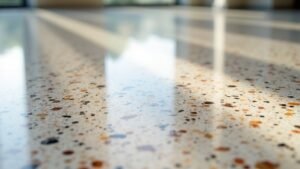
For tile, go porcelain with a matte or micro-textured finish for slip resistance, and use larger formats to cut grout lines; specify a stain-resistant grout.
Add a subtle 2025 touch with vertical-stacked or ribbed tile in the shower niche.
For counters, pick quartz or sintered stone for low maintenance and heat resistance, and consider Eco friendly materials like recycled-glass tops for a bolder look.
On walls and ceilings, use a bathroom-rated, mold-resistant satin paint; keep sheen consistent to avoid patchy reflections under statement lighting.
Seal porous stone if you insist on it.
Pick Modern Fixtures and Mixed-Metal Finishes That Match
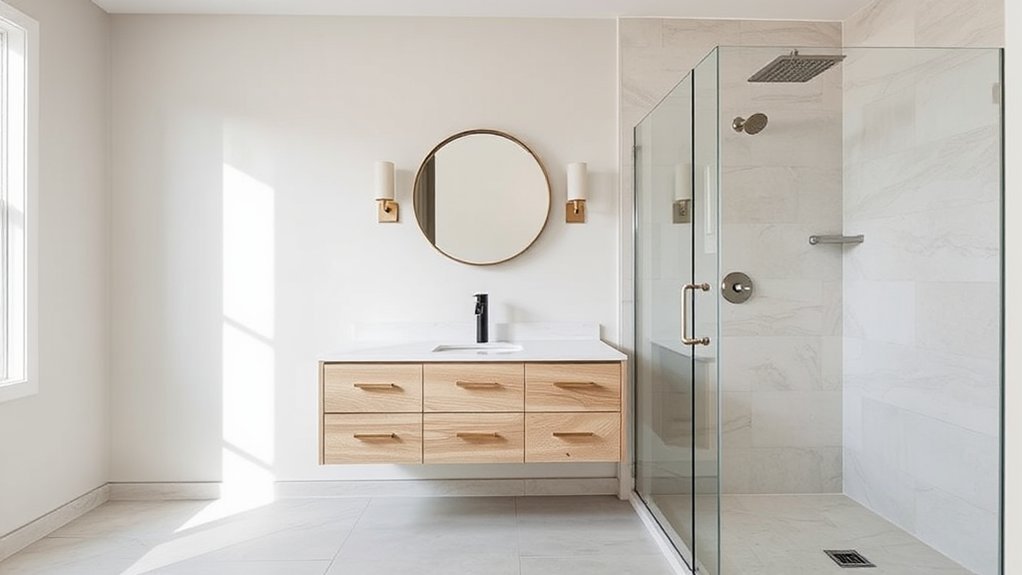
If you want your remodel to feel current without chasing fads, choose fixtures with clean profiles and then commit to a tight, intentional metal mix.
For fixture selection, favor slim lever handles, squared spouts, and low-profile shower trims that echo your vanity lines. Match the faucet’s geometry to your mirror frame and lighting so nothing looks accidental.
For metal finishes, pick a dominant tone (brushed nickel, matte black, or champagne bronze) for 70–80% of pieces, then add one accent finish for contrast. Keep sheen consistent: pair matte with matte, brushed with brushed.
Repeat each finish at least twice—faucet and shower, or light and hardware—to create rhythm. Avoid mixing more than two metals unless your room is large. Test samples under your real lighting.
Build In Hidden Storage, Comfort, and Subtle Tech
Because a bathroom feels calmer when every daily-use item has a place, build storage and upgrades into the bones of the room instead of relying on countertop organizers. Recess a mirrored medicine cabinet, add a toe-kick drawer under the vanity, and specify Hidden compartments for hair tools, extra rolls, and cleaning supplies.
Use niche shelving in the shower, but keep lines crisp with flush trims and matching grout.
For comfort, choose a warming towel bar, radiant floor heat, and a quiet fan with humidity sensing.
Keep Tech integrations subtle: dimmable, high-CRI lighting on motion at night; a concealed outlet in a drawer for charging; and a smart valve that remembers your shower temperature.
You’ll get a spa-clean look without sacrificing daily convenience, ever.
Frequently Asked Questions
What Modern Bathroom Upgrades Add the Most Resale Value in 2025?
You’ll add the most resale value with luxury fixtures and smart technology: frameless glass showers, wall-hung vanities, radiant heated floors, high-efficiency toilets, touchless faucets, smart mirrors, and layered LED lighting with dimmers. Keep finishes cohesive, clean.
Do I Need Permits or Inspections for a Bathroom Remodel?
Yes—you’ll often need permits, yet cosmetic swaps usually don’t. Check local Permit requirements for plumbing, electrical, or layout changes, then plan for Inspection processes at rough-in and final stages to avoid delays.
How Long Does a Typical Modern Bathroom Remodel Take From Start to Finish?
You’ll typically finish a modern bathroom remodel in 3–8 weeks, depending on demo, plumbing, and tile. You’ll speed things up by ordering bathroom fixtures early and locking lighting design before rough-in, inspections.
Should I Hire a Designer, or Can I Plan a Modern Look Myself?
You can plan a modern look yourself if DIY feasibility fits your skills and time, but hire a designer for layout changes, custom millwork, or lighting plans. Use professional assistance for permits, waterproofing, and cohesive finishes.
What Should I Do to Protect the Rest of My Home During Remodeling?
Protect your home by setting up dust containment with zip walls, sealing vents, and running a HEPA air scrubber. Use floor protection like ram board and tacky mats. Stage a clean zone, and schedule daily cleanup.
Conclusion
You’re not just remodeling a bathroom—you’re tuning a modern instrument. Set your budget and scope first, then lock in layout, plumbing, and electrical so the pretty choices don’t backfire. Choose durable, slip-resistant porcelain, quartz or sintered stone, and moisture-smart paint for a clean, lasting shell. Keep fixtures minimal, align metals like matte black or brushed nickel, and layer lighting. Hide storage in niches and built-ins, and tuck smart tech out of sight.