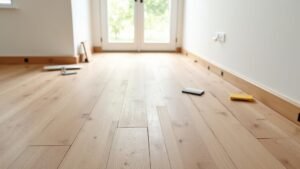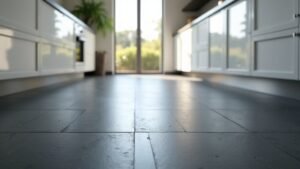
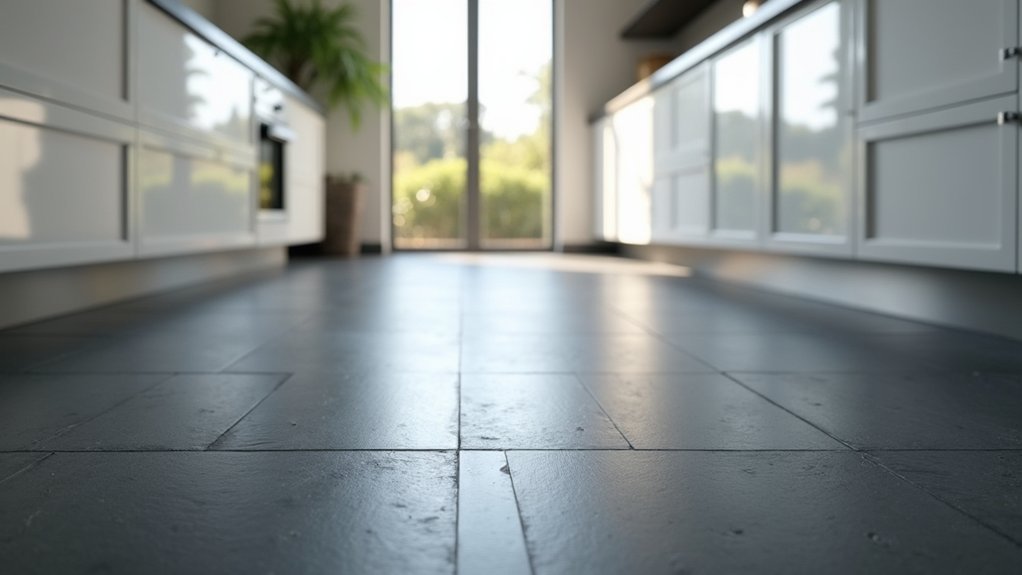
Slate floors can be a great long-term choice if you want natural texture, strong scratch resistance, and solid performance in busy areas like entryways, kitchens, mudrooms, and laundry rooms. You’ll need a quality install on a flat subfloor, plus waterproof grout and a slip-resistant finish in wet zones. Plan to seal regularly to prevent stains and moisture darkening, and protect edges from impacts. Up next, you’ll see where slate works best, costs, and care tips.
Key Takeaways
- Slate floors are durable and handle heavy foot traffic for decades when properly installed, sealed, and maintained.
- Natural color variation and textured finishes add character, hide minor scuffs, and suit modern, rustic, or traditional styles.
- They require periodic sealing and pH-neutral cleaning to prevent stains, moisture intrusion, and blotchy or slick surfaces.
- Slip resistance depends on finish; choose clefted or brushed slate for wet areas and avoid polished slate in showers.
- Installation is heavier, more complex, and costlier due to subfloor prep, cutting, and breakage waste; outdoor use needs freeze-thaw-rated slate.
Are Slate Floors Right for Your Home and Budget?
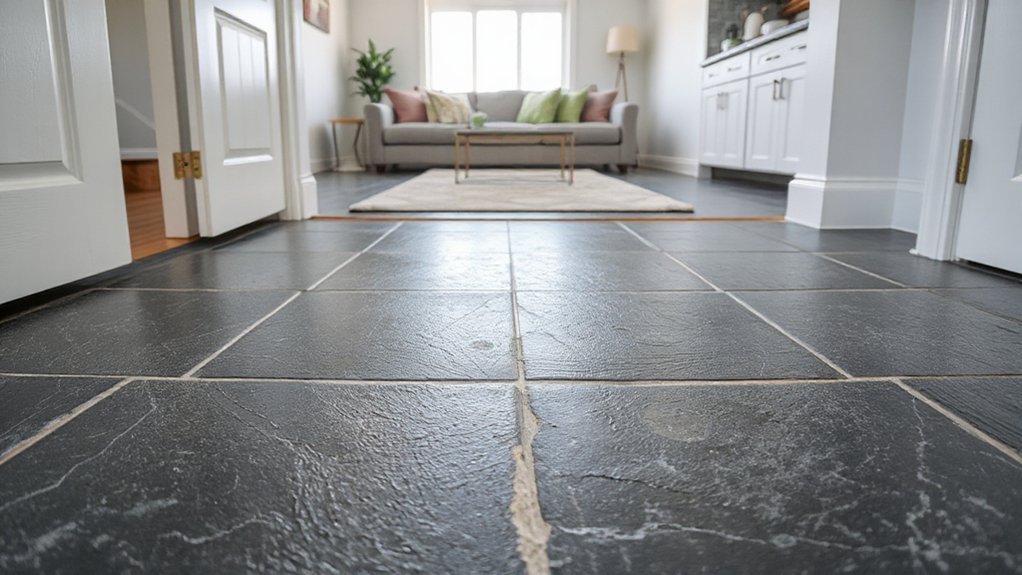
If you’re considering slate, start by weighing how you live and what you can realistically spend, because this stone performs best when your expectations match its strengths and upkeep. Choose slate if you want a long-term surface and you’re comfortable budgeting for quality installation, subfloor prep, and periodic sealing. If you track in grit, plan on rugs and frequent sweeping to limit surface wear.
Match the product to the room. In kitchens, entries, and baths, you’ll need a slip-resistant finish and a waterproof grout/sealer plan. In bedrooms, you’ll likely add area rugs for warmth and noise control. For Eco friendly options, specify locally sourced or reclaimed slate and low-VOC sealers. Slate’s aesthetic versatility lets you select cleft or honed textures and varied color blends.
What Are the Biggest Slate Flooring Pros?
Because slate forms under intense heat and pressure, it delivers a rare combination of toughness and character that makes it a standout flooring choice. You get Natural aesthetics that don’t look manufactured, plus Unique textures that add grip and visual depth. Slate’s density helps it handle daily traffic, and its color range lets you match modern, rustic, or traditional rooms without forcing the palette. When you seal it properly, you’ll also simplify routine cleaning and keep the surface looking sharp. Key advantages you can count on include:
- Long-lasting durability in busy areas
- Distinct veining and tonal variation for one-of-a-kind floors
- Good thermal mass that pairs well with radiant heat
- Strong indoor/outdoor versatility for consistent design continuity
What Are the Most Common Slate Flooring Cons?
Slate floors aren’t bulletproof, and you can chip edges or corners if you drop heavy items or drag furniture across them. You’ll also need to seal slate on a regular schedule to prevent staining and moisture intrusion, especially in kitchens, baths, and entryways. If you don’t plan for these maintenance and durability realities upfront, slate can cost you more in repairs and upkeep than you expect.
Prone To Chipping
Although slate ranks as a durable stone, it’s still prone to chipping—one of the most common complaints homeowners run into with slate flooring. Your main risk is edge damage: corners and cleft surfaces can fracture when heavy objects drop or when furniture legs drag. Chipping vulnerability rises with softer slate varieties, thinner tiles, and uneven subfloors that create stress points. Even with solid Impact resistance, slate can’t flex like vinyl, so sudden point loads leave a mark.
To reduce chips, you should:
- Choose thicker tiles and denser slate grades
- Use felt pads and wide, non-metal furniture glides
- Keep a doormat at entries to limit grit abrasion
- Repair loose tiles promptly to prevent shifting and cracks
Ongoing Sealing Needs
Even if you choose a high-quality tile, you’ll still need to seal slate flooring on a regular schedule to prevent staining and moisture intrusion. Slate is porous, and unsealed surfaces can darken from spills, grout haze, and tracked-in oils. Your sealing frequency depends on the slate’s density, finish, and traffic: expect annual resealing in busy kitchens and entries, and every 2–3 years in low-use rooms.
You’ll also face maintenance challenges during prep. You must deep-clean, let the floor dry fully, and apply an even coat without lap marks. Missed spots can leave blotchy absorption, while over-application can create a slick film. Plan for downtime, ventilation, and periodic water-drop tests to confirm protection.
How Durable Is Slate Flooring in Daily Use?
In daily use, you’ll notice slate holds up well because its dense surface resists most scratches from shoes, pet claws, and sliding chairs. Under heavy foot traffic, properly installed and sealed slate can last for decades without wearing through like softer flooring. Your results hinge on the slate’s grade and cleft, plus consistent sealing and prompt grit cleanup to prevent abrasion.
Resistance To Scratches
Because slate forms under intense heat and pressure, it handles everyday abrasion better than many common floor materials. Its naturally cleft surface disguises light scuffs, and denser grades resist grit that would quickly mar softer stones or wood finishes. Still, you’ll get the best scratch performance when you choose quality tile and maintain it correctly.
- Use entry mats and felt pads to stop sand from acting like sandpaper.
- Sweep often; fine debris causes most visible scratching in kitchens and halls.
- Apply a penetrating sealer so micro-scratches don’t hold dirt and darken.
- Expect Color variations to help camouflage minor marks, but confirm samples.
Watch for installation challenges: uneven subfloors can create lippage, making edges more prone to chipping when dragged furniture catches.
Longevity Under Heavy Traffic
While high-traffic floors punish weak materials fast, properly selected and installed slate holds up for decades in busy kitchens, entryways, and commercial-style use. Choose dense, low-cleft slate and a suitable thickness, and you’ll resist chipping from dropped pans and constant footfall. Proper substrate prep and flexible thinset prevent cracking when your home shifts slightly. Keep grout joints sealed and clean, because grit acts like sandpaper under shoes. Reseal on schedule to block staining and protect the surface from deicing salts near exterior doors. If one tile ever fails, you can replace it without redoing the whole floor. Slate also supports Eco friendly materials goals, and its natural color range delivers aesthetic versatility that hides everyday wear and suits many design styles.
Are Slate Floors Slippery When Wet?
How slippery slate feels when it’s wet depends less on the stone itself and more on its surface finish, texture, and how you maintain it. In Wet conditions, a clefted, naturally textured slate usually delivers better slip resistance than honed or polished slate, which can feel slick underfoot. Your risk also changes with location, footwear, and how fast water is carried across the surface.
- Choose clefted or brushed finishes for higher traction
- Avoid polished slate in showers, entries, and pool-adjacent areas
- Use mats and runners where splashes and drips are routine
- Address puddles quickly, especially on smooth-cut tiles
If you’re specifying slate for bathrooms or mudrooms, prioritize texture and ask for slip-rating documentation before you buy.
How Do You Clean and Seal Slate Floors?
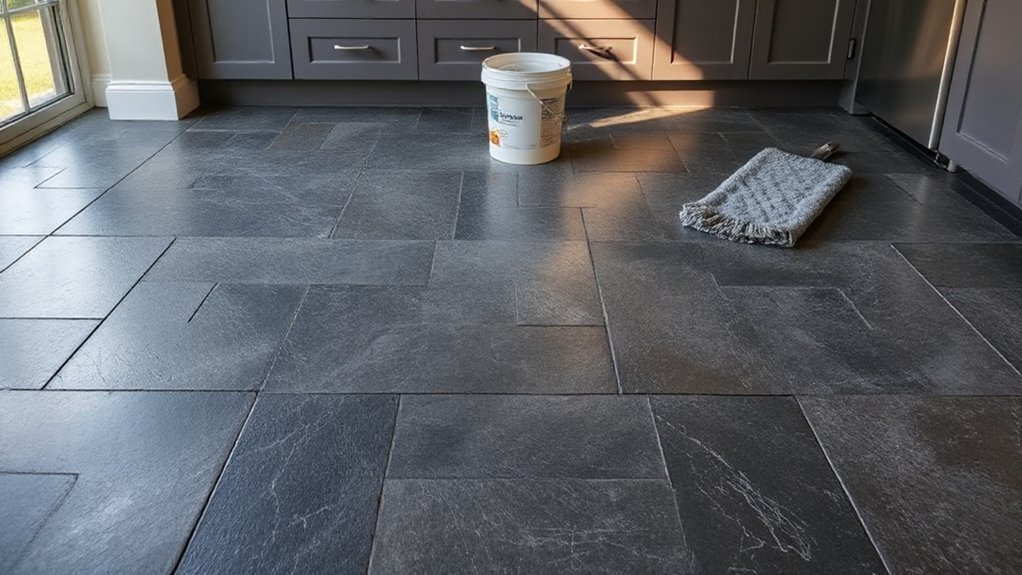
Even if slate looks rugged and low-maintenance, you’ll get the best performance by cleaning it with pH-neutral products and sealing it on a schedule that matches the stone’s porosity and the room’s traffic. Sweep or vacuum grit daily so it doesn’t scratch, then damp-mop with warm water and a pH-neutral stone cleaner; skip vinegar, bleach, and ammonia. For stain removal, blot fast, apply a stone-safe poultice, and rinse thoroughly. Let the floor dry completely before you seal.
Choose a penetrating sealer for natural, matte slate or an enhancing sealer if you want deeper color. Apply thin, even coats with a microfiber pad, wipe off excess, and let it cure per label. Re-seal when water stops beading.
How Much Does Slate Flooring Cost Installed?
Installed slate flooring typically runs $12–$30 per square foot, with most homeowners landing in the mid-teens to low twenties depending on the stone grade and the complexity of the layout. You’ll pay more for premium, color-consistent tiles that deliver luxury aesthetics, and less for cleft, variable pieces that take extra sorting. Labor often equals or exceeds material because slate is heavy, brittle at edges, and demands a flat subfloor—installation complexity drives real cost. Budget for:
- Material grade, thickness, and finish
- Subfloor prep (leveling, underlayment, crack isolation)
- Cut labor for borders, patterns, and tight rooms
- Setting materials, grout, sealing, and cleanup
Ask for an itemized bid and add 10% waste for breakage and offcuts.
Where Do Slate Floors Work Best (and Where Not)?
Once you’ve priced slate, the next decision is whether it fits the way you’ll actually use the space. Slate shines where you need traction, moisture resistance, and low-fuss cleanup—think mudrooms, laundry rooms, entryways, and kitchens. In bathrooms, it works well if you seal it properly and keep grout maintained. You’ll also get strong Indoor elegance in foyers, dining rooms, and open-plan living areas when you choose a honed finish and consistent color range.
For Outdoor durability, slate performs on covered patios, walkways, and stoops in mild climates when you pick freeze-thaw-rated stone. Avoid slate in unconditioned sunrooms, harsh freeze zones, or high-salt areas unless the product is specifically rated. Skip it if you want soft underfoot comfort.
Frequently Asked Questions
Can Slate Flooring Be Installed Over Radiant Floor Heating Systems?
Yes, you can install slate over radiant systems if you use proper underfloor heating-rated membranes and thinset. Slate’s thermal conductivity transfers heat efficiently, but you’ll need expansion joints, controlled ramp-up, and manufacturer-approved insulation.
What Is the Best Grout Color for Multi-Toned Slate Tiles?
Choose a medium-gray or charcoal grout for multi-toned slate; it balances hues without competing. For color contrast, go lighter or darker intentionally. Always prioritize grout sealing to prevent staining and maintain consistent appearance.
Can You Refinish or Re-Hone Slate Floors if They Get Scratched?
Yes—you can refinish or re-hone scratched slate. Like smoothing a weathered river stone, you’ll use gentle abrasion for scratch removal, then seal. For deeper damage, you’ll hire pros for Slate polishing and re-honing.
Does Slate Flooring Fade or Change Color in Direct Sunlight?
Yes, slate can fade or show color change with prolonged sunlight exposure. You’ll notice it most on darker tiles. You can reduce shifting by using UV-blocking window films, rugs, and consistent sealing. Rotate furnishings regularly.
Is Slate Considered Eco-Friendly Compared to Other Natural Stone Floors?
Yes, you’ll often find slate more eco-friendly when you prioritize Sustainable sourcing and local quarries. You’ll gain Eco conscious benefits from durability and low VOC finishes, but you must verify quarry practices and transport impacts.
Conclusion
If you want a floor that can take daily life like Achilles took the field, slate delivers: dense, hard, and naturally textured. Still, you can’t ignore its weak spots—porosity, weight, and the need for sealing. When it’s wet, you’ll need the right finish and mats to keep footing sure. Budget for material and skilled installation, then plan simple sweeping and pH-neutral cleaning. Choose slate where durability wins.