
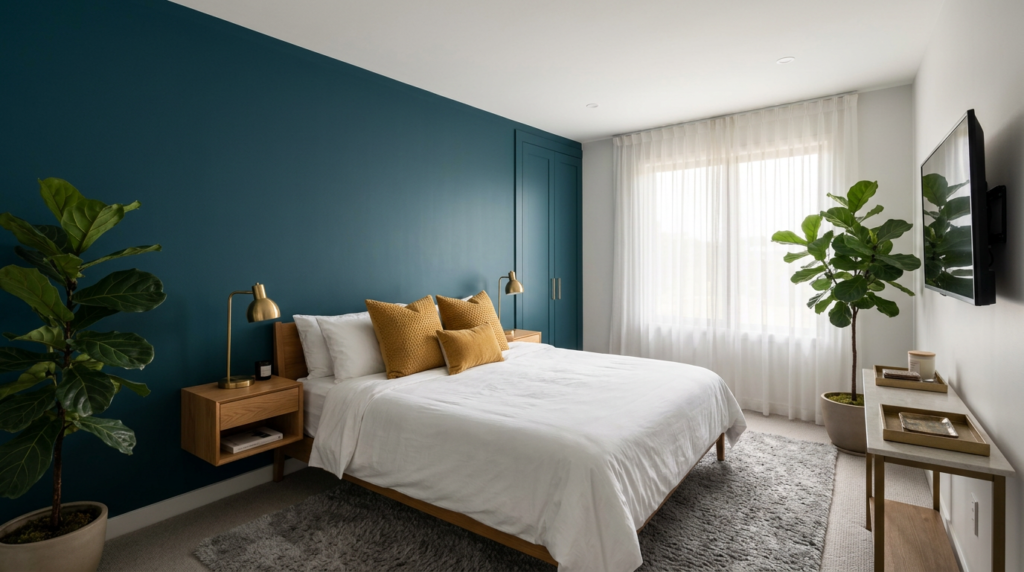
You can make a bedroom feel more finished just by choosing the right accent wall colour, but you’ll get better results when you place it behind the bed and match it to your light. Soft sage or dusty seafoam can calm the space, while navy or charcoal can add depth without feeling heavy. Warm terracotta suits wood, and slate blue sharpens metal. The key is knowing what your room can handle—and what it can’t.
Choose the Best Accent Wall (Usually Behind the Bed)
Because your accent wall sets the tone for the whole room, start by choosing the wall that naturally deserves attention—usually the one behind your bed. It frames the headboard, anchors your layout, and looks intentional from the doorway.
If your bed isn’t centered, pick the wall that still holds the largest visual weight, then balance the opposite side with lamps or art. Avoid walls broken up by too many doors, closets, or odd angles; they’ll chop up the colour and dilute the impact.
You can also use the accent wall to highlight architecture like a bay window or built-in shelving, but only if it’s a clear focal point.
Once you’ve chosen the wall, keep other walls calm so the feature reads instantly.
Match Your Accent Wall Colour to Room Light
Two bedrooms painted the same colour can look completely different once daylight and bulbs hit the walls, so match your accent shade to the light you actually live with.
Start by noting your room’s direction: north light reads cool and can flatten warm reds and oranges, while south light boosts warmth and can make yellows look louder. East light stays crisp in the morning, then fades; west light turns golden late and deepens browns, terracotta, and navy.
Next, check your bulbs: warm LEDs push creams and greens toward yellow, while cool LEDs can make taupe or beige look grey.
Paint large test patches, then view them morning, evening, and with lamps on. If you use dimmers, test at your usual levels too.
Soft Colours for a Calm, Spa-Like Bedroom
When you want your bedroom to feel like a spa, reach for soft, muted accent wall colours that lower visual noise and make the room feel breathable. Try misty sage, pale eucalyptus, or dusty seafoam to cue calm without turning the space cold.
If you prefer neutrals, choose warm greige, creamy ivory, or a whispery sand to keep the mood restful and flattering to skin tones.
Keep saturation low and undertones consistent with your bedding and flooring, so nothing clashes at night. A matte or eggshell finish softens glare and hides minor wall texture.
Pair your accent wall with white oak, linen, and brushed nickel for an airy, clean look. Add one gentle contrast—like a thin black frame or charcoal throw—to define the space.
Dark Colours That Make a Bedroom Feel Cosy
Although dark paint can look bold on a swatch, it often makes a bedroom feel more cocooning and intimate as soon as it hits a full wall. Choose inky navy, charcoal, or forest green for an accent wall behind the headboard, and you’ll instantly anchor the room. Keep the finish matte or eggshell so the colour absorbs light instead of bouncing it around.
Balance the depth with crisp bedding, pale curtains, and layered textures like boucle, linen, and a thick rug, so the space stays inviting, not heavy. If your room lacks daylight, pick a dark shade with a clear undertone and test it at night under your actual lamps.
Add a slim picture ledge or framed art to break up the wall and keep it intentional.
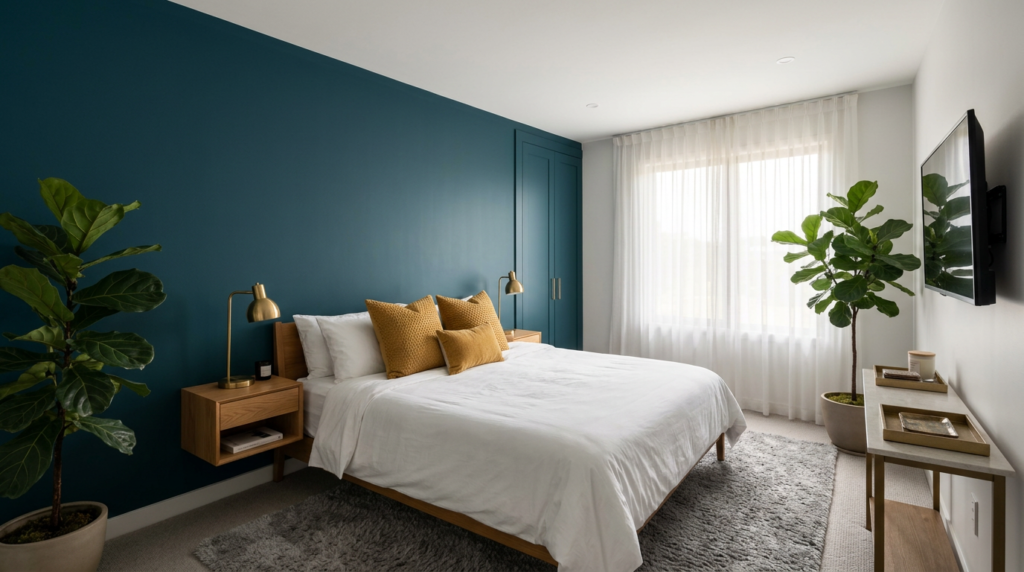
Warm Accent Wall Colours That Suit Wood Tones
Because wood already brings warmth and natural variation into a bedroom, you’ll get the most cohesive look by pairing it with an accent wall in earthy, warm-leaning shades like terracotta, clay, caramel, or muted peach. These tones echo oak, walnut, and pine without making the room feel heavy.
If your floors run honey-gold, pick caramel or apricot; if your furniture is deeper walnut, try clay or cinnamon for balance. Keep the undertone slightly muted so the wood grain stays the star.
You can also use a warm greige or sandy beige when you want subtle contrast. Finish with warm white trim, linen bedding, and brass or leather accents to tie everything together. Test samples in evening light for accuracy.
Cool Accent Wall Colours That Suit Metal Finishes
If your bedroom leans on metal finishes for its character—think black steel, brushed nickel, chrome, or aged brass—choose a cool-toned accent wall to sharpen the look without turning it icy. Try slate blue to make chrome feel crisp and intentional, or deep teal to give brushed nickel more depth.
For black steel, go with charcoal-blue or inky navy; they echo the metal’s strength while softening harsh contrast. If you’ve got aged brass, lean into smoky green or muted petrol blue to balance warmth with sophistication.
Keep the undertone consistent: blue-based colours flatter silver metals, while green-leaning blues pair beautifully with brass. Finish with matte or eggshell paint so the wall absorbs glare and lets your hardware shine.
Neutral Accent Walls That Brighten Small Rooms
Want your bedroom to feel bigger without resorting to stark white? Choose a neutral accent wall that lifts light and softens shadows. Warm greige, creamy beige, and pale taupe reflect daylight while adding depth, so the room feels airy, not flat.
If your space runs dim, pick a neutral with a slightly warm undertone to counteract the gray cast from north-facing windows.
Paint the wall behind the headboard to anchor the bed, then keep adjacent walls a shade lighter to stretch the perimeter. Use a low-sheen finish to reduce glare and hide bumps.
Pair the colour with natural wood, crisp linens, and a few black or brass details for contrast without shrinking the room. Keep art simple and scaled, too.
Bold Accent Wall Colours (Teal, Terracotta, Black)
Even in a small bedroom, you can go bold on one wall without making the space feel closed in. Teal brings depth and calm at once, especially behind the bed where it frames your headboard and bedding. Pair it with crisp white trim, pale wood, or brass to keep it bright and intentional.
Terracotta warms the room instantly and flatters natural textiles; it’s perfect if you want a grounded, sunset feel that still reads modern.
Black sounds risky, but it can look sleek and tailored, adding contrast that makes artwork and linens pop. Keep surrounding walls light, repeat the accent color in a pillow or throw, and let your lighting and decor balance the drama nicely.
Test Paint Samples (Undertones, Finish, and Timing)
Bold colours look their best when you’ve checked how they actually behave in your bedroom’s light, so test paint samples before you commit to an accent wall. Paint large swatches (at least 12×12 inches) on two walls, or use peel-and-stick sheets, so you can see shifts across the room.
Watch for undertones: teal can lean green, terracotta can turn pink, and black can read blue or brown against your flooring and bedding. Match your sample’s finish to your final choice—matte hides flaws, eggshell adds wipeability, satin boosts depth but highlights texture.
Check the colour at morning, midday, and night, with lamps on. Live with it for 48 hours before deciding.
Conclusion
You’ll get the best results when you choose the wall behind your bed and match the colour to your room’s light. If you want calm, stick with misty sage, pale eucalyptus, or dusty seafoam. If you’re craving cosy, try navy, charcoal, or forest green in a matte or eggshell finish. Warm terracotta suits wood, while slate blue flatters metal. Keep small rooms bright with greige or ivory. Always test samples first.