
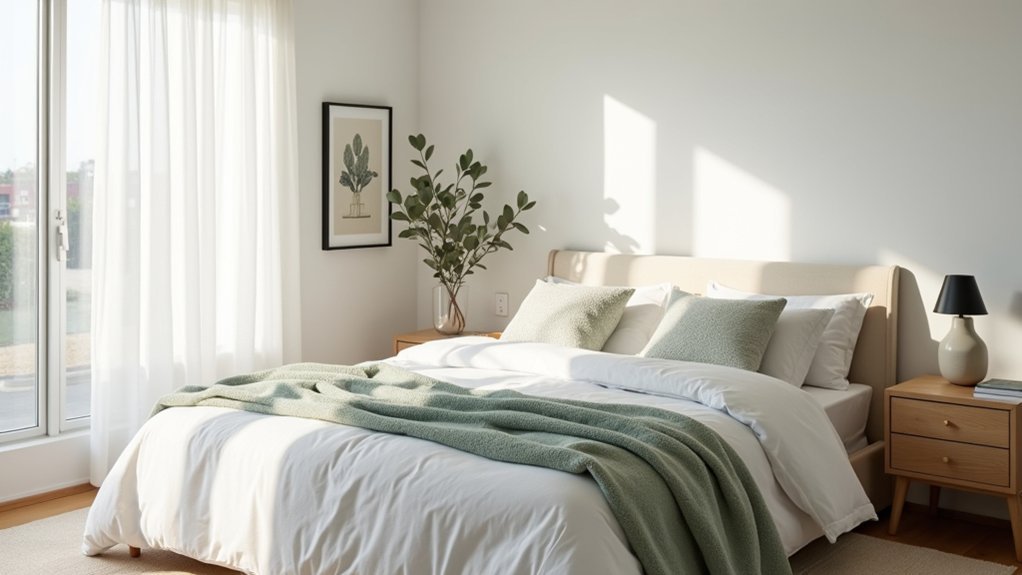
You don’t need a big budget or a full weekend to make your bedroom feel new. Start with a quick 15-minute reset: bin rubbish, gather laundry, clear bedside surfaces, and line up shoes and clothes so it looks intentional. Then swap in fresh bedding and add a throw for instant comfort. If the room still feels flat, your lighting and layout are likely holding it back—so here’s what to change next.
Key Takeaways
- Do a quick reset: trash out, laundry collected, and surfaces cleared and wiped for an instantly cleaner bedroom.
- Refresh bedding with clean sheets and a seasonal duvet cover, then plump pillows and smooth the bed for a polished look.
- Upgrade lighting by layering warm bulbs with lamps, adding dimmers, and separating controls for easy mood shifts.
- Improve layout by centering the bed on the longest wall, clearing pathways, and using mirrors to reflect daylight and open the space.
- Add texture and personality with layered cushions, a throw, a rug, and a simple, cohesive art arrangement for a finished feel.
Do a 15-Minute Bedroom Reset (Trash, Laundry, Surfaces)
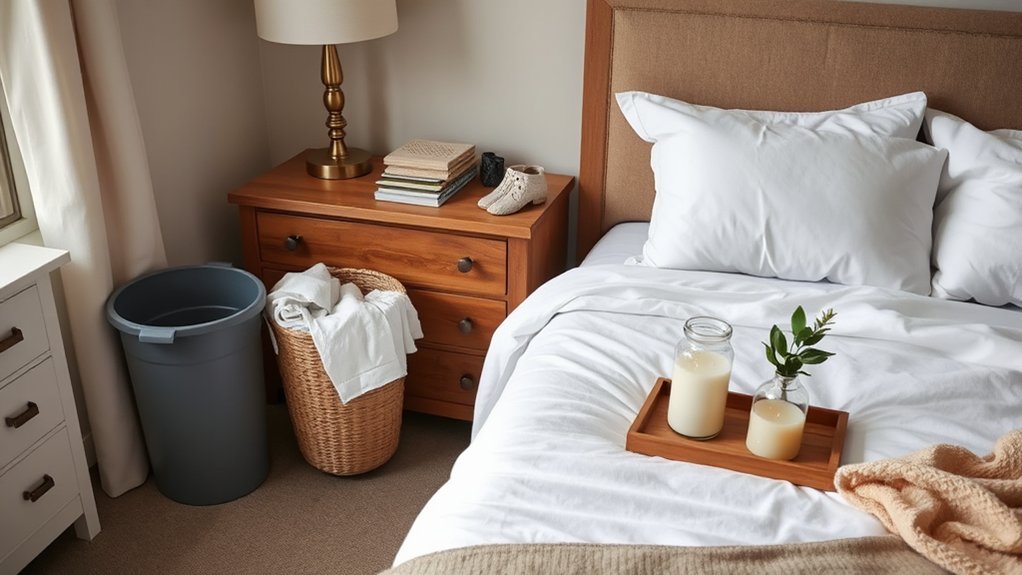
Even if you’ve only got 15 minutes, you can make your bedroom feel noticeably fresher by doing a quick reset. Start with a bin bag: empty the rubbish, clear cups, and collect stray packaging.
Next, grab a laundry basket and sweep up clothes from the floor, chair, and end of the bed; take it straight to the washer or hallway so it’s out of sight.
Then reset surfaces for instant calm. Put skincare, chargers, and books back where they belong, and wipe bedside tables and the windowsill with a microfibre cloth.
Finish with quick bedroom organization: align shoes, stack papers, and straighten decor accents like candles or a small tray so everything looks intentional.
Swap Your Bedding for an Instant Refresh
Once you’ve cleared the clutter and reset your surfaces, change the bedding to make the whole room feel brand new. Start with freshly laundered sheets, then add a duvet cover that suits your mood and the season.
Go crisp white for a hotel feel, soft neutrals for calm, or a subtle print to add interest without overwhelming the space. For smart color coordination, pick one accent shade from your cushions, curtains, or artwork and repeat it in the cover or throw. Keep patterns to one hero piece and let everything else stay plain.
Build in seasonal updates: breathable cotton or linen for warmer months, brushed cotton or a heavier tog duvet for winter. Finish by plumping pillows and smoothing the cover.
Warm up the Room With Better Lighting
Warm up your bedroom by layering ambient light with focused task lighting, so you’re covered for winding down and getting ready.
Swap in warm-tone bulbs to soften the space and make colours feel richer.
Add dimmers and choose lampshades that diffuse light, giving you quick control over mood without changing the whole room.
Layer Ambient And Task
Because a single overhead light can make a bedroom feel flat and harsh, you’ll get a quicker uplift by layering ambient and task lighting instead.
Start with ambient lighting that washes the room evenly: try a ceiling pendant on a dimmer, a pair of bedside lamps, or a slim floor lamp in a dark corner.
Then add task lighting where you actually need it, such as an adjustable reading light beside the bed or a focused lamp on a dressing table.
Aim to light faces, not just ceilings, by placing lamps at roughly eye level when you’re seated.
Use shades to soften glare and keep cords tidy with trunking or clips.
Finally, control each light separately so you can shift from calm to practical in seconds.
Add Warm-Tone Bulbs
If your bedroom lighting still feels clinical after you’ve layered it, swap in warm‑tone bulbs to soften the whole space. Aim for 2700K to 3000K for that flattering, evening glow that makes bedding and paint colours look richer.
Check fittings before you buy: most UK lamps take E27 or E14 caps, while many ceiling spots use GU10s. Choose LED Warm bulbs labelled “warm white” for good efficiency without the harsh blue cast.
In bedside lamps, pick lower-lumen options so the light feels gentle rather than glaring. For a reading light, keep the beam focused but still warm so it doesn’t fight the rest of the room.
You’ll get a cosy ambiance that suits winding down.
Use Dimmers And Shades
Want an instant way to make your bedroom feel calmer at night? Fit dimmer switches so you can drop the light level after dinner and avoid that harsh “big light” glare. You’ll create a softer pool of light for reading, winding down, or getting ready without shocking your eyes. If you rent, try plug-in dimmers for lamps and keep the ceiling light on a low setting when you can.
Next, tackle daylight control. Swap flimsy blinds for lined window shades that filter sun in the morning and block streetlights after dark. Choose neutral fabrics to warm the room and keep it looking cohesive.
Pair shades with a bedside lamp and you’ll get flexible, cosy lighting year-round. It’s quick, affordable, and feels hotel-level.
Rearrange Your Bedroom for a New Layout
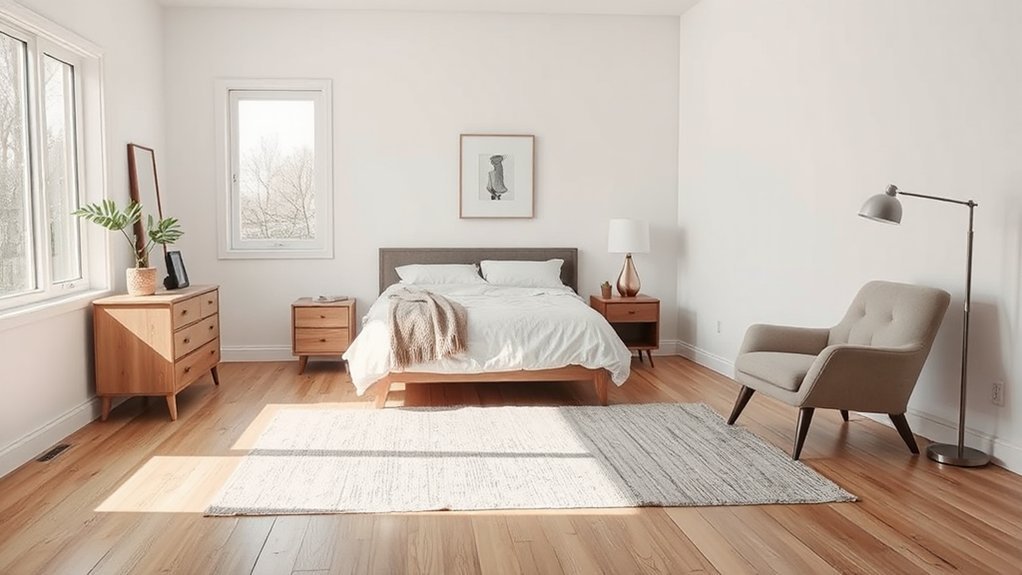
While you mightn’t be changing the furniture, rearranging your bedroom can make it feel completely new without spending a penny. Start with furniture placement: put the bed on the longest wall so you’ve got clear access on both sides, then shift bedside tables to balance the room. Keep pathways wide enough for an easy walk from door to wardrobe, especially in smaller UK box rooms.
Next, think about sightlines. Angle your chest of drawers so it doesn’t block natural light, and place a mirror opposite the window to bounce daylight around.
If your room color is dark, move bulkier pieces away from the window to stop it feeling heavy. Finish by editing: remove one item that clutters the layout, then reassess the flow before adding anything back.
Layer Cozy Textures (Pillows, Throws, Rug)
Even when you keep the same furniture layout, layering soft textures instantly makes a bedroom feel warmer and more put-together.
Start with Textile layering on the bed: two cushions in a robust cotton or linen, then one larger velvet or boucle cushion for Texture contrast. Add a throw at the foot—chunky knit in winter, lightweight waffle in summer—so you can adjust comfort without changing the duvet.
Finish with a rug that anchors the space and softens morning steps. In UK homes, a low-pile wool blend works well with underfloor heating and is easy to hoover; go larger than you think, so at least the front two-thirds of the bed sits on it.
Keep colours tonal to avoid clutter, and repeat one texture elsewhere for balance.
Hang Art and Add Personal Touches
Because blank walls can make a bedroom feel unfinished, hang a few well-chosen pieces of art and weave in personal touches to give the space character without adding clutter. Start with one focal piece above the bed, then build an art arrangement around it using two to four smaller prints in matching frames. Keep spacing consistent (about 5–7cm) so it looks intentional, not scattered. If you rent, use Command strips to avoid damaging paintwork.
Balance artwork with personal memorabilia, but edit ruthlessly: display a framed photo, a ticket stub in a mount, or a small ceramic picked up on holiday. Group items on a single shelf or bedside table tray so they read as a collection. Finish with warm bulbs to highlight details in the evening.
Frequently Asked Questions
How Can I Refresh My Bedroom on a Tight Budget?
Refresh your bedroom cheaply by decluttering first, then repaint one wall or swap bedding from sale rails. Add DIY decor with framed prints, upgrade lighting with warm bulbs, and use budget storage boxes from Wilko or IKEA.
What Paint Colors Make a Small Bedroom Feel Larger?
Choose light, cool tones like soft white, pale grey, duck-egg blue, or sage to make your small bedroom feel larger. You’ll boost Mood enhancement and use Colour psychology; keep trims bright, and avoid heavy contrast.
How Do I Reduce Bedroom Odors Without Using Candles?
Like a fresh breeze after rain, you’ll cut bedroom odours by opening windows daily, washing bedding weekly, and binning rubbish promptly. Use Air purifiers and natural deodorizers like bicarbonate of soda, vinegar, and activated charcoal.
Which Plants Are Best for Improving Bedroom Air Quality?
You’ll get the best bedroom air quality from snake plant, peace lily, English ivy, and spider plant. For Indoor gardening, choose hardy Air purifying plants, keep pots well-drained, and avoid overwatering in UK rooms.
How Can I Make My Bedroom Quieter and Reduce Outside Noise?
You’ll make your bedroom quieter by testing what really blocks noise: sealing gaps, then adding mass. Fit Soundproof curtains, hang Acoustic panels, use draught excluders, and add a thick rug. You’ll notice calmer nights.
Conclusion
You don’t need a grand makeover to refresh your bedroom; just act with purpose. Do a quick reset, then switch bedding for a clean, hotel-like lift. Add warm, layered lighting so evenings feel less like a harsh spotlight and more like a quiet West End scene. Shift furniture to improve flow and catch daylight, then layer throws, cushions, and a rug. Finish with art and keepsakes—your own small “room of one’s own”.