
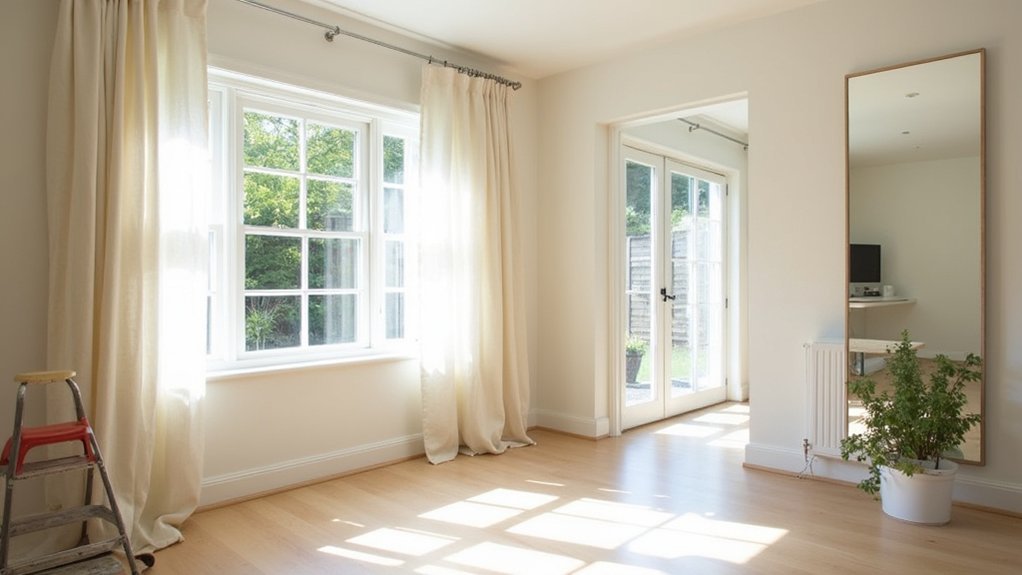
You’ll brighten your home fast by washing glazing inside and out, clearing algae from sills, and removing outside blockers like overgrown hedges or bins. Replace heavy lined curtains with voile, linen, or pale roller blinds, and hang tracks higher and wider so you don’t lose glass area. Fix misted double glazing and avoid dark frames or films that dull daylight. Add a large mirror opposite a window and choose pale, light-reflective paint. Keep going for more room-by-room fixes.
Key Takeaways
- Clean windows inside and out, clear algae on sills, and remove outside obstructions like hedges, bins, or parked vehicles.
- Replace heavy curtains and pelmets with sheer voile, linen, or pale blinds, and mount tracks higher and wider to reveal more glass.
- Hang large mirrors opposite or beside bright windows to reflect daylight deeper into rooms and along dark hallways.
- Repaint walls in light tones with a lighter ceiling, and use satin or eggshell on trim to help light travel further.
- Add reflective decor like glass tables, metallic accents, and glossy frames, keeping surfaces clean to maximize brightness.
Spot the Top 5 Natural-Light Blockers
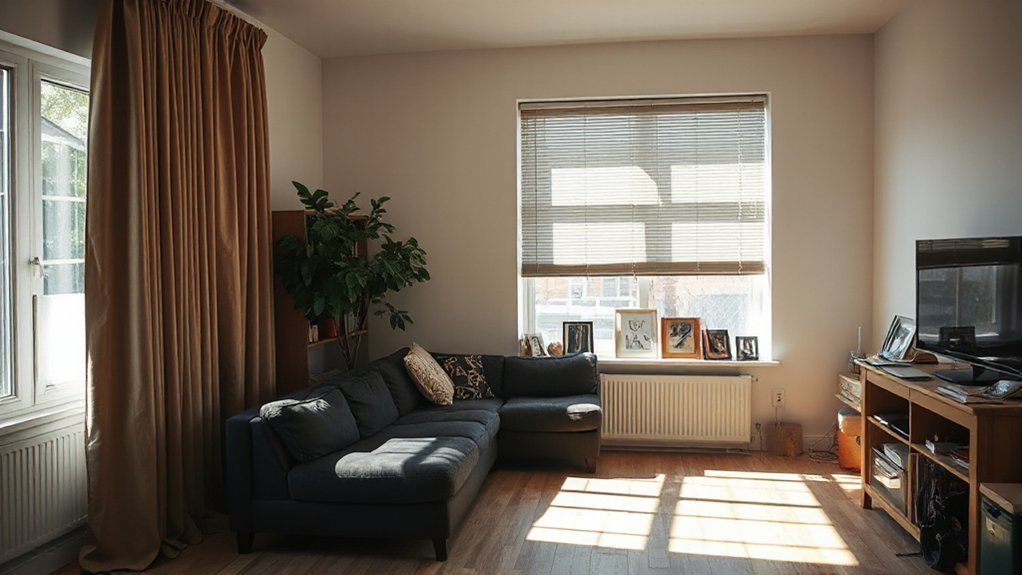
Before you buy new bulbs or splash out on a skylight, identify what’s actually stopping daylight getting in. Start with dirty glazing: wash inside and out, and clear algae from exterior sills. Next, check obstructions—overgrown hedges, bulky bins, or a parked van close to the façade. Third, look for failed seals or misted double glazing that scatters light; book a local glazier. Fourth, inspect frames and reveals: dark paint, wide uPVC profiles, or deep alcoves can cut the visible pane. Fifth, review add-ons: heavy window film, security mesh, or fly screens can tint rooms. If the room’s north-facing or shaded, consider skylight installation only after you’ve removed these blockers first.
Upgrade Window Treatments for More Natural Light
Although new glazing can help, you’ll often get a bigger daylight boost by upgrading what you hang over the window. Start by swapping heavy, lined drapes for lighter Window treatment styles such as voile panels, linen mixes, or slim roller blinds in pale tones. Fit curtains higher and wider than the frame so glass is fully exposed when open, and choose ceiling-mounted tracks to reduce light loss at the top. Replace bulky pelmets with a neat pole or track, and keep tiebacks ready to pull fabric clear. If privacy’s the issue, use top-down/bottom-up blinds or sheer café shutters rather than full-height covers. For awkward bays or sash windows, explore Custom curtain options with made-to-measure headings that stack back tightly. Clean, minimal hardware finishes the job.
Place Mirrors to Bounce Daylight Deeper
When you position mirrors to face a window, they act like extra panes and throw daylight further into the room. For best mirror placement, hang a large mirror opposite or adjacent to the brightest window, keeping it level with the glass to maximise daylight reflection. In narrow Victorian terraces and modern flats alike, try a tall mirror at the end of a hallway to pull light through from a front bay. Place smaller mirrors behind table lamps or on side walls to redirect glare away from seating. Avoid aiming mirrors straight at the sun in south-facing rooms, as it can create harsh hotspots. Use secure wall fixings rated for the mirror’s weight, and keep frames slim so you don’t block light. Clean glass regularly.
Choose Brightening Paint Colors and Finishes
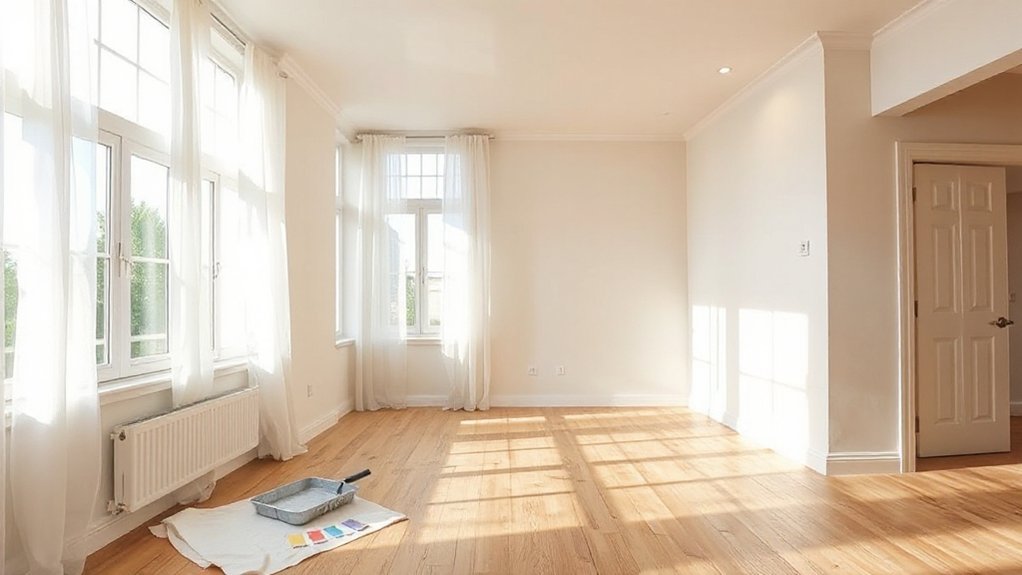
If your rooms still feel dim after you’ve tackled windows and mirrors, paint choice can make a bigger difference than you’d expect. Start by switching to lighter paint color palettes: warm off-whites, soft greys, pale stone, or muted sage. In UK light, these shades stay bright without looking stark, especially in north-facing rooms. Keep ceilings a step lighter than walls to lift the space, and carry one main tone through hallways to prevent visual “stops” that feel gloomy.Next, choose the right finish sheen. Matt hides bumps but absorbs light, so use durable matt on busy walls and a washable eggshell or satin on darker corridors, stairwells, and woodwork. A slightly higher sheen on skirting and doors helps daylight travel further without looking glossy.
Add Reflective Decor That Boosts Natural Light
Once you’ve brightened the walls, you can push daylight further by adding reflective decor that bounces light around the room rather than letting it die in corners. Start with a large mirror opposite or near the window line to double perceived brightness, then layer smaller mirrors to catch different angles. Choose Reflective surfaces you’ll actually use: glass-topped nesting tables, chrome or brass lamp bases, and glossy picture frames. Add light enhancing accessories such as a metallic tray, a high-shine vase, or a pale, satin-finish lampshade to lift shadows without glare. In UK homes, keep it practical: pick easy-clean finishes for kitchens and hallways, and avoid overly distressed mirrors that muddy reflections. Check reflections by day, not under LEDs.
Rearrange Furniture to Let Sunlight Spread
Although new paint and mirrors help, your layout often decides how far daylight actually reaches. Start by evaluating sightlines from each window and remove anything that blocks the glass or casts heavy shadows. Smart furniture placement isn’t about minimalism; it’s about giving light a clear route through the room for better sunlight diffusion.
- Pull sofas and bookcases 20–30cm off the window wall so rays can spill behind them.
- Swap tall units for lower pieces near glazing, and shift display cabinets to interior walls.
- Angle armchairs and dining tables so they don’t sit squarely in the sun’s path, especially in smaller UK lounges.
Keep surfaces tidy and avoid bulky window-side storage. You’ll notice brighter corners without changing your fittings.
Brighten Dark Hallways Without Adding Lights
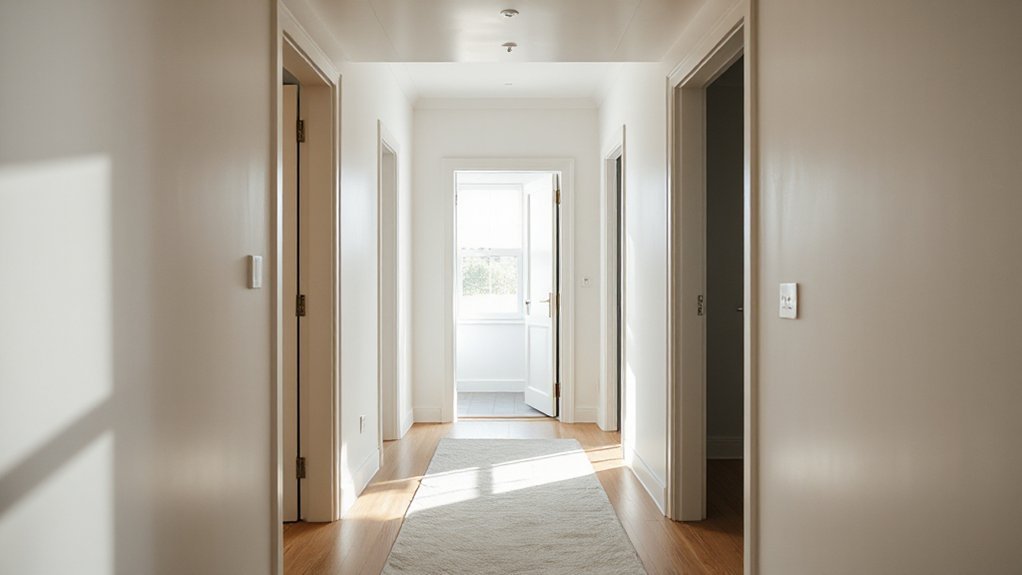
Because hallways in many UK homes sit far from exterior walls, they often feel gloomy even on bright days—but you can still push daylight through them without fitting a single new light. Start with Sunlight enhancement: swap heavy doors for glazed or part-glazed versions, or fit clear panes above existing doors if your layout allows. Paint walls and ceilings in warm off-white (not stark brilliant white) and choose a satin or eggshell finish to bounce light. Add a large mirror opposite the brightest room’s doorway to reflect spill light down the run. Replace dark carpet with a pale runner and keep skirting boards crisp. For Dark corner solutions, use a narrow console in a light timber, plus glass-fronted storage to reduce visual weight, too.
Frequently Asked Questions
How Can I Increase Natural Light in a Windowless Bathroom?
You can’t add true daylight, so mimic it: fit a sun tube or daylight LED panel, paint Light colored walls, use large mirrors, and swap to frosted glass doors or partitions for brighter diffusion.
Do Skylights or Solar Tubes Require a Building Permit?
Yes—usually; because nothing says “fun” like building codes. You’ll often need permit requirements via Building Regulations for roof openings. Check your council’s planning portal, listed-building status, and hire a competent roofer.
What’s the Best Way to Reduce UV Fading While Keeping Daylight?
Fit spectrally selective window film or low‑E glazing: you’ll get strong UV protection while keeping daylight maximization. Choose a reputable UK installer, check EN standards, and add lined blinds for peak‑sun hours.
How Do I Stop Glare on TV Screens Without Darkening the Room?
Angle your TV away from windows and fit Smart window films to cut reflections without dimming. Add adjustable blinds to fine-tune light. Use a matte screen protector and switch on bias lighting behind the telly.
Which Window Replacements Maximize Daylight Without Sacrificing Insulation?
Choose triple-glazed low-iron units with warm-edge spacers and slimline uPVC or thermally-broken aluminium window frame materials; they’ll boost daylight yet keep U-values low. Skip heavy glass tinting; use UV-clear coatings instead, in UK homes.
Conclusion
Letting more daylight in doesn’t require major building work—you just need smarter choices. Start by tackling the biggest blockers, then swap heavy curtains for lighter treatments, add mirrors, and pick pale, light-reflective paints. Even small tweaks like glossy finishes and reflective accessories help push sun further into the room. Rearrange bulky furniture away from windows and open up hallways. In the UK, households spend about 10% of their electricity on lighting—so daylight upgrades can pay back.