
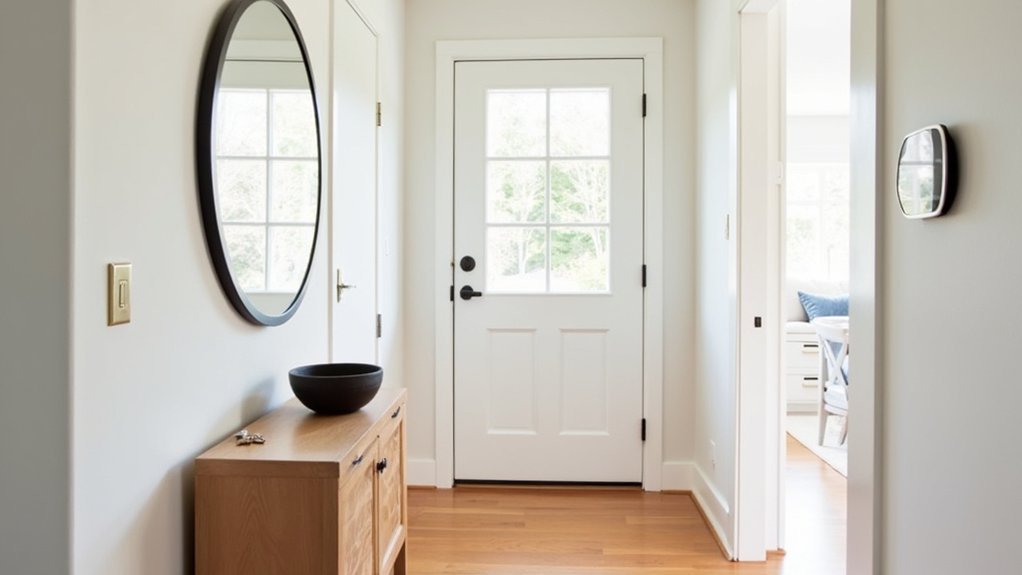
You could add thousands to your home’s value this weekend without lifting anything heavier than a paint tin. You’ll get the best ROI by choosing small, visible upgrades that buyers in the UK notice first: fresh neutral paint, brighter modern lighting, updated kitchen and bathroom hardware, and airtight windows and doors. Tidy storage and a smart front entrance finish the job. The trick is knowing what to do first, and what to skip…
Key Takeaways
- Boost curb appeal with a refreshed front door, updated house numbers, tidy landscaping, and simple path lighting.
- Repaint in neutral tones and fix small defects; clean, well-prepped surfaces signal good maintenance and photograph better.
- Modernize fittings cheaply by swapping to LED light fixtures, updated taps/handles, and refreshed bathroom grout and sealant.
- Improve comfort and buyer confidence with draught-proofing, sealing gaps, reflective radiator panels, and a smart thermostat.
- Spend strategically: prioritize must-fix items first, then quick value boosters, aligned to local sold prices and buyer expectations.
Minor Home Upgrades With the Best ROI
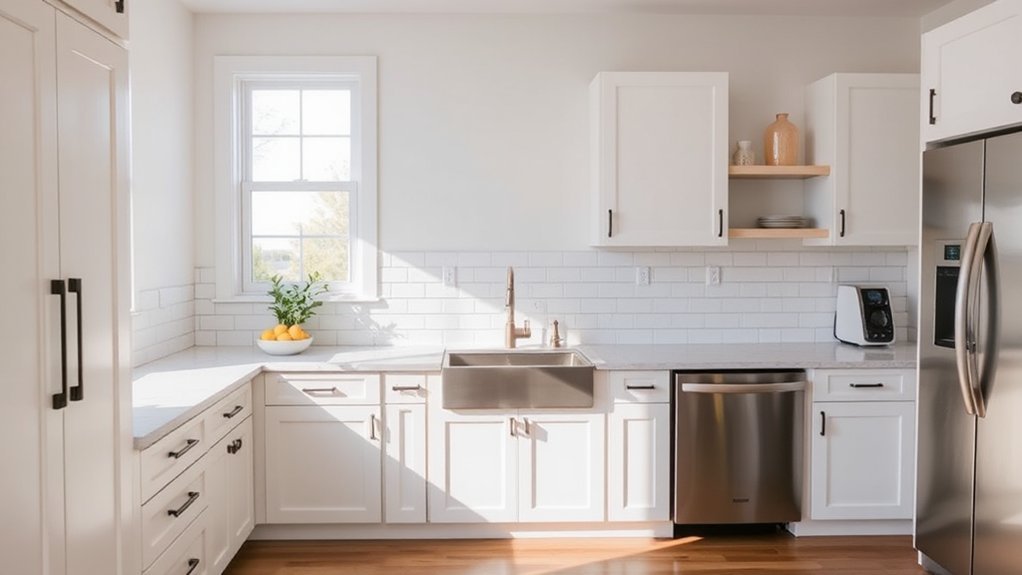
Although major renovations can be tempting, you’ll often get a stronger return from smaller, targeted upgrades that improve first impressions and everyday usability.
Start with kerb appeal: refresh the front door, update house numbers, and use simple landscaping ideas like edged borders, tidy gravel, and low-maintenance shrubs to make the plot look cared for.
Inside, swap dated light fittings for modern LEDs, replace tired taps and handles, and re-grout or reseal bathrooms to signal cleanliness without big spend.
Improve energy performance with draught-proofing, reflective radiator panels, and smart thermostats.
Add light-touch Home automation—video doorbells, smart locks, and app-controlled heating—so buyers see convenience and security.
Finally, repaint in neutral tones and fix squeaks, snags, and chips to keep viewings smooth.
Choose Upgrades by Budget and Weekend Time
Whether you’ve got £50 and a couple of hours or £500 and a full weekend, you’ll get better results by matching upgrades to your budget and the time you can realistically spare.
Start with Budget planning: list must-do fixes, then value-boosters, then nice-to-haves, and price them using UK retailers and local trades quotes.
For a short slot, choose quick wins you can finish cleanly: replace dated cabinet handles, fit a smart thermostat, reseal a shower, swap tired light fittings, or upgrade door furniture.
If you’ve got a full weekend, pick one higher-impact task such as refreshing kitchen storage with new hinges and drawer runners, fitting loft boarding for usable storage, or improving kerb appeal with a new house number, letterbox, and exterior lighting.
Strong weekend project planning keeps you on schedule and avoids half-finished jobs.
Paint Walls and Trim for Instant Value
If you want a fast, measurable uplift without major disruption, paint gives you the best value per pound. Fresh, neutral walls make rooms feel larger, cleaner, and better maintained, which helps viewings and surveyor impressions. Use colour psychology: warm off-whites suit north-facing rooms, while soft greys calm busy spaces; keep bold colours to a single feature wall if you must.
Don’t ignore trim. Crisp skirting, architraves, and doors signal care and can modernise tired interiors in a weekend. Choose the right paint finish: durable matte for walls in living areas, wipeable eggshell for hallways, and satinwood on woodwork for a clean, contemporary sheen.
Prep properly—fill, sand, and caulk—so the result looks professional, not rushed.
Minor Home Upgrades: Modernize Lighting Cheaply
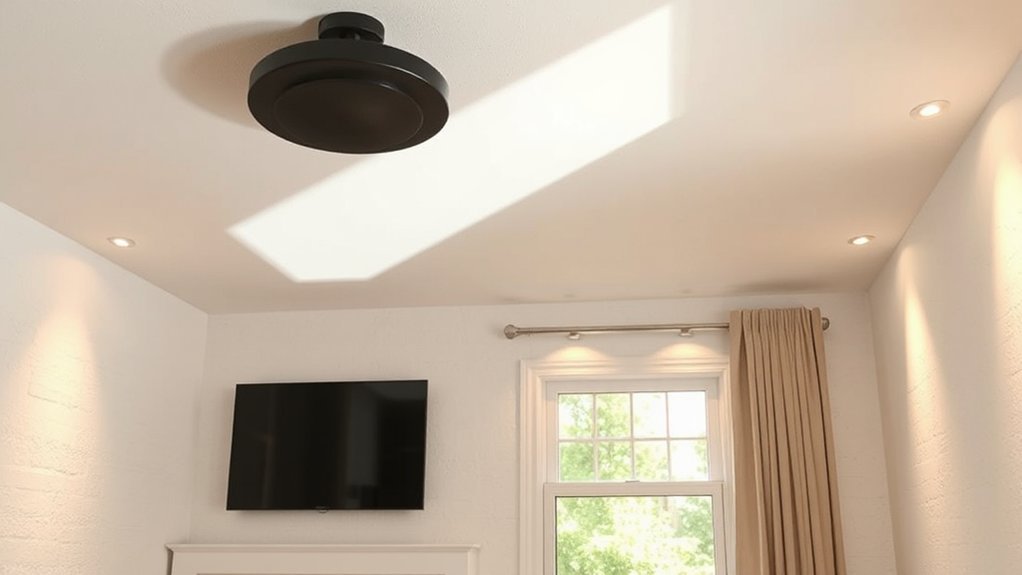
Because lighting shapes how every room photographs and feels, swapping outdated fittings gives you one of the cheapest “modern” upgrades with a big impact at viewings. Replace yellowed pendants with simple, matte finishes and fit warm-white LEDs (around 2700–3000K) for a clean, inviting look. Add dimmers where suitable to show flexibility without major work.
Prioritise energy efficiency: choose A-rated LED lamps and check compatibility with existing dimmer switches to avoid flicker.
In darker UK homes, increase lumens rather than colour temperature for brightness that still feels cosy.
Install under-shelf or wardrobe LED strips for practical task lighting buyers notice.
If your budget allows, introduce Smart lighting with a couple of app-controlled bulbs in key rooms, then leave clear reset instructions for viewings.
Minor Home Upgrades: Swap Kitchen and Bath Hardware
Swap out tired kitchen and bathroom hardware and you’ll give your home a quick, visible uplift without major spend. Choose modern finishes that suit UK tastes and prioritise high-touch fixtures like taps, handles, and drawer pulls for the biggest day-to-day impact.
Keep it cohesive by matching hardware styles across each room, so everything looks intentional rather than piecemeal.
Choose Modern Finishes
While you mightn’t notice it day to day, dated kitchen and bathroom hardware can instantly age a home, so choosing modern finishes is one of the quickest, most cost-effective upgrades you can make.
Start by picking one finish family and sticking to it across both rooms; consistency reads “refreshed”, not “patched”. In UK homes, brushed nickel and satin brass feel current without looking flashy, and matte black suits cleaner, architectural schemes.
Match your new hardware to surrounding surfaces: Contemporary countertops pair well with warmer metals, while cooler tones complement chrome or nickel.
If you’ve invested in sleek backsplash designs, echo their lines with slim, minimalist handles and simple, geometric knobs. Keep sheen levels aligned so everything looks intentional.
Choose durable, easy-clean finishes for busy households too.
Prioritize High-Touch Fixtures
Once you’ve chosen a consistent finish, put your budget where you’ll feel it most: the fixtures you touch every day. Upgrade kitchen cabinet pulls, drawer runners, tap handles, and door levers first; they’re what buyers notice in viewings and what you’ll appreciate daily.
In bathrooms, swap tired towel rails, toilet roll holders, and shower controls for solid brass or stainless options that won’t wobble or pit in hard-water areas.
Choose quality mechanisms: smooth quarter-turn taps, soft-close hinges, and sturdy escutcheons. If you’re adding Smart home convenience, fit a keyless front-door lock or motion-sensor cupboard lights.
For Eco friendly features, pick aerated tap inserts or low-flow shower handsets—quick wins that cut water use without feeling stingy. Keep receipts and warranties for your buyer.
Match Hardware Styles
After you’ve upgraded the pieces you touch most, make sure every knob, pull, tap, and handle follows the same style rulebook across the kitchen and bathrooms. Buyers notice Hardware consistency even if they can’t name it; mixed finishes can read as piecemeal and cheap.
Pick one direction—modern, shaker, traditional—and commit. For Style matching, keep your finishes aligned: brushed nickel with brushed nickel, matt black with matt black, brass with brass. If you must mix, limit it to two finishes and repeat each at least three times across rooms so it looks intentional.
Match shapes too: square pulls with a square tap, or rounded levers with cup handles. In UK homes, this small discipline photographs well for Rightmove and supports a stronger asking price.
Minor Home Upgrades: Boost Curb Appeal in a Day
If you’ve only got a day to spare, you can still make your home look sharper from the street with a handful of quick, low-cost upgrades. Start by pressure-washing the drive, path, and patio, then weed and edge borders for crisp lines.
Refresh the front door with a new coat of paint, polish the letterbox, and swap in a modern house number.
Add kerb-ready charm with tidy pots and a matched pair of planters flanking the entrance. Install simple landscape lighting along the path and by the door to make evenings feel safer and more premium.
Finally, stage the space: set clean outdoor furniture on the patio or front step and add a neutral cushion. You’ll create an inviting first impression that buyers notice fast.
Seal Drafts With Caulk and Weatherstripping
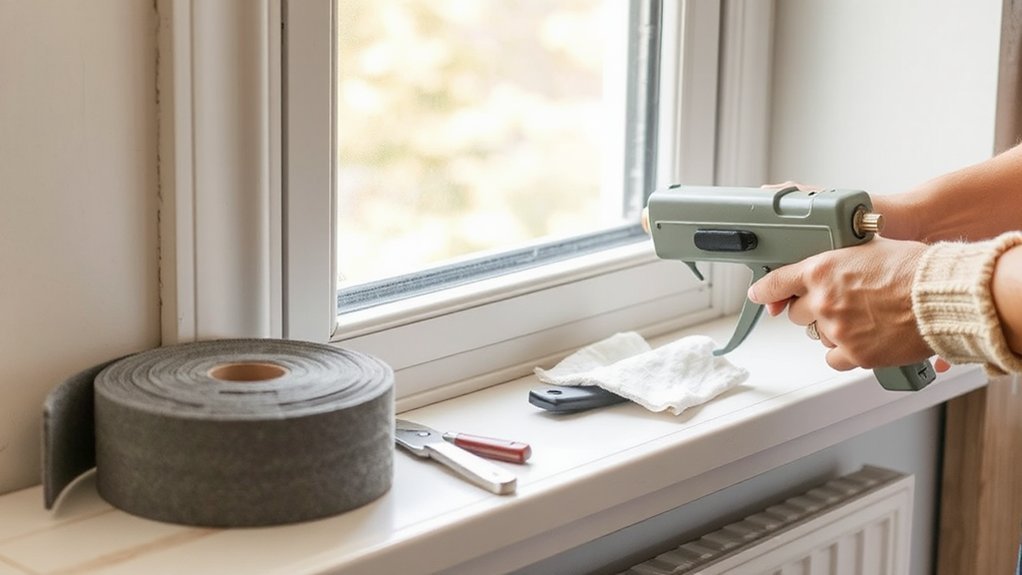
You’ll get quick, noticeable gains by tracking down the usual draught culprits—gaps around windows and doors, skirting boards, loft hatches, and pipe penetrations.
Pick the right fix: use caulk for static cracks and joins, and weatherstripping for moving parts like door and window sashes.
Apply cleanly, let it cure, then run your hand or a smoke test around the edges to confirm the seal holds.
Identify Common Draft Sources
Even in a well-kept UK home, sneaky drafts often slip in through predictable gaps—around window frames, external doors, loft hatches, skirting boards, and service penetrations for pipes and cables.
To pinpoint them, you’ll need a quick, methodical check room by room, focusing on cold edges and junctions.
On a windy day, run your hand along frames, thresholds, and corners; you’ll feel moving air instantly. Look for daylight around doors, worn letter plates, and gaps at keyholes.
Check under kitchen units where pipework enters, and behind toilets where soil pipes pass through walls.
In older terraces, inspect suspended timber floors and air bricks for uncontrolled airflow.
Mark each suspect spot with masking tape so you can tackle draft prevention efficiently and boost energy efficiency.
Choose Caulk Or Weatherstripping
Because different gaps move and flex in different ways, you’ll get the best seal by choosing caulk for static cracks (around skirting, window trims, and pipe penetrations) and weatherstripping for moving joints (doors, opening windows, and loft hatches).
For window sealing, pick a paintable acrylic caulk for indoor trims, or a high-quality exterior silicone for outside joints exposed to rain.
Use a caulk gun for clean lines, and keep a damp cloth handy for quick smoothing.
For door insulation, fit adhesive foam or rubber strips to the frame where the door meets the stop; choose a brush strip or drop seal if the draught comes from the threshold.
Buy BS/EN-rated products, and avoid cheap packs that compress fast.
Apply And Check Seals
Once you’ve chosen the right caulk or weatherstripping, prep and application make the difference between a quick fix and a seal that lasts. Clean frames and sills with sugar soap, then dry fully. Mask edges for a tidy line, cut the nozzle at 45°, and run a steady bead to seal gaps around skirting, pipes, and window trims. Tool it smooth with a wet finger or profiling tool, and peel tape before it skins.
For strips, measure twice, stick to dust-free surfaces, and close the window to set compression. After 24 hours, test: feel for drafts, listen for rattles, and use a lit incense stick to spot movement.
You’ll weatherproof windows, cut heat loss, and boost EPC appeal.
Minor Flooring Upgrades That Look New Fast
If your floors look tired but you don’t want the cost or disruption of a full replacement, a few minor upgrades can make them look new in a weekend. Start by deep-cleaning: scrub grout, lift carpet spots, and use a wood-safe cleaner on boards.
Then refresh the finish—apply a scratch-cover polish for laminate, or a wax/oil top-up for sealed timber. For vinyl, use a restorer to bring back shine without residue.
Update thresholds and edging strips; new brushed steel or oak trims instantly sharpen transitions. Add a statement runner or stair carpet for better flooring textures and easy warmth.
Finally, tighten color coordination: match rugs, skirting touch-up paint, and door bars to your existing tones for a cohesive, higher-value look. Buyers notice.
Add Closet and Pantry Storage Without Remodeling
Even when you can’t face ripping out fitted units, you can dramatically increase usable storage in closets and pantries with a few smart, low-disruption add-ons. Start by measuring internal widths and depths, then choose modular systems you can install with a drill and wall plugs.
Good Closet organization relies on zones: hanging, folded, and small-item sections, so everything gets a defined home and stays tidy.
- Add a second hanging rail or a pull-down rail to double space for shirts and jackets.
- Fit clip-on shelf dividers, baskets, and clear boxes to stop piles collapsing and improve visibility.
- Upgrade pantry shelving with adjustable brackets, door racks, and lazy Susans so tins, packets, and spices don’t vanish.
Finish with labels and a battery LED strip for quick checks.
Avoid Over-Improving for Your Local Market
Because buyers compare your home against others nearby, the smartest upgrades are the ones your local market will pay for—not the most impressive ones you can afford. Check sold prices on Rightmove and Zoopla, then match the standard of your street.
If most nearby homes have laminate worktops, a £10k granite kitchen may not lift your ceiling price, especially in areas with market saturation.
Focus on fixes that widen appeal: fresh paint, modern lighting, tidy flooring, and energy tweaks like draught-proofing and a smart thermostat. These signal care without pricing you out.
Before you commit, ask a local estate agent what buyers currently reward in your postcode. You’ll avoid over improvement risks, protect your budget, and keep your saleable value aligned with realistic comparables.
Frequently Asked Questions
Do I Need Permits for Minor Upgrades Like Lighting and Hardware Swaps?
You usually don’t need permits for like-for-like lighting or hardware swaps, but Permit requirements apply if you alter circuits, bathrooms, or listed buildings. Check your council, use qualified electricians, and keep Upgrade documentation for compliance.
How Can I Estimate Added Value Before Listing My Home for Sale?
UK homes that are staged can sell up to 8% higher; you’ll estimate added value by checking sold prices on Rightmove, then pricing uplift from Home staging and Curb appeal using local agent appraisals and EPC improvements.
Should I Disclose DIY Upgrades to Buyers, and How Should I Document Them?
Yes—you should disclose DIY upgrades to buyers; it protects you from misrepresentation claims. Keep receipts, dated photos, manuals, and certificates (Gas Safe, Part P). Share them during Home staging and explain any Neighborhood impact on valuations.
What Upgrades Help Most When Refinancing or Getting a New Appraisal?
Around 20% of a UK home’s value can hinge on condition—so focus on visible wins. You’ll boost refinancing/appraisal with Interior lighting upgrades, modern kitchens/bathrooms, and crisp paint; finish with tidy Hardware updates.
How Do I Choose a Reliable Contractor for Small Home Improvement Jobs?
Choose a reliable contractor by checking contractor credentials, reading local reviews, and verifying insurance. Get three written quotes, confirm timelines, and use Budget planning. Pay only staged payments, insist on a contract, keep receipts.
Conclusion
You don’t need a full renovation to lift your home’s value; you just need smart, weekend-friendly wins. Stick to fresh neutral paint, updated lighting, and new kitchen and bathroom hardware for instant impact. Seal drafts with caulk and weatherstripping to cut bills and boost comfort. Refresh tired floors and add simple storage to make rooms feel bigger. Like polishing a gemstone, these small upgrades help buyers see quality without you overspending.