
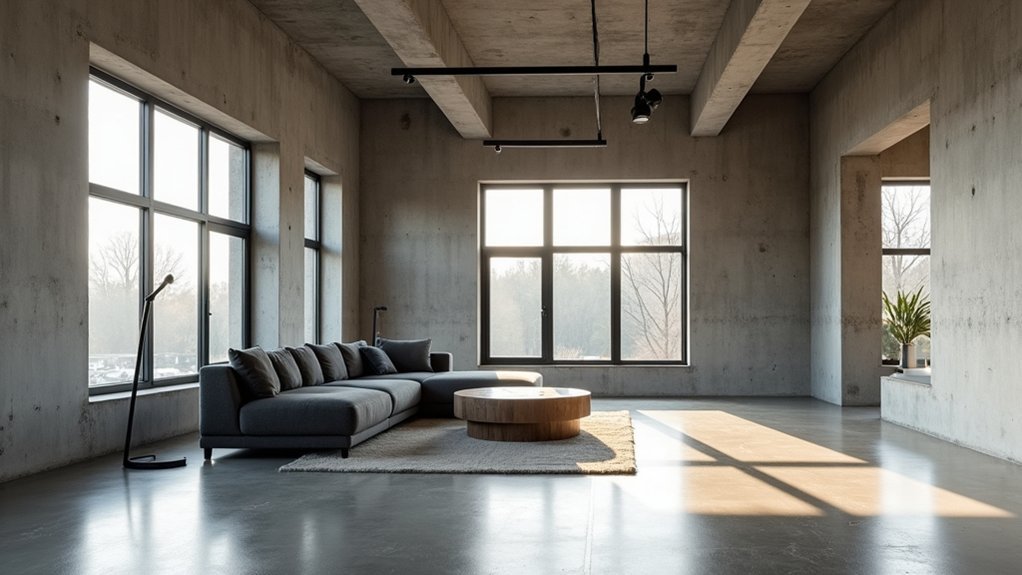
Nail industrial minimalist design by keeping structure honest—exposed brick, sealed concrete, and steel—then pairing it with clean, low-profile furniture and a warm-neutral palette (charcoal, warm white, oxidized tones) with muted accents under 10%. Plan zones with material shifts and maintain 36-inch pathways for crisp flow and negative space. Layer warm-dim lighting (2700–3000K, CRI 90+) with track and pendants to wash texture. Add patina-ready materials, minimal art, and integrated closed storage—keep going for the full playbook.
Key Takeaways
- Highlight honest materials—exposed brick, concrete, and steel—avoiding faux finishes to keep the space authentic and minimal.
- Use a restrained neutral palette with under 10% muted accents (rust, olive, ink blue) to add depth without visual noise.
- Choose clean-lined, low-profile furniture with steel frames and tight upholstery, prioritizing purposeful silhouettes and uncluttered negative space.
- Layer warm, high-CRI lighting (2700–3000K) with track, pendants, and wall washing to sculpt textures and maintain functional zones.
- Rely on built-in, closed storage with slim hardware, using open shelves only for curated pieces to prevent clutter and preserve crisp lines.
Industrial Minimalist Design: The 7 Core Elements
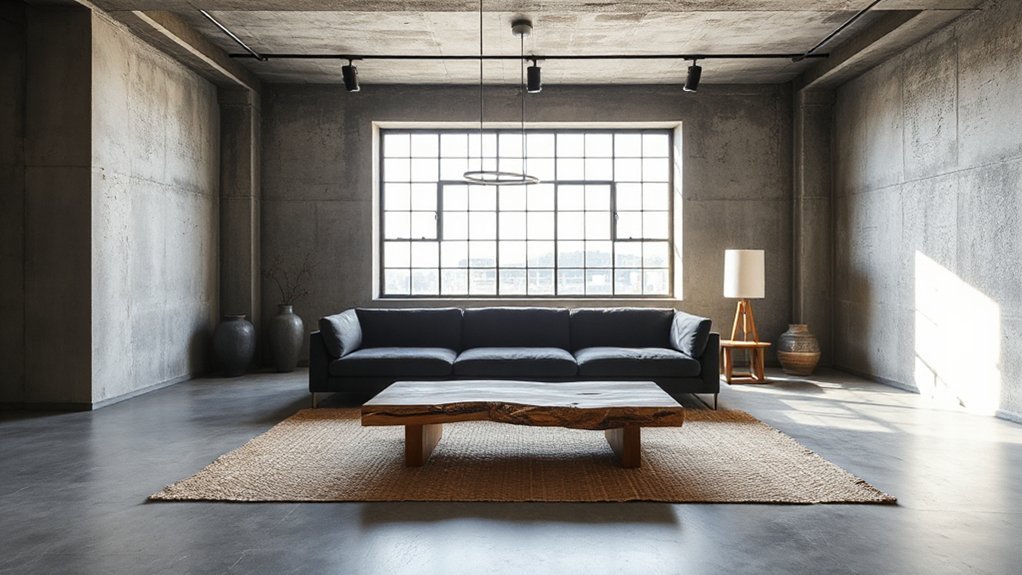
Seven core elements define industrial minimalist design, and when you get them right, you’ll create a space that feels both raw and refined. First, expose honest structure—brick, concrete, steel—without faux finishes. Second, keep a restrained palette: charcoal, warm whites, and oxidized tones. Third, choose clean-lined furniture with purposeful silhouettes and slim profiles. Fourth, prioritize texture contrast: matte plaster against polished metal, aged wood against smooth stone. Fifth, use high-function lighting—blackened pendants, track heads, and diffused task lamps. Sixth, curate decor with intent: one or two Artistic wall accents, oversized and graphic, not cluttered. Seventh, layer patina through Vintage industrial accessories—valve knobs, factory stools, or reclaimed hardware—so the room feels collected, not themed. Keep every piece hardworking and visually quiet.
Plan the Layout: Zones, Flow, and Negative Space
You start by defining clear functional zones—cooking, lounging, working—using furniture placement, lighting layers, and material shifts instead of walls. Then you tune circulation so paths feel effortless and sightlines stay long, a key industrial-minimalist move. Finally, you protect negative space as a design element, balancing the void against hard edges and raw surfaces so the room reads intentional, not empty.
Define Functional Zones
Where does each daily activity actually belong in an industrial minimalist space? Start with space zoning driven by functional planning, not furniture. Map primary tasks—cooking, working, lounging, dining, sleeping—then assign each a clear footprint. Use architectural cues: a concrete or steel-framed island defines the kitchen; a rug-free platform of sealed wood marks lounging; a linear table under a pendant locks in dining; a wall-mounted desk and task light signal work. Keep boundaries crisp with material shifts, ceiling tracks, or open shelving, not bulky dividers. Maintain consistent palettes—charcoal, blackened steel, warm oak—so zones read intentional, not cluttered. Finally, align storage to each zone: concealed cabinets for tools, open racks for daily-use essentials only.
Balance Flow And Void
Once you’ve defined the zones, make circulation and negative space do the heavy lifting. Carve clear paths—36 inches minimum—so movement feels effortless around a sofa, island, or workbench. Keep sightlines long; industrial minimalist rooms read larger when you don’t block windows or exposed structure.
Use voids to frame your strongest materials: concrete floors, steel posts, brick, or blackened hardware. Leave one wall mostly bare to reset the eye and prevent visual fatigue. Anchor each zone with one bold mass (a low sectional, a dining table) and let surrounding air create spatial harmony. Repeat a few cues—matte black lines, oak planes, grid lighting—to establish visual rhythm. Edit hard: if it doesn’t improve flow or function, it goes.
Industrial Materials That Look Better With Age
Although trends come and go, industrial minimalist spaces get better when the materials are allowed to age honestly—developing patina, soft wear, and subtle tonal shifts that add depth without adding clutter. Choose hot-rolled steel for shelving or frames; it darkens, scuffs, and reads more intentional each year. Let sealed concrete keep its hairline marks; they signal use, not mess. Opt for Eco friendly materials like reclaimed oak, linoleum, or recycled brick; they mature gracefully and reduce replacement cycles. Use vegetable-tanned leather on stools and pulls—it burnishes where you touch it most. Finish with Vintage industrial accents: aged brass hardware, factory lamps, and wire glass. You’ll get character through time, not through extra objects. Keep surfaces sealed, not glossy.
Build a Calm Industrial-Minimal Color Palette
Because industrial interiors already bring strong texture—steel, concrete, brick—you’ll get the calmest minimalist result by narrowing your palette to a few low-saturation neutrals and repeating them with discipline. Start with a warm off-white or pale greige on walls to soften hard surfaces, then anchor the room with charcoal, graphite, or matte black in small, consistent doses. Keep wood tones either consistently cool (ash, oak) or consistently warm (walnut) to maintain color harmony. Use one muted accent—oxide rust, deep olive, or ink blue—at under 10% for depth without visual noise. Let material contrast do the work: matte vs satin, raw vs sealed. Match metals by undertone, and avoid mixed chromes.
Choose Furniture With Clean, Industrial Lines
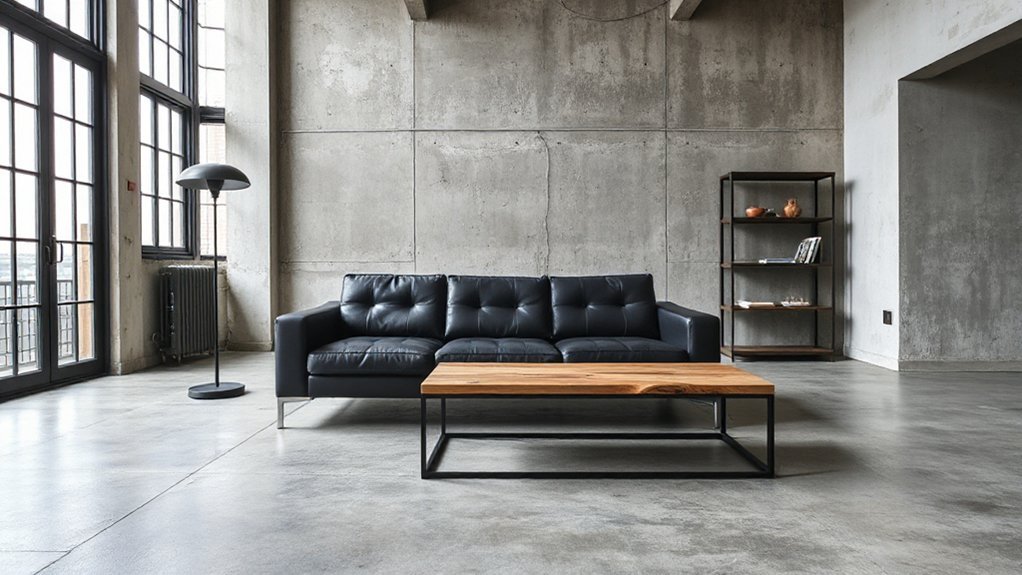
To keep an industrial-minimal space crisp, you’ll want furniture with clean lines and honest materials. Prioritize simple steel frames in matte black or brushed finishes, then balance them with streamlined wood silhouettes that stay slab-like and unfussy. Finish the look with low-profile upholstery—tight backs, squared arms, and tailored seams—so the room reads modern, not bulky.
Prioritize Simple Steel Frames
Why do steel frames anchor industrial minimalist rooms so effectively? They deliver instant structure, echoing minimalist architecture with honest, load-bearing clarity. You should choose sofas, chairs, and tables built on slim, rectilinear bases; they read lighter than bulky legs while staying visually strong. Specify matte black or gunmetal finishes to reduce glare and keep the palette disciplined. Look for welded seams, crisp corners, and consistent tubing diameters—these details separate refined industrial from garage-grade. Keep profiles low, arms straight, and proportions tight so negative space stays dominant. When you place steel-framed pieces, align edges with walls and rugs to reinforce grid logic. You’ll get a cleaner sightline, better circulation, and a room that feels edited, modern, and intentional.
Select Streamlined Wood Silhouettes
Steel frames set the grid, but streamlined wood silhouettes bring warmth without breaking that industrial discipline. Choose pieces with crisp edges, planar profiles, and leg geometry that echoes factory drafting—think squared tapers, slab sides, and honest joinery. Let silhouette shapes read clearly from across the room: long, low consoles; rectilinear dining tables; tight, architectural shelving.
Stay trend-right by mixing pale ash or white oak with matte black hardware, or going deeper with walnut against concrete. Favor visible grain and purposeful knots; these wood textures add depth without ornament. Keep proportions lean: thin tops, strong aprons, and open bases that show negative space. Finally, repeat one timber tone across key items so the room feels curated, not rustic.
Use Low-Profile Upholstery
How do you keep an industrial room feeling inviting without softening its edge? You do it with low profile upholstery: tight seats, shallow arms, and crisp tailoring that echoes steel beams and concrete. Skip overstuffed silhouettes; instead, choose sofas and lounge chairs with squared frames, exposed metal legs, and slim cushions that sit close to the ground.
Stick to minimalist fabric choices that read refined and durable—heavy cotton canvas, wool blends, or performance tweed in charcoal, bone, or muted olive. Keep piping subtle, seams straight, and tufting minimal or absent. Pair one upholstered anchor piece with a leather sling chair or a bench-style settee to maintain negative space. You’ll get comfort, structure, and a cleaner industrial line.
Industrial Minimalist Lighting: Ambient, Accent, Task
Three layers of light make industrial minimalism feel intentional rather than stark: ambient lighting sets a clean, even baseline with unobtrusive fixtures, accent lighting sculpts texture on brick, concrete, and exposed beams, and task lighting delivers focused brightness where you work.
Start with warm-dim LEDs at 2700–3000K and a high CRI (90+) so steel and wood read true, not flat. Keep ambient sources recessed, track, or slim flush-mounts, and put them on dimmers. For accents, aim adjustable heads at vertical surfaces to add depth without adding objects. Then lock in task light: under-cabinet bars, articulated arms, or a glare-controlled desk lamp placed 15–18 inches above the work plane. Choose Vintage fixtures in matte black or aged brass, and streamline pendant styles over islands for crisp pools of light.
Style Texture and Wall Décor Without Clutter
Even if you keep the palette tight and the furniture lean, you can still build warmth by layering tactile surfaces and editing wall décor like a gallery. Start with Exposed brick or concrete as your base, then add one contrasting material per zone—oiled oak, aged leather, or matte black steel—to keep the industrial edge crisp, not cold. Treat every wall piece as intentional, with breathing room and consistent framing.
- Hang Vintage signage sparingly, centered at eye level for impact.
- Use one oversized monochrome print instead of a busy grid.
- Add a slim picture ledge with two frames max, rotated seasonally.
- Balance hard surfaces with a wool runner or nubby linen panel.
Finish with a single sculptural hook or sconce to punctuate, not crowd.
Smart Storage to Keep the Industrial Look Clean
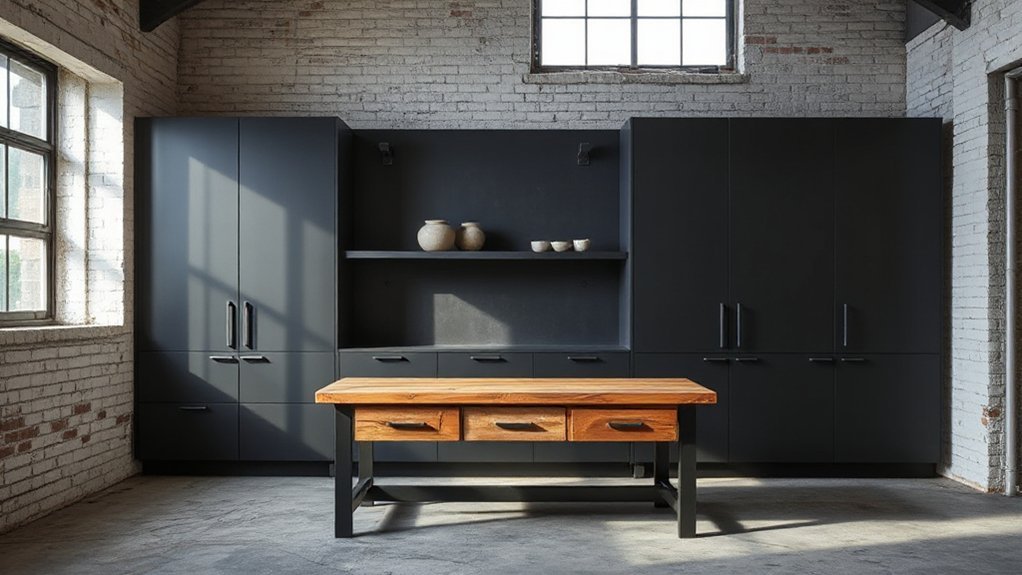
Because industrial minimalism puts every pipe, plank, and shadow on display, you’ve got to treat storage as part of the architecture, not an afterthought. Build Smart storage into the shell: floor-to-ceiling steel-framed cabinets, flush fronts, and continuous toe-kicks that read like a wall plane. Choose matte black hardware or finger pulls to keep lines tight and visual noise low.
For clutter control, prioritize closed storage for smalls and open storage for curated volume. Use modular shelving with solid back panels to hide cords, routers, and charging hubs. Add under-bench drawers to dining banquettes, lift-top coffee tables, and bed platforms with pull-out bins. In kitchens, run full-height pantry pull-outs and deep base drawers for cookware so countertops stay bare. Label discreetly, store vertically, and you’ll keep the loft vibe crisp.
Industrial Minimalist Mistakes (And Quick Fixes)
Clean, built-in storage keeps the loft vibe sharp—but a few common missteps can still make industrial minimalism feel cold, cluttered, or staged. If your space reads like a showroom or a warehouse, you’re likely stacking too many hard surfaces, leaning on matching “factory” sets, or ignoring scale. Fix it by balancing raw and refined, then editing with intent. These industrial minimalist mistakes have quick fixes that keep the look modern, not sterile.
- Too much gray-on-gray: add one warm wood tone and a camel or rust textile.
- Exposed everything: conceal cords, routers, and bins in matte-black cabinets.
- Undersized lighting: use an oversized pendant or linear fixture to anchor zones.
- Bare walls: hang one large art piece or a grid of monochrome prints.
Frequently Asked Questions
How Do I Make Industrial Minimalist Feel Warm for Families?
You’ll warm industrial minimalist for families by layering Industrial textures with soft rugs, timber, and linen, then adding Cozy lighting via dimmable pendants and lamps. Choose rounded furniture, kid-friendly finishes, and warm neutrals to soften.
What’s the Best Approach for Renters Who Can’T Modify Walls?
You’ll get the best results by using removable wall decor, leaning art, and tension rods, then upgrading plug-in lighting fixtures with dimmable bulbs. Layer rugs and textiles, and choose modular furniture you can reconfigure.
How Can I Incorporate Plants Without Breaking the Minimalist Aesthetic?
You add plants by treating them like disciplined roommates: one per zone, no spreading. Use Plant placement with consistent pots, tight groupings. Choose architectural species. Limit Green accessories to one accent, repeat materials.
Is Industrial Minimalist Design Suitable for Small Apartments?
Yes, it’s suitable for small apartments if you keep layouts open and surfaces uncluttered. Choose slim Metal fixtures and light palettes, then add controlled Vintage accents for warmth without visual noise or crampedness.
What Are Budget-Friendly Ways to Start Industrial Minimalist Styling?
Start cheap by decluttering, then thrift durable metal and wood pieces. Swap in simple lighting fixtures, add peel-and-stick concrete accents, and stick to muted color palettes. Use black hardware, open shelving, and one statement art.
Conclusion
You’ve stripped the room back to what matters: space, light, and honest materials. Concrete underfoot, matte black steel framing your view, warm wood grounding the edges—everything feels intentional. You’ve zoned the layout so circulation stays effortless and negative space reads like quiet luxury. Lighting layers soften hard surfaces: a dim ambient wash, crisp task beams, a focused accent glow. With hidden storage and restrained texture, the industrial soul stays sharp, calm, and current.