
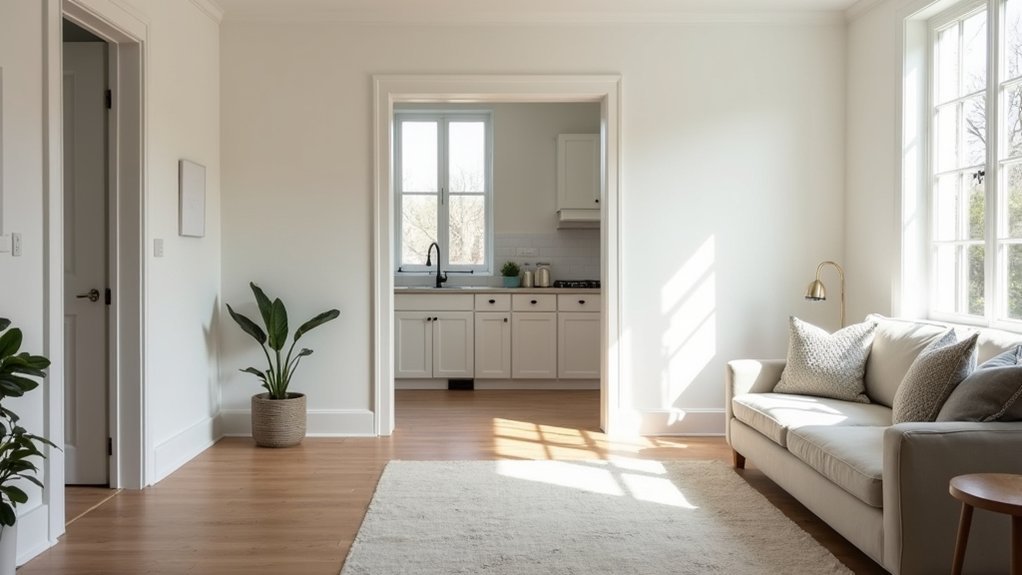
When you’re selling, every hour and dollar should pull its weight. You’ll get the fastest payoff by handling obvious repairs, decluttering hard, and creating a clean baseline with neutral paint and refreshed floors. Swap dated lights and tired hardware for simple modern pieces, then focus on kitchen and bath touch-ups that photograph well. Finish with curb-appeal basics like pressure washing and trimmed landscaping—but the real difference comes from what you tackle first…
Key Takeaways
- Fix safety and maintenance issues first: leaks, HVAC service, gutters, and broken outlets to prevent inspection surprises.
- Refresh walls with neutral paint: patch holes, caulk gaps, prime repairs, and cut clean trim lines for crisp photos.
- Improve floors fast: deep-clean carpets, regrout tile, buff hardwood, or replace worn areas with budget-friendly LVP or low-pile carpet.
- Modernize lighting and hardware: swap dated fixtures, add warm LED bulbs, update switch plates, and match finishes across door and plumbing hardware.
- Boost curb appeal quickly: pressure-wash, repaint the front door, replace house numbers, tidy landscaping, and stage the porch with a new mat.
Prioritize Quick Property Upgrades by ROI and Time
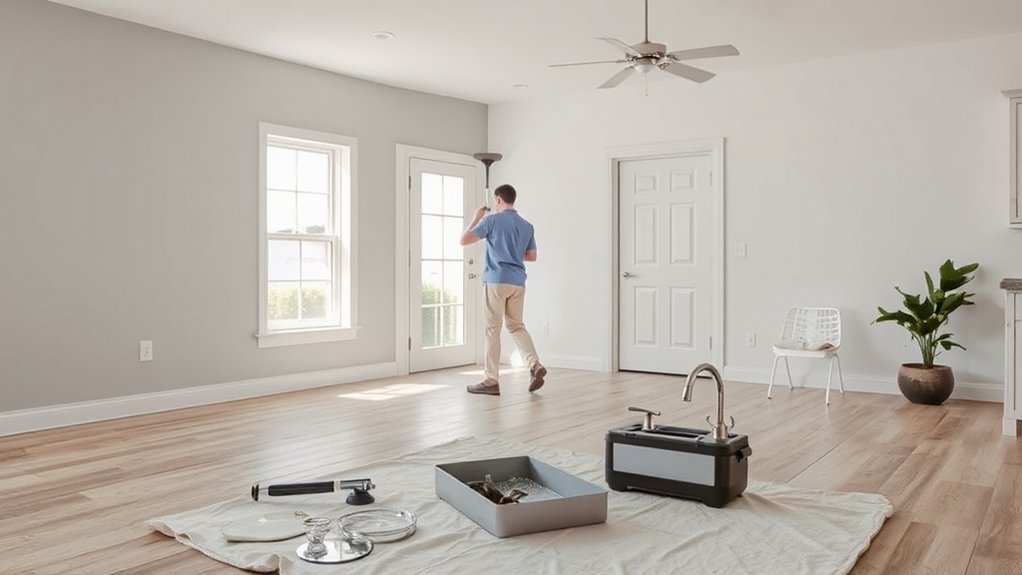
Before you start swinging a hammer, prioritize upgrades that deliver the biggest return in the shortest time, because buyers notice the basics first and appraisers reward visible, functional improvements.
Start with safety and maintenance: fix leaks, replace cracked outlet covers, service HVAC, and repair gutters and downspouts.
Next, update high-touch items that read “well cared for”: new cabinet pulls, modern light fixtures, a smart thermostat, fresh caulk around tubs and sinks, and a new mailbox or house numbers.
Keep receipts and a tight scope so you don’t over-improve for your neighborhood.
Pair upgrades with Staging strategies: declutter, improve lighting, and create clear room uses.
Then use Pricing tactics to reflect condition upgrades without pricing past comparable sales.
Track timeline and budget weekly.
Refresh Paint and Floors for a Clean Reset
Although trendy finishes come and go, nothing resets a home’s first impression like clean paint and well-kept floors. Start by patching holes, caulking gaps, and sanding rough spots so your walls read crisp, not tired. If you’ve got heavy Wall textures, repair cracks and chips, then prime to prevent flashing; consider softening dated texture only where it’s damaged.
Choose a neutral, washable interior paint and cut sharp lines at trim for a professional look. For floors, deep-clean carpet, regrout tile, and buff hardwood to restore sheen. If replacement’s necessary, pick durable Flooring options that photograph well: mid-tone LVP, refreshed engineered wood, or new low-pile carpet in bedrooms.
Match progressions, fix squeaks, and replace torn thresholds.
Upgrade Lighting and Fixtures for Instant Polish
When your listing photos hit the web, dated lighting and mismatched hardware can make an otherwise updated home feel tired. Treat lighting as part of your lighting design: layer ambient, task, and accent light so rooms read bright and intentional. Swap yellowed domes for clean, modern flush-mounts in hallways and bedrooms, and add a statement pendant in the entry for impact.
Prioritize consistent finishes. Your fixture selection should coordinate across doors, closets, and plumbing trim—pick one metal (brushed nickel, matte black, or brass) and repeat it. Replace builder-grade switch plates, update dimmers, and install warm-white LED bulbs (2700–3000K) with high CRI for accurate color.
Check that every fixture works, sits level, and doesn’t flicker.
Budget Kitchen and Bath Property Upgrades That Show Well
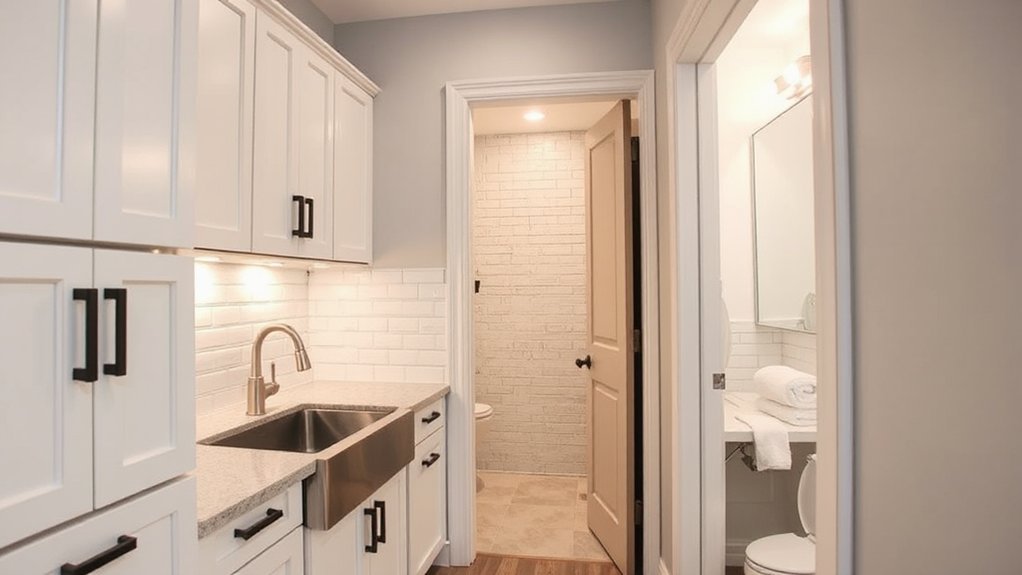
Because buyers judge kitchens and baths as “move-in ready” spaces, you’ll get the most visual payoff from small, targeted upgrades that clean up finishes and refresh surfaces without a full remodel.
Start by deep-cleaning grout, recaulking tubs and sinks, and replacing yellowed switch plates. Swap dated cabinet pulls for simple brushed nickel or matte black, then add a matching faucet if the finish clashes. If cabinets are solid, paint them and install soft-close bumpers; avoid trendy colors unless historical trends in your market support them.
Replace worn laminate with an affordable butcher block remnant, or resurface counters if replacement isn’t feasible.
In baths, install a new mirror, bright LED vanity bulbs, and a crisp shower curtain.
Use Neighborhood analysis to match the local price point.
Boost Curb Appeal Property Upgrades Before Listing
Even if you plan major interior updates, you’ll win more showings by tightening up curb appeal first, since buyers form a price opinion before they step inside. Start with exterior cleaning: pressure-wash siding, walkways, and the driveway, then scrub windows and wipe down the front door hardware. Touch up peeling trim and repaint the door in a modern, contrasting color. Swap dated house numbers and add a bright, warm porch light.
Next, prioritize Landscaping improvements that photograph well: edge the lawn, re-mulch beds, prune shrubs below windows, and remove dead plants. Add two matching planters at the entry for symmetry.
Finally, clear gutters, hide trash bins, and stage the porch with one clean chair and a new mat.
Frequently Asked Questions
Do I Need Permits for Minor Upgrades Before Listing My Home?
You might, depending on your local Permit requirements: cosmetic painting usually doesn’t, but electrical, plumbing, structural, or HVAC work often does. Check your city/county office, document approvals, and provide accurate DIY disclosures to buyers.
Should I Disclose DIY Repairs and Renovations to Potential Buyers?
Absolutely—you should disclose DIY repairs and renovations; it’s a million times safer. Document work, dates, permits, and contractors to avoid DIY pitfalls. Use clear renovation disclosures for material changes, known defects, and unpermitted work.
How Do Upgrades Affect My Home Appraisal and Comparable Sales Analysis?
Upgrades can raise your valuation if they match Appraisal criteria and local Comparable metrics. You’ll get the most impact from permits, quality workmanship, and market-typical improvements; overcustomization won’t translate into comp-based adjustments.
What Upgrades Are Most Likely to Trigger Buyer Inspection Issues?
You’ll trigger inspection issues with DIY electrical/plumbing, unpermitted structural changes, roof patches, and poor drainage. Landscaping improvements can expose grading problems; interior cosmetic fixes can hide moisture or mold. Use permits, disclose work, and hire licensed trades.
When Should I Stop Upgrading and Focus on Staging and Marketing Instead?
After you’ve hit 90% of buyer expectations, stop upgrading and pivot to staging and marketing. Skip Luxury upgrades; prioritize cosmetic enhancements. If projects won’t finish in two weeks, they’ll delay listing and add risk.
Conclusion
If you’re selling soon, focus on upgrades that pay back fast and photograph well. Patch and paint, scrub and stage, repair and replace—so buyers see care, not chores. Brighten rooms with updated lighting, modern switches, and clean hardware. Make kitchens and baths look crisp with fresh caulk, new faucets, and tidy counters. Then win the drive-by: pressure wash, edge lawns, add mulch, and paint the front door.