
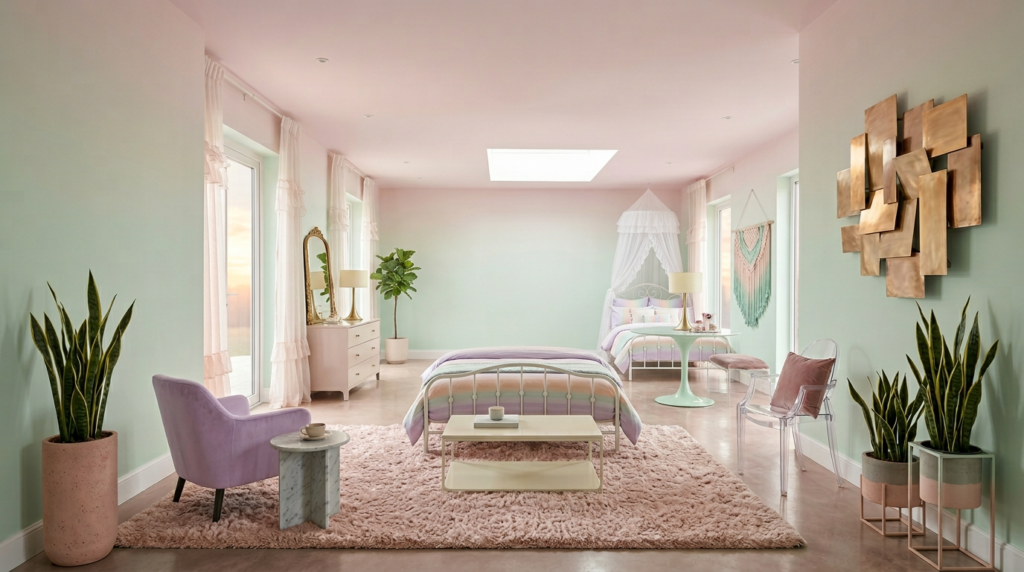
If you want a bedroom that feels calm but still current in 2024, you can’t go wrong with soft pastels—powder blue, muted sage, blush pink, or warm lilac. You’ll get the best results when you balance them with warm whites, greige, or soft taupe, then layer in light wood, texture, and gentle lighting. But the real difference comes down to one choice most people miss…
How to Choose a Pastel Bedroom Palette (2024)
Before you pick paint swatches or new bedding, decide what you want your bedroom to feel like—airy and calm, warm and cozy, or fresh and modern—because that mood should guide your pastel palette in 2024.
Then choose one “hero” pastel for large surfaces: walls, rug, or duvet. Keep it muted, not sugary. Add a second pastel as an accent through pillows, art, or a chair, and ground both with a neutral like warm white, greige, or soft taupe.
Check your room’s light: north-facing rooms need warmer pastels; bright rooms can handle cooler tints.
Limit patterns to two scales so the space doesn’t look busy.
Finally, test samples morning and night, and match hardware to your undertone.
Powder Blue Pastels: Airy, Calm Bedrooms
If you want a bedroom that feels instantly lighter and quieter, powder blue gives you that airy calm without turning the space icy. Use it on one main wall, ceiling accents, or linen bedding to soften daylight and reduce visual noise.
Pair it with warm whites, pale greige, and natural oak to keep the mood inviting.
Choose matte or eggshell paint for a velvety finish, then layer textures: quilted cotton, boucle throws, and sheer curtains.
Add contrast with charcoal picture frames or black hardware so the room doesn’t fade.
Brass lamps and creamy ceramics bring gentle warmth without overpowering the blue.
Keep patterns subtle—thin stripes, cloudlike watercolor, or tiny checks—to maintain that floating, restful feel.
A cool-toned rug anchors the palette and muffles sound too.
Muted Sage Pastels: Warm, Grounded Rooms
While brighter greens can feel sharp in a bedroom, muted sage reads soft and steady, giving the room a warm, grounded calm. Use it on walls for a gentle cocoon, or keep it to bedding and a throw if you want a lighter touch.
Pair sage with creamy whites, oat-toned linens, and pale woods to keep the palette airy without turning cool. Add depth with clay or sand accents, and choose brushed brass or matte black hardware for clean contrast.
You’ll get the best effect from warm lighting: 2700K bulbs soften the green and make evenings feel restful.
Bring in texture—bouclé, linen, or wool—to prevent the colour from feeling flat. Keep patterns subtle and organic too.
Blush Pink Pastels: Modern, Not Sweet
Because blush pink carries a soft warmth rather than a sugary hit, it can read modern and composed in a 2024 bedroom. Use it as a wall wash in a matte finish, or keep it restrained on bedding and a headboard so it feels architectural, not precious.
Pair it with off-white, oatmeal, or warm greige to quiet the palette and let the pink act like a neutral.
Choose materials that sharpen the look: pale oak, brushed brass, blackened steel, or ribbed glass. Add contrast through charcoal piping, ink-toned art, or a dark walnut nightstand.
If you want pattern, pick tonal stripes or micro-checks instead of florals. Keep lighting warm and diffused, and the room stays calm and current.
Warm Lilac Pastels: Cosy and Current
Though lilac can feel powdery at first glance, a warmer, slightly muted version reads cosy and current in a 2024 bedroom. You’ll get that inviting effect when you choose lilac with a hint of mauve or grey, so it looks grounded instead of sugary.
Paint it on a feature wall behind the bed, or bring it in through a duvet, pillows, or a textured throw for a softer commitment.
Keep the finish matte or eggshell to make the colour feel velvety under warm lighting. Add tonal layers—dusty orchid, pale plum, and lavender-tinted whites—to build depth without making the room feel busy.
If you want contrast, introduce deep berry accents in small doses.
Pair Pastels With Neutrals and Light Wood
To keep pastel bedroom colours from feeling too sweet, pair them with calm neutrals and light wood tones. Start with a soft base like warm white, oat, or greige on walls or bedding.
Then layer your chosen pastel—powder blue, blush, or lilac—in smaller blocks across cushions, throws, and art. Choose light oak, ash, or birch for bed frames, nightstands, and shelving to add warmth without adding visual weight.
Keep finishes matte or satin so the palette reads relaxed, not shiny. If you’re mixing multiple pastels, anchor them with one consistent neutral and repeat the same wood tone throughout the room.
Finish with natural fabrics like linen and cotton to keep everything breathable and modern. Clean lines help, too.
Add Contrast With Black, Brass, and Texture
Neutrals and light wood give pastels a calm foundation, but a little edge keeps the palette from fading into the background. Bring in matte black through slim lamp bases, picture frames, or a bedside table to sharpen blush, mint, or powder blue. Keep black accents small and repeated so the room feels tailored, not heavy.
Warm things up with brushed brass: swap in brass drawer pulls, a mirror frame, or a simple wall sconce. Brass adds glow without competing with your soft tones.
Then layer texture to add depth—bouclé cushions, linen bedding, a chunky knit throw, and a low-pile rug. Mix smooth ceramics with ribbed glass to catch light. You’ll get contrast, richness, and a bedroom that feels intentional.
Conclusion
You’ve got plenty of ways to make soft pastels work in a 2024 bedroom. Choose powder blue when you want an airy calm, muted sage for grounded warmth, blush pink for a modern glow, or warm lilac for cosy sophistication. Keep everything balanced with warm whites, greige, or soft taupe, plus light wood. Then add definition with black accents, brass details, and rich textures so your room feels serene, current, and truly restful.