
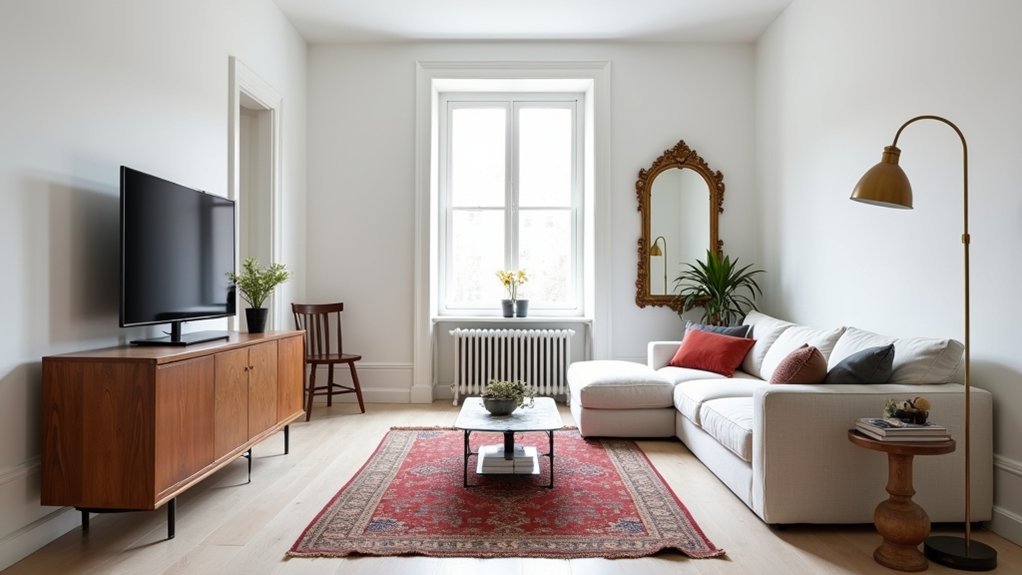
Start with one standout vintage “hero” piece—a credenza, rug, or leather chair—then design around its scale, patina, and era so it feels intentional. Keep your foundation modern and neutral (warm white, greige, soft taupe), and repeat two to three materials like brass, walnut, or chrome for cohesion. Layer clean upholstery with tactile textures—linen, bouclé, aged leather—and edit accessories sparingly in grouped vignettes. Next, you’ll see how to shop, inspect, and upgrade finds.
Key Takeaways
- Choose one standout vintage “hero” piece per room and keep surrounding furniture modern, simple, and scaled to support it.
- Build a neutral foundation (warm white, greige, taupe) so patina reads intentional, not cluttered, and textures can shine.
- Repeat materials and finishes twice (brass, walnut, leather) to create cohesion while mixing eras and silhouettes thoughtfully.
- Add vintage lighting, mirrors, and small accessories sparingly, grouping items in threes and editing regularly for a curated look.
- Shop reputable sources and inspect condition fast—check stability, veneer, odors, and upholstery—then budget for reversible updates like hardware swaps.
Choose One Vintage “Hero” Piece First
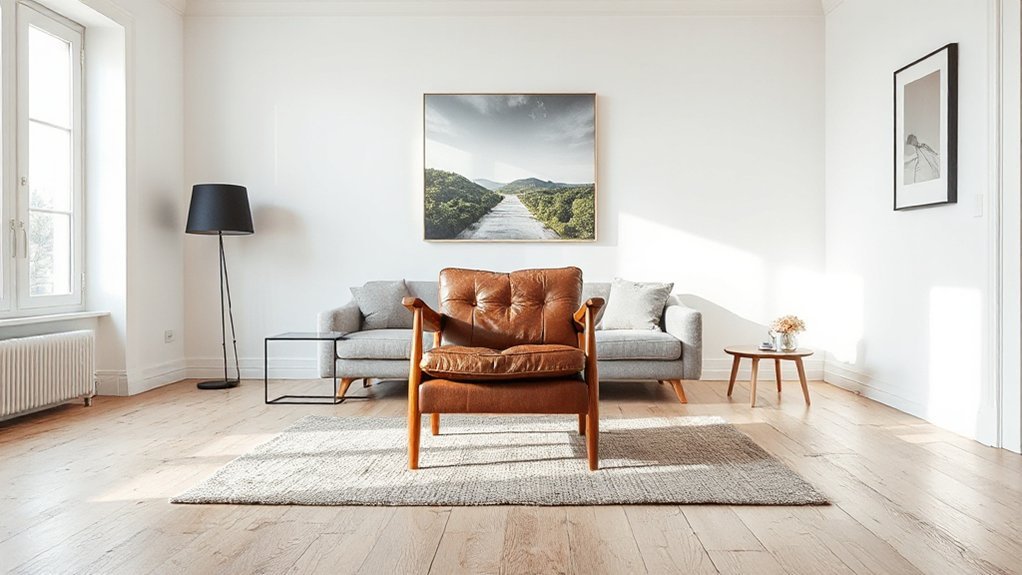
Start with one vintage “hero” piece—the item that sets the tone for the entire room—such as a sculptural mid-century credenza, an antique Persian rug, or a well-made leather club chair. Place it first, then design around its scale, color, and patina so it reads intentional, not accidental. Keep surrounding finishes modern and restrained—clean-lined upholstery, simple drapery, and edited wall art—so the hero stays dominant.
Next, echo its materials with a tight set of Vintage accessories: one ceramic vessel, a brass tray, or framed ephemera, not a crowded vignette. Anchor the scene with Antique lighting, like a milk-glass pendant or aged-bronze sconce, to cast warm, dimensional light that flatters wear and texture. Measure, clear pathways, and let negative space do the heavy lifting.
Pick a Vintage Era That Matches Your Home
One smart shortcut is to let your home’s architecture pick the vintage era for you. A Craftsman bungalow naturally supports Arts and Crafts or early American pieces, while a mid-century ranch aligns with 1950s–60s lines. In a loft or new-build, lean into streamlined 1970s Italian modern or Bauhaus-influenced forms to keep Vintage charm without visual clutter.
Use Era pairing to match proportions, not just dates: low ceilings favor lower, longer silhouettes; tall rooms handle vertical, ornate profiles. Check your fixed finishes—floor tone, trim profiles, and window grids—then choose an era that repeats those cues. If your home mixes styles, pick one dominant era and let other decades appear only as subtle accents, so everything reads intentional and current.
Best Vintage Pieces for Modern Rooms
Because modern rooms rely on clean lines and negative space, the best vintage pieces are the ones that deliver sculptural impact and real function without adding visual noise—think a teak credenza with long, low proportions, a Barcelona-style or sling lounge chair with a crisp frame, a large vintage mirror to bounce light, and a punchy 1970s ceramic lamp to warm up minimalist surfaces. Keep your edit tight: choose one hero piece per zone, then let it anchor the palette. In living areas, a midcentury nesting table set gives flexible surface area without bulk. In dining rooms, pair a tulip-base table with vintage bentwood chairs for contrast. In bedrooms, add a cane-front nightstand or lacquered campaign dresser for texture. Track Vintage trends, but prioritize Modern reinterpretations that meet today’s ergonomics and storage needs.
Where to Shop for Quality Vintage Finds
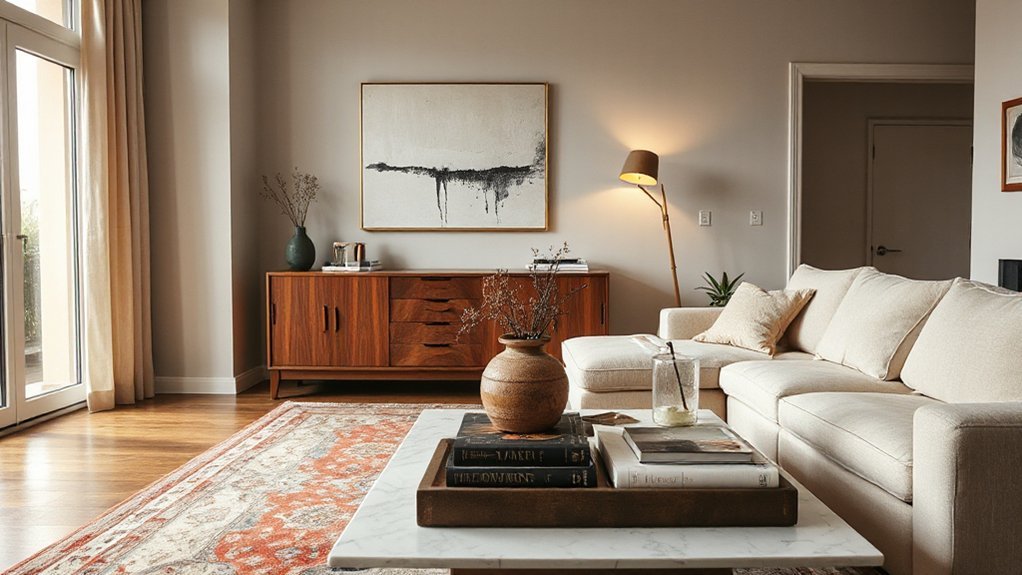
A standout vintage piece only earns its “hero” status if it’s well-made and honestly represented, so where you shop matters as much as what you pick. To source investment-worthy finds, prioritize sellers with tight curation, clear provenance notes, and consistent category specialization—especially for Antique glassware and Retro textiles that vary widely by era.
- Reputable vintage dealers and design showrooms: You’ll get edited selections, trend-forward sourcing, and pricing that reflects verified quality.
- Estate sales and reputable auction houses: You can access whole-home collections and mid-century staples before they’re picked over.
- Vetted online marketplaces: Filter by seller ratings, return policies, and detailed photos; save searches for specific makers and decades.
Track local vintage fairs, then build relationships—you’ll get first look at new arrivals.
How to Inspect Vintage Condition Fast
Before you fall for patina and provenance, run a rapid condition check that separates true character from costly damage. Start with structure: wobble-test chairs, rock case goods corner-to-corner, and open every drawer to feel for racking. Scan joints for fresh glue, mismatched screws, or new corner blocks—signs of rushed repairs.
Next, inspect surfaces in raking light. You’re looking for lifted veneer, heat rings, deep scratches through finish, and cloudy lacquer. Smell for mustiness that signals active mildew or water intrusion. Flip pieces over: check for wormholes, powdery frass, and split rails. For upholstery, press cushions; listen for springs, and check webbing tension. During vintage sourcing, price in furniture restoration only when the frame is sound.
Anchor the Room With Modern Basics
You’ll get the cleanest vintage-meets-now look when you anchor the room with modern basics first. Choose neutral foundation pieces—think a streamlined sofa, simple rug, and matte-painted walls—so your vintage finds read intentional, not chaotic. Then balance patina and ornament with crisp silhouettes and uncluttered sightlines to keep the space current.
Choose Neutral Foundation Pieces
Because vintage pieces already bring patina, pattern, and visual “noise,” a neutral foundation keeps the room feeling intentional rather than cluttered. Start with modern basics in warm whites, soft grays, oatmeal, or muted taupe so your finds read as curated accents, not competing statements. Use matte finishes and tight weaves to quiet the background and elevate texture.
- Choose a low-profile sofa, solid rug, and simple drapery in one undertone (warm or cool) to prevent visual drift.
- Build Color contrast deliberately: pair mid-tone vintage wood with pale upholstery, or dark metal with light walls.
- Apply lighting techniques that flatter age: diffuse overheads, add a focused picture light, and use warm LED bulbs to deepen patina without glare.
Balance Vintage With Clean Lines
Even if your vintage pieces steal the spotlight, clean-lined modern basics keep the room feeling edited and current. Start with a streamlined sofa, low-profile media console, or slab coffee table in solid wood, lacquer, or metal. These forms act like a visual reset, so ornate silhouettes don’t compete.
Then layer character with intention: drape antique textiles over a tailored armchair, or frame a kilim as art against a crisp white wall. Limit patterns to one or two repeats, and echo their tones in a modern rug or throw. For illumination, choose retro lighting with a simple geometry—opal globe, cone shade, or brass sconce—so it reads nostalgic, not cluttered. Keep negative space around each standout piece, and you’ll get contrast without chaos.
Use a Tight Color Palette to Mix Eras
When you keep your palette tight, vintage pieces stop feeling like outliers and start reading as intentional design moves. Pick two to three core hues, then repeat them across old and new items so the room feels edited, not collected.
- Choose a modern base: warm white, soft greige, or inky charcoal sets a current, gallery-like backdrop.
- Match undertones: align woods, metals, and paints by temperature (warm with warm, cool with cool) to lock in Color harmony.
- Use one accent color: carry it through art, ceramics, or upholstery so a mid-century chair and a contemporary sofa feel like one story.
This disciplined approach makes Era blending look effortless and trend-right.
Layer Textures So Vintage Feels Intentional
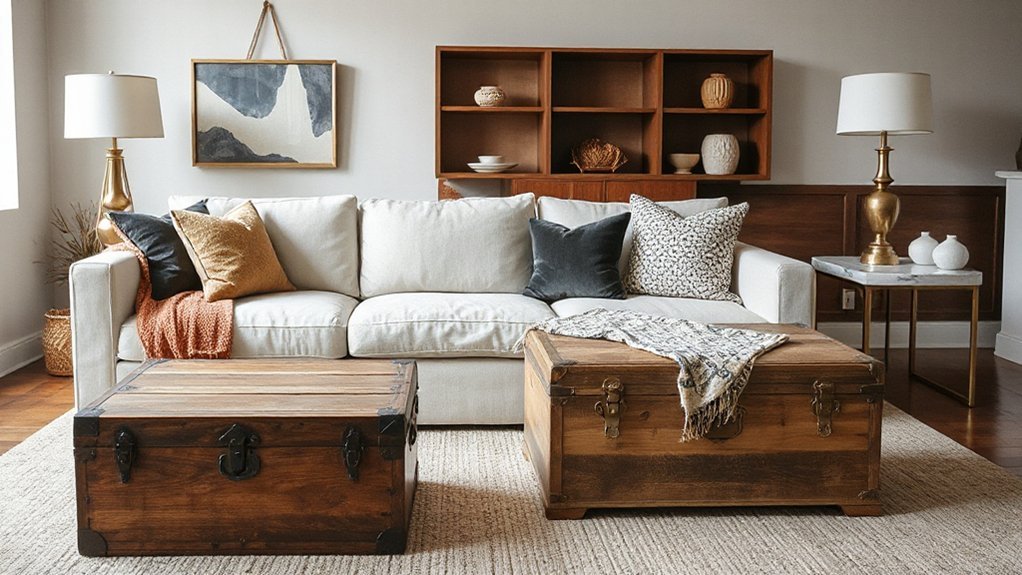
Layer textures to make your vintage pieces read as curated, not cluttered—you’re mixing old and new on purpose. Pair patinated wood, aged leather, or tarnished brass with modern, neutral backdrops like linen upholstery, matte paint, and streamlined rugs so the wear looks elevated. Keep the contrast controlled: one or two timeworn statement textures, then let clean neutrals and crisp silhouettes carry the rest.
Mix Old And New
Although your vintage pieces may carry plenty of character on their own, they’ll look most intentional when you mix them with clean-lined modern elements and thoughtfully varied textures. Anchor the room with one strong vintage statement, then repeat its materials elsewhere so the contrast feels curated, not chaotic. Pair Antique furniture with a slim-profile sofa, a waterfall-edge console, or minimal shelving to sharpen the silhouette.
- Combine tactile layers: bouclé, linen, and aged leather against lacquer or glass.
- Keep scale disciplined: offset a chunky credenza with airy legs and low visual weight.
- Edit your vignettes: group Retro accessories in threes, mixing matte ceramic, brass, and smoked acrylic.
You’ll get a high-low look that reads collected, current, and design-forward.
Balance Patina With Neutrals
Mixing old and new sets the framework; now make the room feel cohesive by balancing vintage patina with a neutral base. Start with warm whites, greige, or soft taupe on large surfaces so your aged brass, worn oak, and crackled leather read as curated, not cluttered. Aim for Neutral harmony by repeating one calm tone across rugs, drapery, and upholstery.
Then build Patina contrast through texture, not more color: pair a distressed sideboard with matte-linen curtains, a honed stone top, or a bouclé chair. Keep metals consistent—antiqued brass with brushed brass, not chrome. Use one high-gloss element (lacquer, glass) to sharpen edges, and one nubby layer (wool, sisal) to ground the vignette. Edit accessories to odd-number groupings, leaving negative space.
Style + Edit: Make Vintage Look Curated
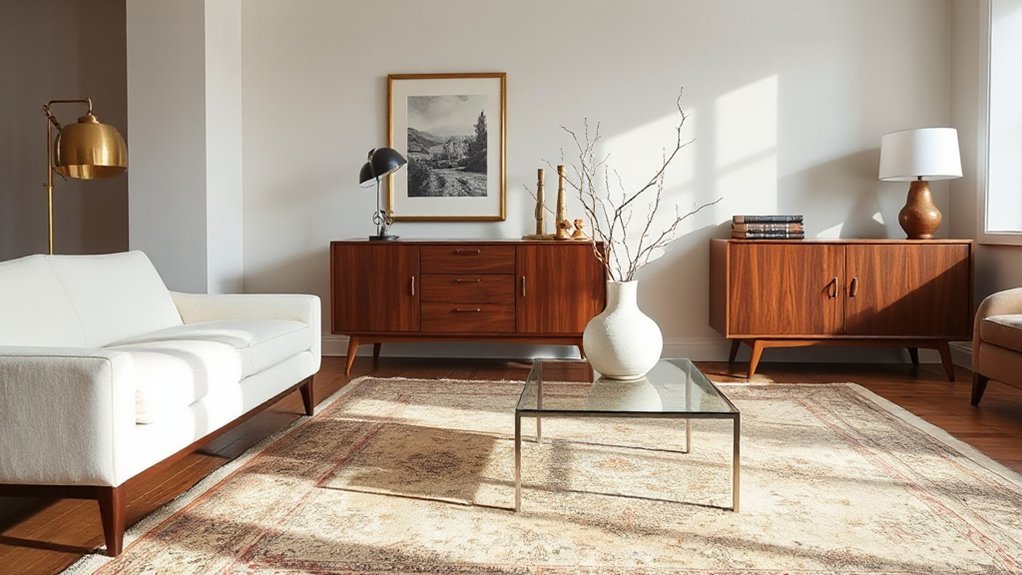
When you treat vintage like a capsule collection instead of a flea-market haul, it reads intentional, not accidental. You don’t need more pieces—you need better decisions. Start with Modern curation: pick a tight palette, repeat one material, and let negative space do the work. Then use Vintage pairing to create contrast that feels designed, not themed.
- Choose a hero: one statement vintage item per zone (chair, mirror, lamp), then keep supporting pieces quiet.
- Edit by era and line: mix periods, but align silhouettes—curves with curves, clean angles with clean angles.
- Build rhythm: repeat a finish (brass, walnut, chrome) at least twice so the room reads cohesive.
Step back, remove one item, and you’ll see the edit.
Easy Care and Small Upgrades for Vintage
You’ll keep vintage pieces looking sharp with simple, material-specific cleaning and a few protective moves like wax, felt pads, and UV-conscious placement. When you want a fast refresh, swap dated knobs for modern pulls, tighten hinges, and update tired finishes with a gentle polish, a toned wax, or a matte-seal topcoat. These small, low-risk upgrades preserve patina while aligning the piece with today’s clean, tailored interiors.
Simple Cleaning And Protection
Although vintage pieces bring instant character, they’ll look intentional in a modern space only if you stabilize and protect them first. Start with Furniture preservation basics: remove dust with a soft brush, then wipe with a barely damp microfiber cloth and pH-neutral soap. Dry immediately to prevent swelling, haloing, or rust marks.
- Test every cleaner in a hidden spot and wait 24 hours for discoloration or tackiness.
- Add Surface protection with felt pads, coasters, and discreet clear bumpers to prevent scratches on stone, lacquer, or engineered floors.
- Control the environment: keep pieces out of direct sun, aim for steady humidity, and use a HEPA vacuum attachment for carvings and caning.
Finish by tightening loose joints gently and storing textiles in breathable cotton, not plastic.
Quick Hardware And Finish Updates
How do vintage pieces start looking “custom” in a modern room without losing their soul? You focus on quick, reversible tweaks that sharpen the silhouette and align with today’s finishes. Start with Hardware upgrades: swap dated brass pulls for satin nickel, matte black, or unlacquered brass to echo nearby lighting and faucets. Keep hole spacing consistent, or use backplates to cover scars. Upgrade hinges to soft-close where possible, but save original parts in a labeled bag.
Next, do a Finish refresh that respects patina. Clean, then scuff-sand only the glossy areas, and seal with a low-sheen topcoat to reduce maintenance. For painted pieces, try color-washing or a mineral paint in a muted, modern tone. Replace felt pads and levelers for stability.
Frequently Asked Questions
How Do I Safely Ship Large Vintage Furniture Long-Distance?
You’ll safely ship large vintage furniture long-distance by disassembling, photographing, and padding corners, then crating and pallet-wrapping. Choose white-glove carriers, insure full value, and control humidity for Vintage preservation and Antique restoration during transit.
Do I Need Special Insurance for Valuable Vintage Decor?
Yes—you’ll need special insurance if your vintage decor’s value exceeds standard policy limits. Get a Vintage valuation or Antique appraisal, then schedule items or add a rider, covering transit, theft, and accidental damage.
How Can I Authenticate a Vintage Piece and Avoid Reproductions?
Channel your inner detective: you’ll authenticate by checking maker’s marks, patina, joinery, and period materials. Request provenance, compare to catalog archives, and consult appraisers. For Vintage authenticity and Reproduction identification, scrutinize finishes and hardware.
What’s the Best Way to Store Vintage Items I’M Not Using?
Use acid-free tissue, breathable cotton covers, and labeled archival boxes; keep items cool, dry, dark, and off floors. Rotate a Vintage display seasonally. Choose modular Storage solutions, add silica gel, and inspect quarterly.
Are There Legal Restrictions on Importing Vintage Furnishings Internationally?
Measure twice, cut once: yes, you’ll face legal limits when importing vintage furnishings. You must verify vintage authenticity, comply with import regulations, wood/taxidermy bans, fumigation rules, CITES permits, and pay duties, VAT.
Conclusion
Start with one vintage hero piece, then let your palette, textures, and editing do the heavy lifting. Worried vintage will make your modern room feel dated? It won’t if you anchor it with clean-lined basics, repeat one or two colors, and upgrade the unseen details—new wiring, fresh upholstery foam, felt pads. Keep only what earns its place, and mix eras with intention. Shop smart, inspect fast, and you’ll get character without clutter.