
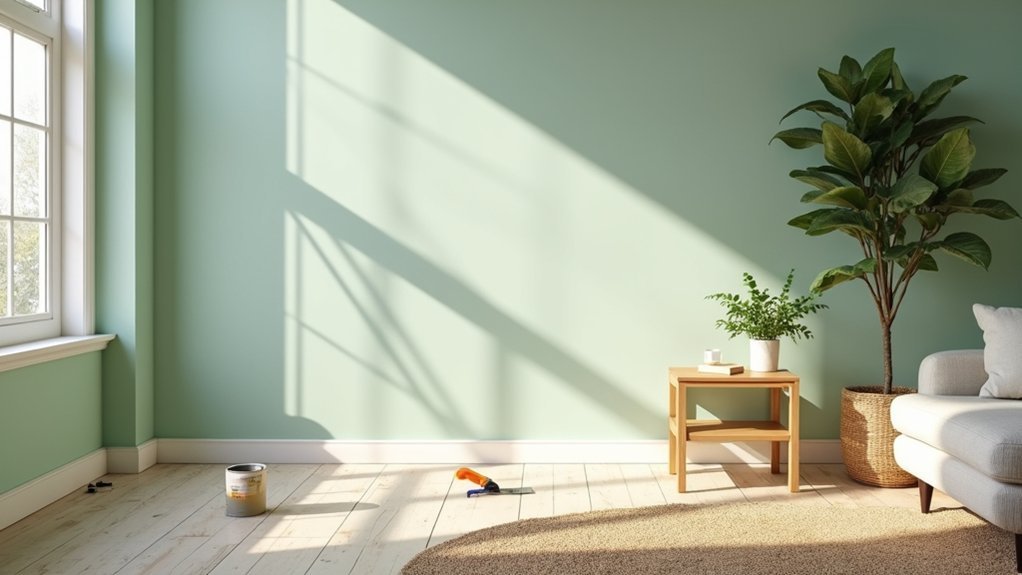
Make your home feel new again for £0–£100 by starting with a 20‑minute reset: clear surfaces, hide cables, rotate cushions, swap throws, and reposition mirrors to bounce light. Pick one accent colour and repeat it in small bits for a mood lift. Freshen skirting boards, doors, or radiators with a quick sand, sugar soap, filler, then satinwood paint. Renters can add peel‑and‑stick wallpaper or decals. Next, tweak your layout and lighting for bigger impact.
Key Takeaways
- Do a 20-minute reset: clear surfaces, hide cables, and rearrange existing decor like cushions, throws, and mirrors for fresh light.
- Refresh high-wear paint areas—skirting, doors, radiators—after cleaning, filling, and spot-priming for a crisp, “new home” finish.
- Add renter-friendly peel-and-stick wallpaper or decals to a feature wall, shelves, or cupboard fronts for instant pattern and personality.
- Rearrange furniture using measurements and socket locations to improve flow, clear walkways, and create a stronger focal-point layout.
- Swap textiles, lighting, and art: new cushion covers, warm 2700K bulbs, and rotated frames can make rooms feel cozier fast.
Pick Your $0–$100 Refresh Plan (Fast Wins)
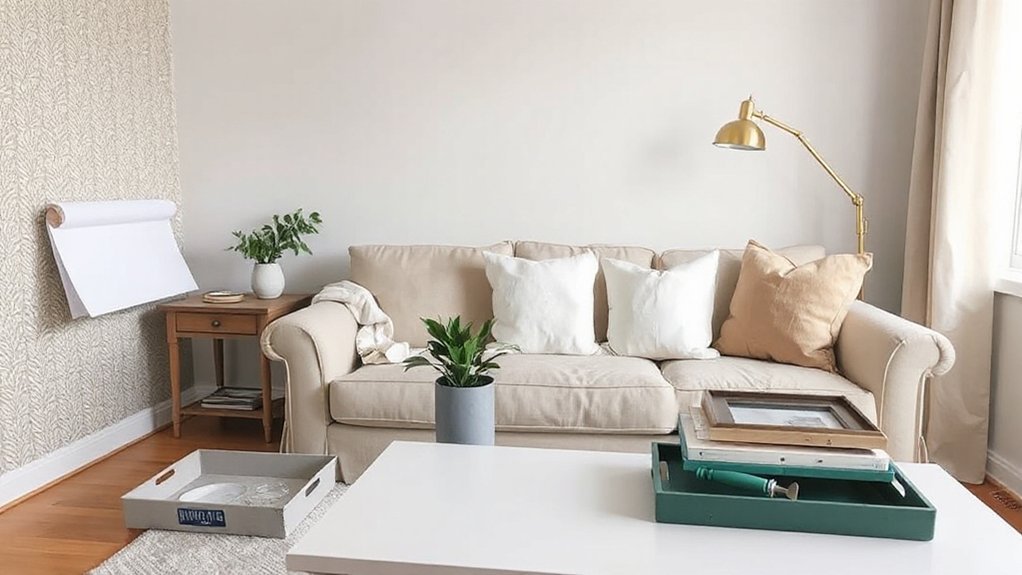
Whether you’ve got £0 to spend or you’re happy to put aside up to £100, you can refresh a room quickly by picking one tight plan and sticking to it. Start with a 20-minute reset: clear surfaces, corral cables, and shift one oversized item to improve spatial flow from doorway to seating. Next, use what you own: rotate cushions, swap throws between rooms, and move a mirror opposite a window for brighter light.
If you can spend, cap it: £10–£25 for warm LED bulbs, £15–£40 for matching hangers and storage boxes, £20–£60 for a new rug or curtain pole, £5–£20 for houseplants. Apply Color psychology by choosing one accent colour across two or three small items to calm or energise.
Do High-Impact Paint Touch-Ups (Trim, Doors, Accents)
Once you’ve nailed your £0–£100 refresh plan, use paint touch-ups to make the whole room look sharper for very little outlay. Target skirting boards, architraves, internal doors, banisters, and radiator covers first—these take knocks and show grime.
Start with paint preparation: wash with sugar soap, rinse, dry, then lightly sand and hoover dust. Fill dents, caulk gaps, and spot-prime bare patches or stains to stop bleed-through. For speed, use a 2-inch angled brush and a mini foam roller on flat panels.
Create Color contrast by painting trim in crisp white satinwood against warmer walls, or go bold on a single door in deep navy or heritage green. Mask edges, keep a wet line, and de-nib between coats.
Add Renter-Friendly Peel-and-Stick Upgrades
How do you get a big visual upgrade without losing your deposit? Go for peel-and-stick finishes that come off cleanly. Use temporary wallpaper on one feature wall, inside alcoves, or on the back of open shelving for instant pattern. Prep properly: wipe with sugar soap, let it dry, then smooth from the centre out with a plastic scraper to avoid bubbles.
Add removable decals to plain cupboard fronts, splashback tiles, or the fridge for a quick lift. Choose matt vinyl for a painted look, and check heat ratings if you’re using them near a hob. Test a small corner first, especially on fresh paint. When you move out, warm with a hairdryer and peel slowly to minimise damage.
Rearrange Furniture for a Budget DIY Reset
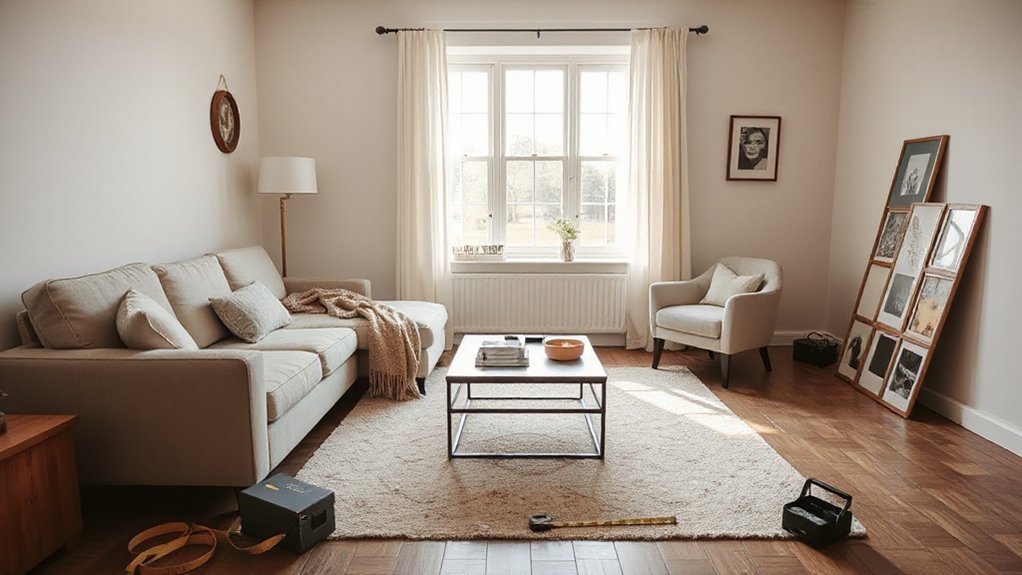
If your room feels tired but your budget’s tight, rearranging what you already own can deliver the fastest DIY reset. Start by measuring key pieces and noting socket locations and radiator clearance, common in UK terraces and flats. Sketch a quick plan on paper so you don’t waste energy shifting heavy items twice.
Focus on Furniture placement that improves flow: keep a clear walkway from doorway to window, and angle seating towards your main focal point. For Space optimization, pull sofas a few inches off the wall, tuck nesting tables under, and swap bulky pieces between rooms if one feels cramped. Raise small items off the floor using shelves you already have, and group storage near where you use it. Finish by checking door swing and natural light.
Swap Textiles, Lighting, and Art for Instant Cozy
Because textiles, lighting, and wall art sit right in your eyeline and hands, swapping them gives you a cosy reset without touching the big furniture. Start with Textile layering: add a chunky throw, swap cushion covers, and mix one patterned fabric with two plains so it doesn’t look busy. Change curtains for lined thermal ones or add a simple voile for softer daylight. For Ambient lighting, ditch the harsh main bulb and use warm LEDs (2700K) in table lamps, a floor lamp, and plug-in fairy lights. Put lamps on smart plugs or a cheap timer for evenings. Finally, rotate prints: move frames between rooms, use A3 posters from UK high-street shops, and hang them with Command strips to avoid holes.
Frequently Asked Questions
How Do I Budget for DIY Projects When Prices Vary by Region?
You budget by researching regional pricing at local UK merchants, then building a range estimate. Do a Cost comparison online and in-store, add a 15% contingency, and lock prices with quotes before buying.
What Permits or Building Codes Might Apply to DIY Home Updates?
You’ll often need building permits for structural work, extensions, electrics, plumbing, or windows; you must follow Building Regulations and check zoning regulations (local planning). You should ask your council’s planning and building control teams first.
How Can I Avoid Common DIY Mistakes That Reduce Home Resale Value?
Like a wonky picture frame, rushed DIY skews buyers’ first glance: you’ll protect resale by Choosing color schemes neutrally, finishing neatly, keeping receipts, and getting Part P/Gas Safe checks. Prioritise Upgrading fixtures over quirky features.
Which Tools Are Essential to Start DIY Upgrades on a Tight Budget?
You’ll need a tape measure, cordless drill/driver, hammer, spirit level, screwdrivers, adjustable spanner, utility knife, sandpaper, paintbrushes, and masking tape. They’ll cover decorative accents and furniture refurbishing, keeping costs down at Wickes.
How Do I Safely Dispose of Old Paint, Bulbs, and Renovation Waste?
Like clearing a cluttered shed, you’ll sort waste: use Paint recycling at your council HWRC or reuse schemes; wrap bulbs for bulb disposal in store take-back; bag rubble; book a licensed skip.
Conclusion
So you’ve “refreshed” your home for under £100, and somehow it’s not a full Grand Designs episode—shocking. Still, you’ve nailed the practical wins: pick a tight plan, hit scuffed skirting and doors with paint, slap on peel-and-stick like a responsible rebel, shift the sofa to break the rut, then swap cushions, bulbs, and a print or two. Now it looks new, and your bank account’s not crying. Cheers to that.