Paint your walls a soft white, warm off-white, or pale greige in eggshell or satin, and keep trim and ceilings one shade lighter to lift the room. Add depth by painting the far wall slightly deeper in the same family. Layer lighting on dimmers, mixing ambient and task bulbs at 2700–3500K with 90+ CRI. Hang a large mirror opposite the window, then swap bulky pieces for leggy, multi-use furniture and hidden storage. Keep going for more step-by-step placements and swaps.
Key Takeaways
- Paint walls soft off-white or pale greige, keeping trim and ceiling one shade lighter to reduce contrast and open the room.
- Add layered lighting on dimmers plus uplights and task lamps using consistent 2700–3500K, 90+ CRI bulbs to eliminate dark corners.
- Hang a large mirror opposite a window to bounce daylight; choose one at least 70% of the window width.
- Swap bulky furniture for slim, raised-leg pieces and multifunction storage to open sightlines and reduce visual weight.
- Mount curtains high and wide with light fabric, and keep decor minimal with fewer, larger pieces to preserve negative space.
Paint Colors That Make a Small Room Look Bigger
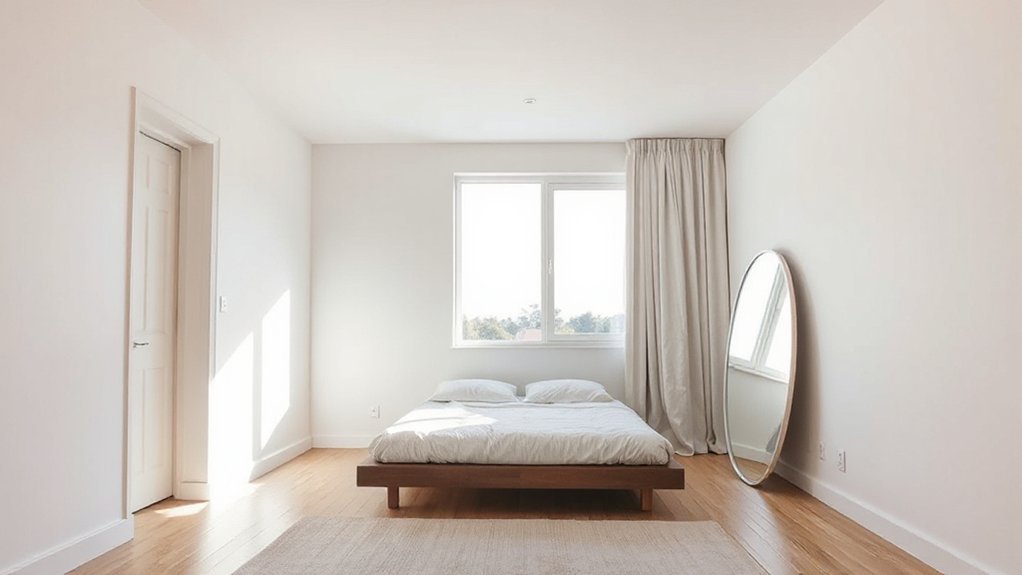
Although you can’t change a room’s footprint, you can make it feel larger by choosing paint colors that bounce light and blur hard edges. Start with soft whites, warm off-whites, or pale greige to reflect more daylight and reduce contrast. Use Color psychology: cool blue-green undertones read airy and recede, while heavy warm reds and dark browns visually advance and shrink walls. Keep trim and ceiling one shade lighter than the walls to lift the eye and minimize breaks. If you want depth, paint one far wall a slightly deeper tone in the same family, not a high-contrast accent. Choose the right paint finish: eggshell or satin on walls cleans well yet stays low-glare; flat on ceilings hides seams.
Layered Lighting to Brighten a Small Room
Paint can help walls recede, but lighting determines whether those colors actually read bright and open. Start with ceiling or wall-mounted fixtures on dimmers to create an even Ambient glow that washes corners and reduces harsh shadows. If you can’t install wiring, use plug-in sconces and uplight floor lamps aimed at the ceiling to lift the perceived height.
Next, add task illumination where you work: an adjustable desk lamp, under-cabinet LED strips, or a reading light by the sofa. Keep bulbs consistent—2700–3000K for cozy, 3000–3500K for crisp—and choose high CRI (90+) so paint looks true. Finally, use one accent light to highlight art or a plant, not clutter. Control layers separately for flexibility.
Where to Place Mirrors to Double Visual Space
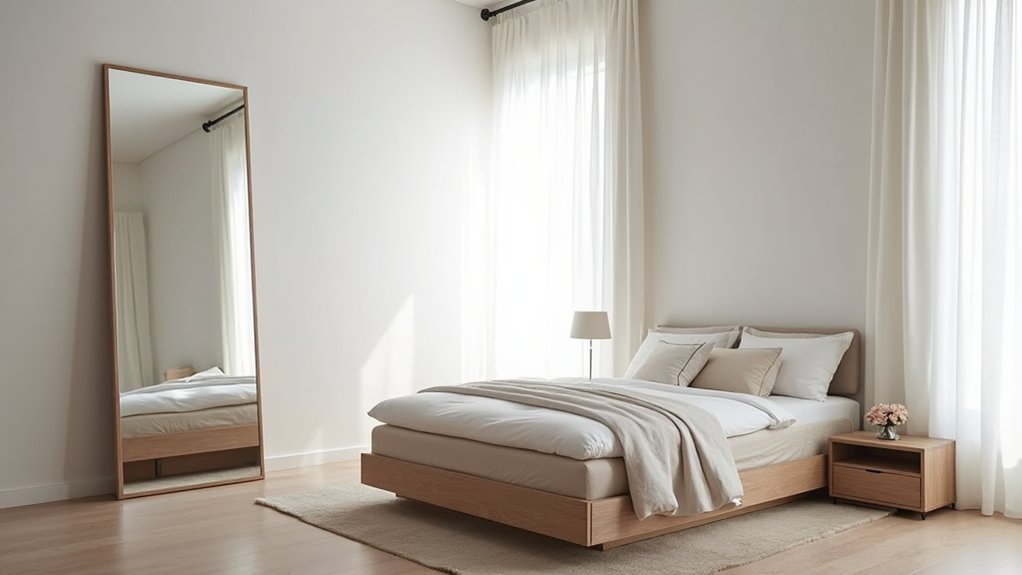
Place a mirror opposite a window to bounce daylight deeper into the room and visually push the walls back. Angle or position mirrors to reflect your main light sources—lamps, sconces, or a ceiling fixture—so you don’t create dark pockets. For added depth, mount a mirror behind key furniture like a sofa, console, or headboard to extend sightlines without adding clutter.
Opposite Windows Placement
One mirror can do the work of a second window when you hang it directly opposite your largest window. This window placement captures natural light and throws it back into the room, extending sightlines and reducing harsh shadows. Keep the mirror centered on the window’s midpoint, and hang it at eye level so the reflected view feels continuous, not tilted. Choose a frame that matches trim so it reads like architecture, not décor.
- Measure the window width; pick a mirror at least 70% as wide.
- Mount it on the wall facing the glass, not on adjacent angles.
- Align the top edge with the window head for a clean horizon.
- Clear clutter below so the reflection stays open and calm.
Reflect Light Sources
Two well-placed mirrors can make your lighting work twice as hard by bouncing both natural and artificial light deeper into the room. Place one near a lamp or sconce so the mirror catches the bulb’s glow and spreads it across the darkest wall. Angle it slightly toward the center of the room to avoid harsh hotspots and to lift overall brightness.
Add a second mirror where it can pick up Natural sunlight as it moves through the day, such as beside a window wall rather than directly facing it. Use larger panes or grouped panels to create a continuous light band. Choose slim frames and reflective decor finishes (polished metal, glass, lacquer) nearby to amplify the effect without visual clutter. Keep surfaces clean so reflections stay crisp.
Behind Key Furniture
Because your eye reads depth from layered planes, a mirror positioned behind key furniture can instantly push the back boundary of a small room farther away. Anchor it to pieces that already define your furniture arrangement, so the reflection extends the scene instead of multiplying clutter. Choose a mirror sized to the furniture’s width, mount it level, and keep its edges clear of busy patterns. Pair it with wall mounted storage to lift objects off surfaces and preserve clean sightlines.
- Place a mirror behind a sofa or console to double the longest wall’s perceived run.
- Set one behind a bed’s headboard to deepen the sleeping zone without crowding.
- Mount behind a dining bench to widen traffic paths and brighten faces.
- Put one behind a desk to bounce light and make work corners recede.
Space-Saving Furniture Swaps for Small Rooms
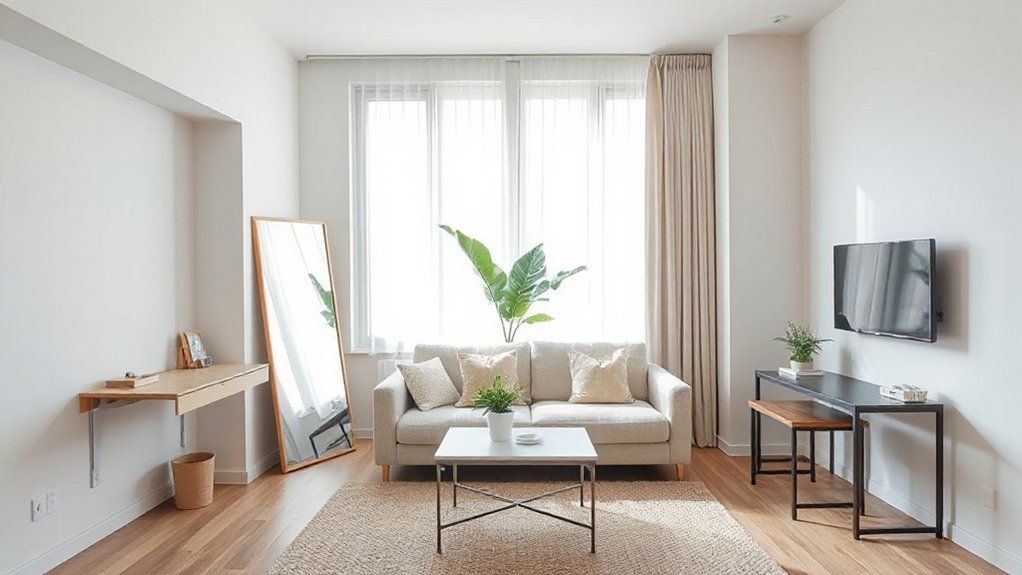
After you’ve optimized mirror placement, make your furniture work harder by swapping bulky pieces for slimmer profiles that keep sightlines open. You’ll gain instant breathing room when you replace overstuffed sofas, wide nightstands, and heavy coffee tables with leggy, low-visual-weight options. Then choose multi-function pieces—storage ottomans, lift-top tables, and wall-mounted desks—so you cut clutter without sacrificing function.
Swap Bulky For Sleek
Even if you can’t change your room’s square footage, you can change how much visual and physical space your furniture eats up by swapping bulky pieces for sleek, scaled-down alternatives. Aim for minimalist decor and streamlined furniture that sits lighter in the room and shows more floor.
- Replace overstuffed sofas with tight-back, raised-leg seating to open sightlines and increase visible flooring.
- Trade thick, skirted tables for thin-top, slender-leg options; you’ll reduce visual weight instantly.
- Choose armless chairs and low-profile silhouettes so pathways stay clear and the room reads wider.
- Swap heavy bookcases for open-frame shelving; the negative space prevents a wall from feeling solid.
Measure depth, not just width, and keep finishes consistent to prevent visual chopping.
Choose Multi-Function Pieces
When you pick furniture that does double duty, you free up floor space without sacrificing comfort or function. Start with multi functional furniture that replaces two standalone pieces: a storage ottoman instead of a coffee table plus bins, a sleeper sofa in place of a couch and guest bed, or a lift-top table that acts as dining and desk space. Choose nesting tables you can spread out only when you need surface area, then tuck away. In the bedroom, swap a standard frame for a platform bed with drawers, and use a wall-mounted drop-leaf desk rather than a bulky bureau. Keep the look cohesive with versatile decor—tray tops, slipcovers, and neutral finishes—so each piece blends, not crowds. Measure clearances before buying.
Hidden Storage DIYs to Clear Floor Space
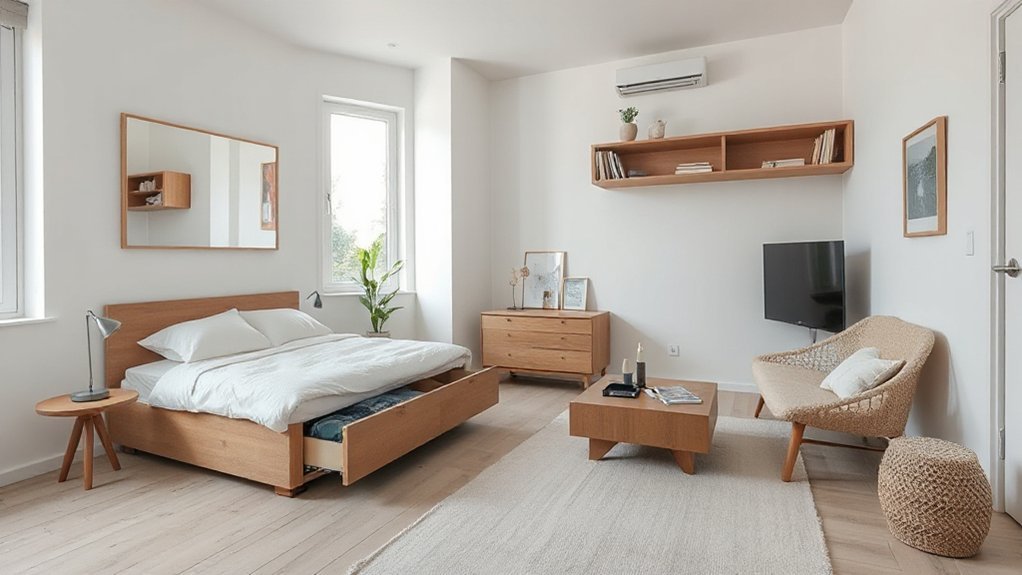
- Add a lift-top bench: hinge the seat, install a chain stop, and stash linens inside.
- Turn toe-kicks into drawers: use full-extension slides, a false front, and shallow trays for tools.
- Mount door-back racks: screw into studs, then hang baskets for toiletries or mail.
- Create shelf-ledges above doors: anchor L-brackets, keep depth under 8 inches, and store rarely used gear.
Styling Rules: Scale, Curtains, and Negative Space
Clearing floor space with hidden storage sets the stage, but your room won’t look bigger until the styling matches the scale of the space. Choose fewer, larger pieces instead of many small ones: one substantial wall art print reads calmer than a collage. Keep furniture legs visible and leave 10–20% of surfaces empty to create negative space your eye can rest on.
Hang curtains high and wide: mount rods 4–6 inches below the ceiling and extend them 6–10 inches past the window frame. Use light, solid fabrics that skim the floor to elongate walls. Limit decorative accents to a tight palette and repeat materials (wood, brass, black) for cohesion. Finally, align heights—lamps, frames, and shelves—so sightlines stay uninterrupted.
Frequently Asked Questions
How Can I Make a Small Room Look Bigger on a Tight Budget?
Use light color schemes, paint trim to match walls, and add one large mirror. Optimize furniture arrangement: float pieces off walls, choose multi-use seating, and keep pathways clear. You’ll maximize light, reduce clutter, and expand sightlines.
What Are Renter-Friendly DIY Upgrades That Won’T Damage Walls?
You can use removable wallpaper for accents, mount shelves with adhesive hooks, add peel-and-stick tiles, swap hardware, and hang curtains with tension rods. You’ll upgrade quickly, avoid holes, and remove everything cleanly at move-out.
Which Common Decorating Mistakes Make Small Rooms Feel Even Smaller?
You make rooms feel smaller by overstuffing furniture, blocking pathways, using harsh color contrast, and ignoring clutter reduction. You’ll also shrink space with busy patterns, heavy drapes, too many tiny decor pieces, and dim lighting.
How Do I Make a Low-Ceiling Room Feel Taller Without Renovations?
Make a low-ceiling room feel taller by creating contrast: keep walls light, add darker floors, and paint the ceiling a shade lighter. Use Vertical lines—tall curtains, slim bookcases—to visually boost Ceiling height.
What Quick Weekend DIY Project Creates the Biggest Visual Impact?
Paint a single high-contrast accent wall and reorganize furniture placement to open clear sightlines; you’ll get the biggest weekend impact fast. Keep trim and ceiling lighter, pull pieces off walls, and center key seating.
Conclusion
With the right paint shade, you’ll push walls back visually and keep the room feeling calm. Add layered lighting to erase shadows, then place mirrors opposite windows to bounce daylight deeper. Swap in slimmer, raised-leg furniture so you gain clear sightlines, and build hidden storage to lift clutter off the floor. Follow scale, hang curtains high, and protect negative space—why crowd what could breathe? You’ll make small rooms feel open.