
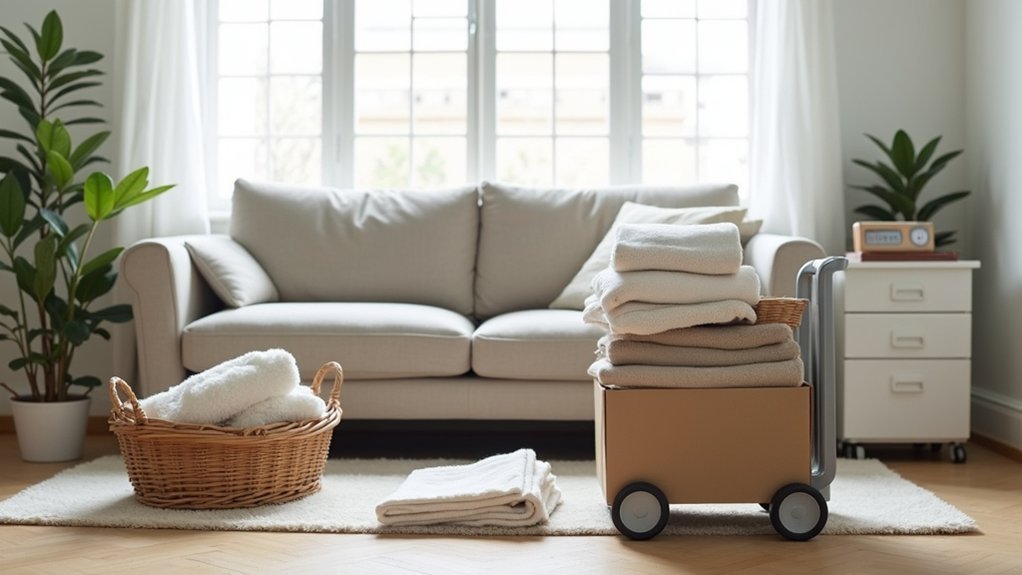
Start with one tiny clutter zone for 10 minutes, using a timer and four boxes: keep, donate, bin, relocate. Pick a visible hot spot like the hallway or kitchen worktop for a quick win, then clear surfaces first and only put back what you use weekly, need, or truly love. Create simple drop zones for keys, post, and chargers, and store things near where you use them. Keep it up with a daily 10-minute reset, and you’ll uncover extra shortcuts next.
Key Takeaways
- Start with one small, visible clutter zone for 10 minutes to build momentum without feeling overwhelmed.
- Identify high-traffic clutter hot spots and tackle the area causing the most daily friction first.
- Use four categories—Keep, Donate, Trash, Relocate—and move relocated items to their proper rooms immediately.
- Clear surfaces first, then keep only what you use weekly, genuinely need, or truly love.
- Maintain progress with a daily 10-minute reset routine and simple “home zones” for essentials like keys, post, and chargers.
Start With One Small Clutter Zone (10 Minutes)
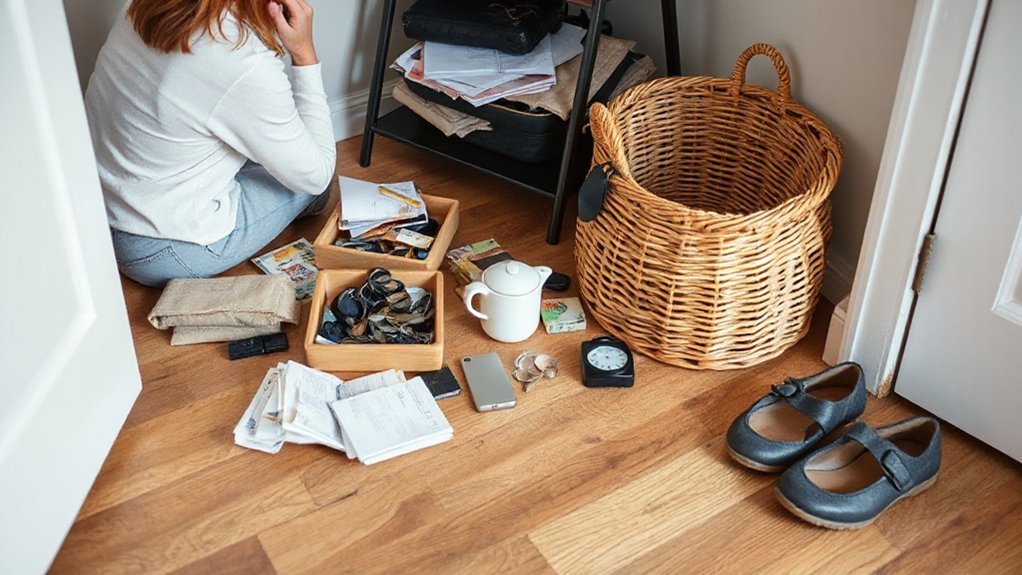
If you’re feeling overwhelmed by clutter, start by choosing one tiny “clutter zone” you can tackle in just 10 minutes—like the kitchen worktop corner, the hallway shoe pile, or a single bedside table. Set a timer on your phone, grab a carrier bag, and work fast: bin obvious rubbish, stack like-with-like, then wipe the surface with a damp microfibre cloth.
Use three piles: Keep, Donate, Relocate. For a small space, don’t “relocate” far—take items straight to their proper room or put them in a labelled tray by the stairs. Keep donations in a reusable shopping bag by the front door for your next charity shop run. Finish with a quick declutter photo to track progress.
Choose Your Biggest “Clutter Hot Spot” First
Next, pick your biggest clutter hot spot by looking at high-traffic areas like the hallway, kitchen worktop, or living room floor that you walk past every day. Size it up quickly—how much is piled up, how often it gets messy, and what’s stopping you using the space properly. Start where you’ll get a visible win fast, so you notice the difference straight away and stay motivated.
Identify High-Traffic Zones
Because clutter builds fastest where you walk, drop bags, and kick off shoes, you’ll get the quickest win by pinpointing your home’s high-traffic zones and choosing one “clutter hot spot” to tackle first. Stand at your front door and trace your daily traffic flow: hallway to kitchen, living room to stairs, and the route to the loo. Note where items naturally land—keys on the console, post on the sideboard, shoes by the mat—then pick the single spot that interrupts movement most. In many UK homes, that’s entryway clutter in a narrow hall. Set a timer for five minutes and observe one school-run arrival or grocery drop-off. Your chosen zone should be unavoidable, used daily, and small enough to reset quickly.
Assess Clutter Severity
Although every room might feel a bit chaotic, you’ll make faster progress by evaluating how severe each “clutter hot spot” is and starting with the one that causes the most daily friction. Do a quick home assessment with a notebook and a timer, and score each area for clutter severity. Focus on where mess blocks routines: getting out the door, cooking tea, or finding school kit. Walk through at the same time each day for consistency, and note what piles up and why.
- Count how often you touch items there in a week
- Measure lost minutes: keys, post, chargers, shoes
- Check safety and access: trips, blocked cupboards, damp-prone corners
- Track volume: bags, packaging, paperwork, laundry overflow
Start With Visible Wins
Where will you see the biggest difference the fastest? Pick your most visible clutter hot spot: the hallway table, kitchen worktop, or lounge floor. You’ll get instant visual motivation when guests and you notice the change straight away. Clutter psychology matters here: a clear, high-traffic space reduces decision fatigue and makes you more likely to keep going. Set a 20-minute timer, grab a carrier bag for rubbish, a box for “elsewhere”, and a small tray for items that belong there. Clear surfaces first, then reset only what earns its spot. If you’ve got papers, make one stack for “to deal with” and file later. Finish by wiping the surface so it looks fully done today.
Use the 4-Box Declutter Method (Keep/Donate/Trash/Relocate)
When you’re staring at a messy room and don’t know where to start, the 4-box declutter method gives you a simple, fast decision system. Grab four carrier bags or boxes, label them, and work clockwise around the room so you don’t backtrack. This is one of the most reliable declutter techniques for quick momentum, and it supports smarter storage solutions later.
- Keep: park items you’ll store properly once you’ve finished the pass
- Donate: seal the box and schedule a charity shop drop-off or collection
- Trash: bin broken, stained, or out-of-date stuff immediately
- Relocate: take items to their correct room at the end, in one trip
Set a 20-minute timer and stop when it rings. Repeat tomorrow.
Keep What You Use, Need, or Truly Love (No Guilt)
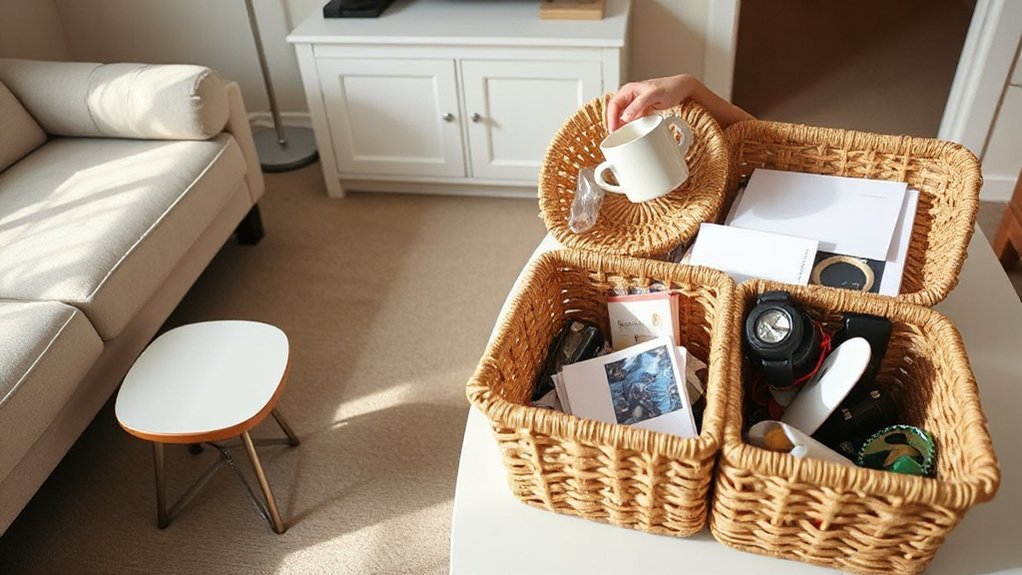
Keep items you actually use week to week, genuinely need for your household, or truly love enough to display or reach for. If it doesn’t fit one of those tests, let it go via donate, sell, recycle, or bin it responsibly. You don’t owe clutter space in your home—release the guilt and keep only what earns its place.
Use It, Keep It
Although it can feel wasteful to let things go, you’ll make faster progress by sticking to one simple rule: use it, keep it. Walk room by room and ask, “Have I used this in the last 12 months?” If not, it’s not earning space in a typical UK home. Keep what supports daily life, work, or household upkeep, then give the rest a clear next step.
- Keep everyday essentials within arm’s reach (kettle bits, keys, school items).
- Store occasional-use kit together, labelled, so you can find it fast.
- Limit duplicates: one spare charger, one good tin opener, one duvet set.
- Match items to storage solutions that fit your cupboards, under-stairs, and loft.
This decluttering mindset turns decisions into habit, not debate.
Love It, Release Guilt
The “use it, keep it” rule speeds up decisions, but some items don’t fit neatly into a 12‑month test because they carry meaning. When you feel Emotional attachment, pick up the item and ask: do I truly love it, or do I just feel obliged to keep it?
Create three piles: Love, Need, and Let Go. Limit Love to what you’d display or use proudly in your UK home, not what stays boxed in the loft. For sentimental pieces, keep one “memory box” per person and label it; everything else gets photographed, then recycled or donated.
Practise Guilt release by reframing: you’re not binning the memory, you’re freeing space. If it’s broken, duplicate, or stressful, let it leave today.
Create Simple Home Zones (Drop Spots That Work)
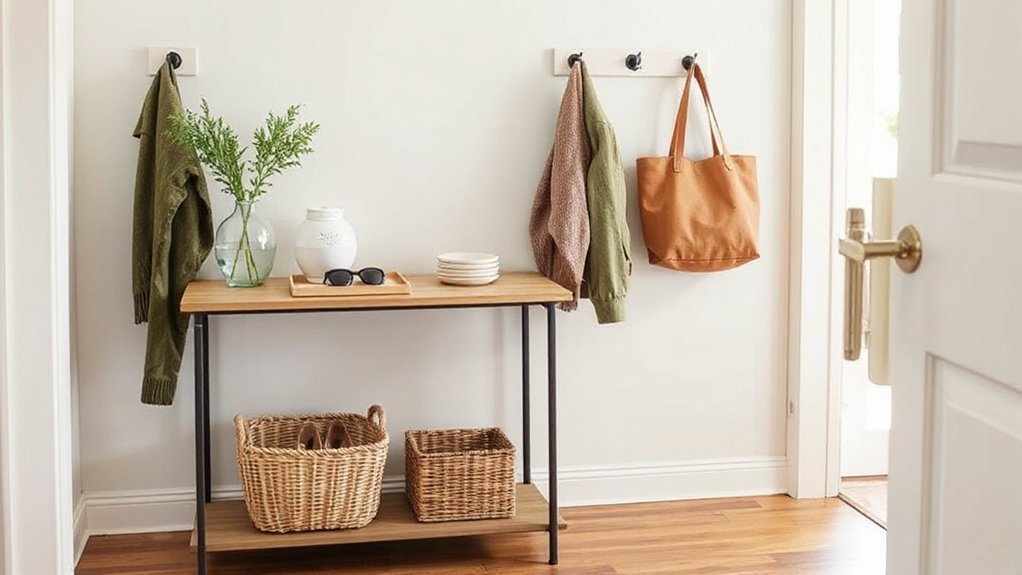
When you give everyday items a dedicated “home zone,” you stop clutter at the door instead of chasing it around the house. Pick three to five zones only, then label them and stick to them for a fortnight. You’ll build a decluttering mindset because you decide once, not daily. Use simple storage solutions: a tray, a lidded box, or a slim basket that fits UK hall tables and narrow landings. Keep zones visible, not perfect.
- Set an “arrivals” drop spot for keys, post, and sunglasses.
- Add a “leaving” spot for returns, parcels, and library books.
- Create a “family admin” zone for chargers, pens, and calendars.
- Keep a “reset” box for stray items you’ll rehome each evening.
Store Items Where You Use Them (Point-of-Use Rule)
Why do clutter hotspots keep coming back even after a tidy-up? Usually, it’s because you’re storing things far from where you actually use them. Apply the point-of-use rule: keep scissors by the gift wrap, spare bin liners in the kitchen cupboard, and cleaning sprays under the sink nearest the loo. You’ll stop “temporary” piles because putting items away won’t feel like a trek.
Choose simple Storage solutions that fit the spot: a slim caddy for toiletries, a tray in the hallway for keys, or stackable boxes in a utility cupboard. Use clear Labeling techniques so everyone follows the system—masking tape and a marker work fine. If it’s easy to return, it won’t become clutter again.
Organize Room by Room With Quick Beginner Checklists
Although tackling a whole house can feel overwhelming, you’ll make faster progress by organising room by room using quick checklists you can finish in 10–15 minutes. Pick one space, set a timer, and follow the same order each time: clear surfaces, sort into keep/donate/recycle, then return items to homes. Use simple storage solutions like labelled Really Useful Boxes, drawer dividers, and over-door hooks so you don’t create new piles. Add color coding to speed decisions: one colour per family member, category, or floor, using sticky dots or washi tape.
- Start at the door and work clockwise
- Touch each item once and decide immediately
- Keep a small “elsewhere” basket for runaway items
- Note gaps: a shelf, a box, or a label
Do a 10-Minute Daily Reset to Stop Clutter
Even if you’ve only got a spare 10 minutes, a daily reset stops clutter from snowballing into a weekend-long job. Set a timer on your mobile, then do the same short loop each evening: clear the kitchen worktop, load or stack the dishwasher, wipe the sink, and put post straight into a folder or recycling.
For smart Time management, keep a “return basket” in the hallway and do a quick sweep: shoes on the rack, coats on hooks, toys back in one lidded box. Finish by resetting your living room—fold throws, stack magazines, and put remotes in a tray.
Use motivation strategies: play one upbeat track, tick it off a habit tracker, and stop when the timer ends. You’ll wake up to calmer spaces.
Avoid These Beginner Organizing Mistakes (And Quick Fixes)
When you’re starting to organise, a few common missteps can waste time and make the mess feel worse. You’ll shop for boxes before you’ve edited, or you’ll try to tackle the whole house in one go. Use clutter psychology to work with your habits: make the right choice the easy choice.
- You buy storage solutions first; fix it by decluttering one drawer, then measure and label.
- You create “doom piles”; fix it with a 3-bag sort: bin, donate (to your local charity shop), relocate.
- You hide clutter in cupboards; fix it by zoning shelves and keeping like-with-like.
- You keep “just in case” items; fix it with a 30-day box and a set review date.
Set a timer, finish one area, and stop there.
Frequently Asked Questions
How Do I Organize When I Have ADHD or Struggle With Focus?
You’ll organise better with ADHD by using Time management: set a 10-minute timer, pick one micro-task, and stop. Use Motivation strategies: body-double, rewards, and checklists. In the UK, try labelled boxes and charity shops.
What Are the Best Organizing Apps for Tracking Household Inventory?
You’ll do best with Sortly, Airtable, or Notion for digital catalogs and household inventory management; add barcodes, photos, and locations. In the UK, try Pantry Check for groceries, plus Google Sheets for quick exports.
How Can I Declutter Sentimental Items Without Feeling Overwhelmed?
Start with one small box at a time, set a 15‑minute timer, and keep only items that still serve your life. Photograph the rest. Label a “maybe” bag. Sentimental clutter, emotional attachment ease.
How Do I Keep My Home Organized With Young Kids and Pets?
You’ll stay organised by setting daily 10-minute resets, using Toy storage bins at kid height, and creating Pet zone organization near the back door. Rotate toys weekly, label boxes, and keep wipes, leads, and treats together.
When Should I Hire a Professional Organizer, and What Does It Cost?
Hire a professional organiser when clutter feels like quicksand and you can’t make progress. In the UK, expect £40–£80 per hour or £250–£600 per day, including storage solutions and tailored decluttering techniques.
Conclusion
You don’t need a full weekend or a Pinterest-perfect plan to get organised—you just need consistency. Start with one small zone, use the 4-box method, and keep only what you use, need, or genuinely love. Set up simple drop spots, store items where you use them, and tackle rooms with quick checklists. Then do a 10‑minute daily reset. Skip common mistakes like overbuying storage. Think of clutter like a fax machine: outdated systems won’t serve you.