Map how you actually move by standing in doorways, sketching routes, and noting key drop points for shoes and keys. Keep main walkways 75–90cm wide (60cm for secondary), and clear pinch points by testing with a laundry basket. Right-size furniture for UK rooms, using slim, raised-leg pieces and mock-ups before buying. Place the sofa, bed, or table first, then zone with rugs and 2700K lighting. Next, you’ll see quick storage swaps that reclaim space.
Key Takeaways
- Observe real walking routes from doorways, sketch them on a simple plan, and move furniture to reduce detours and collisions.
- Keep main walkways 75–90cm wide and secondary paths 60cm+, removing floor clutter and hiding cables to prevent pinch points.
- Measure rooms and mock up furniture with tape or cardboard, choosing slimmer pieces or fewer items to preserve clear circulation space.
- Place anchor pieces first and create zones with rugs and lighting, keeping access to doors, radiators, windows, and storage unobstructed.
- Add vertical, closed storage (tall units, wall shelves, ottomans) to hide clutter, free floor space, and maintain a calm, cohesive layout.
Start by Mapping How You Move in Each Room
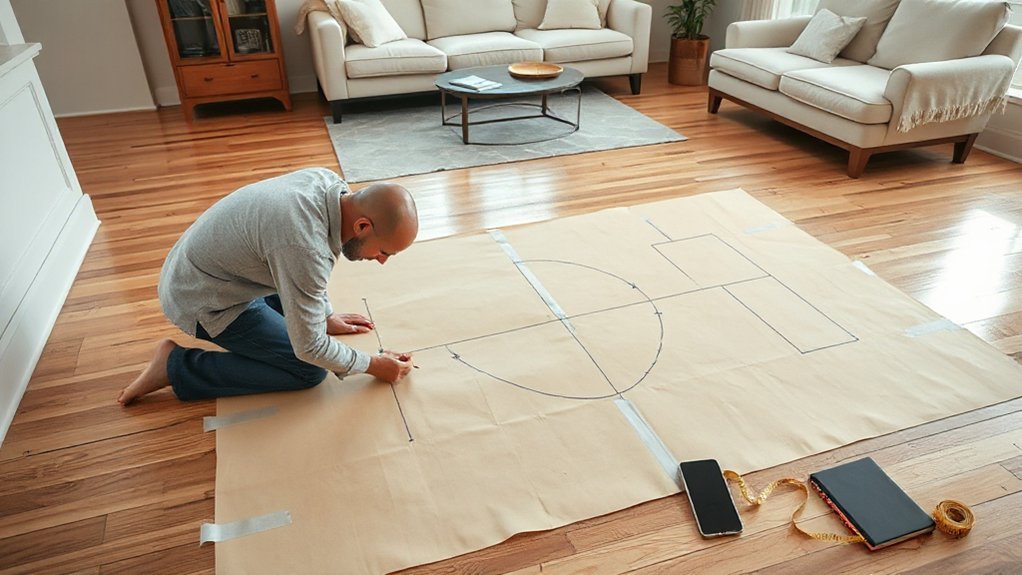
Before you move a single piece of furniture, map how you actually walk through each room day to day. Stand at the doorways and note where you naturally head: sofa, kettle, coat hooks, stairs. Sketch a quick floor plan on paper or your phone, then trace your main routes in different colours for mornings, evenings, and weekends. You’ll spot Traffic patterns that clash with how you use the space, especially in UK terraces and compact flats. Next, list the “stop points” where you pause—dropping keys, unloading shopping, putting on shoes—and match them to nearby surfaces or storage. Use that map to guide furniture arrangement, keeping frequently used items close to their action zones and reducing awkward detours around tables, chairs, or radiators.
Set Walkway Widths and Keep Paths Clear
Once you’ve mapped your daily routes, set clear walkway widths so you’re not shimmying past chair backs or clipping a radiator every time you cross the room. Aim for a consistent 75–90cm main route and at least 60cm for secondary paths, then check pinch points by walking it with a laundry basket or hoover.
Keep those corridors clear: move floor lamps, baskets, and plant pots off the line of travel, and tuck cables behind skirting or into trunking. If you’ve got doors that clash, swap swing direction or fit a slimmer handle to stop snagging.
Carry the same thinking outside. Give garden pathways a steady width, trim edges, and store bins or bikes so outdoor walkways stay open year-round.
Right-Size Furniture for Your Room Layout
Clear walkways only stay clear if your furniture fits the room as well as your routes. Check Furniture proportions against your floorplan: measure wall-to-wall, then subtract your circulation gaps so you know the true usable footprint. In UK homes, where lounges and box rooms run tight, choose slimmer depths, armless styles, or raised legs so light and sightlines pass underneath. Match room scale by balancing heights: a tall bookcase can dwarf a low ceiling, while chunky arms can swallow a narrow bay. Before you buy, tape outlines on the floor or use cardboard mock-ups, and confirm doors, radiators, and window sills still open and breathe. If you can’t reduce size, reduce count. Keep it consistent.
Place Key Pieces First (Sofa, Bed, Table)
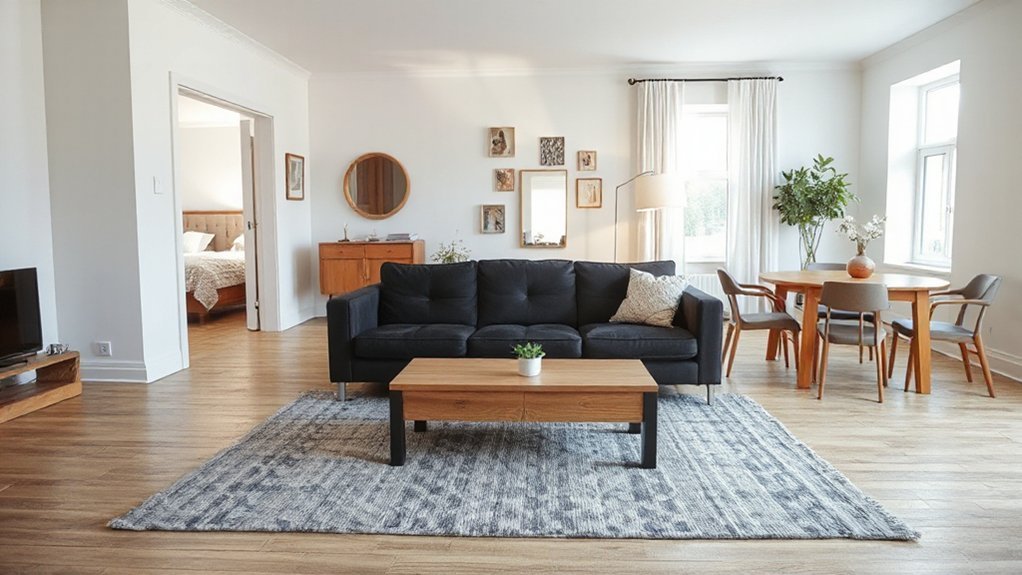
Start by placing your main anchor piece—sofa, bed, or dining table—so the room has a clear centre and purpose. Then set the rest around it to keep walkways open and daily routines smooth, especially in tighter UK rooms. Measure the floor space and key clearances before you shift anything, so each piece fits without blocking doors, radiators, or storage.
Anchor The Room First
One simple rule makes any room feel more organised: place the anchor piece first. In a UK living room, that’s usually the sofa; in a bedroom, the bed; in a dining space, the table. Set it where you naturally want the focal point to land—often facing the fireplace, bay window, or telly wall—then build everything else around it for instant visual balance.
Keep the anchor off radiators and don’t block alcoves or built-ins you’ll use for storage. In tight terraces or flats, choose a compact anchor (two-seater, double bed, drop-leaf table) and position it square to the room so it reads tidy. Once it’s down, you’ll spot dead corners and awkward gaps quickly.
Prioritize Function And Flow
Before you think about side tables or styling, make the room work by prioritising function and flow and placing the key pieces first—the sofa, bed, or dining table. These set your room hierarchy, so everything else supports them, not the other way round. Start by deciding what the room must do daily, then position the main item to protect clear traffic flow from doorway to window, and to cupboards or the hallway.
- Living room: Face the sofa towards the natural focal point (fireplace, telly wall), leaving a straight walk-through route.
- Bedroom: Place the bed where you can access both sides and the wardrobe without squeezing past.
- Dining: Centre the table for easy pull-out chairs and quick kitchen access, especially in smaller UK terraces.
Measure Before Placement
Clear flow only works when the main pieces actually fit, so measure the room and the routes through it before you shift a sofa, bed, or dining table. Note door widths, hallway pinch points, radiators, bay windows, and sockets, then confirm furniture dimensions from manufacturer specs, not guesswork. You’ll avoid buying a sofa that blocks the front door or a bed that traps you against the wardrobe.
Start with the biggest item in each zone: sofa to face the focal point, bed to leave access on both sides, table to keep a comfortable pull-out zone. Use masking tape on the floor to map footprints and walking gaps. For Measuring accuracy, measure twice, include skirting boards, and account for recliner extensions and chair clearance.
Create Clear Zones for Living, Work, and Dining
- Mark zones with a rug for lounging, a slim desk by a socket for work, and a compact table near the kitchen for meals.
- Keep each zone’s storage close: baskets for throws, a file box for paperwork, and a tray for cutlery.
- Set simple rules: no work kit on the table, no plates on the desk, and cables tucked away.
Float Furniture to Open Up Walls and Corners
Pull your sofa or chairs a few inches off the wall and angle them to shape clear walking paths through the room, which helps in narrower UK spaces. You’ll free up corners for a slim lamp, plant, or small console instead of blocking them with bulky pieces. Float your main seating to face the fireplace, bay window, or TV so the room’s focal point feels intentional rather than accidental.
Create Walking Paths
Two small shifts can instantly make a room feel easier to move through: give yourself a clear walking route, then float key pieces slightly off the walls. Start by mapping the natural line from doorway to sofa, kitchen, or stairs, and keep it unobstructed—aim for about 80–90cm, similar to Outdoor pathways and garden walkways.
- Pull the sofa or armchair 10–20cm forward so corners aren’t dead zones and cables fit neatly behind.
- Angle a side table or tuck an ottoman under a console to stop pinch points near doors and radiators.
- Use a runner or rug edge to “draw” the route, and shift storage to the perimeter.
You’ll reduce bumps, improve flow, and make compact UK rooms feel bigger.
Highlight Room Focal Points
One quick way to make a room feel calmer and larger is to float your main furniture a little and aim it at a clear focal point—your fireplace, bay window, or TV wall. Pull the sofa 10–20cm off the wall and slide an armchair into a corner angle; you’ll soften dead space and create easier routes around the room. Anchor the grouping with a rug that sits under the front legs, then keep side tables slim to save floor area in typical UK-sized lounges. Use Focal point lighting, like a pair of wall lights or a floor lamp aimed at the feature, to draw the eye forward. Finish with restrained Decorative accents—one bold print, a tray, or a tall plant—so the focal point stays crisp.
Use Rugs and Lighting to Reinforce the Zones
Where do you start when an open-plan room feels a bit shapeless? Use Area rugs and layered lighting to define clear zones without adding walls. A rug under the sofa and coffee table signals “lounge”, while a smaller runner can mark a dining or desk spot, even in a typical UK flat.
- Pick rugs that sit under key furniture legs, so each zone feels anchored and tidy.
- Add layered lighting: a ceiling pendant for overall light, a floor lamp for reading, and a table lamp to soften corners.
- Match bulb warmth across fittings (around 2700K) so the space feels cohesive, not chopped up.
You’ll guide movement naturally, reduce visual clutter, and make each area feel intentional.
Add Smart Storage That Frees Floor Space
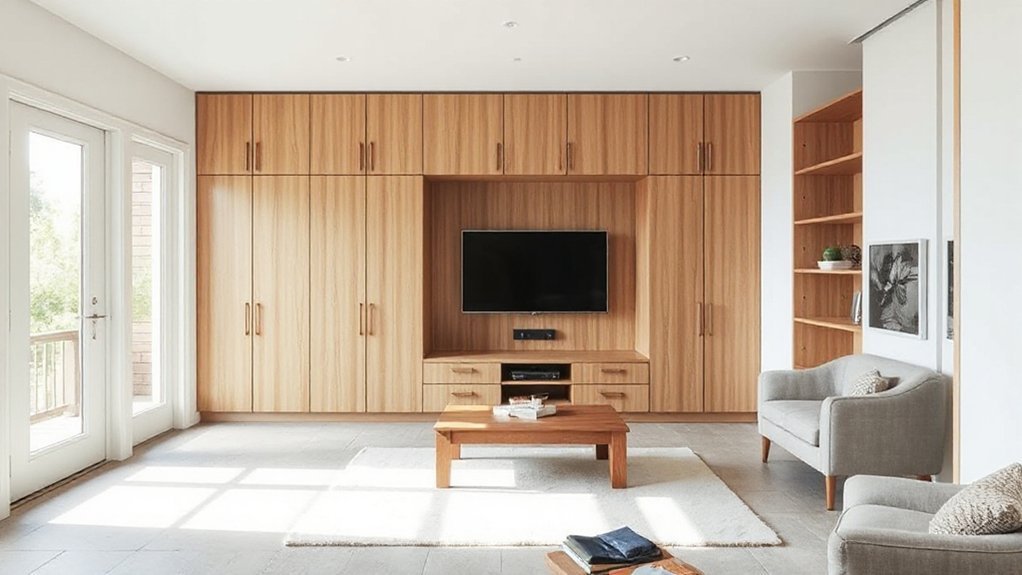
If your open-plan room feels tight, add storage that goes up and tucks away so you can keep the floor clear. Wall-mounted cupboards, floating shelves, and tall bookcases give you Smart storage without crowding walkways or sightlines.
Choose pieces with doors so visual clutter disappears fast, especially in a lounge-diner where everything’s on show. Use the space above radiators carefully with shallow shelves, and keep frequently used items at arm height. In the kitchen zone, fit ceiling-high units and add a narrow pull-out larder to stop worktops becoming dumping grounds. In the living area, pick an ottoman sofa or coffee table with hidden compartments for throws, chargers, and remotes. You’ll reclaim Floor space, improve circulation, and make the room feel calmer day to day.
Fix Dead Space With Slim, Low-Cost Swaps
Two quick swaps can turn dead space into useful storage without spending much or changing your layout: replace bulky pieces with slimline versions and use the narrow gaps you already have. You’ll keep clear walkways in a typical UK terrace or flat, while sticking to Minimalist decor and adding subtle Color accents.
- Swap a wide console for a slim shoe cabinet in the hallway; you’ll hide clutter and still have a drop zone for keys.
- Slide a 15–20cm rolling trolley beside the fridge or washing machine for tins, cleaning sprays, or recycling bags.
- Replace chunky bedside tables with wall-mounted shelves; you’ll free floor space and make hoovering quicker.
Choose light oak or white finishes, then add one bright tray or hook for personality.
Frequently Asked Questions
Do I Need a Professional Designer to Improve My Home Layout?
You don’t need a professional designer; you can improve your layout yourself. Start with smart furniture placement to free up tight UK rooms, then choose cohesive colour schemes. Measure, declutter, and test arrangements before buying.
How Much Should I Budget for Basic Layout Improvements?
Budget £100–£500 for “basic” tweaks—because moving sofas is famously pricey. Spend on Furniture placement aids, storage, and mirrors for Natural lighting. Allow £0–£200 for paint and £100+ for small fittings.
What Layout Changes Help My Home’s Resale Value the Most?
You’ll boost resale most by creating Open floorplans between kitchen and living areas, maximising Natural lighting with larger internal openings, and adding built-in storage. Keep changes compliant, improve flow, and prioritise a versatile downstairs loo and utility.
Are There Layout Rules That Improve Accessibility for Aging in Place?
Yes—treat your home like a steady handrail: apply Universal design with step-free entries, wider doorways, and clear routes. Add Safety considerations—non-slip floors, lever handles, walk-in showers, good lighting—saving space in UK terraces.
How Can I Plan a Layout That Works Well With Pets and Kids?
Plan clear routes, gate off hazards, and create pet safe zones near beds. Choose child friendly furniture with washable fabrics and rounded edges. Use built-in storage for toys and leads, and place feeding away from play.
Conclusion
If you try one theory, make it this: your home feels “small” less from square footage and more from broken routes. Space-planning studies back it up—when you can walk through without sidestepping, rooms read larger and calmer. So you’ll get the biggest UK-friendly win by widening paths, right-sizing furniture, and zoning with rugs and lighting. Add wall storage and slim swaps to kill dead corners without spending.