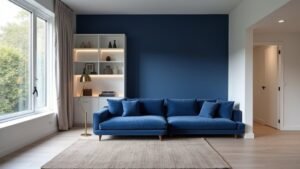
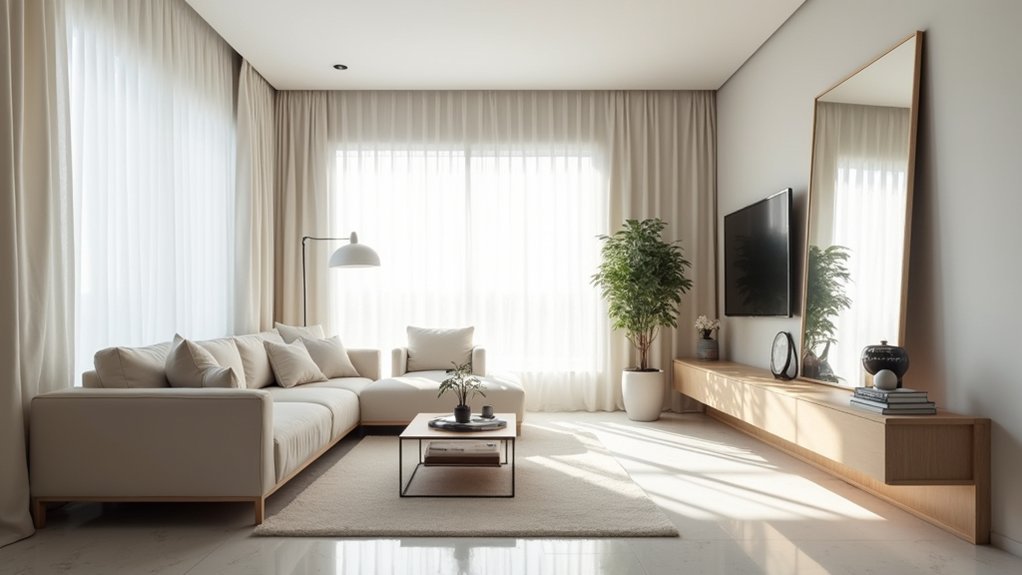
Start by clearing the floor of shoes, bags, and cables, then keep 60% of surfaces empty and corral loose bits in trays or lidded baskets. Paint walls in light, soft tones (cool whites, pale greys, misty blues) and avoid high-contrast trims. Layer lighting with a dimmable ceiling light plus task and accent lamps, and hang one large mirror opposite a window. Reposition furniture to keep 75–90cm walkways, use tall storage, and hang curtains near the ceiling. Keep going to pick the best fixes for your room.
Key Takeaways
- Declutter floors and surfaces: keep 60% clear, store loose items in labeled boxes, and use under-bed or lidded storage.
- Paint walls and trim in light, low-contrast tones to reflect daylight and blur edges; test swatches under different lighting first.
- Layer lighting with ambient, task, and accent sources; add dimmers or smart plugs for flexible brightness without harsh glare.
- Hang one large mirror opposite a window to bounce light and add depth; keep frames slim and the mirror clean.
- Improve layout with 75–90cm clear walkways, zone areas with matching low-pile rugs, and use tall or wall-mounted storage.
Declutter First to Make a Room Feel Bigger
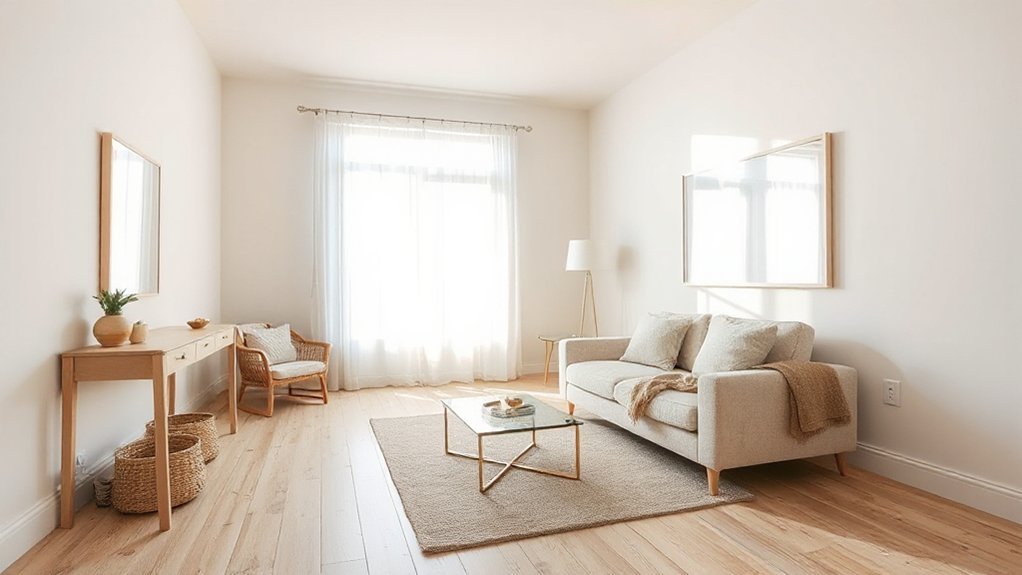
Before you buy new storage or move a single piece of furniture, declutter what you’ve already got. Start with the floor: clear stray shoes, bags, and cables so you can see the room’s footprint. Apply a Minimalist mindset—keep what you use weekly, store what you use seasonally, and bin, donate, or sell the rest through your local charity shop or Facebook Marketplace.
Next, tackle surfaces. Limit each sideboard, windowsill, or coffee table to one purposeful item, not a pile. Create clear categories, then choose Storage solutions that hide volume: under-bed boxes, lidded baskets, and slimline shelving behind doors. Label everything so you don’t re-clutter. You’ll gain visual space fast.
Use Light Paint Colors to Expand the Room
Ever wondered why some rooms instantly feel airier than others? It’s often down to light paint colours that bounce daylight around, soften shadows, and blur hard edges. Use Colour psychology to your advantage: cool whites, pale greys, and misty blues calm the eye and make boundaries recede, while warm creams keep north-facing UK rooms from feeling stark.
Choose one shade for walls, ceiling, and woodwork to reduce visual breaks, or go a half-shade lighter on the ceiling to “lift” it. Test swatches in morning and late-afternoon light before you commit. Consider paint finish options: matt hides uneven plaster; eggshell adds durability for busy hallways; satinwood on skirting reflects subtly without glare. Avoid strong contrast trims that shrink the frame.
Add Layered Lighting to Brighten Dark Corners
Although paint can lift a space, you’ll only banish that boxed-in feeling when you layer your lighting to eliminate gloomy corners. Start with ambient light: swap a tired pendant for a brighter LED fitting and choose warm-white bulbs (around 2700–3000K) so the room feels open, not harsh.
Next, add task lighting where you work—an under-cabinet strip in the kitchen, a desk lamp in the spare room, or a reading light by the sofa—to stop shadows pooling. Finish with accent lighting to target dark corners: a slim floor lamp behind an armchair, a plug-in wall light, or a small uplighter on a bookcase. Put lamps on smart plugs or dimmers, and you’ll fine-tune levels through the day.
Place Mirrors to Bounce Light and Depth
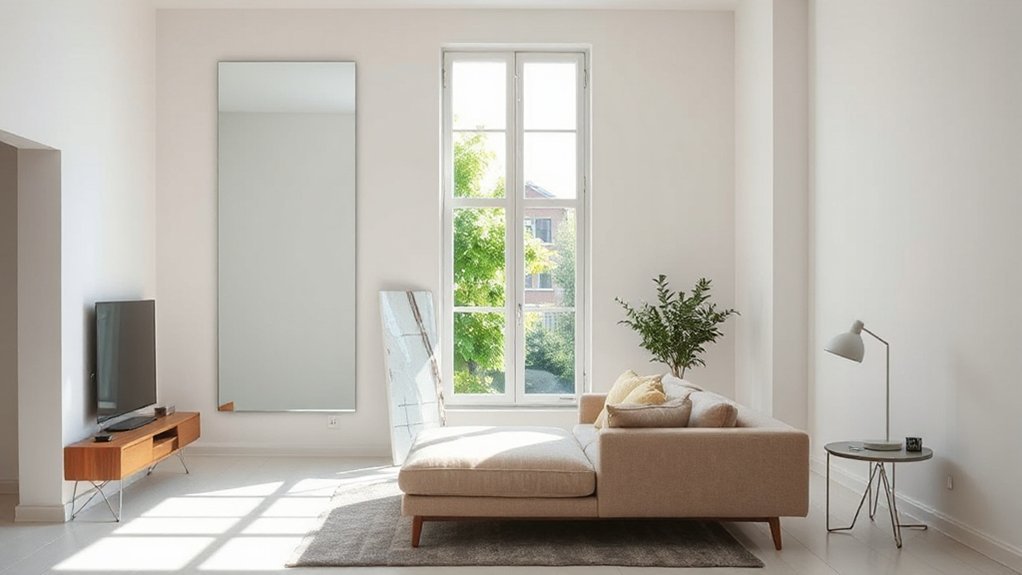
One well-placed mirror can double the light in a room and make it feel deeper without moving a single piece of furniture. For best mirror placement, hang it opposite a window to throw daylight back into the space, or angle it to reflect a bright lamp you already use in the evenings. Choose a larger mirror over several small ones; it reads as an extra “window” and adds instant depth. In narrow UK hallways, position a tall mirror on the longest wall to stretch sightlines. Keep the frame slim and pale to avoid visual weight, and wipe glass regularly so reflective surfaces stay crisp. Don’t point mirrors at cluttered shelves; reflect the calmest view instead. This simple upgrade lifts even box rooms.
Rearrange Furniture to Open Walking Paths
When you clear a direct route through a room, it instantly feels larger because your eye (and feet) can travel without obstacles. Start by identifying your main doorway-to-sofa, hallway-to-window, or kitchen-to-table line, then keep it at least 75–90cm wide for comfortable UK living. Shift bulky pieces off that line and push seating into a defined zone, rather than letting it drift in the middle.
Use furniture placement to support traffic flow: angle an armchair to face the sofa, tuck side tables tight to chairs, and move occasional chairs to corners when they’re not needed. In small flats, float the sofa slightly forward only if it creates a cleaner path behind. Finally, align rugs and tables so you don’t dodge edges.
Choose “Light” Furniture With Legs and Slim Arms
If you want a room to feel bigger without moving a wall, pick furniture that looks visually “light” — pieces on legs with slim arms and an open base let more floor show, so the space reads wider. In UK homes where rooms run tight, swap bulky sofas for a compact two-seater on tapered legs, or choose an armless accent chair instead of a deep tub chair. Keep silhouettes clean: minimalist design favours straight lines, raised frames, and low visual clutter. Aim for compact furniture with narrower arms and a shallower seat, so you gain usable space without sacrificing comfort. Choose glass, pale wood, or light upholstery to reduce visual weight, and leave a small gap between furniture and walls to maintain airiness.
Use Vertical Storage to Clear the Floor
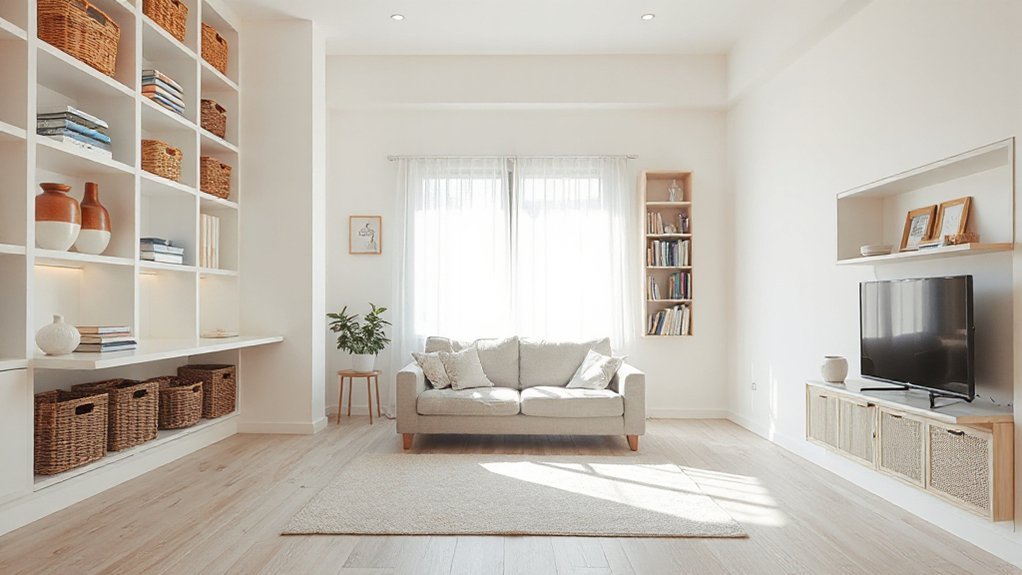
Light, leggy furniture helps a room breathe, but you’ll feel the biggest shift once you free up the floor altogether. Go vertical: replace low, wide storage with tall bookcases, ladder shelves, and slim vertical units that use dead wall height without crowding walkways. Anchor them to the wall for safety, especially in rentals with plasterboard—use the right fixings or a batten.
Next, switch to wall mounted solutions wherever you can. Fit floating shelves above radiators, mount bedside tables, and use rail-and-hook systems in kitchens and hallways to lift everyday clutter off the ground. Keep the lowest 30–40cm clear so the floor line reads longer. Finally, edit what you store: fewer items means you’ll need less furniture overall.
Hang Curtains High to Add Height
Mount your curtain pole as close to the ceiling as you can, not just above the window frame, to draw the eye upward and make the room feel taller. Choose long, floor-length panels that just skim the floor so the fabric creates a clean vertical line. You’ll get more perceived height without any structural work, and it’s an easy DIY job with a drill and wall plugs.
Mount Rods Near Ceiling
Ever wondered why some rooms feel taller without changing a thing? It’s often because the curtain hardware sits close to the ceiling line. When you mount rods near the ceiling, you draw the eye upward and visually extend the wall, making modest UK rooms feel airier. Aim to fix the brackets around 10–15cm below the ceiling or just under coving, keeping them level across the window.
Use a stud finder if you’ve got plasterboard, or choose proper wall plugs for solid brick and block. Mark holes with a pencil, drill carefully, then secure brackets firmly so the pole won’t sag. If you’ve bay windows, use angled bay brackets or a flexible track mounted high to maintain the same ceiling height impression.
Choose Long Floor-Length Panels
Once you’ve raised the curtain rod towards the ceiling line, back it up with long, floor-length panels to make the height trick look intentional and more dramatic. Aim for a ‘kiss the floor’ hem or a slight break; anything hovering above the skirting chops the wall and shrinks the room. Choose long panels wide enough to stack generously when open, so you don’t block daylight. In UK homes, go for pencil pleat or eyelet headings for a clean vertical drop, and keep patterns subtle to avoid visual clutter. Pick fabric textures that suit the space: lightweight voiles for bright south-facing rooms, or lined linen-look for privacy without heaviness. Match panel colour to wall paint for the strongest stretch effect.
Define Zones Without Blocking Sightlines
You can carve out clear zones without shrinking the room by using rugs and layered lighting to signal where each activity sits. Anchor a seating area with a properly sized rug, then add a floor lamp or pendant to define it, keeping walkways bright and open. If you need separation, choose open shelving or a slatted screen so you get structure without blocking sightlines.
Use Rugs And Lighting
Two simple tools—rugs and lighting—can carve out clear zones in a room without adding bulky furniture that interrupts sightlines. Start with area rugs to “anchor” each function: a 160x230cm rug under a sofa and coffee table, a runner to guide a hallway, or a smaller rug under a desk. Keep colours close to your flooring and choose low-pile options so edges sit flat and tidy.
Next, layer ambient lighting so each zone feels intentional. Use a dimmable ceiling fitting for the whole space, then add a floor lamp by the seating and a task lamp at your work spot. Aim light downwards or at walls to reduce glare and keep the room visually open. Hide cables neatly too.
Choose Open Shelving Screens
If your room needs clear zones but still has to feel open, swap solid dividers for open shelving screens that let light and sightlines pass through. You’ll define a dining spot, WFH nook, or reading corner without shrinking the space.
Choose open shelving with a slim frame and pale finish to bounce daylight, especially in typical UK terraces and flats. Keep the back open and stop the unit short of the ceiling to maintain airflow and height. Anchor it safely: fix tall shelving to the wall with brackets, or use anti-tip straps on rental-friendly settings. Style it with restraint—books upright, a few baskets, and one plant—so it functions as room dividers, not visual clutter. Leave some cubes empty to keep depth.
Simplify Surfaces With a Clean Styling Rule
Although it’s tempting to fill every shelf, sideboard, and windowsill, busy surfaces make a room feel tighter and more chaotic. Use a simple rule: style in threes, then stop. Choose one anchor item (lamp, plant, or vase), one practical piece (tray, coaster, or catch-all), and one accent, keeping gaps around each so the eye can rest.
Stick to Minimalist accessories and monochrome palettes to reduce visual noise, especially in smaller UK homes where light is precious. Corral loose bits in a lidded box or a shallow tray, and keep everyday essentials in a drawer. Aim for 60% clear surface on coffee tables and kitchen worktops. You’ll make cleaning quicker, too, and the room will instantly read larger.
Frequently Asked Questions
How Can I Make a Low Ceiling Look Higher Without Renovations?
Create Ceiling height illusions by painting ceiling and upper walls the same pale shade; use vertical stripes, tall curtains hung near coving, and uplighters. Apply Color palette tricks: light matt finishes, minimal contrast, and slim furniture.
Do Certain Rug Sizes and Patterns Make a Room Feel Larger?
Yes—choose larger area rugs that sit under front furniture legs; they’ll stretch sightlines and unify zones. Use light, low-contrast stripes or geometrics for pattern illusions. Avoid tiny rugs or busy motifs.
What Window Treatments Work Best for Small Rooms With Little Natural Light?
Let light spill like mist: choose sheer curtains to brighten without blocking. Pair them with pale Window blinds for privacy and bounce. Hang curtains high to stretch walls, and avoid heavy linings. Use warm-white bulbs.
How Can I Reduce Visual Clutter From Cords, Routers, and Electronics?
Hide cables with trunking, cable clips, and a cord management box; label plugs. Corral routers on a shelf in a ventilated basket for electronic organization. Use UK multiway extensions and Velcro ties.
Which Plants Make a Room Feel Bigger Without Taking up Floor Space?
To kill two birds with one stone, choose Indoor air purifying plants like pothos, spider plants, and trailing philodendron in baskets; you’ll add hanging greenery, draw eyes upward, and keep floors clear in UK flats.
Conclusion
When you’re trying to make a room feel bigger, treat it like opening a crowded Tube carriage: clear the clutter and suddenly you can breathe. In a recent UK survey, 9 in 10 people said mess makes them feel stressed—so start by editing what’s on show. Then let light work harder: pale paint, layered lamps, and a well-placed mirror. Keep walkways open, store upwards, hang curtains high, and zone gently without blocking views.