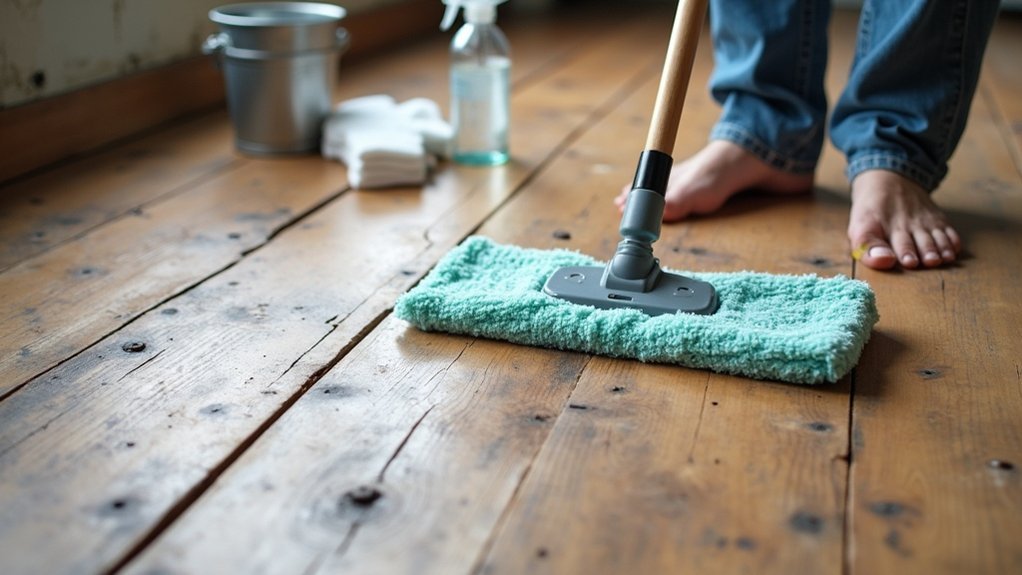
Like Theseus tracking a path through a maze, you’ll get better results on reclaimed wood when you follow the right sequence. Start by identifying the floor’s finish, because sealed boards tolerate damp cleaning while oiled or waxed surfaces don’t. Sweep or vacuum with a soft brush to pull up grit, then damp-mop with a nearly dry microfiber pad and a pH-neutral, low-residue cleaner. The wrong moisture level or cleaner can scar the patina—so here’s how you prevent that…
Key Takeaways
- Identify the floor’s finish first; mineral spirits and a 60‑second water-drop test reveal film finishes versus oils or wax.
- Dry clean frequently by vacuuming or sweeping with a soft brush head; disable beater bars to prevent scratches and grit damage.
- Damp-mop sparingly with a nearly dry microfiber pad, working with the grain in small sections, and dry immediately with a towel.
- Use only pH-neutral, low-residue wood-floor cleaner diluted as directed; change rinse water often to avoid redepositing grime.
- Avoid vinegar, steam mops, ammonia, and strong solvents; they can dull finishes, leave residues, or cause cupping and board loosening.
Figure Out the Finish on Reclaimed Wood Floors
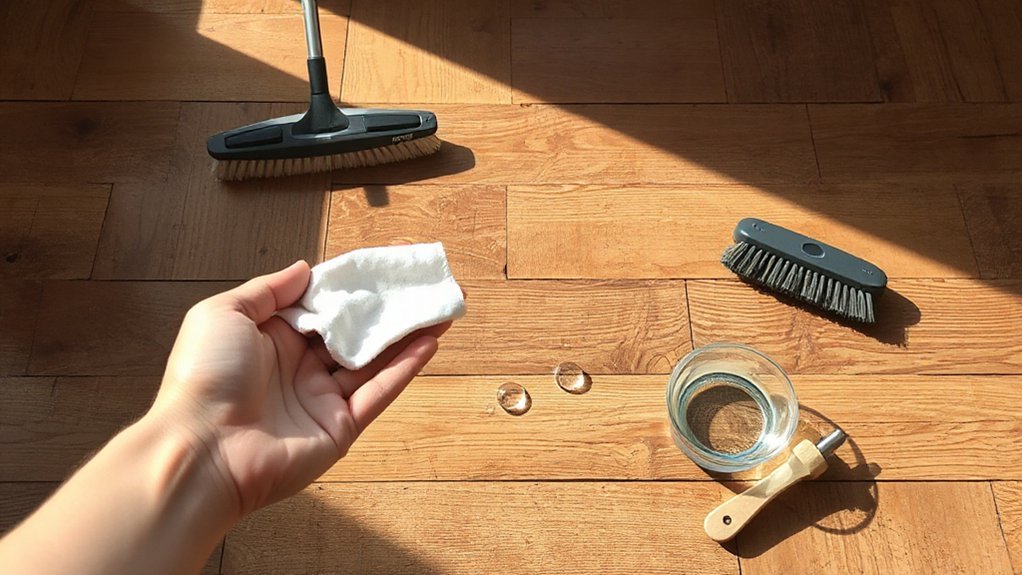
Before you reach for any cleaner, figure out what finish is protecting your reclaimed wood floor, because the wrong product can dull the sheen, soften a wax layer, or drive moisture into bare boards. Start with Finish identification: check installation notes, ask the installer, or test an inconspicuous spot.
Rub a white cloth dampened with mineral spirits; wax or oil will smear or lift color, while polyurethane stays unchanged. Place a drop of water for 60 seconds: tight beading suggests a film finish; darkening indicates penetrating oil or bare wood.
Inspect edges and wear paths—film finishes chip, oils fade evenly, wax looks hazy. Once you confirm the finish, choose compatible cleaners and recoat schedules to support Reclaimed wood preservation and minimize patina loss.
Dry-Clean Reclaimed Wood Floors (Dust + Grit)
Once you’ve identified the finish, make dry cleaning your default routine, because dust and grit act like sandpaper on reclaimed boards and quickly flatten the patina. Vacuum or sweep 2–4 times weekly, and daily in entry zones. Use a soft-brush floor head and turn off the beater bar to avoid edge-chipping and nail snags.
For sweeping, choose a microfiber dust mop; it captures fine silica without spreading it, supporting Eco friendly cleaning by reducing disposable wipes. Work with the grain, overlap passes, and finish with baseboard-to-center strokes to corral debris.
Empty the vacuum bin outside and clean filters regularly—fine dust clogs suction and redeposits grit. Keep thresholds clear; crumbs and dust invite insects, so consistent dry pickup strengthens Pest prevention too.
Damp-Mop Reclaimed Wood Floors the Safe Way
Although reclaimed wood can handle routine cleaning, it won’t forgive excess water—so damp-mop with a “nearly dry” pad, not a wet string mop. Start after you’ve removed grit, then wring or spin your microfiber pad until it feels barely moist to the touch. Work in small sections, following the grain, and keep your passes light to avoid pushing moisture into gaps, checks, and nail holes.
- Use a pH-neutral, low-residue cleaner diluted per label for Eco friendly cleaning.
- Change rinse water often, and swap pads as soon as they load with soil.
- Dry immediately with a clean towel, then ventilate so boards equalize fast.
Consistent, controlled damp-mopping protects patina, limits cupping, and reduces future Wood floor restoration work.
Avoid Vinegar, Steam Mops, and Harsh Cleaners
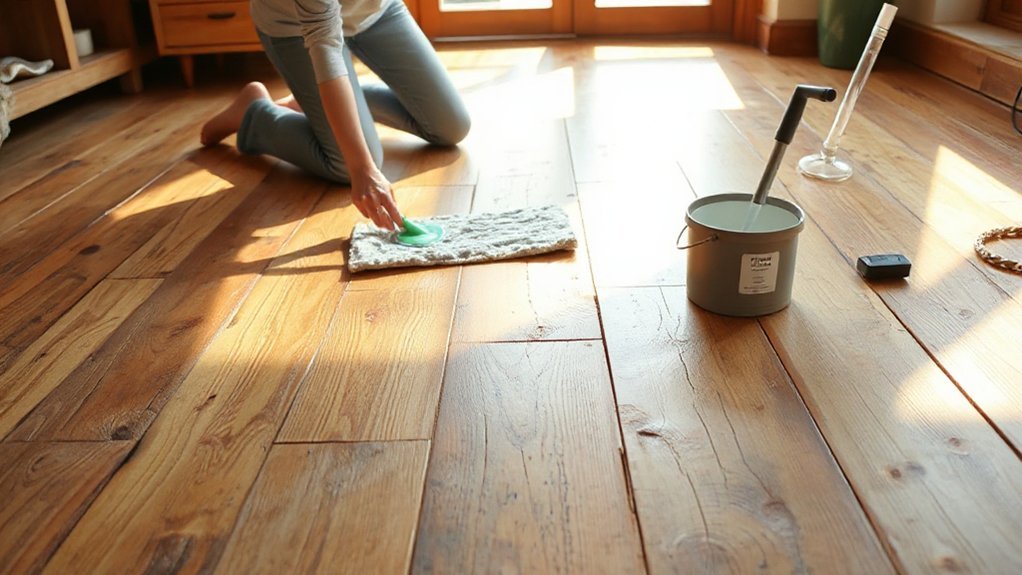
Because reclaimed wood carries open checks, old fastener holes, and a thinner, irregular finish layer, you should skip vinegar, steam mops, and harsh alkaline or solvent-based cleaners—they can etch the finish, swell fibers, and drive moisture and residue deep into gaps, leaving haze, raised grain, and accelerated wear that’s difficult to reverse.
Vinegar’s acetic acid dulls polyurethane and wax, and repeated use strips patina. Steam mops force hot vapor into seams, loosening boards and fostering cupping; they also soften some adhesives.
Strong degreasers, ammonia, and citrus solvents can leave surfactant film that attracts grit and increases abrasion. For Eco friendly cleaning, use a pH-neutral hardwood cleaner diluted per label and applied with a lightly damp microfiber pad. Keep residues minimal, and dry immediately.
Limiting moisture also supports Pest prevention by reducing damp, debris-filled crevices.
Remove Common Reclaimed Wood Floor Stains
When spills or marks show up on reclaimed wood, you’ll get the best results by matching the removal method to the stain type and keeping liquid exposure brief. Start with dry methods first, then step up carefully. Use soft microfiber, wipe with the grain, and dry immediately to protect the patina and finish.
- Water spots: Buff with a dry cloth, then apply a thin coat of mineral oil or a hardwood-safe polish; wipe off fully.
- Grease/food: Dust cornstarch or baking soda, let it absorb, vacuum, then spot-clean with a pH-neutral wood cleaner.
- Ink/tannin/dark rings: Dab 3% hydrogen peroxide on a cotton swab; test first, limit dwell time, and neutralize with a damp cloth.
These stain removal techniques and cleaning product recommendations prevent over-wetting and minimize refinishing.
Frequently Asked Questions
Can I Refinish Reclaimed Wood Floors Without Sanding Them?
Yes, you can refinish reclaimed wood floors without sanding if the finish is intact; use Refinishing techniques like chemical deglossing and bonding primers. For DIY restoration, screen lightly, patch defects, then apply compatible topcoat.
How Often Should Reclaimed Wood Floors Be Professionally Cleaned?
You should schedule professional cleaning every 12–18 months, or every 6–12 months in high-traffic areas. It’ll extract embedded grit along the wood grain, preserving finish durability and reducing premature wear over time.
What’s the Best Way to Prevent Scratches From Furniture and Pets?
Like armor for your floor, add felt pads and glides for Furniture protection, keep legs clean, and lift—not drag—pieces. For Pet scratch prevention, trim nails, use rugs, and train pets off high-traffic zones.
How Do I Control Humidity to Stop Reclaimed Wood Floors From Cupping?
Control humidity by keeping indoor RH at 35–55% year-round. Use a hygrometer, run a humidifier/dehumidifier as needed, and improve ventilation. Prioritize humidity regulation and moisture control by fixing leaks and sealing crawlspaces.
Are Reclaimed Wood Floors Safe to Clean With a Vacuum Beater Bar?
Yes, but it’s like sandpaper on silk if you’re careless. For Vacuum safety, disable the beater bar on bare floors. Beater bar considerations: use soft rollers, raised height, and test.
Conclusion
Once you’ve decoded your floor’s finish, you can clean it like a conservator, not a vandal. Keep grit out with frequent dry passes, then damp-mop with a nearly dry microfiber pad and a pH-neutral, low-residue cleaner, moving with the grain. Skip vinegar, steam, and solvent-heavy products—they’re sirens for swelling and dulling. Tackle stains with targeted methods, then dry fast. Treat reclaimed boards like a well-kept archive: protect the story, not just the shine.