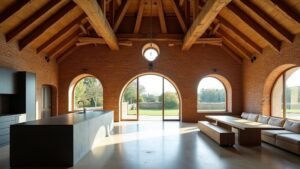
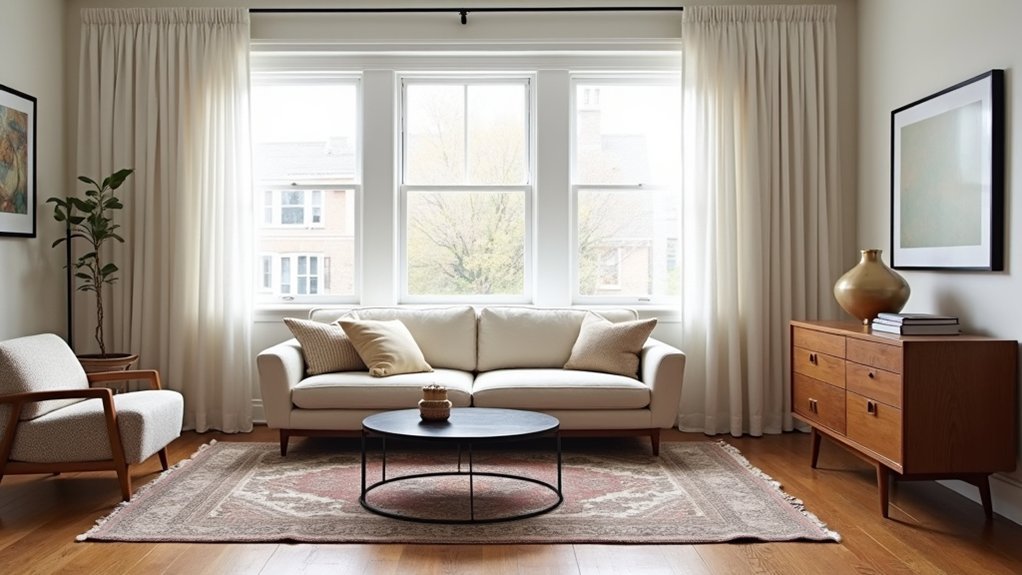
You can mix furniture styles without making your home feel busy by picking one anchor style for your biggest pieces, then keeping everything else on a tight leash. Stick to three colours (neutral, supporting, accent) and repeat them in cushions, rugs, and art. Match metal finishes and limit wood tones, so nothing fights for attention. Balance scale and visual weight, add texture and a couple of curves, and keep walkways clear. Keep going for easy pairings and pitfalls to avoid.
Key Takeaways
- Choose one anchor style for major pieces, then add smaller accent items that don’t compete with the focal points.
- Limit your palette to three colours and repeat them across textiles, art, and accessories to prevent visual noise.
- Keep finishes consistent by repeating metal tones and limiting wood stains to one main and one secondary.
- Balance scale and visual weight, leaving negative space and maintaining clear walkways so the room doesn’t feel crowded.
- Repeat shapes and textures, mixing clean lines with a few curves and tactile materials to add depth without clutter.
Pick an Anchor Style for the Whole Space
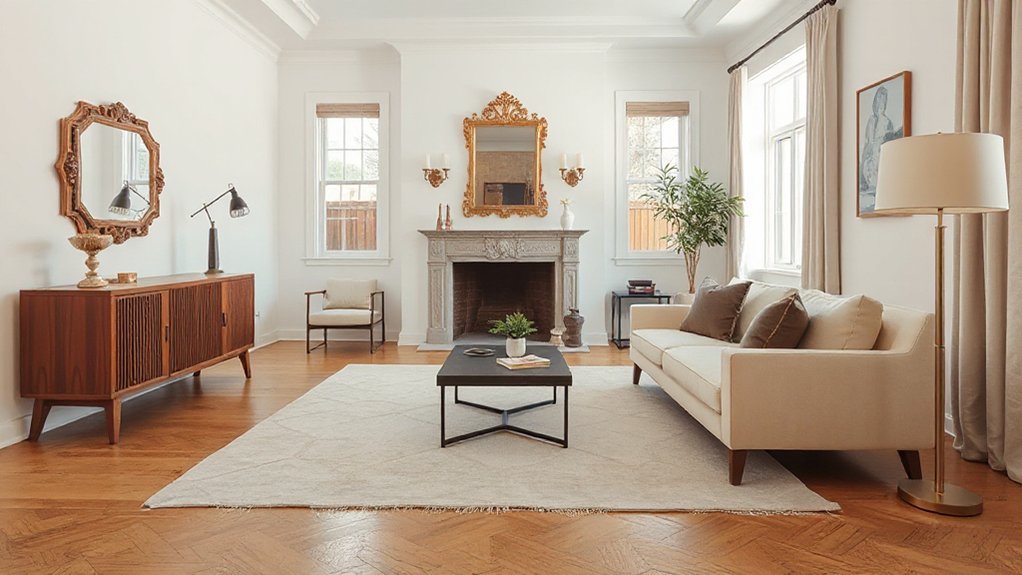
If you start by choosing one “anchor” style for the room—think modern, traditional, mid-century, or industrial—you’ll find it far easier to mix in other influences without the space looking chaotic. Your Anchor style should dominate the biggest items: sofa, dining table, bed frame, and main storage. In UK homes, where rooms can be compact, this prevents visual clutter and keeps sightlines calm.
Next, set simple rules for anything you add: repeat the anchor’s key shapes (clean lines, turned legs, or metal frames) and keep proportions consistent. When you buy a “wildcard” piece, make it secondary in scale and place it where it won’t fight the focal point. That’s how you maintain furniture harmony while still getting character.
Use a Tight Color Palette to Mix Furniture Styles
Once you’ve chosen your anchor style, let colour do the heavy lifting to keep mixed pieces feeling intentional. A tight palette creates instant Color coordination across eras, from mid-century teak to a contemporary sofa, without forcing everything to match. Pick one dominant neutral, one supporting tone, and one accent, then repeat them in small, deliberate hits.
- Choose three colours max: e.g., warm white, charcoal, and rust
- Repeat them in textiles, artwork, and ceramics for Palette consistency
- Use UK paint testers (Farrow & Ball, Dulux) to check undertones in your room’s light
Aim for one wood tone family (warm or cool) and keep metals either mostly brushed brass or mostly chrome. If you crave pattern, keep it within your three colours.
Balance Scale and Visual Weight Across Pieces
Although you can mix eras and finishes with confidence, the room will only feel calm when the scale and visual weight of each piece stay in balance. Start by anchoring the layout with one main item—usually your sofa in a UK living room—then choose secondary pieces that don’t compete for dominance.
Check proportions: a bulky Chesterfield needs a larger rug and substantial coffee table, while a slim mid-century settee suits lighter, raised-leg companions. Spread heft around the room so one side doesn’t feel “heavy”; pair a tall bookcase with a low, wide sideboard elsewhere. Use negative space too—leave breathing room between pieces for scale harmony. Finally, test sightlines from the doorway and sofa; you’re aiming for visual equilibrium, not a showroom cram.
Repeat Finishes and Materials (Wood, Metal, Fabric)
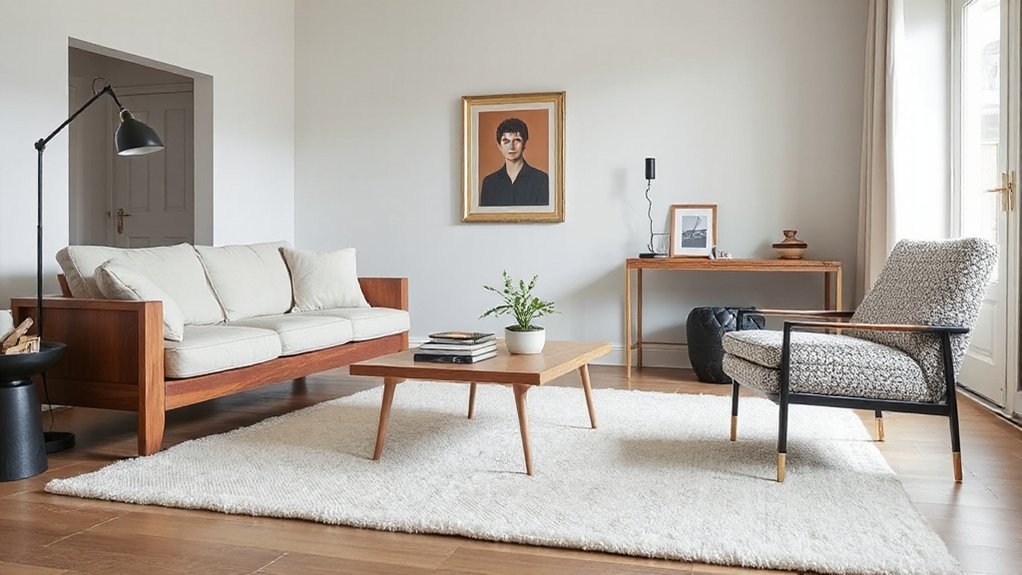
- Match metal finishes: keep to black, brushed brass, or chrome across legs, handles, and lighting
- Repeat textiles: carry one fabric type or colour family through cushions, a throw, and an ottoman
- Limit wood variety: one main tone, one secondary, and everything else neutral
Stick to this rule and your mix reads curated, not busy.
Mix Clean Lines With Curves and Texture
If your room feels a bit flat or overly boxy, mixing clean-lined pieces with a few curves and tactile finishes will sharpen the look without adding clutter. Keep your main items crisp—think straight-armed sofa or slab-front sideboard—then soften the silhouette with one or two rounded elements. Aim for shape harmony by repeating the curve at least twice, such as in a lamp base and a mirror frame, so it feels intentional. Use Texture contrast to stop modern lines looking cold: pair smooth lacquer or glass with bouclé, linen, rattan, or a nubby wool rug. In smaller UK rooms, choose curved pieces with a light visual footprint, like slim legs and open bases, to protect floor space and sightlines.
Try These Easy Style Pairings (With Examples)
When you stick to a simple “one anchor style + one accent style” rule, mixing furniture looks deliberate rather than busy. Start with the dominant era or vibe, then add one supporting look through smaller pieces and finishes. Keep colours tight (think warm oak, black metal, and off-white), and repeat one material across the room so it reads cohesive in typical UK-sized spaces.
- Scandi base + Modern accents: pale wood sideboard, matte-black lamp, slimline sofa legs
- Mid-century base + Vintage contrasts: teak dining table, thrifted spindle chairs, aged brass pulls
- Industrial base + soft traditional: steel-framed console, wool rug, pleated shade in cream
Aim for similar visual weight, and you’ll avoid clutter while still getting character.
Choose One Statement Piece per Zone
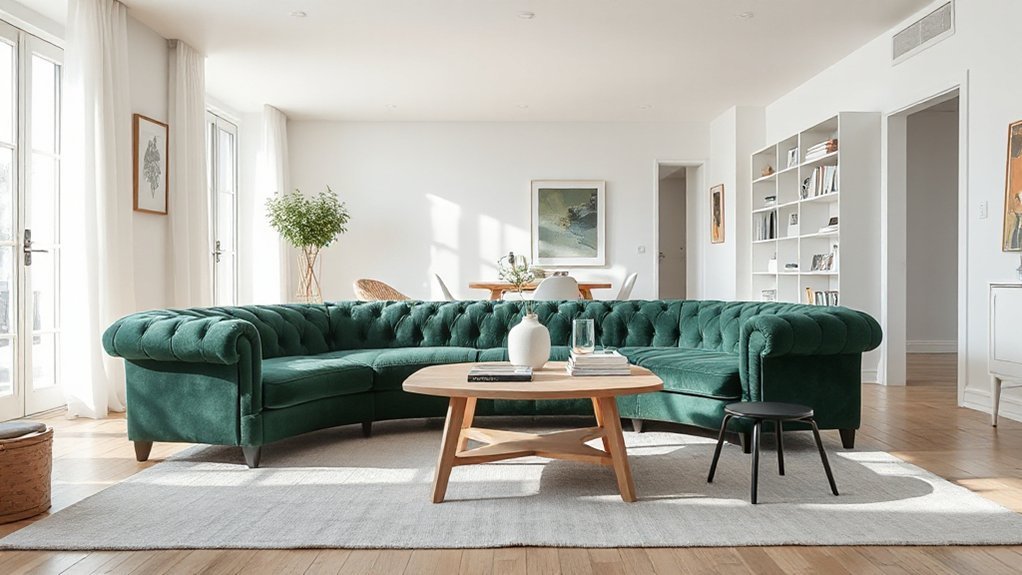
Start by defining each zone in your home—sofa area, dining spot, reading nook—so every mix of styles has a clear boundary. Then choose one hero piece per zone, such as a standout armchair or bold sideboard, to set the tone without visual clutter. Keep everything else as quiet basics in calm colours and simple shapes, so your statement piece reads intentional rather than busy.
Define Each Zone
Although mixing styles can feel like a free-for-all, your home won’t look busy once you define each zone and give it one clear statement piece to lead the look. Start by mapping how you actually live—sofa-chat, dining, reading, WFH—then use Furniture placement to draw invisible borders, even in open-plan UK flats.
- Anchor each zone with one focal item, then keep surrounding pieces quieter
- Repeat one finish across zones (oak, black metal, brass) for style consistency
- Leave breathing room: clear walkways, avoid overfilling corners, mind door swings
Use rugs, lighting, and side tables to signal where one zone ends and the next begins. If everything competes, edit: move smaller items to another zone or stash them away.
Select A Hero Piece
Clear zones give you the framework; a hero piece gives each area its identity without adding visual noise. Pick one statement item per zone and let it lead the mix—then every other choice can relate back to it. In a UK living room, that might be a Chesterfield, a sculptural G Plan sideboard, or a bold patterned sofa from a British maker.
Choose a hero with clear lines, strong material, or distinctive scale. Aim for Heritage charm if you’re leaning classic, or a Vintage contemporary feel if you want old-meets-new. Keep the hero anchored to the zone’s function: dining gets a standout table or pendant; bedroom, an upholstered headboard; hallway, a console with presence. Commit to it, and you’ll avoid ‘too many stars’.
Balance With Quiet Basics
Once you’ve chosen the hero, keep the rest of the zone deliberately quiet so the mix reads curated, not cluttered. In a UK home where rooms are often compact, you’ll prevent Eclectic chaos by letting supporting pieces act like a backdrop: simple shapes, calm finishes, and consistent scale.
- Pick one statement per zone: a velvet sofa, a sculptural floor lamp, or a bold rug.
- Keep secondary furniture neutral: oak, black metal, warm white paint, and plain upholstery.
- Repeat one linking detail twice (brass, cane, or a timber tone) to unify the mix.
You’ll also avoid Overwhelming clutter by limiting patterns to one surface and using closed storage—sideboards, media units, or baskets—to hide daily bits. Leave breathing space around the hero.
Tie the Mix Together With Rugs, Art, and Lighting
You’ll stop a mixed-style room feeling busy by using rugs, art, and lighting as your unifiers. Anchor contrasting furniture with a rug that sets the colour palette, then repeat those tones through art to link pieces across the space. Finish by layering lighting—ceiling, table, and floor lamps—to create consistent warmth and cohesion in typical UK rooms.
Anchor Styles With Rugs
Even if you’ve blended a few eras in one room, a well-chosen rug can pull the whole scheme together and stop it feeling busy. Start by choosing one “anchor” rug that echoes a key colour from your largest pieces, then let smaller items contrast around it. In UK homes, where rooms can be compact, size matters: go bigger so front legs of sofas and chairs sit on the pile, which visually calms the layout. Use Textile contrast to separate heavy wood from light upholstery, and lean on Pattern pairing: keep one element bold (rug or upholstery) and the other quieter.
- Pick wool for warmth and durability in draughtier period houses
- Repeat one rug tone in cushions for instant cohesion
- Use stripes or borders to guide traffic flow and zoning
Unify Rooms With Art
How do you stop a mix of vintage, modern, and inherited pieces from feeling like separate stories? You use art as your visual “glue”. Start with your Art collection: choose a consistent thread—colour palette, frame finish, or subject matter—then repeat it across the room. In UK homes, a simple gallery wall above a sofa or sideboard works brilliantly, especially when you keep spacing even and hang the centre line at about 145cm from the floor.
Scale matters: pair a large statement print with quieter pieces so the room doesn’t feel fussy. Echo key tones from your rug in mounts, cushions, and decorative accessories, but cap repeats at three to avoid clutter. Finally, limit frame styles to two for calm.
Layer Lighting For Cohesion
Because furniture styles can clash most at night, layered lighting does the heavy lifting to make vintage, modern, and inherited pieces read as one scheme. Start with ambient layering: a dimmable ceiling light or uplighter gives you an even base so no single piece shouts. Then add task lighting where you live—reading lamps by the sofa, a pendant over the dining table—so each zone feels intentional. Finally, bring in accent light to connect finishes and textures, like picture lights, LED strips on shelves, or a table lamp washing a textured wall.
- Use warm LEDs (2700K) across the room for consistency
- Keep fixture coordination tight: repeat one metal or shade tone
- Put key circuits on dimmers for easy mood shifts
Avoid These Common Furniture-Mixing Mistakes
While mixing furniture styles can give your home real character, a few predictable missteps will make it feel cluttered rather than curated. First, don’t ignore scale: if your sofa’s chunky, balance it with lighter side tables rather than another bulky piece. Next, tighten furniture placement—float key items to create clear walkways (aim for about 80–90cm in UK living rooms) and don’t shove everything against the wall. Avoid “one-of-each” looks by repeating at least one element (wood tone, metal finish, or leg shape) across the room. Keep accessory coordination disciplined: choose a limited palette, then echo it in cushions, art, and rugs. Finally, don’t over-collect trends; edit regularly and leave breathing space for calm.
Frequently Asked Questions
How Do I Mix Styles in an Open-Concept Floor Plan?
You mix styles in an open-plan by anchoring zones with repeat accents, then use Color coordination to link pieces. Keep Texture balancing between soft and sleek. Stick to one rug palette, varied silhouettes, UK-scale.
What’s the Best Approach for Mixing Vintage and Brand-New Furniture?
Treat it like Britain treats chaos: politely controlled. You’ll mix vintage and new best by anchoring one hero piece, then using colour coordination and matching furniture proportions; repeat finishes, keep silhouettes calm, edit ruthlessly.
How Can I Blend Inherited Furniture With My Current Taste?
You can blend inherited pieces by anchoring them with your favourite colours, then use colour coordination through cushions and rugs. Prioritise furniture placement: give key heirlooms breathing room, balance with modern lighting, and keep finishes consistent.
How Do I Mix Furniture Styles on a Tight Budget?
You’ll mix styles on a tight budget by treating your room like a well-tuned playlist: shop charity shops and Facebook Marketplace, stick to Color coordination, add Texture mixing with cushions, rugs, throws, then edit ruthlessly.
When Should I Hire an Interior Designer for Mixing Styles?
Hire an interior designer when you’re stuck on a cohesive plan, renovating, or spending big on key pieces. They’ll nail colour coordination, guarantee accessory balancing, and source UK suppliers, saving costly mistakes.
Conclusion
Stick with one anchor style, then let everything else play nicely around it. You’ll keep a tight colour palette, balance scale, and repeat a few finishes so nothing feels like a “bit of a muddle”. Mix clean lines with softer curves, choose one standout piece per zone, and use rugs, art, and lighting to smooth any rough edges. Do that, and your home won’t look busy—it’ll look calmly collected, top to bottom.